Camera

Film Crew Position: BTS Photographer

What does a BTS Photographer do?

What Is a BTS Photographer?

A BTS photographer — short for behind-the-scenes photographer — is the crew member responsible for capturing still images during film and television production. On a union production you will see this role listed in the credits as unit still photographer or still photographer, and the images themselves are commonly called unit stills. The terms are interchangeable: BTS photographer, unit still photographer, and set photographer all refer to the same job.

Every major feature film, scripted television series, streaming production, and commercial hires a unit still photographer. The images this person creates end up everywhere: theatrical poster campaigns, Netflix thumbnail art, billboard advertisements, social media feeds, DVD and Blu-ray packaging, press junket materials, entertainment news features, awards screeners, and electronic press kits (EPKs). Without unit stills, studios and distributors would have no licensed imagery to market a production.

Unlike the documentary or video camera operators who capture moving footage for EPK purposes, the unit still photographer shoots exclusively in still format. The skill set is distinct: you must understand cinema lighting, read an actor's performance frame by frame, anticipate the decisive moment within a take, and do all of this without making a sound, drawing attention to yourself, or interfering with the filmmaking process in any way.

BTS vs. Unit Stills: What Is the Difference?

The two image categories a set photographer delivers are often confused by people outside the industry:

Unit stills are the primary deliverable. These are photographs taken during an actual camera take — the actors are performing, cameras are rolling, and the still photographer is simultaneously capturing the scene from an approved angle. Unit stills must match the continuity of the shot: costume, lighting, hair, makeup, and actor positioning must be consistent with what appears on screen. Studios use these images in marketing because they represent the film's visual identity.

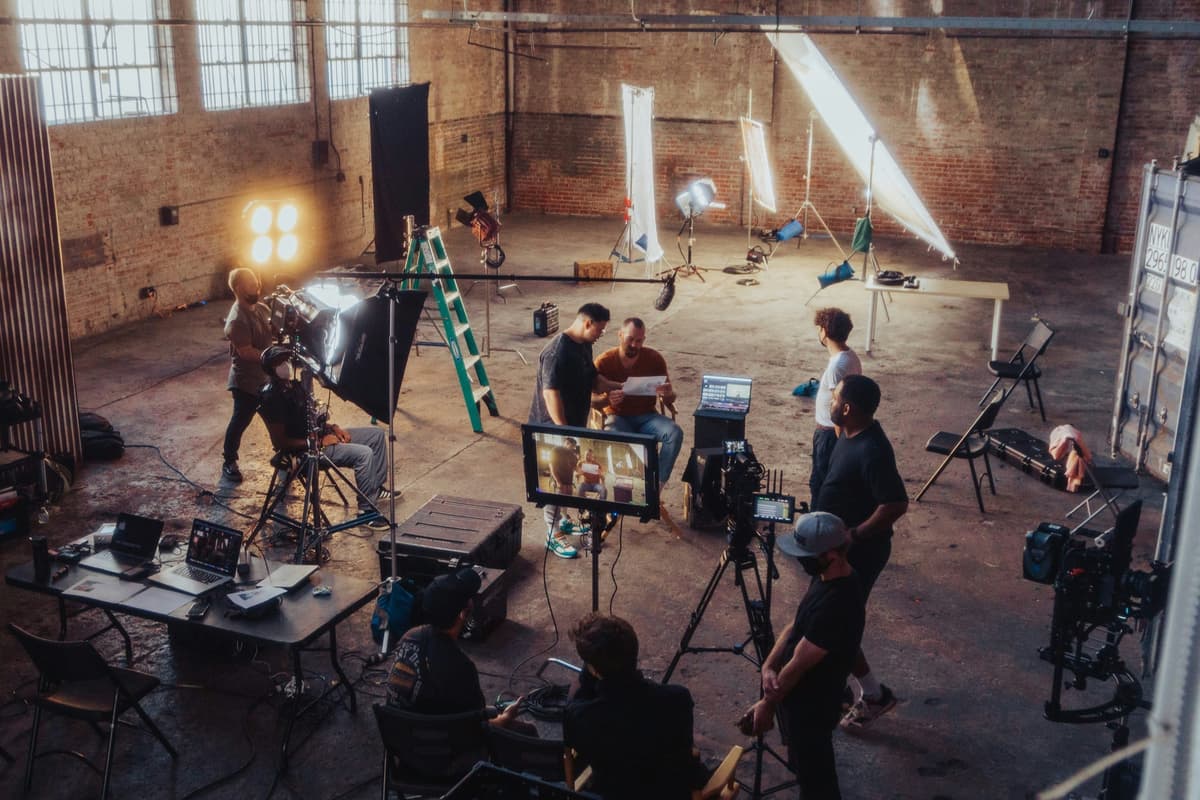
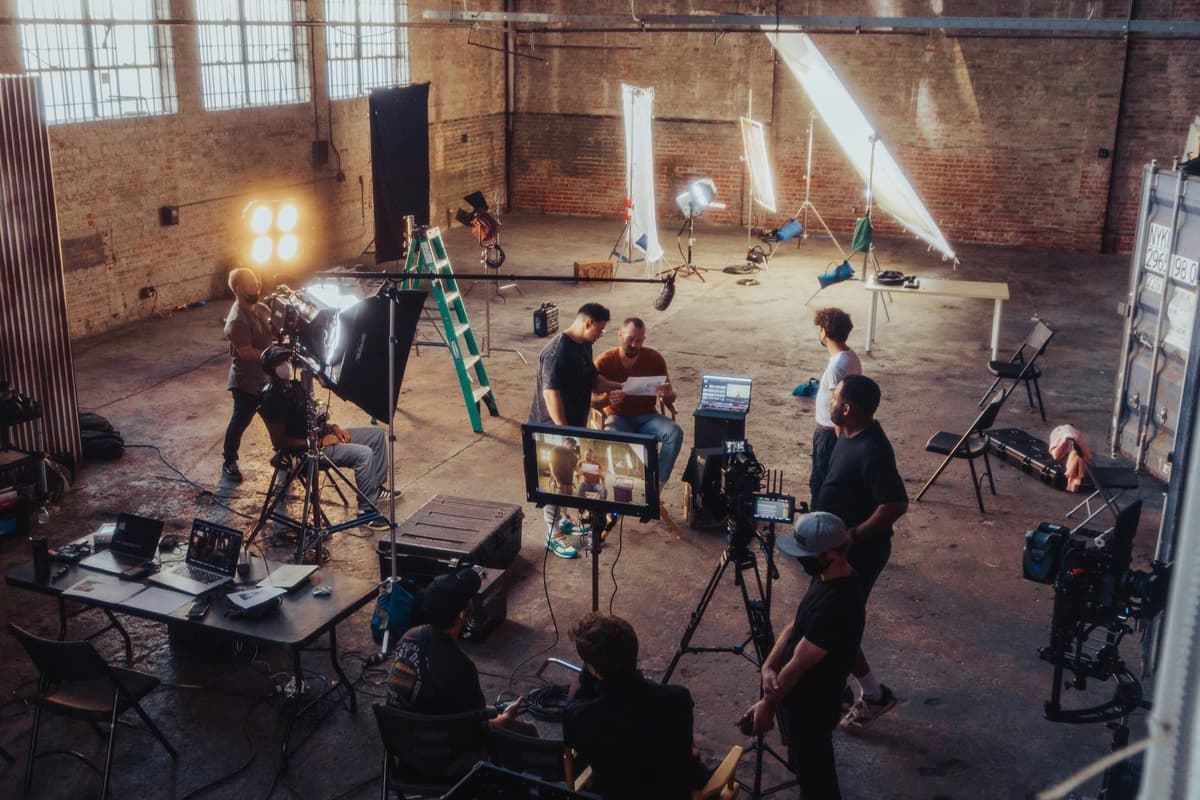
Behind-the-scenes (BTS) images are secondary. These are candid photographs taken between takes — directors consulting with actors, grips rigging equipment, the DP reviewing a monitor, the production designer walking the set. BTS images are used for social media content, press features, documentary materials, and DVD extras. They humanize the production and generate audience anticipation during the production period.

Most unit still photographers deliver both, but unit stills take priority on every set.

Why Productions Hire a BTS Photographer

A dedicated unit still photographer is not a luxury — it is a legal and contractual requirement on most productions. Studios and distributors require a library of licensed still images before they can execute a marketing campaign. The images must be production-owned, not pulled from frame grabs (which are lower resolution and require separate licensing), and not shot by crew members on personal phones (which creates ownership and clearance problems).

On SAG-AFTRA productions, photographing actors on set without an accredited unit still photographer present may violate performer agreements. IATSE Local 600, the International Cinematographers Guild, covers unit still photographers under its jurisdiction on IATSE-signatory productions. This means major studio features, network television, and most streaming productions require a Local 600 still photographer.

The downstream value is enormous. A single still photographer's work on a $20 million feature will generate thousands of images used across an 18-month marketing campaign. Managing all of those production assets efficiently — tracking deliverables, costs, and vendor relationships — is where platforms like Saturation.io help production teams stay organized from pre-production through post.

IATSE Local 600 Classification

Unit still photographers working on IATSE-signatory productions are classified under IATSE Local 600 (the International Cinematographers Guild) in the United States. Local 600 covers the Camera Department, which includes directors of photography, camera operators, first and second assistants, digital imaging technicians, and unit still photographers.

Membership in Local 600 is required to work on major studio features, network television, and most large-budget streaming productions. The path to membership involves accumulating qualifying work hours on covered productions — typically 100 days of covered work — before applying. Non-union still photographers can work on non-IATSE productions and build the day count needed to qualify.

What role does a BTS Photographer play?

Primary Duties of a Unit Still Photographer

The unit still photographer's workday begins before the crew call and rarely ends before the last camera rolls. Unlike most crew positions that have defined handoff moments, the still photographer's job is to document everything from first lighting setup to last martini shot. The following are the core responsibilities of the role.

Unit Stills During Takes

The most technically demanding part of the job is shooting during live camera takes. The still photographer must position at an approved angle — typically beside or behind the film camera, never crossing the axis — and capture frames that match the performance and visual tone the director is building. Camera movement, actor blocking, lighting changes, and dialogue timing must all be anticipated in advance. The still photographer cannot direct actors, cannot call cut, and cannot ask for a reshoot. There is one take, and the images must be there.

During takes, the still photographer operates in complete silence. Camera shutters produce audible clicks that can ruin a sound recording. Modern mirrorless cameras offer electronic silent shutters that eliminate this problem, and every professional set photographer uses silent shooting mode as a default. Some productions still use mechanical cameras with sound-dampening blimps for extreme sound-sensitive scenes.

Behind-the-Scenes Candids Between Takes

Between takes — while the AD resets, actors review notes, or the DP adjusts lighting — the still photographer documents the production environment. This includes candid moments between director and cast, crew members in action, set details that reveal the scale of the production, and spontaneous interactions that give audiences a sense of the production culture. These images are used for social media content calendars, behind-the-scenes featurettes, and press coverage during the production period.

The challenge with BTS photography is reading the room. Not every private conversation is appropriate to photograph. Not every crew member wants to be on camera. A skilled unit still photographer understands set etiquette deeply enough to know when to shoot and when to lower the camera.

Press Kit Photography

Studios require a formal press kit for every production — a curated package of high-resolution images delivered to entertainment journalists, media outlets, and award campaign coordinators. The unit still photographer is responsible for capturing the images that will populate this kit. Press kit images must be technically perfect: sharp focus, correct exposure, proper color balance, and consistent with the film's visual identity. These images appear in publications with enormous readership; a blurry or poorly lit press kit image reflects on the production.

Social Media Content

Marketing teams increasingly pull from the unit still photographer's archive to fuel social media during production, post-production, and release. Instagram, X (formerly Twitter), TikTok, Facebook, and streaming platform social accounts all need a steady stream of production imagery. The still photographer often flags selects as they shoot — images they know will work for social — and delivers prioritized quick-turnaround edits to the social media team.

EPK Support

The electronic press kit (EPK) is a multimedia package delivered to press outlets containing trailers, featurette footage, cast and crew interviews, and still photographs. The still photographer's images form the visual backbone of the EPK. In some cases, a still photographer will work in close coordination with the EPK camera crew, timing their coverage so that both formats are capturing the same moments from compatible angles.

Working Around Set Without Disrupting Filming

Movement is the most important discipline a unit still photographer must master. On a working film set, the camera department has right of way. The still photographer cannot walk between the film camera and the set during a take, cannot create shadows in the production lighting, and cannot allow a reflection to appear in a mirror or glass element within frame. Learning to navigate these constraints invisibly — crouching low, sliding along walls, anticipating camera moves from the shot list — takes years to develop.

The 1st Assistant Director controls the set and is the unit still photographer's primary point of contact regarding timing. Before each take, the AD will call "rolling" and the still photographer must already be in position. This requires reading the shot list, understanding coverage sequences, and staying aware of the camera's position and travel at all times.

Delivering Selects to Publicist and Studio

At the end of each shooting day — or within a production-specified turnaround window — the unit still photographer edits and delivers a curated selection of images to the production's publicist and studio representative. On large productions this means culling 300 to 1,500 captures down to 50 to 150 selects, applying consistent color grading, and uploading files to a shared asset management system. Caption data, metadata tagging, and clearance notes are part of the deliverable package.

Photographing Actors and Principal Cast

Capturing flattering, usable images of principal cast is among the most important and politically sensitive aspects of the job. Actors and their representatives are acutely aware of how they appear in still photography. Some actors have approval rights over still images in their contracts. Building a respectful, professional relationship with cast members — being unobtrusive, not publishing or sharing images without authorization, and demonstrating consistent quality — is essential to long-term employment in the role.

Do you need to go to college to be a BTS Photographer?

Education Pathways for BTS Photographers

Unlike many film crew positions that have clearly defined union apprenticeship tracks, becoming a unit still photographer is an entrepreneurial path. There is no single degree or certification that automatically qualifies you for the role. What the industry evaluates is your portfolio and your reputation — both of which are built through experience, not credentials alone. That said, formal education can accelerate your development significantly if you choose the right program and supplement it with real-world work.

Photography Degree Programs

A Bachelor of Fine Arts (BFA) or Bachelor of Arts (BA) in Photography provides a structured foundation in visual storytelling, lighting theory, color management, and image editing that directly applies to set photography work. Programs at the Rochester Institute of Technology (RIT), the School of Visual Arts (SVA) in New York, and the International Center of Photography in New York offer rigorous technical training.

Within a photography degree, the most relevant coursework includes documentary photography (for the candid, observational eye needed on set), portrait photography (for understanding how to capture actors in the best light), lighting courses (to understand cinematic lighting setups), and post-processing courses covering color grading and digital asset management.

Film School and Production Programs

A film production degree — or enrollment in a film production program — provides something that a pure photography degree cannot: immersive exposure to how film sets operate. Programs at NYU Tisch, USC School of Cinematic Arts, AFI, and Chapman University give students access to actual film productions where they can begin building a portfolio of unit stills from student productions. Student films are one of the primary entry points into set photography: they are real sets with real crews, and the images you capture there become your first legitimate portfolio credits.

Many working unit still photographers have no formal degree at all. What they share is an obsessive commitment to studying great film photography — the archives of photographers like Mary Ellen Mark, Phil Bray, Merrick Morton, and Douglas Kirkland — and a willingness to work long hours on low-budget productions to build experience.

Photojournalism Programs

Photojournalism training is arguably more directly applicable to BTS photography than traditional art photography programs. Photojournalists are trained to observe without interfering, to anticipate decisive moments, to work invisibly in chaotic environments, and to deliver clean, publishable images under deadline pressure. These are exactly the skills required on a film set. Schools with strong photojournalism programs include Syracuse University's Newhouse School, Northwestern's Medill School, and the Missouri School of Journalism.

The Self-Taught and Photo Assistant Path

A large proportion of working set photographers are self-taught or learned through assisting. Assisting a working unit still photographer — carrying equipment, managing memory cards, handling basic post-processing — exposes you to real productions and allows you to observe professional set etiquette from the inside. This path takes longer but provides direct mentorship and access to the professional network that most set photography work flows through.

The self-taught path requires building a deliberate learning plan: study the portfolios of top working still photographers, volunteer on student films, shoot corporate events and music videos to develop speed and instinct, and progressively move into lower-budget features where you can practice unit stills under real conditions.

IATSE Local 600 Membership Pathway

For those who want to work on major studio productions, IATSE Local 600 membership is necessary. The membership pathway for unit still photographers generally works as follows:

First, you work on non-union productions and accumulate experience. IATSE requires that applicants demonstrate a minimum number of days worked in the craft — typically 100 qualifying days on non-IATSE productions — before being eligible to apply for union membership. Days are documented with pay stubs, contracts, or producer letters confirming dates and job title.

Second, you find a signatory production willing to hire you as a non-union still photographer through the union's roster system. The union maintains a roster of qualified non-members who can work on signatory productions under specific conditions. This is a common entry point to union work.

Third, you apply for membership once you have accumulated the qualifying days and have been hired through the roster system onto a signatory production. The application requires documentation of work history, references from union members, and payment of initiation fees. The initiation fee for Local 600 is typically several thousand dollars; annual dues are also assessed.

Portfolio Building for Film Sets

Your portfolio is your primary marketing tool. A unit stills portfolio should contain only images that look like professional unit stills — not personal photography projects, travel photography, or wedding work, even if technically excellent. Casting directors, producers, and directors evaluating a still photographer's portfolio are specifically looking for evidence that you can capture actors performing in cinematic light without interrupting the take.

Building a credible portfolio requires working on set. Start with student films at nearby film schools — many post crew calls through film school job boards, Shooting People, and similar communities. Move to short films, music videos, and independent features as your portfolio develops. Every legitimate production you work on, even for deferred pay, adds credits and imagery to your portfolio. Curate aggressively: a portfolio of 20 exceptional images is more effective than one with 100 mediocre ones.

What skills do you need to be a BTS Photographer?

Core Skills for a BTS Photographer

Working as a unit still photographer requires a distinct combination of photographic mastery, interpersonal intelligence, and production awareness. The technical skills are demanding; the soft skills are equally critical. The following are the competencies that separate photographers who get hired on major productions from those who remain stuck on student films.

Silent Shooting and Camera Sound Management

The single most important technical skill a set photographer must possess is the ability to shoot silently. On a sound-recording set, a mechanical camera shutter is audible to the boom operator and will ruin a take. Productions have shut down unit still photographers mid-take for making noise. Modern mirrorless cameras from Sony, Canon, and Nikon all offer fully electronic silent shutters that eliminate shutter noise entirely — a non-negotiable requirement for serious set work.

Understanding the limitations of electronic shutters — specifically the rolling shutter effect that can distort fast movement at high frame rates — is equally important. In situations where a fully electronic shutter creates image quality problems, photographers may use a mechanical shutter with a sound blimp (a foam-padded housing that dampens shutter sound) or work during lighting setups when sound is not rolling.

Camera Systems: Canon, Sony, Nikon Mirrorless

The professional set photography community has largely migrated to full-frame mirrorless systems, driven by their superior silent shooting capabilities and high-ISO performance. The three dominant systems are:

Sony Alpha Series (A7R V, A1, A9 III): Sony pioneered the professional mirrorless market for set photography. The A9 III's global shutter eliminates rolling shutter distortion entirely, making it ideal for fast action during takes. The A7R V delivers 61MP resolution for large-format print applications. Sony's extensive G Master prime lens lineup provides fast, silent autofocus critical for capturing actors mid-performance.

Canon EOS R System (R5 II, R3, R5): Canon's mirrorless lineup is widely used among set photographers. The R5 II's AI-powered subject tracking and eye-detect autofocus is exceptional for capturing actors mid-take without pre-focusing. Canon's RF 85mm f/1.2L and RF 50mm f/1.2L are popular on set for their rendering quality in cinematic lighting.

Nikon Z System (Z8, Z9, Z6III): Nikon's Z-mount system is increasingly popular on set. The Z9 pioneered the all-electronic shutter in a professional body, enabling 20fps completely silent capture — a significant advantage during fast action coverage.

Fast Prime Lens Selection

Zoom lenses are rarely the right tool for set photography. The slow apertures at the long end, the additional size and weight, and the inferior low-light performance compared to prime lenses make zooms impractical for most set work. Working unit still photographers typically carry a selection of fast primes:

35mm f/1.4 or f/1.2 — wide establishing shots, environmental portraits, environmental storytelling. 50mm f/1.2 or f/1.4 — natural perspective, walking alongside cast, candid documentary coverage. 85mm f/1.4 or f/1.2 — portrait work, working farther from the set, isolating subjects from background activity. 135mm f/1.8 or f/2 — telephoto candids from a distance, compressing background, working across the set without crossing the line.

Low-Light Photography

Film sets are often lit for cinema cameras, not for still photographers. That means the exposure levels may be tuned for a cinema camera at ISO 800 shooting at T2.8 — a very different situation from a studio portrait session. Unit still photographers routinely shoot at ISO 3,200 to ISO 12,800 in challenging lighting conditions. Understanding how to expose correctly in mixed lighting (tungsten and daylight, practical lamps and HMI fills) is essential. High-ISO noise management — knowing when noise reduction will help and when it will destroy image quality — is a separating skill.

Color Management and Tethered Capture

Large productions increasingly require unit still photographers to shoot tethered — wirelessly transmitting images to a production-managed asset server in near real-time. This requires working knowledge of tethered capture software, wireless transmitters (CamFi, Tethertools, and similar systems), and color management workflows that maintain consistent color profiles across thousands of images delivered over the course of a production.

Matching the color profile and visual tone of unit stills to the film's overall visual identity — communicated through the DP's LUT and color grade — is a growing expectation on large productions. Still photographers who can deliver images that already feel like they belong in the film's world save marketing teams significant retouching time.

Capture One and Lightroom Proficiency

The two industry-standard applications for professional post-processing of unit stills are Capture One and Adobe Lightroom Classic. Capture One is preferred on many major productions for its superior color handling, tethering reliability, and session-based workflow that translates cleanly to delivery requirements. Lightroom is more widely used among photographers entering the industry and remains acceptable for many productions.

Core competencies in either application include: batch color grading, selective masking and local adjustments, metadata management, export preset management (multiple output sizes and formats in a single export operation), and catalog organization for productions with thousands of daily captures.

Set Etiquette and Production Awareness

No technical skill compensates for poor set etiquette. The camera department controls the set; the 1st AD controls the shooting day. A unit still photographer who crosses the camera line, creates a shadow in the production lighting, makes noise during a take, or photographs private conversations without consent will not be invited back regardless of image quality. The foundational behaviors are: never cross in front of a rolling camera; communicate all position changes to the 1st AC or key grip before moving; never use flash on set without explicit permission from the DP; wait for the AD's cue before approaching cast for between-take coverage; silence all phone and camera notifications during shooting hours; and understand the shot list and coverage sequence before the day begins.

Quick-Turnaround Editing

Major productions often require selects delivered to the publicist or studio the same evening. This turnaround pressure requires the ability to cull quickly and grade consistently. Developing a triage system — flagging selects in-camera as you shoot, rating in Capture One immediately on download — dramatically reduces the editing bottleneck at the end of a 13-hour shooting day.

Interpersonal and Observational Skills

Patience, observation, interpersonal skills, organization, and adaptability are the core soft skills of the role. The ability to read a set — knowing when a director is about to give a breakthrough note to an actor, when the gaffer is about to do something technically interesting, when the DP is framing up a shot worth capturing from your angle — comes from thousands of hours of on-set experience and an acute sensitivity to human dynamics.

New to filmmaking?

Get Free Template

Use our budget template to get a kick start on your film project. Get access to dozens of templates no matter what type of project!