What is a BTS Director?

Overview
What Is a BTS Director?
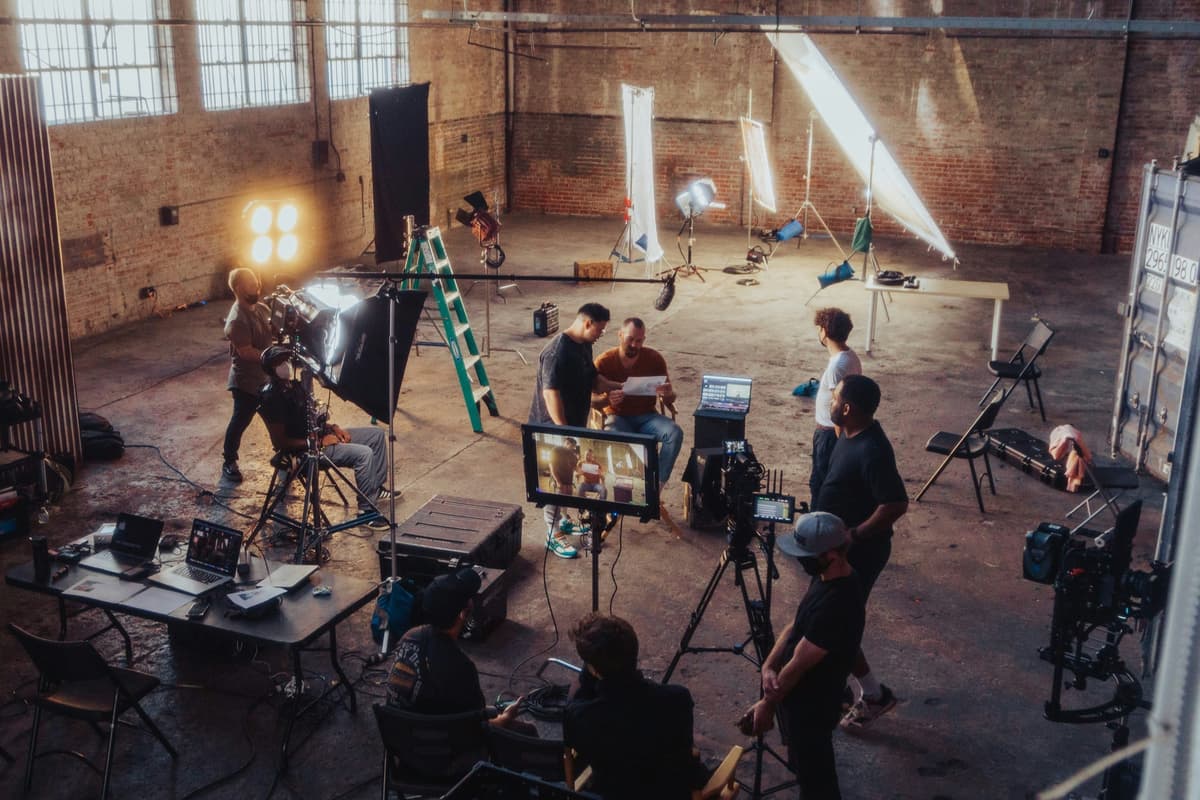
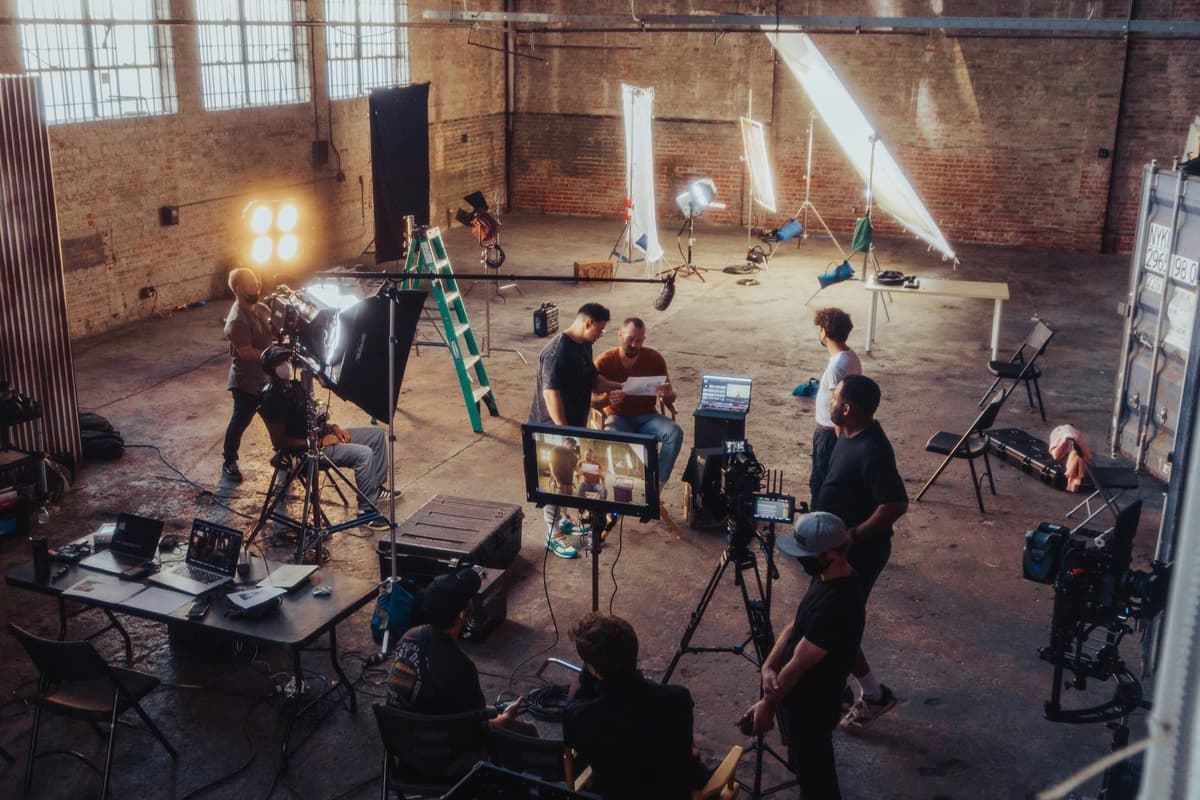
A BTS Director—short for Behind-The-Scenes Director—is the filmmaker responsible for capturing and shaping the documentary content that shows how a film or television production was made. While the main unit director focuses entirely on the final cut audiences will see, the BTS Director runs a parallel production that documents the creative process, the people behind the camera, and the stories that never make it into the theatrical release.
The role sits at the intersection of documentary filmmaking and promotional content creation. BTS Directors produce Electronic Press Kits (EPKs), making-of featurettes, cast and crew interviews, on-set footage packages, and social media content—all of which serve the film's marketing campaign before, during, and after release. Their work appears on streaming platforms as bonus content, in press junkets, at film festivals, and across YouTube and social channels.
On studio productions, the BTS Director leads a dedicated unit—often called the EPK unit—that operates alongside the main crew with its own camera operators, sound recordists, and editors. On independent films with smaller budgets, the BTS Director may work solo or with a single assistant, handling camera, sound, and interviews themselves.
BTS Director vs. EPK Producer
The terms BTS Director and EPK Producer are sometimes used interchangeably, but there is a meaningful distinction. An EPK Producer manages logistics—scheduling press junket days, coordinating with publicists, and overseeing deliverable formats for distribution. The BTS Director makes the creative decisions: how to frame an interview, which on-set moments to prioritize, what story to tell about the production. On large studio features, both roles exist; on independent films, a single person often fills both.
Where BTS Directors Work
BTS Directors work across film, television, streaming, and commercial production. Studio tentpoles, prestige television series, and major streaming originals typically hire dedicated BTS units from the first day of principal photography. Smaller independent features, music videos, branded content productions, and documentary series also hire BTS Directors, though often on shorter contracts covering specific production phases.
Managing a film's budget efficiently—including BTS crew costs—is easier with purpose-built production software. Saturation.io gives producers and line producers a real-time view of EPK unit spending alongside the main unit budget, so nothing slips through the cracks.
Role & Responsibilities
Core Responsibilities of a BTS Director
The BTS Director's job begins in pre-production and runs through post-production deliverables. Their responsibilities span creative direction, logistics, and editorial.
Pre-Production Planning
Before cameras roll on principal photography, the BTS Director meets with the film's publicist, marketing team, and producer to establish what the EPK needs to deliver. This includes identifying key talent interviews, mapping which production departments and locations offer the most compelling story material, and building a shot list for the EPK unit. The BTS Director reviews the main unit's shooting schedule to flag high-priority days—major action sequences, pivotal scenes, first days on significant locations—where BTS presence is essential.
Directing On-Set Coverage
During principal photography, the BTS Director operates on the main set or alongside second unit depending on daily priorities. Their primary tasks include:
- Directing camera operators to capture crew at work, rehearsals, camera setups, and candid cast moments
- Recording interviews with cast members, the director, department heads, and key creatives—often in dedicated interview setups between scenes or during lunch breaks
- Capturing B-roll of set construction, costume fittings, makeup and hair, props, visual effects preparations, and production design details
- Coordinating access with the 1st AD to identify windows in the shooting schedule when talent and department heads are available for interviews
- Logging footage daily so editorial can begin assembling cuts during production rather than waiting for wrap
Managing the EPK Unit
On studio productions, the BTS Director supervises a small crew that may include a dedicated EPK Director of Photography or camera operator, a sound recordist for interviews, and a production assistant. They are responsible for keeping the EPK unit unobtrusive—never disrupting the main unit's work—while still capturing everything the marketing team needs. Navigating this balance requires strong communication with the 1st AD and respect for the main unit's workflow.
Press Junket Direction
Press junkets are high-stakes production days where the BTS Director sets up and directs a series of back-to-back interviews with principal cast and the director. They establish the visual look of the junket setup—lighting, backdrop, framing—and direct talent through interview questions coordinated with the publicist. Speed and efficiency are critical: talent slots are often 15–30 minutes each, and the BTS Director must ensure clean, usable interviews from every session.
Social Media and Streaming Content
Increasingly, BTS Directors are asked to produce content specifically formatted for Instagram, TikTok, YouTube, and streaming platform bonus features. This requires understanding platform-specific aspect ratios, pacing conventions, and audience expectations—creating vertical-format social clips from the same day's material that will also feed a long-form making-of featurette.
Post-Production Oversight
After principal photography wraps, the BTS Director supervises or directly edits the EPK deliverables: making-of featurettes (typically 5–20 minutes each), cast and crew interview clips, production diary episodes for streaming platforms, and press junket packages. They work with the film's marketing and distribution team to meet deadlines tied to trailer releases, festival premieres, and home video release windows.
Collaboration and Chain of Command
The BTS Director reports to the film's producer and publicist rather than the main unit director. On large productions they coordinate daily with the Unit Publicist, who manages press access and controls what footage can be captured and released. They also work closely with the 1st AD for schedule access, the Director of Photography for aesthetic alignment, and marketing/distribution executives who specify EPK deliverable requirements.
Skills Required
Essential Skills for a BTS Director
BTS Directors require a hybrid skill set that combines the creative instincts of a documentary filmmaker with the logistical awareness of a production professional who must never impede the main unit's work.
Documentary Direction and Storytelling
At the core of the role is the ability to identify and shape a compelling story from raw production footage and interviews. A BTS Director must recognize which moments, conversations, and candid interactions will resonate with audiences and journalists—and direct interviews in a way that draws out authentic, quotable responses from cast and crew. This requires active listening, the ability to improvise follow-up questions, and an understanding of what promotional content needs to communicate about a film.
Camera Operation and Cinematography
Many BTS Directors operate camera themselves, particularly on smaller productions. Proficiency with professional video cameras (Sony FX series, Canon Cinema EOS, ARRI Alexa accessories for BTS), mirrorless hybrids, and gimbal systems is essential. The ability to shoot handheld in tight spaces, capture clean interview setups with motivated lighting, and match the visual aesthetic of the main unit's material is critical. Even when supervising a dedicated EPK DP, the BTS Director needs enough camera literacy to art-direct shots effectively.
Interview Technique and Direction
Directing talent through EPK interviews is a distinct skill. The BTS Director must make actors comfortable on camera in an informal context (often between exhausting scenes), ask questions that generate usable promotional sound bites, and guide subjects to incorporate the question into their answer for standalone clip usability. Working diplomatically with publicists—who may restrict certain topics or control interview access—is also part of the role.
Audio Recording for Interviews
Clean, broadcast-quality audio is non-negotiable for EPK interviews. BTS Directors must understand lavalier microphone placement, boom microphone technique, audio levels, and how to minimize set noise—HVAC, ambient machinery, crowd noise—during interview recordings. Many BTS Directors handle their own audio on smaller productions.
Non-Linear Editing
Editing proficiency—primarily in Adobe Premiere Pro, Final Cut Pro, or DaVinci Resolve—is expected at minimum at a rough cut level. On independent productions, BTS Directors often deliver finished edits themselves. Even when working with a dedicated editor, the ability to log footage, create assembly edits, and communicate editorial vision precisely is essential.
On-Set Diplomacy and Discretion
The BTS Director works in a sensitive environment. Main unit directors, actors, and DPs may be uncomfortable with BTS cameras during challenging creative moments. The BTS Director must read the room, know when to pull back, and build trust with the main unit so they gain access over time rather than antagonizing the people they're documenting. Discretion about what footage is appropriate to capture—and what should never appear in any deliverable—is a professional responsibility.
Project Management and Delivery
EPK deliverables come with firm deadlines tied to marketing campaigns. BTS Directors must track footage, manage drives and digital asset workflows, coordinate with post-production teams, and deliver finished packages in the correct format specifications for streaming platforms, broadcast, and digital distribution. Experience with file management, transcoding, and delivery spec compliance is part of the job.
Adaptability and Run-and-Gun Production
Production schedules change daily. The BTS Director must pivot quickly—moving between a tight interview setup and wide-open location coverage within the same hour—while maintaining consistent quality. The ability to produce compelling content with minimal setup time, in unpredictable environments, is what separates experienced BTS Directors from beginners.
Salary Guide
BTS Director Salary and Day Rates
BTS Director compensation varies significantly depending on production budget, union status, geographic market, and whether the work is structured as a daily rate or flat deal. Unlike many above-the-line and below-the-line positions, BTS directing does not have a standardized guild rate scale—it falls outside DGA jurisdiction for most productions—making rates highly negotiable.
Day Rates by Production Type
Rates break down roughly by production scale:
- Major studio features and premium TV: $750–$1,500+ per day for experienced BTS Directors with credits on recognizable productions. Studio productions may also offer flat deals for the entire shoot, structured as a weekly rate of $3,000–$6,000 for a BTS Director leading a full EPK unit.
- Mid-range independent film and network TV: $400–$750 per day. These productions often hire BTS Directors for the duration of principal photography plus post-production delivery days.
- Low-budget independent and streaming: $200–$400 per day. Deferred payment arrangements are common on ultra-low-budget productions, though experienced BTS Directors typically decline these.
- Music videos and branded content: $350–$700 per day, depending on agency or label budget. Music video BTS tends to be compressed into 1–2 day shoots, while branded content may span multiple production days.
- Press junket days (flat rate): $500–$1,200 per day, often paid as a separate rate from on-set coverage days due to the intensive multi-interview setup and breakdown involved.
Flat Deals vs. Daily Rates
Some BTS Directors negotiate flat package deals—a single fee covering all production, interview direction, and post-production delivery of specified EPK deliverables. Flat deals work in the BTS Director's favor when productions are well-organized with limited scope; they work against the BTS Director when productions extend or deliverable lists expand without additional compensation. Always define deliverables and revision rounds in writing before agreeing to a flat deal.
Annual Earnings Estimates
Full-time BTS Directors who work consistently across multiple productions per year can earn $60,000–$120,000 annually, depending on the volume and scale of projects. The Bureau of Labor Statistics (BLS) categories Producers and Directors (SOC 27-2012) at a median annual wage of $83,390 as of May 2024, though BTS Directors at the lower end of the scale—particularly those still building their reel—may earn closer to $40,000–$55,000 in their first few years working regularly. See the BLS Occupational Outlook for Producers and Directors for broader industry context.
Benefits and Union Status
Most BTS Directors work as freelance contractors without employer-provided benefits. Health insurance, retirement contributions, and equipment insurance are the freelancer's own responsibility. Some BTS camera operators working within the EPK unit are IATSE Local 600 members, which provides access to the Motion Picture Industry Pension & Health plan, but BTS Directors themselves are rarely covered by guild agreements unless they are also members of the DGA or IATSE.
Rate Negotiation Factors
Rates are influenced by: the size and recognizability of your past credits, whether you own your own camera package (which can command a camera rental fee on top of your directing rate), the length of the production engagement, the number and type of deliverables required, and whether you are sourced through a production company relationship or directly by the producer. BTS Directors who bring both directing skills and owned equipment often negotiate $100–$300/day in additional camera rental fees.
Frequently Asked Questions
Frequently Asked Questions About BTS Directors
What does a BTS Director do on a film set?
A BTS Director runs the behind-the-scenes unit on a film or television production, capturing footage and directing interviews that document how the project was made. They shoot on-set coverage of the crew at work, direct cast and department head interviews for the EPK, and produce the making-of featurettes, press junket packages, and social media content that form the film's promotional materials. They operate independently from the main unit while coordinating access through the 1st AD and the unit publicist.
What is an EPK and how does the BTS Director produce it?
An Electronic Press Kit (EPK) is a professionally produced package of promotional video content including cast interviews, director commentary, B-roll of the production, and making-of featurettes. The BTS Director is responsible for capturing all on-set material, directing the interview sessions, and often supervising or completing the edit of EPK components. EPKs are delivered to streaming platforms for bonus content, film festivals for press screenings, and distributors and broadcasters for marketing use.
How is a BTS Director different from the main film director?
The main director makes all creative decisions for the film itself—performance, camera angles, narrative structure. The BTS Director makes creative decisions for the documentary content about the film's production. They work in parallel, with the BTS Director documenting the main director and crew at work rather than directing the scripted project itself. The BTS Director reports to the producer and publicist, not to the film's director.
What qualifications do you need to become a BTS Director?
There are no formal licensing or certification requirements to work as a BTS Director. Most enter the role through a combination of a film production or documentary degree (or equivalent self-taught experience), demonstrated on-set experience as a camera operator or PA, and a strong demo reel of EPK or documentary work. Building credits on smaller productions and developing relationships with producers and publicists are the primary routes to advancing into BTS work on larger budgets.
Is BTS directing a viable full-time career?
Yes, experienced BTS Directors who build a strong reel and industry relationships can sustain full-time freelance careers. The demand for BTS and EPK content has grown significantly with the expansion of streaming platforms, social media content requirements, and home video bonus features. BTS Directors who develop expertise in both on-set production and social media content formats are particularly well-positioned. Like most production freelance careers, the work is project-based and requires consistent networking and self-promotion between productions.
What camera equipment does a BTS Director use?
BTS Directors typically work with compact, versatile camera packages suited to run-and-gun documentary work. Common choices include the Sony FX3 or FX6 (popular for low-profile on-set shooting), Canon C70 or C300 series, and gimbal systems like the DJI RS series for stabilized handheld movement. Mirrorless cameras (Sony a7S III, Canon R5 C) are also widely used for their compact form factor and ability to blend into busy set environments without drawing attention. For press junket interviews, a higher-end setup with proper interview lighting is standard.
Education
Educational Pathways for Aspiring BTS Directors
There is no single degree that trains BTS Directors specifically—the role is typically built from a combination of documentary filmmaking education, practical on-set experience, and self-initiated EPK work on low-budget productions.
Relevant Degree Programs
Film production programs with a documentary or nonfiction concentration provide the strongest foundation. Relevant coursework includes documentary direction and production, cinematography and camera operation, sound recording for documentary and interview formats, editing, and production management. Programs worth exploring include:
- BFA or MFA in Film Production — offered at USC, NYU Tisch, AFI Conservatory, Chapman University, and many state university systems. Look for programs with documentary specializations or nonfiction tracks.
- BFA in Documentary Studies — Duke University's Center for Documentary Studies and Sheffield Hallam University offer dedicated documentary programs that transfer directly to EPK work.
- Digital Media and Broadcast Journalism — programs at Northwestern, Syracuse's Newhouse School, and similar institutions train students in interview production, short-form storytelling, and promotional content—all core BTS skills.
- Communications and Media Production — broader programs that include video production, editing, and storytelling fundamentals applicable to BTS work.
Key Courses and Skills Developed in School
Regardless of program, the most relevant coursework for BTS Directors covers: documentary production and storytelling, cinematography and lighting for interviews, audio recording and sync sound, non-linear editing (Premiere Pro, Final Cut Pro, DaVinci Resolve), and producing/project management. Additional coursework in marketing, public relations, and media studies helps BTS Directors understand the promotional context their content serves.
Building Experience Without a Film School Degree
Many working BTS Directors are self-taught or learned through production assistant work and low-budget projects. Effective paths include:
- Volunteering as a camera operator or PA on short film sets to learn on-set protocol
- Offering to shoot BTS content for free or at reduced rates on student and indie productions to build a reel
- Shooting documentary content for local events, bands, artists, and small businesses to develop interview and run-and-gun camera skills
- Editing EPK-style packages from your own footage to demonstrate end-to-end capability to potential employers
Portfolio and Demo Reel
A BTS Director's demo reel is their primary hiring tool. It should demonstrate the ability to direct and shoot compelling interviews, capture cinematic B-roll under time pressure, and edit cohesive short-form documentary content. Reel length should be two to three minutes maximum, with the strongest material in the first 30 seconds. Include making-of featurettes, interview excerpts, and on-set coverage that showcases camera skill and editorial storytelling ability.
Certifications and Short Courses
Professional development through organizations like IATSE (specifically Local 600, the International Cinematographers Guild, which covers some BTS camera operators) and through online platforms such as MasterClass, Coursera film programs, and the Directors Guild training programs can supplement formal education and demonstrate ongoing professional development to potential clients and employers.
Last updated April 25, 2026
Budget this role in seconds with Saturation
Rate packs, fringes, and phases turn a crew list into an accurate production budget without the spreadsheet math.
Rate packs
Verified union rates, versioned.


Fringes and markupsRebuilt
Stack them, cap them, and see the split on every line.
PhasesRebuilt
Every column knows its type.
Auto-fill
Rates fill in as you type, from the source you turned on.