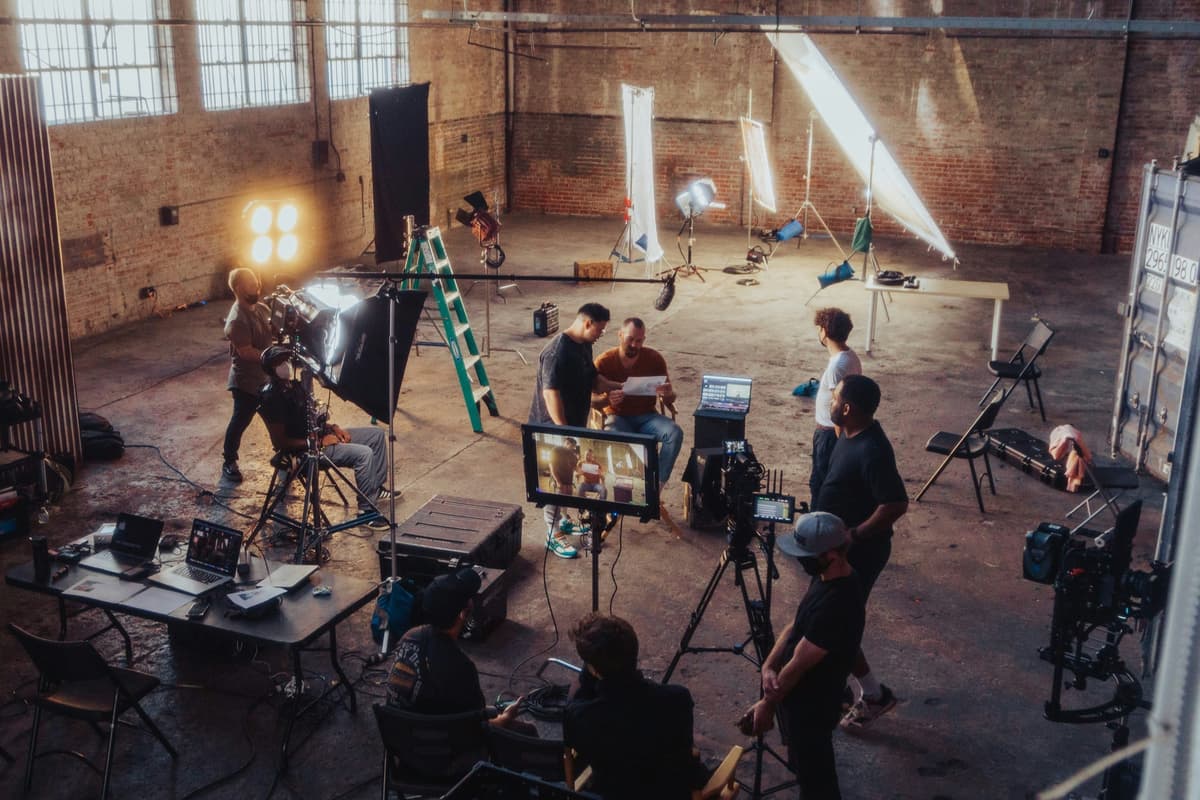
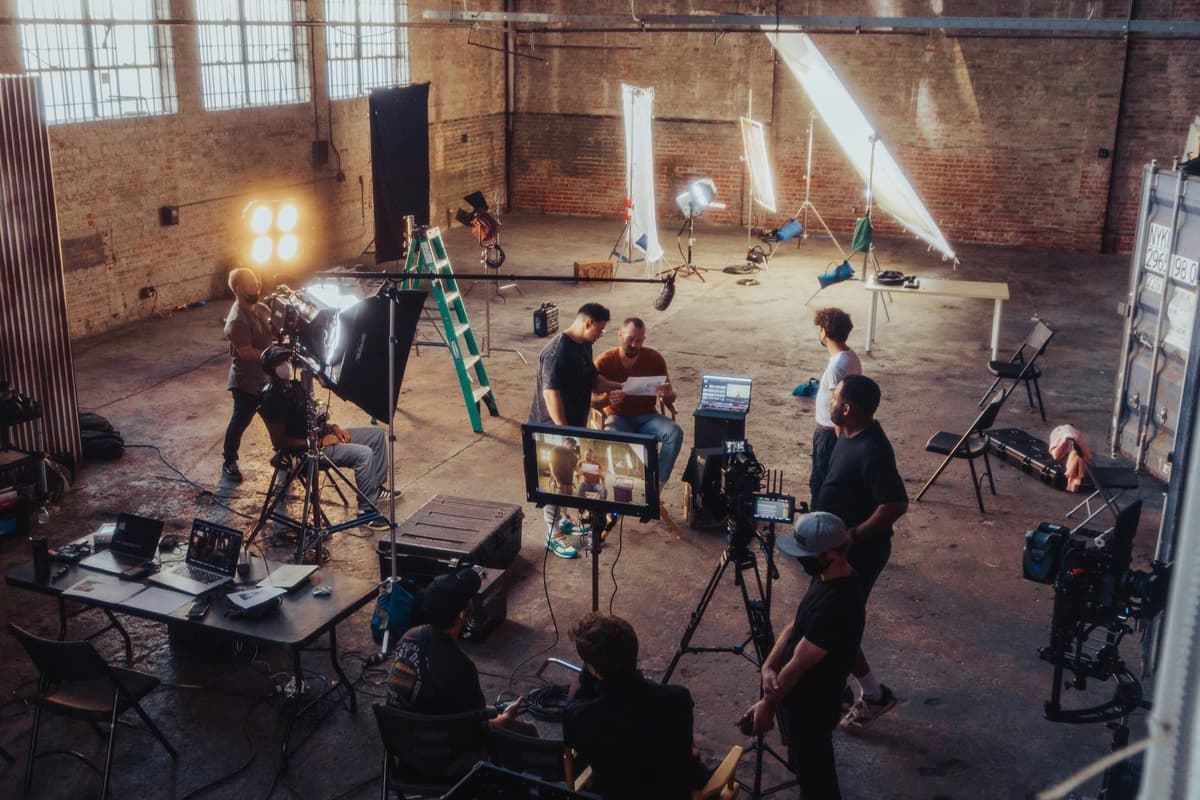
What is a 1st Assistant Camera (Focus Puller)?
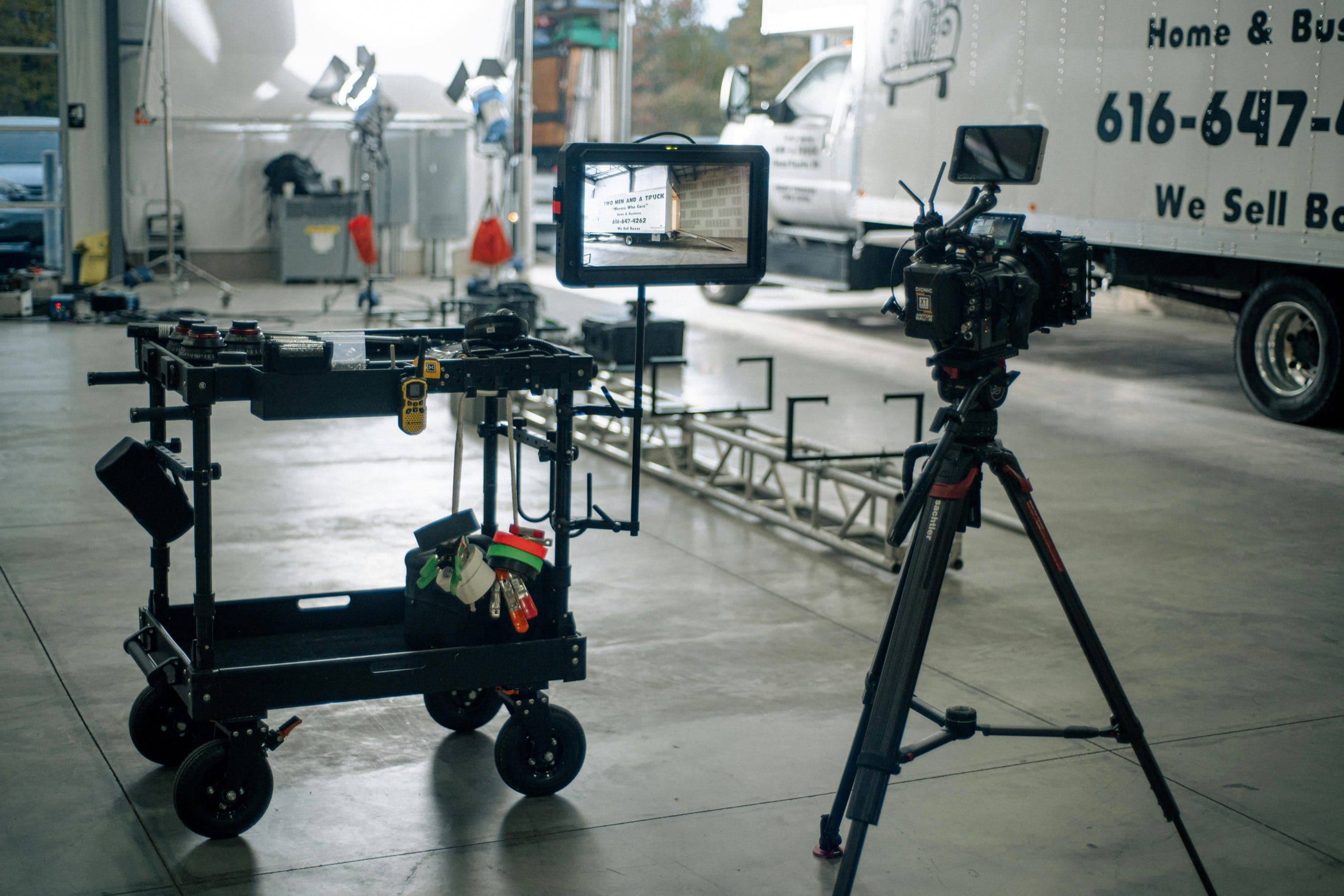
Overview
What Is a 1st Assistant Camera (1st AC)?
The 1st Assistant Camera — universally known as the 1st AC or focus puller — is one of the most technically demanding roles on any film or television production. While the Director of Photography (DP) shapes the visual language of the project, the 1st AC is the person who executes that vision frame by frame, keeping every subject razor sharp as the camera rolls.
In the simplest terms, the 1st AC is responsible for maintaining the optical focus of the camera lens throughout every take. In practice, the role extends far beyond that single task. The 1st AC builds, preps, and maintains the entire camera package; manages the 2nd AC and camera loader; coordinates with the DP on lens choices; and serves as the technical authority for all things camera during production.
The two terms — 1st AC and focus puller — are used interchangeably across the industry. In North America, the title "1st AC" is more common on union sets. In the UK and Australia, "focus puller" is the standard term. Either way, they describe the same person doing the same job.
Where the 1st AC Fits in the Camera Department
The camera department on a typical narrative production is structured as follows:
- Director of Photography (DP / Cinematographer) — creative head of department
- Camera Operator — operates the camera during takes
- 1st Assistant Camera (1st AC / Focus Puller) — maintains focus, manages camera package
- 2nd Assistant Camera (2nd AC / Clapper Loader) — slates, loads media, supports 1st AC
- Digital Imaging Technician (DIT) — manages digital workflow and color on set
The 1st AC reports directly to the camera operator and DP. On smaller productions without a dedicated camera operator, the 1st AC may report directly to the DP. The 1st AC supervises the 2nd AC and any additional camera assistants or camera PAs.
Why the 1st AC Role Matters
A soft image — one that is out of focus — is almost always unusable in post-production. There is no software fix for a fundamentally out-of-focus shot. This makes the 1st AC's work mission-critical: a single missed focus during an emotional close-up can force a reshoot, costing thousands of dollars and hours of production time.
On high-end productions, focus pulling is considered one of the most difficult technical skills on set. Director James Gunn has noted that the 1st AC role, "when pulling focus meant something, was both the hardest job AND toughest skill to master." The combination of extreme precision, split-second timing, and the ability to anticipate actor movement makes an experienced 1st AC genuinely invaluable.
Managing a production's camera budget — ordering the camera package, tracking rentals, logging camera reports — also falls to the 1st AC. Productions using Saturation.io's cloud-based production management platform can collaborate on camera department budgets in real time, keeping equipment costs transparent and tracked throughout the shoot.
1st AC vs. Camera Operator: What Is the Difference?
The camera operator physically moves the camera during a take — panning, tilting, dollying, handheld operation. The 1st AC stands to the side of or behind the camera, watching the lens and adjusting the focus ring (manually or via a remote wireless system). The two roles work in close coordination: the operator communicates where the camera is moving, and the 1st AC pre-measures distances and sets marks so focus never slips during the take.
Role & Responsibilities
Primary Responsibility: Pulling Focus
The defining duty of the 1st AC is pulling focus — adjusting the focus ring on the camera lens in real time during a take to ensure that the intended subject remains sharp. This requires extraordinary precision and anticipation.
To pull focus accurately, the 1st AC must:
- Measure the precise distance from the camera's film plane (or sensor plane) to the subject using a tape measure
- Set that distance as a hard mark on a follow focus wheel
- Anticipate actor movement and pre-mark multiple positions on the focus wheel
- Execute smooth, accurate transitions between focus marks during the take — without being visible on camera
- Adjust in real time when actors deviate from their rehearsed blocking
On modern digital productions, the 1st AC typically uses a remote wireless follow focus system (Preston FI+Z, Tilta Nucleus-M, Nucleus-Nano, or similar) that allows motorized focus control from a handheld unit. This is especially critical when shooting with long telephoto lenses — where even millimeter-level focus errors are visible — or in situations where the 1st AC cannot physically reach the lens (underwater housing, crane arm, vehicle interior).
Camera Building and Prep
Before any camera rolls, the 1st AC is responsible for building the camera from scratch. This includes:
- Assembling the camera body, mattebox, follow focus, rails system, and all accessories
- Attaching lenses and verifying they are clean and free of dust, scratches, or fungus
- Mounting monitors, video village cables, and specialty accessories (anamorphic adapters, diopters, filters)
- Balancing handheld rigs or gimbals when required
- Setting up and calibrating the wireless video system
- Configuring wireless follow focus motors and mapping each lens correctly
Camera prep happens on prep days at the rental house before the shoot begins. The 1st AC typically spends one to three days at the camera rental facility checking and testing every piece of equipment in the camera package — running lens tests, checking focus calibration, verifying that all motors, cables, batteries, and accessories are functioning correctly.
Lens Checks: Lens Charts and Collimation
A critical prep task is running a lens chart test to verify that each lens is properly calibrated and that focus marks are accurate. The 1st AC:
- Sets up a resolution chart at a known distance and shoots a test frame
- Reviews the frame at full magnification to confirm sharpness at the marked distance
- Checks that the focus mark on the lens barrel matches actual sharp focus at that distance
- Identifies any lenses that back-focus or front-focus — meaning they focus slightly behind or in front of the marked distance
- Notes these variations in the camera report so they can be compensated during the shoot
On productions using interchangeable lens systems (cinema primes from ARRI, Zeiss, Cooke, Leica, or Panavision), ensuring consistent focus calibration across an entire lens set is essential for continuity — especially in scenes that mix multiple focal lengths.
Managing the Camera Package
The 1st AC functions as the camera department quartermaster. Responsibilities include:
- Drafting and negotiating the camera package order with the rental house
- Creating a comprehensive camera package list covering body, lenses, follow focus, monitors, batteries, media, and all accessories
- Checking equipment in and out from the rental facility
- Managing expendables (tape, markers, camera reports, lens cleaning supplies)
- Keeping an accurate inventory of all equipment on set
- Flagging damaged or malfunctioning equipment immediately and arranging replacements
- Coordinating camera package returns at the end of production
Managing the 2nd AC
The 1st AC directly supervises the 2nd AC (also called the clapper loader or camera loader). Key coordination tasks include:
- Delegating slating duties — operating the clapperboard at the top of each take
- Directing the 2nd AC to mark actors (placing floor tape marks for blocking)
- Assigning lens-change duties between setups
- Coordinating media management — offloading cards, formatting, managing magazines on film shoots
- Supervising the organization of the camera cart and camera truck
- Training and mentoring junior camera assistants and camera PAs
Marking Actors
Before a take, the 1st AC or 2nd AC places focus marks — small pieces of colored tape (T-marks) — on the floor to indicate where actors should stand during key moments in the scene. The 1st AC then measures from the camera's film plane to each mark, records the distance, and sets corresponding marks on the follow focus wheel. This allows the 1st AC to snap to exact focus positions without guessing during the take.
Camera Reports and Continuity
At the end of each shooting day, the 1st AC completes camera reports documenting:
- Every shot, setup, and take — including camera settings (aperture, frame rate, shutter angle, ISO)
- Lenses used on each setup and filter combinations
- Any equipment issues or abnormalities observed during the day
- Media roll numbers and quantities
Camera reports travel with the media to the lab or DIT station, providing the post-production team with a complete technical record of how each image was captured.
Checking the Gate (Film) and Reviewing the Monitor (Digital)
On film productions, after each printed take, the 1st AC checks the gate — physically inspecting the camera's film gate for a stray fiber or piece of debris ("hair") that would show as a dark line on every frame. On digital productions, the equivalent responsibility is reviewing the monitor or EVF after each take for technical issues such as banding, sensor artifacts, or color anomalies.
Remote Focus Systems: Preston FI+Z and Alternatives
The industry-standard wireless follow focus system is the Preston FI+Z (Focus, Iris, Zoom), which allows the 1st AC to control focus, iris, and zoom remotely via a handheld unit. Other systems in common use include:
- Tilta Nucleus-M — widely used on independent productions and mirrorless camera setups
- Tilta Nucleus-Nano — lightweight single-axis motor for run-and-gun setups
- ARRI WCU-4 / cforce mini RF — ARRI's professional wireless lens control system
- cmotion cPRO — high-end European system used on major features
- Heden / Bartech — analog wireless systems still in use on some productions
Choosing and calibrating the correct wireless focus system for each production — based on camera platform, lens type, shooting environment, and budget — is part of the 1st AC's pre-production responsibilities.
Skills Required
The Most Critical Skill: An Eye for Focus
Above all else, the 1st AC must have an extraordinary, trained eye for focus — the ability to look at an image on a monitor or EVF and immediately determine whether the correct subject is in sharp focus, and if not, exactly which direction and by how much to adjust. This skill sounds obvious but is genuinely rare in practice.
Many camera assistants can pull focus adequately in controlled conditions with static subjects. Elite 1st ACs are those who maintain crisp focus on an actor who is improvising movement, walking at variable speeds, turning their head unexpectedly, or performing in low-contrast lighting conditions where focus is nearly impossible to read on a monitor.
Depth of Field Mastery
The 1st AC must have an intuitive, mathematical understanding of depth of field (DoF) — the range of distance in front of and behind the focus point that appears acceptably sharp in the image. This understanding directly informs how much tolerance exists for focus error on any given shot.
Key depth of field variables a 1st AC works with constantly:
- Aperture (f-stop) — Wider apertures (f/1.4, f/2) produce shallower DoF, making focus more critical and less forgiving. Stopped-down apertures (f/8, f/11) produce deeper DoF.
- Focal length — Longer lenses compress depth of field at any given aperture. A 135mm lens at f/2.8 has dramatically less DoF than a 35mm lens at the same f-stop and subject distance.
- Subject distance — The closer the subject is to the camera, the shallower the depth of field. Extreme close-ups on wide-open lenses can have DoF measured in millimeters.
- Sensor / film format size — Larger sensors (ARRI LF, Panavision 70mm) produce shallower DoF than smaller sensors at equivalent focal lengths and apertures.
The best 1st ACs calculate depth of field mentally without a chart — knowing immediately whether a slight actor deviation from their mark will result in a soft image or whether the available DoF provides enough cushion to absorb the error.
Precise Distance Measurement and Estimation
Precise distance measurement is a core mechanical skill. Responsibilities include:
- Using a tape measure to measure from the camera's film plane (marked on the camera body with a circle-phi symbol) to the subject, then setting the corresponding mark on the follow focus wheel
- Measuring multiple positions for multi-mark focus moves — actor walks from position A to position B, requiring two marks and one smooth transition during the take
- Developing the ability to estimate distances by eye accurately — essential in fast-moving documentary or run-and-gun situations where there is no time to measure with a tape
Experienced 1st ACs practice distance estimation constantly — it is a skill that can be developed anywhere, at any time, not just on a film set.
Remote Focus Systems: Technical Proficiency
Operating wireless follow focus systems is a non-negotiable technical skill for professional 1st ACs. Key competencies:
- Mounting, calibrating, and operating the Preston FI+Z or equivalent system confidently under pressure
- Mapping lens focus travel correctly — knowing where hard stops are and calibrating the handset ring accordingly for each lens
- Troubleshooting wireless dropouts, motor slipping, and handset calibration issues quickly on set without disrupting the shooting flow
- Operating dual-axis systems (focus + iris simultaneously) when required by the DP
- Working with anamorphic lenses, which have different focus breathing characteristics than spherical lenses
Multi-Platform Camera Knowledge
Proficiency across multiple camera platforms (ARRI, RED, Sony, Panavision, Blackmagic) is essential for a working 1st AC. Format-specific knowledge includes:
- How to build, power, and configure each camera body from scratch
- Menu navigation for frame rate, shutter angle, ISO, and white balance settings on each platform
- Battery systems, power draw, and runtime estimates for each camera family
- Media management protocols — RED Mags vs. SxS cards vs. CFexpress vs. Codex modules
- Physical camera dimensions and weight distribution for rig and gimbal balancing
Calm Under Pressure
A film set is a high-pressure environment with significant money on the line with every hour of production time. The 1st AC must maintain composure and precision when:
- The director calls for a take with no rehearsal and the actor blocks differently than discussed
- Equipment malfunctions mid-setup with the whole crew waiting
- The DP changes the lens or aperture five minutes before the first shot
- A take is long and physically demanding — maintaining focus through a complex camera move over several minutes
- Night shoots, extreme temperatures, or physically challenging locations affect equipment performance
The ability to identify a problem, solve it quickly, and communicate calmly without disrupting the flow of the set separates good 1st ACs from great ones.
Physical Endurance and Spatial Awareness
The 1st AC works on their feet for 12–14 hour days in physically demanding environments. Requirements include:
- Carrying and maneuvering heavy camera equipment, lens cases, and accessories throughout the day
- Maintaining a stable, focused body position while operating follow focus systems during takes
- Quickly repositioning between setups in tight or crowded spaces
- Working effectively in extremes of heat, cold, rain, dust, and other environmental challenges
Spatial awareness — keeping track of where the camera, the actors, and the 1st AC's own body are in relation to each other and to the camera frame — is particularly important. The 1st AC must stay out of frame while remaining close enough to the lens to operate the follow focus effectively.
Meticulous Attention to Detail
Camera reports must be accurate and complete. Equipment checklists must be methodically followed. No lens should go onto the camera unexamined. No media card should be handed over without confirmation that it was properly formatted. The habits of meticulous attention that prevent errors on a high-budget production are built through consistent practice at every level of the business.
Communication and Collaboration
The 1st AC works at the intersection of the creative team (DP, director, camera operator) and the technical crew (2nd AC, DIT, grip department). Strong communication skills — including the ability to convey technical information clearly and concisely under pressure — are essential. On union sets, the 1st AC also navigates department hierarchies and inter-department coordination daily.
Production Management and Budget Awareness
Modern 1st ACs are increasingly expected to be fluent in production management processes. The camera package is one of the most significant variable budget line items on a production — rental packages for major features can run $10,000–$50,000 per week. 1st ACs who can manage their department's spending against the approved camera budget — using tools like Saturation.io's production expense management platform — are far more valuable to production managers and producers than those who treat budget as someone else's problem.
Salary Guide
How Much Does a 1st AC Make?
Compensation for a 1st AC varies substantially based on union status, market, production type, and years of experience. The range spans from entry-level non-union day rates to six-figure annual incomes for experienced union 1st ACs working steadily in Los Angeles or New York.
IATSE Local 600 Union Rates (2025–2026)
On union productions covered by IATSE Local 600 contracts, 1st AC rates are set by the applicable collective bargaining agreement. Rates vary by contract type (Feature Film, Television, Commercial) and tier (Major Studio, Independent, Low-Budget Modified).
Under the current IATSE Basic Agreement for feature films and television, 1st AC minimum rates are approximately:
- Minimum daily rate: $595–$680 per 10-hour day (varies by contract tier, 2025–2026 rates)
- Weekly rate (guaranteed): $2,975–$3,400 per week
- Overtime: Time-and-a-half after 10 hours; double time after 12 hours on most contracts
- Kit rental: Many 1st ACs also invoice a kit rental fee of $50–$200 per day for personal focus pulling tools, tape measures, markers, and accessories — this is standard practice and expected on union productions
These are minimum rates. Experienced, in-demand 1st ACs on major productions routinely negotiate above-scale rates with individual production companies.
Non-Union Day Rates
On non-union productions — independent films, music videos, commercials, corporate video, and branded content — 1st AC rates are negotiated directly and vary widely by market and budget level:
- Entry-level / micro-budget indie: $150–$300 per day
- Mid-range independent production: $300–$500 per day
- Well-budgeted independent / commercial: $500–$750 per day
- Experienced non-union 1st AC on commercial/branded content: $750–$1,200 per day
The Assemble guide to film crew day rates notes that IATSE tier rates using a 10-hour day run from approximately $325 to $550 as a minimum baseline for 1st ACs, with experienced practitioners earning significantly more on negotiated commercial and branded content rates.
Annual Salary Estimates by Market
Annual income for a 1st AC depends heavily on the number of days worked per year, which varies significantly based on market, experience level, and professional relationships. For actively working 1st ACs (not entry-level):
- Los Angeles (Union): $85,000–$180,000+ per year for steadily working Local 600 1st ACs
- New York (Union): $80,000–$160,000+ per year
- Atlanta / Georgia (Growing market): $65,000–$130,000 (mix of union and non-union productions driven by Georgia's tax incentive production boom)
- Smaller regional markets (non-union): $35,000–$65,000
- ZipRecruiter national average (Feb 2026): $37,428 per year — this figure includes part-time and entry-level workers; full-time union 1st ACs earn significantly more
The ZipRecruiter aggregate significantly underrepresents what established union 1st ACs earn. For realistic LA/NY union income among consistently working professionals, the $85,000–$150,000 range is more accurate.
Salary by Experience Level
Experience Level
Day Rate (Non-Union)
Annual Estimate
Entry-level (0–2 years as 1st AC)
$150–$300
$25,000–$50,000
Mid-level (3–6 years)
$350–$600
$55,000–$90,000
Experienced (7+ years, union)
$600–$900+ (above scale)
$90,000–$160,000+
Top-tier LA/NY (major features)
$900–$1,500+
$150,000–$220,000+
Bureau of Labor Statistics Data
The Bureau of Labor Statistics does not track "1st Assistant Camera" as a specific occupation. The closest relevant category is Camera Operators, Television, Video, and Film (SOC 27-4031). According to the BLS Occupational Employment and Wage Statistics:
- Median annual wage for Camera Operators, Television, Video, and Film: $62,860 (May 2023 data)
- Top 10% of earners: $131,370+
- Bottom 25%: Under $40,590
These BLS figures blend all camera operators across all industries and geographic markets. For narrative film production 1st ACs specifically — particularly union members working in major production hubs — compensation typically falls at or well above the upper end of the BLS range.
Additional Income: Kit Rentals, Overtime, and Per Diem
Union 1st ACs frequently supplement their base rate with several additional income sources:
- Kit rental: $50–$200 per day for personal equipment — this is standard on union productions and is expected as part of the engagement
- Overtime: On long shooting days (13–16 hours), overtime can add 50–100% to the base day rate
- Travel and per diem: On location shoots away from home, 1st ACs receive daily per diem ($65–$85 per day is common on union contracts) plus hotel accommodations and travel costs covered by production
- Additional cameras: On multi-camera shoots, 1st ACs may receive additional compensation for each additional camera body they are responsible for
How to Increase Your 1st AC Income
- Join IATSE Local 600 as early as you qualify — union rates are 2–4x non-union minimums on equivalent production tiers
- Build deep relationships with DPs who work consistently — a DP who trusts your focus pulling will bring you on every project
- Develop specialty skills: Steadicam 1st AC work, underwater housing operation, and virtual production LED volume work all command premium rates
- Work commercial and branded content alongside narrative productions — commercial day rates frequently exceed narrative feature rates on a per-day basis
- Develop deep expertise on specific camera systems (especially ARRI) that are in constant demand across all production types
Frequently Asked Questions
Frequently Asked Questions: 1st Assistant Camera (Focus Puller)
What does a 1st AC do on set?
The 1st AC (1st Assistant Camera) is responsible for maintaining the focus of the camera lens throughout every take — a role known as "pulling focus." They measure the distance from the camera to actors, set focus marks on the follow focus wheel, and adjust focus in real time during filming. Beyond focus, the 1st AC builds and maintains the camera package, manages the 2nd AC, completes camera reports, handles lens changes, and coordinates equipment with the rental house. The 1st AC is the camera department's technical authority on set.
Is the 1st AC the same as the focus puller?
Yes. "1st AC" (First Assistant Camera) and "focus puller" refer to the same person doing the same job. "1st AC" is the standard term on North American productions, while "focus puller" is the more common title in the UK, Australia, and much of Europe. Both titles describe the camera department crew member whose primary duty is keeping the image in sharp focus and who manages the camera package.
How much does a 1st AC make?
A 1st AC's income varies significantly by market, experience, and union status. Non-union 1st ACs earn approximately $150–$750 per day depending on production size and market. Union 1st ACs working under IATSE Local 600 contracts earn minimum daily rates of $595–$680 per 10-hour day (2025 rates), with experienced union 1st ACs in Los Angeles or New York earning $85,000–$180,000+ annually when working steadily. Top-tier 1st ACs on major studio features can earn $150,000–$220,000+ per year when kit rentals and overtime are factored in.
How do you become a 1st AC?
The standard path to 1st AC is to start as a camera PA or 2nd AC and work your way up through experience. Most working 1st ACs spent 3–7 years as 2nd ACs on progressively larger productions before moving up to 1st AC. Film school can accelerate technical education, but on-set experience is what actually qualifies you for the role. Building trusted relationships with DPs who will bring you on their productions is the key to career advancement. Joining IATSE Local 600 by accumulating qualifying union days is the long-term goal for those working in major markets.
What is focus pulling?
Focus pulling is the act of adjusting the focus ring on a camera lens during a take to keep the intended subject sharp as the camera or subject moves. The 1st AC uses a follow focus system — either a manual gear-driven mechanism or a wireless motorized system like the Preston FI+Z — to control the lens focus from outside the camera's field of view. Focus pulling requires precise distance measurement, anticipation of actor movement, and smooth, accurate execution during takes. It is widely considered one of the most technically demanding skills in film production.
What is a camera report?
A camera report is a written log completed by the 1st AC (or 2nd AC under their supervision) at the end of each shooting day. It documents every shot, setup, and take — including the lens used, aperture, frame rate, shutter angle, ISO, media roll numbers, and any technical issues. Camera reports travel with the exposed media to the lab or post-production facility, providing the editorial and color-grading teams with a complete technical record of how each image was captured.
What remote focus systems do professional 1st ACs use?
The industry-standard wireless follow focus system is the Preston FI+Z (Focus, Iris, Zoom), which allows remote control of focus, aperture, and zoom via a handheld unit. Other systems in widespread use include the Tilta Nucleus-M, Tilta Nucleus-Nano, ARRI WCU-4, and cmotion cPRO. The choice of system depends on the camera platform, lens type, shooting environment, and production budget. Most professional 1st ACs own a personal Preston FI+Z as a kit rental item that travels with them to every production.
What is the difference between a 1st AC and a 2nd AC?
The 1st AC pulls focus, manages the camera package, and supervises the 2nd AC. The 2nd AC (also called the clapper loader) operates the clapperboard at the top of each take, marks actors with floor tape, assists with lens changes, manages media cards or film magazines, and keeps the camera cart organized. The 2nd AC reports directly to the 1st AC and supports their work throughout the shooting day. Working as a 2nd AC is the primary step before becoming a 1st AC.
Education
Is a Degree Required to Become a 1st AC?
There is no mandatory degree required to work as a 1st AC. The camera department is one of the most hands-on, apprenticeship-based career paths in the film industry. The vast majority of working 1st ACs built their careers by starting at the bottom — as camera PAs, camera interns, or 2nd ACs — and working their way up through experience rather than formal education.
That said, a film school education can significantly accelerate your development, particularly in understanding camera systems, optical principles, and the collaborative language of film production. Many successful 1st ACs attended film school not specifically to train as camera assistants, but to gain broad production knowledge that made them more effective collaborators on set.
Film School Programs Worth Considering
For those pursuing formal education, look for programs with strong hands-on camera training components:
- American Film Institute (AFI) Conservatory — Cinematography MFA; students operate professional cinema cameras from day one
- USC School of Cinematic Arts — Production MFA with extensive camera workshop curriculum
- NYU Tisch School of the Arts — Film program with a strong cinematography track
- Brooks Institute / SCAD / Emerson College — Undergraduate programs with substantive camera department training
- Vancouver Film School — Intensive one-year Film Production program with a strong technical focus
- National Film and Television School (NFTS, UK) — Diploma in Camera for those pursuing the UK focus puller career path
Prioritize programs where students can shoot on professional cinema cameras (ARRI Alexa, RED, Sony Venice) rather than only DSLRs or mirrorless cameras. Real experience on professional equipment is what translates to on-set readiness.
The Camera Assistant Career Ladder
The typical career progression in the camera department follows a clear path:
- Camera PA / Camera Intern — Entry point. Assists the department with logistics, moving cases, and fetching equipment. No direct technical camera responsibility yet.
- Camera Loader — Loads and unloads film magazines on film shoots; manages media cards and drives on digital shoots. Works under the 2nd AC's direction.
- 2nd AC (Clapper Loader) — Operates the clapperboard, marks actors, manages the camera cart, and assists the 1st AC directly. This is where technical camera knowledge is developed systematically.
- 1st AC (Focus Puller) — Pulls focus, manages the camera package, and supervises the 2nd AC. This step typically requires 3–7 years of experience as a 2nd AC on progressively larger productions.
- Camera Operator — Operates the camera during takes. Some 1st ACs transition to operating; others remain 1st ACs throughout their careers — the two roles require different skill sets and temperaments.
- Director of Photography (DP) — The creative head of the camera department. Not all camera operators or 1st ACs aspire to DP; many prefer to remain excellent technical specialists throughout a career.
IATSE Local 600: The International Cinematographers Guild
In the United States, professional camera department members — including 1st ACs — typically join IATSE Local 600, the International Cinematographers Guild. Local 600 represents directors of photography, camera operators, and camera assistants working on union productions including major studio features, network television, and streaming originals.
To join Local 600 as a 1st AC, you typically need to:
- Accumulate a minimum number of paid union-qualifying days working as a camera assistant on covered productions
- Demonstrate experience across a range of camera systems and production types
- Be sponsored or vouched for by existing union members in good standing
- Pay initiation fees and ongoing dues
Union membership provides access to significantly higher day rates, comprehensive health insurance through the Motion Picture Industry Pension and Health Plans, pension benefits, and the professional network that union membership brings. For most 1st ACs working in Los Angeles or New York, joining Local 600 is the long-term career goal.
Learning Camera Systems: What You Must Know
A 1st AC must be proficient on every major cinema camera platform. This is non-negotiable on professional sets where productions routinely mix camera systems or switch bodies mid-production. Core systems to master include:
- ARRI Alexa 35, LF, Mini LF — the dominant camera family on major productions worldwide; deep familiarity is essential
- RED Komodo, V-RAPTOR, DSMC3 — common on independent films and some streaming productions
- Sony VENICE 2, FX9, FX6 — widely used in documentary, commercial, and narrative production
- Panavision DXL2 / Millennium DXL2 — high-end rental camera system used on major features
- Blackmagic URSA Cinema — increasingly popular on independent and emerging productions
- Film cameras — ARRI 235, Panavision Millennium XL2 — for film shoots, increasingly rare but still used on prestige productions
Each camera system has different focus scaling, different motor torque requirements, different weight distributions, and different accessories. A 1st AC who knows only one system will find their career opportunities limited to productions using that system.
Self-Training: Building Focus Pulling Skill
Experienced 1st ACs consistently recommend structured self-training outside of paid work:
- Set up a basic follow focus system on any camera and practice measuring and marking distances
- Film moving subjects — people walking at different speeds, changing direction — and review results critically at full zoom
- Practice estimating distances to objects by eye, then measure with a tape to check accuracy; do this habitually in everyday life
- Rent access to professional cinema cameras at production schools or camera rental facilities
- Volunteer as a 2nd AC on student films and short films to accumulate real on-set experience
- Watch films analytically for focus choices — when focus shifts, why it shifts, and how it was executed technically
Last updated April 25, 2026
Budget this role in seconds with Saturation
Rate packs, fringes, and phases turn a crew list into an accurate production budget without the spreadsheet math.
Rate packs
Verified union rates, versioned.


Fringes and markupsRebuilt
Stack them, cap them, and see the split on every line.
PhasesRebuilt
Every column knows its type.
Auto-fill
Rates fill in as you type, from the source you turned on.