X2 Budget
 AdventureActionScience Fiction2h 13m
Updated
Synopsis
In this piece, Michael Broidy of Fox Publicity sits with Bryan Singer, producers Ralph Winter and Lauren Shuler Donner, and actors Hugh Jackman, James Marsden, Anna Paquin, Rebecca Romijn-Stamos, Alan Cumming, Famke Janssen, Shawn Ashmore, Aaron Stanford, and Kelly Hu for an Internet-based chat. Each participant appears solo in this set of excerpts. They take queries from various international chat rooms and discuss a number of topics in this reasonably informative and interesting discussion.
What Is the Budget of X2: X-Men United?
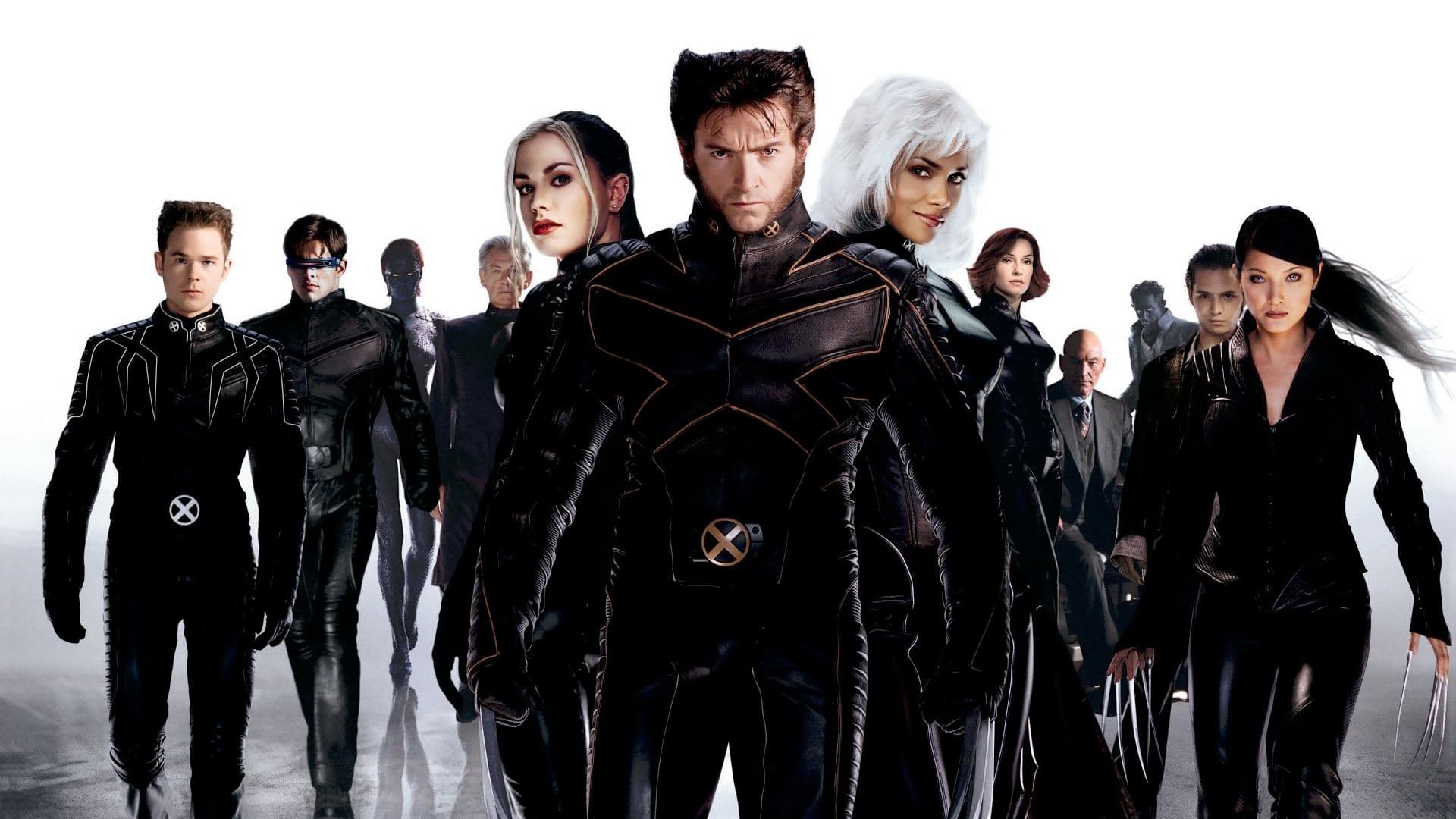
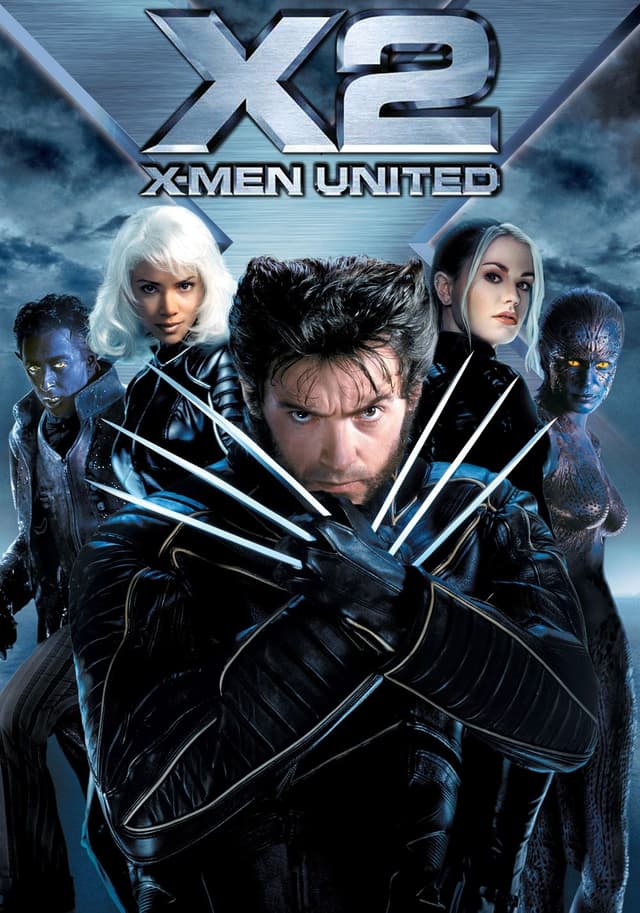
X2: X-Men United was produced on a budget of approximately $110 million, nearly doubling the $75 million spent on the original X-Men (2000). 20th Century Fox greenlit the increased budget after the first film grossed $296 million worldwide and established the X-Men franchise as a viable tentpole property. Director Bryan Singer returned alongside producers Lauren Shuler Donner and Ralph Winter, with the expanded budget reflecting a larger scope, more elaborate visual effects sequences, and the addition of several new mutant characters to the ensemble cast.
The $110 million production budget covered principal photography in Vancouver, British Columbia, along with extensive visual effects work distributed across multiple houses including Cinesite, Rhythm & Hues, and Luma Pictures. Fox's confidence in the sequel was driven not only by the first film's theatrical performance but also by strong DVD sales that had further validated the franchise. The studio positioned X2 as its tentpole summer release for 2003, scheduling it for the first weekend of May to capture the opening of the blockbuster season.
Key Budget Allocation Categories
- Visual Effects and Action Set Pieces: The VFX budget expanded significantly from the first film, with approximately $25 million allocated across multiple effects houses. The opening White House assault sequence featuring Nightcrawler (Alan Cumming) teleporting through Secret Service agents required extensive wire work, digital doubles, and the signature "BAMF" smoke effects. Additional heavy VFX sequences included the attack on the X-Mansion, Jean Grey's telekinetic dam sequence, and the Cerebro mind-control set pieces.
- Cast Salaries and Ensemble Expansion: Hugh Jackman's salary increased substantially from his breakout role in the first film, reflecting his emergence as a leading man. Patrick Stewart and Ian McKellen returned at higher rates as established franchise anchors. The film also added Alan Cumming as Nightcrawler, Brian Cox as Colonel William Stryker, Kelly Hu as Lady Deathstrike, and Aaron Stanford as Pyro, while retaining the full ensemble of Halle Berry, Famke Janssen, James Marsden, Anna Paquin, Shawn Ashmore, and Rebecca Romijn.
- Production Design and Practical Sets: Production designer Guy Hendrix Dyas built elaborate practical sets at Vancouver Film Studios, including the expanded X-Mansion interiors, Stryker's underground military base at Alkali Lake, and the dam facility used for the film's climax. The sets were considerably more ambitious than the first film's, with Stryker's base alone requiring multiple interconnected stages to accommodate the action sequences filmed within it.
- Location Filming and Vancouver Production: Principal photography took place primarily in Vancouver and its surrounding areas, with additional shoots at locations standing in for Boston, Washington D.C., and the Canadian wilderness. The production took advantage of British Columbia's tax incentives and established production infrastructure, which helped offset the increased budget while providing diverse locations within a manageable geographic radius.
- Stunt Coordination and Wire Work: The film's action choreography, supervised by stunt coordinator Peter Dillon, required extensive wire work and martial arts choreography, particularly for the Wolverine vs. Lady Deathstrike fight in Stryker's base. The Nightcrawler White House sequence combined wire-assisted acrobatics with digital effects to create the character's teleportation combat style, requiring weeks of rehearsal and multiple shooting days for a sequence lasting approximately three minutes on screen.
How Does X2's Budget Compare to Similar Films?
X2's $110 million budget positioned it in the upper tier of superhero sequels at the time, reflecting the genre's rapid escalation in production costs during the early 2000s. Its worldwide gross of $407 million validated the investment and demonstrated that the X-Men franchise could compete with Sony's Spider-Man series at the box office.
- Spider-Man (2002): Budget $139M | Worldwide $822M. Sam Raimi's Spider-Man, released a year before X2, set the benchmark for superhero blockbusters with a higher budget and dramatically higher gross. X2 cost $29 million less but earned roughly half the worldwide total, reflecting Spider-Man's broader mainstream appeal as a solo character versus the X-Men ensemble approach.
- X-Men (2000): Budget $75M | Worldwide $296M. The original film proved the concept at a significantly lower cost, and X2's 47% budget increase delivered a 37% increase in worldwide gross. The sequel improved on virtually every commercial metric, with a stronger opening weekend ($85M vs. $54M domestic) and better critical reception, justifying Fox's decision to invest more heavily in the franchise.
- The Matrix Reloaded (2003): Budget $150M | Worldwide $742M. Released just two weeks after X2 in May 2003, The Matrix Reloaded cost $40 million more and earned nearly twice as much worldwide. Both films competed directly for the same audience during the summer of 2003, though The Matrix sequel benefited from the cultural phenomenon status of its predecessor.
- Spider-Man 2 (2004): Budget $200M | Worldwide $789M. Released the following year, Spider-Man 2 cost nearly double X2's budget and earned almost double the worldwide gross. The comparison illustrates the cost and commercial ceiling differences between Marvel's most popular character at the time and the ensemble X-Men property, though both franchises were profitable for their respective studios.
X2: X-Men United Box Office Performance
X2: X-Men United opened on May 2, 2003, earning $85.6 million in its domestic opening weekend, a significant improvement over the original film's $54.5 million debut. The opening made it the second-largest May opening at the time, behind only Spider-Man's $114.8 million the previous year. The domestic total reached $214.9 million, while international markets contributed $192.8 million for a worldwide cumulative gross of approximately $407.7 million.
Against a production budget of $110 million, the estimated break-even point (accounting for prints, advertising, and marketing costs at roughly 2x the production budget) was approximately $220 million in worldwide theatrical gross. X2 crossed that threshold comfortably, earning nearly double the break-even figure. The film's studio share of worldwide theatrical revenue, assuming an average 50% retention rate, was approximately $204 million, returning the full production and estimated marketing investment with significant profit.
Box Office Breakdown
X2

For every dollar spent on production, X2 returned approximately $3.71 at the worldwide box office. When factoring in total investment including marketing, the film returned approximately $1.85 for every dollar spent at the theatrical box office alone, before accounting for home video revenue. The DVD release was particularly strong, generating an estimated $160 million in domestic sales, which pushed the franchise's total return well beyond theatrical figures and guaranteed Fox's commitment to a third installment.
X2: X-Men United Production History
Development on an X-Men sequel began almost immediately after the first film's strong opening weekend in July 2000. Bryan Singer had planted the seeds for a sequel by including a post-credits tease referencing the villain Mr. Sinister, though the eventual sequel took a different direction. Fox initially considered a November 2002 release date but pushed production to accommodate Singer's schedule and the complexity of the expanded screenplay.
The screenplay went through multiple drafts and writers. David Hayter, who had written the first film, produced initial drafts. Singer then brought in Michael Dougherty and Dan Harris to rework the script significantly, drawing inspiration from the "God Loves, Man Kills" graphic novel by Chris Claremont and Brent Anderson. This storyline provided the film's central antagonist in Colonel William Stryker, a military commander conducting covert operations against mutants using a corrupted version of Professor Xavier's Cerebro device.
Principal photography began in June 2002 in Vancouver, British Columbia, and ran for approximately four months. The production was notably more complex than the first film, with Singer staging elaborate action sequences including the Nightcrawler White House attack (shot first, over multiple weeks), the military raid on the X-Mansion, and the climactic battle at Alkali Lake. Singer was known for his demanding approach to pre-visualization and rehearsal, insisting on extensive preparation before committing sequences to film.
The casting of Brian Cox as William Stryker was a key creative decision. Cox brought gravitas and specificity to what could have been a generic military villain, grounding the film's themes of persecution and institutional violence against minorities in a performance that critics praised as one of the best villain turns in the superhero genre. Alan Cumming's casting as Nightcrawler was another highlight, with the Scottish actor spending hours daily in prosthetic makeup to achieve the character's distinctive blue-skinned appearance.
Post-production extended into early 2003, with visual effects work continuing until weeks before the May release date. The film's final sequence, in which Jean Grey sacrifices herself to save the team from a collapsing dam, was among the last elements completed. Singer shot multiple versions of the ending, with the final cut emphasizing the tragedy of Grey's death while leaving open the possibility of her return as the Phoenix, a development that would be explored in the subsequent sequel, X-Men: The Last Stand (2006), directed by Brett Ratner after Singer departed for Superman Returns.
Awards and Recognition
X2: X-Men United received a Saturn Award for Best Science Fiction Film from the Academy of Science Fiction, Fantasy & Horror Films, the genre's primary award body. The film also won Saturn Awards for Best Director (Bryan Singer), Best Supporting Actor (Brian Cox), and Best Costume (Louise Mingenbach). It was nominated for a Hugo Award for Best Dramatic Presentation, Long Form, recognizing achievement in science fiction and fantasy storytelling.
The film earned nominations at the Visual Effects Society Awards, recognizing the technical achievement of sequences like the Nightcrawler White House attack and the Alkali Lake climax. While X2 did not receive Academy Award nominations, it was widely cited by critics as one of the best superhero films ever made at the time of its release, and many retrospective assessments have ranked it among the top entries in the genre alongside Spider-Man 2 and Batman Begins.
Critical Reception
X2: X-Men United holds an 85% approval rating on Rotten Tomatoes based on 253 reviews, with a critics' consensus praising it as "a taut, masterful sequel" that improves upon its predecessor. The Metacritic score is 68 out of 100, indicating "generally favorable reviews." On IMDb, the film holds a 7.4 out of 10 user rating, reflecting strong audience satisfaction.
Critics widely praised Singer's ability to juggle a large ensemble while deepening the thematic ambitions of the franchise. Roger Ebert gave the film three and a half out of four stars, noting that it "achieves a depth and comprehensiveness that the first film only hinted at." A.O. Scott in The New York Times called it "smarter, more thrilling, and more emotionally engaging than its predecessor," highlighting Singer's integration of political allegory into summer blockbuster entertainment.
The Nightcrawler White House sequence was singled out by numerous critics as one of the finest action set pieces in superhero film history, combining Singer's precise visual choreography with the character's teleportation powers to create a sequence unlike anything previously seen in the genre. Brian Cox's performance as Stryker was also consistently praised, with critics noting his ability to make the character's anti-mutant bigotry feel uncomfortably real rather than cartoonish. The film's treatment of the mutant metaphor, explicitly connecting it to civil rights struggles, LGBTQ+ identity, and the politics of fear in post-9/11 America, was recognized as unusually sophisticated for a summer blockbuster.
Frequently Asked Questions
How much did it cost to make X2 (2003)?
The production budget was $110,000,000, covering principal photography, cast and crew salaries, locations, sets, post-production, and music. Marketing and distribution (P&A) costs are estimated at an additional $55,000,000 - $88,000,000, bringing the total studio investment to approximately $165,000,000 - $198,000,000.
How much did X2 (2003) earn at the box office?
X2 grossed $214,949,694 domestic, $192,761,855 international, totaling $407,711,549 worldwide.
Was X2 (2003) profitable?
Yes. Against a production budget of $110,000,000 and estimated total costs of ~$275,000,000, the film earned $407,711,549 theatrically - a 271% ROI on production costs alone.
What were the biggest costs in producing X2?
The primary cost drivers were above-the-line talent (Hugh Jackman, Patrick Stewart, James Marsden); visual effects, practical stunts, and A-list talent compensation.
How does X2's budget compare to similar adventure films?
At $110,000,000, X2 is classified as a big-budget production. The median budget for wide-release adventure films in the 2000s ranges from $30 - 80M for mid-budget to $150M+ for tentpoles. Comparable budgets: 300: Rise of an Empire (2014, $110,000,000); Ocean's Twelve (2004, $110,000,000); Deadpool 2 (2018, $110,000,000).
Did X2 (2003) go over budget?
There are no widely reported accounts of significant budget overruns for this production. However, studios rarely disclose precise budget overrun figures publicly. The reported production budget reflects the final estimated cost.
What was the return on investment (ROI) for X2?
The theatrical ROI was 270.6%, calculated as ($407,711,549 − $110,000,000) ÷ $110,000,000 × 100. This measures gross revenue against production budget only - it does not account for P&A or exhibitor shares.
What awards did X2 (2003) win?
6 wins & 41 nominations total.
Who directed X2 and who were the key crew members?
Directed by Bryan Singer, written by Zak Penn, David Hayter, Bryan Singer, Michael Dougherty, shot by Newton Thomas Sigel, with music by John Ottman, edited by Elliot Graham, John Ottman.
Where was X2 filmed?
X2 was filmed in United States of America.
Filmmakers
X2

Official Trailer
Build budgets like this one in Saturation
Start from an industry-standard feature film template, import the schedule and rates you already have, and let the cost report keep itself current as you spend. Real-time collaboration, no spreadsheets.