Mortal Kombat Budget
 ActionFantasyAdventure1h 50m
Updated
Synopsis
In the 1995 film "Mortal Kombat," a group of martial artists is summoned to participate in a high-stakes tournament that will determine the fate of Earth. Led by the determined Liu Kang, the team includes the skilled Johnny Cage and the fierce Sonya Blade, who are all vying to defeat the evil sorcerer Shang Tsung. As they face off against formidable opponents from the dark realm of Outworld, including the iconic reptilian warrior Scorpion and the monstrous Goro, the fighters must harness their unique abilities and confront their own inner demons. With the fate of humanity hanging in the balance, the tournament becomes a battle not just for survival, but for the very soul of Earth itself.
What is the budget of Mortal Kombat?
"Mortal Kombat," an action released in 1995, was directed by Simon McQuoid and stars Lewis Tan, Jessica McNamee. The production budget was $20,000,000, placing it in the mid-budget range for action productions of the 1990s.
Key Budget Allocation Categories
While specific budget breakdowns are not publicly available, typical cost drivers for an action production like this include:
- Stunts, Action Sequences & Visual Effects: Action films allocate a substantial portion of their budget to choreographing and executing practical stunts, pyrotechnics, and CGI-heavy sequences.
- Above-the-Line Talent (Cast & Director): A-list talent commands significant upfront fees plus backend participation.
- Production Design, Sets & Locations: Action films frequently require multiple international shooting locations, large-scale set construction, vehicle acquisitions and modifications, and specialized equipment , all of which drive production costs well above those of dialogue-driven genres.
- Development: In 1997, Robin Shou's original Mortal Kombat contract was a three-picture deal, and Threshold Entertainment's production on a second sequel was initially scheduled to commence shortly after the release of Annihilation, but it was shelved due to Annihilations poor reception and disappointing box-office performance.
What were the major cost factors in Mortal Kombat?
Several factors contributed to the overall production costs of "Mortal Kombat."
- Stunts: Stunts, Action Sequences & Visual Effects is one of the primary cost drivers in action productions of this scale.
- Above-the-Line Talent (Cast: Above-the-Line Talent (Cast & Director) is one of the primary cost drivers in action productions of this scale.
- Production Design: Production Design, Sets & Locations is one of the primary cost drivers in action productions of this scale.
How Does Mortal Kombat's Budget Compare to Similar Films?
At $20,000,000, Mortal Kombat sits in the mid-budget range. Here is how it compares to productions with a similar budget:
- 12 Years a Slave (2013): Budget $20,000,000, Worldwide Gross $187,000,000
- 21 Grams (2003): Budget $20,000,000, Worldwide Gross $60,427,839
- 3 Ninjas Kick Back (1994): Budget $20,000,000, Worldwide Gross $11,798,854
- A Guy Thing (2003): Budget $20,000,000, Worldwide Gross $17,400,000
- A Most Violent Year (2014): Budget $20,000,000, Worldwide Gross $12,007,070
The median budget for wide-release action films in the 2020s ranges from $30 to 80M for mid-budget to $150M+ for tentpoles.
Mortal Kombat Box Office Performance
"Mortal Kombat" earned $42,326,031 domestically and $84,426,031 worldwide at the box office. Against a production budget of $20,000,000, the film performed strongly at the box office.
A film typically needs to earn approximately twice its production budget to cover marketing and distribution costs. For "Mortal Kombat," that break-even threshold was roughly $40,000,000. With worldwide earnings of $84,426,031, the film cleared that threshold comfortably.
Box Office Breakdown
Mortal Kombat

At 322.1%, "Mortal Kombat" earned roughly $4.22 for every $1 invested in production.
Mortal Kombat Production History
In 1997, Robin Shou's original Mortal Kombat contract was a three-picture deal, and Threshold Entertainment's production on a second sequel was initially scheduled to commence shortly after the release of Annihilation, but it was shelved due to Annihilations poor reception and disappointing box-office performance. Attempts to produce a third film since then were stuck in development hell with numerous script rewrites and storyline, cast, and crew changes. A November 2001 poll on the official Mortal Kombat website hosted by Threshold asked fans which characters they believed would die in the third movie.
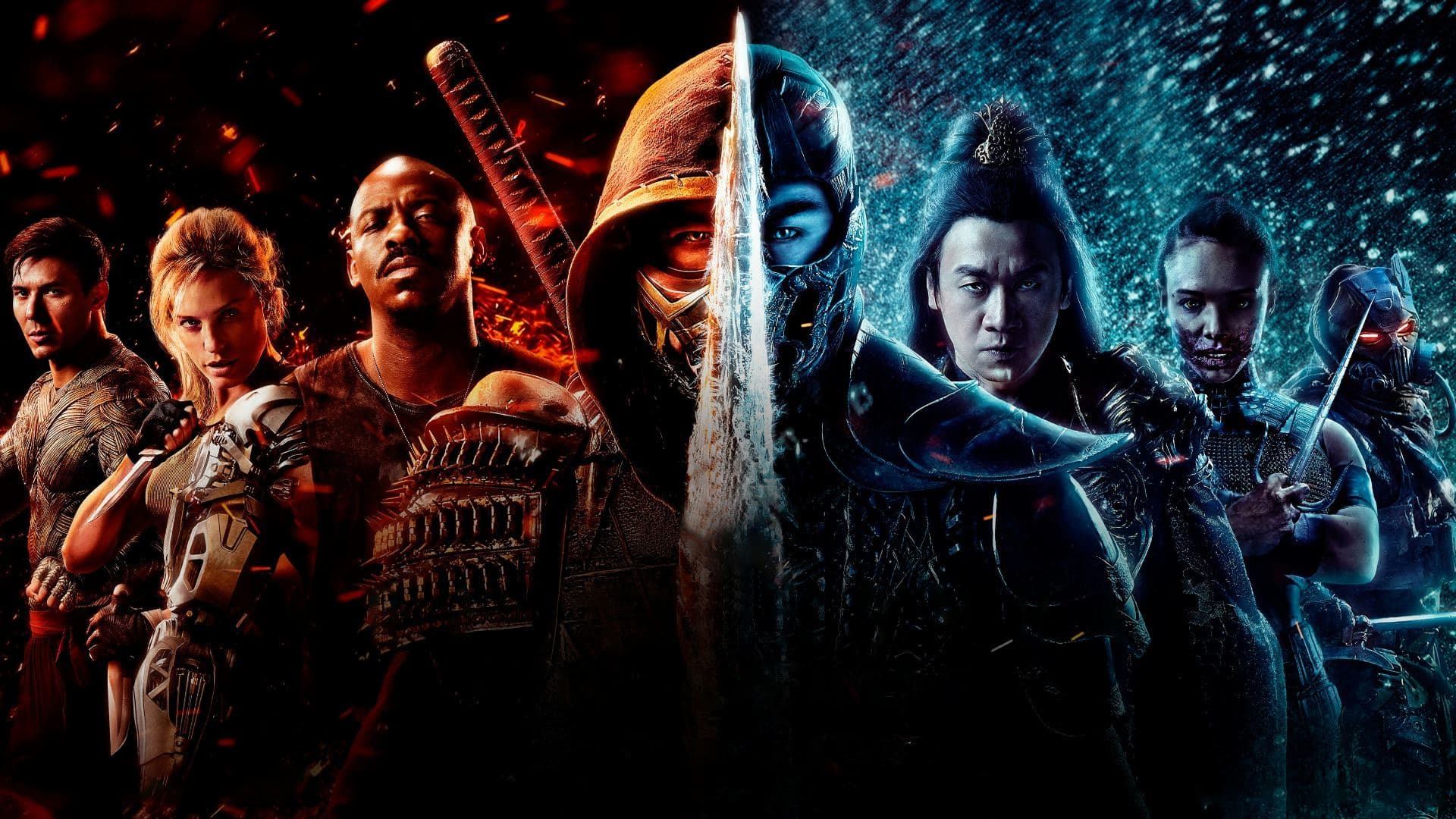
Joe Taslim was the first actor cast for the production in July 2019, as Sub-Zero. In August, Mehcad Brooks, Tadanobu Asano, Sisi Stringer, and Ludi Lin were cast in the roles of Jax Briggs, Raiden, Mileena, and Liu Kang respectively. Later that month, Josh Lawson, Jessica McNamee, Chin Han and Hiroyuki Sanada were cast as Kano, Sonya Blade, Shang Tsung and Scorpion respectively, with Lewis Tan in the role of Cole Young, an original character created for the film.
Production took place at Adelaide Studios and other locations in South Australia, lasting from September 16 to December 13, 2019. In November 2020, Todd Garner stated that "we have more days to shoot" in a statement regarding the film's release delay. The film was shot on the ARRI ALEXA LF and Mini LF cameras with Panavision Anamorphic lenses.
Awards and Recognition
4 wins & 10 nominations total
- AACTA Award for Best Sound: Robert Mackenzie
- AACTA Award for Best Production Design
Critical Reception
Audiences surveyed by CinemaScore gave the film an average grade of "B+" on an A+ to F scale. The Hollywood Reporters John DeFore said the film was "not exactly a knockout" and wrote: "A B-movie that would benefit immensely from some wit in the script and charisma in the cast, it's not as aggressively hacky as P.W.S.A.'s oeuvre, but it runs into problems he didn't face in 1995: namely, the bar has been raised quite a bit for movies in which teams of superpowered young people have fights to save the universe."
Frequently Asked Questions
How much did it cost to make Mortal Kombat (2021)?
The production budget was $20,000,000, covering principal photography, visual effects, cast and crew salaries, locations, sets, post-production, and music. Marketing and distribution (P&A) costs are estimated at an additional $10,000,000 - $16,000,000, bringing the total studio investment to approximately $30,000,000 - $36,000,000.
How much did Mortal Kombat (2021) earn at the box office?
Mortal Kombat grossed $42,326,031 domestic, $42,100,000 international, totaling $84,426,031 worldwide.
Was Mortal Kombat (2021) profitable?
Yes. Against a production budget of $20,000,000 and estimated total costs of ~$50,000,000, the film earned $84,426,031 theatrically - a 322% ROI on production costs alone.
What were the biggest costs in producing Mortal Kombat?
The primary cost drivers were above-the-line talent (Lewis Tan, Jessica McNamee, Mehcad Brooks); visual effects, practical stunts, and A-list talent compensation.
How does Mortal Kombat's budget compare to similar action films?
At $20,000,000, Mortal Kombat is classified as a low-budget production. The median budget for wide-release action films in the 2020s ranges from $30 - 80M for mid-budget to $150M+ for tentpoles. Comparable budgets: 12 Years a Slave (2013, $20,000,000); 21 Grams (2003, $20,000,000); 3 Ninjas Kick Back (1994, $20,000,000).
Did Mortal Kombat (2021) go over budget?
There are no widely reported accounts of significant budget overruns for this production. However, studios rarely disclose precise budget overrun figures publicly. The reported production budget reflects the final estimated cost.
What was the return on investment (ROI) for Mortal Kombat?
The theatrical ROI was 322.1%, calculated as ($84,426,031 − $20,000,000) ÷ $20,000,000 × 100. This measures gross revenue against production budget only - it does not account for P&A or exhibitor shares.
What awards did Mortal Kombat (2021) win?
4 wins & 10 nominations total.
Who directed Mortal Kombat and who were the key crew members?
Directed by Simon McQuoid, written by Greg Russo, Oren Uziel, David Callaham, shot by Germain McMicking, with music by Benjamin Wallfisch, edited by Scott Gray, Dan Lebental.
Where was Mortal Kombat filmed?
Mortal Kombat was filmed in United States of America. Production took place at Adelaide Studios and other locations in South Australia, lasting from September 16 to December 13, 2019. In November 2020, Todd Garner stated that "we have more days to shoot" in a statement regarding the film's release delay.
Filmmakers
Mortal Kombat

Official Trailer
Build budgets like this one in Saturation
Start from an industry-standard feature film template, import the schedule and rates you already have, and let the cost report keep itself current as you spend. Real-time collaboration, no spreadsheets.