The Thief and the Cobbler Budget
 Adventure
Updated
Synopsis
In the Golden City protected by three magical golden balls atop its highest minaret, a silent thief steals the talismans, allowing the evil one-eyed wizard Zigzag to plot a takeover with the help of the savage One-Eyes army. The humble cobbler Tack and the spirited Princess YumYum journey across the desert to a mountaintop witch in hopes of recovering the talismans before the city is destroyed.
What Is the Budget of The Thief and the Cobbler (1995)?
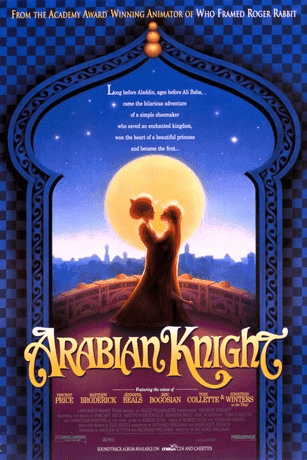
The Thief and the Cobbler (1995), credited to director Richard Williams (original version) and Fred Calvert (the 1995 Miramax recut released in U.S. theaters as Arabian Knight), was produced on an aggregate reported budget of approximately $24,000,000 across more than 28 years of fragmented production. The figure represents one of the most opaque budget estimates in animation history, with various sources placing the total spend between $20,000,000 and $28,000,000 depending on how one accounts for Williams' decades of self-financed work, multiple stalled production cycles, and the Miramax-funded completion and recut.
The original production began in 1964 as Richard Williams' personal animation passion project, financed initially by his commercial animation studio Richard Williams Animation. After multiple stalled production cycles, the Completion Bond Company seized control of the project in May 1992 (with approximately $25 million spent and 85-90% complete) following Williams' missed deadline on a deal financed in part by Warner Bros. The bond company hired Fred Calvert to complete the film inexpensively for direct-to-video release, and Miramax subsequently acquired U.S. theatrical rights to the Calvert version, re-editing and re-scoring for August 1995 release as Arabian Knight.
Key Budget Allocation Categories
The Thief and the Cobbler's aggregate $24,000,000 budget broke down across these fragmented production phases:
- Williams 1964-1992 Production: Richard Williams self-financed the majority of the film's animation work through his commercial animation studio Richard Williams Animation across nearly three decades. The studio funded the project through commercial work including the title sequences for the Pink Panther films, the Christmas Carol (1971) animated short (which won the Academy Award), and the live-action/animation hybrid Who Framed Roger Rabbit (1988). Williams used the Roger Rabbit Academy Award for Best Visual Effects in 1989 to secure the Warner Bros. completion deal that ultimately collapsed in 1992.
- Hand-Drawn Animation: The film featured some of the most technically ambitious hand-drawn animation ever produced. Williams employed lead animators including Art Babbitt (a Disney veteran who had worked on Pinocchio), Ken Harris (Bugs Bunny veteran), Grim Natwick (Snow White, Betty Boop), and many other Hollywood Golden Age animators in their final professional engagements. The animation across the film's 27-year production cycle represented an extraordinary investment in pure character animation craft.
- Voice Cast Recording: The 1964-1992 production phase included voice work from Vincent Price (as Zigzag, recorded in 1967 and again in 1990), Sean Connery (as the King, in dialogue work later cut from the Miramax recut), Anthony Quayle, and others. The 1995 Calvert recut added new voice work from Matthew Broderick (as Tack), Jennifer Beals (as Princess YumYum), Eric Bogosian, and Toni Collette, recorded across late 1993 and 1994.
- Completion Bond Seizure 1992: In May 1992, the Completion Bond Company exercised its rights under the Warner Bros. completion bond and seized the film from Williams. The bond company paid Williams a settlement and immediately hired Fred Calvert (a low-budget animation veteran) to complete the film cheaply for a direct-to-video release.
- Calvert Recut Production 1992-1994: Calvert's team produced the new ending and several inserted sequences using significantly cheaper animation, added new voice work from Matthew Broderick and Jennifer Beals, and inserted Disney-style musical numbers (the original Williams version had no songs). Williams' name was removed from the credits on the Calvert version.
- Miramax Recut and Release 1995: Miramax Films acquired U.S. theatrical rights to the Calvert version, performed additional editing including a substantial re-cut for pacing, replaced the score with new compositions by Robert Folk, and released the film theatrically as Arabian Knight in August 1995. Miramax's investment in re-editing, re-scoring, and marketing the theatrical release added approximately $5 million to the aggregate production cost.
How Does The Thief and the Cobbler's Budget Compare to Similar Films?
At an aggregate $24,000,000, The Thief and the Cobbler sits in the mid-tier of mid-1990s animated features when measured by total production spend across its decades-long production cycle. Comparable productions:
- The Lion King (1994): Budget $45,000,000 | Worldwide $968,511,805. Disney's contemporaneous animated feature cost nearly twice as much and grossed more than a thousand times worldwide.
- Aladdin (1992): Budget $28,000,000 | Worldwide $504,050,219. Disney's previous Arabian-set animated feature, released in November 1992 (during the Williams production crisis), cost slightly more and earned hundreds of times more worldwide. Industry observers widely noted that Aladdin's Arabian setting and visual aesthetic borrowed substantially from Williams' decade-old animation tests of The Thief and the Cobbler that had circulated through Hollywood animation circles.
- Pocahontas (1995): Budget $55,000,000 | Worldwide $346,079,773. Disney's contemporaneous animated feature cost more than twice as much and grossed hundreds of times more worldwide.
- Toy Story (1995): Budget $30,000,000 | Worldwide $373,554,033. Pixar's debut feature, released later in 1995, cost roughly the same as the aggregate Thief and the Cobbler spend and earned hundreds of times more worldwide.
- Anastasia (1997): Budget $53,000,000 | Worldwide $139,804,348. Don Bluth and Fox's animated feature cost approximately twice as much and earned more than a hundred times more worldwide.
The Thief and the Cobbler Box Office Performance
The Thief and the Cobbler was released theatrically in the U.S. by Miramax as Arabian Knight on August 25, 1995, in a limited 510-theater run. The film's worldwide gross totaled approximately $670,000, with U.S. domestic gross of $319,723.
Against an aggregate production budget of approximately $24,000,000 across 28 years of fragmented production, plus Miramax's additional $5,000,000 investment in re-editing, re-scoring, and marketing, the film never had any realistic chance of theatrical profitability. The financial breakdown:
Box Office Breakdown
The Thief and the Cobbler (1995)

The Thief and the Cobbler returned approximately $0.02 in worldwide theatrical revenue for every $1 invested when measured against total estimated production and marketing spend, making it one of the most decisive theatrical failures in animation history relative to budget. The Miramax theatrical release was a salvage attempt that the company had limited expectation of recovering investment on, with the recut serving primarily as a content-acquisition strategy for the Disney-acquired company's nascent home video and cable libraries.
Home video and cable allowed Miramax to eventually recoup some of its incremental investment, but the original Williams production never approached profitability. In subsequent decades, a fan-restoration project called 'The Recobbled Cut' has assembled Williams' original work-print materials into a more complete approximation of his intended version, available as a free online release that has acquired substantial cult-following status. A 2024 documentary, Persistence of Vision (2012), chronicled the production's troubled history and Williams' lifelong commitment to the project.
The Thief and the Cobbler Production History
Richard Williams, the Canadian-British animator who had founded Richard Williams Animation in London in 1962, began developing The Thief and the Cobbler in 1964 as a personal passion project. Williams worked on the film intermittently across the 1960s and 1970s, financing the production through his commercial work including title sequences for the Pink Panther films, the Charge of the Light Brigade (1968) title sequence, and various advertising commissions.
Williams won the Academy Award for Best Animated Short Film in 1972 for A Christmas Carol, and the Academy Award for Best Visual Effects in 1989 for Who Framed Roger Rabbit (where he served as animation director). The Roger Rabbit award secured Williams a deal with Warner Bros. to complete The Thief and the Cobbler, with completion bond financing from the Completion Bond Company.
Williams missed his Warner Bros. delivery deadline in spring 1992, and the Completion Bond Company exercised its rights to seize the film in May 1992. The bond company paid Williams a settlement and immediately hired Fred Calvert, a low-budget animation veteran whose previous credits included Saturday-morning cartoons, to complete the film cheaply for a direct-to-video release. Calvert's team produced the new ending and several inserted sequences using significantly cheaper animation across 1992 and 1993.
The Calvert version, titled The Princess and the Cobbler, was released to direct-to-video in Australia and South Africa in 1993. Miramax Films, then owned by The Walt Disney Company, acquired U.S. theatrical rights to the Calvert version in 1994. Miramax performed additional re-editing including a substantial re-cut for pacing, replaced Robert Folk's score, removed several Williams sequences considered too violent for children, added new voice work from Matthew Broderick and Jennifer Beals, and released the film theatrically as Arabian Knight on August 25, 1995. Richard Williams refused to allow his name to remain on the recut version and was credited only with conceiving the film.
Awards and Recognition
The released Miramax recut received no significant industry awards recognition. The film did not receive Academy Award, Annie Award, or Golden Globe consideration at any major industry ceremony, with the 1995 awards season dominated by Toy Story, Pocahontas, A Goofy Movie, and other higher-profile titles.
Richard Williams' original animation work, partially visible in the released Arabian Knight version and more fully visible in the subsequent fan-restored 'Recobbled Cut,' has been the subject of substantial retrospective recognition. The Academy of Motion Picture Arts and Sciences acquired Williams' production materials for archival preservation, and the original 1992 work-print version (before the Calvert intervention) is widely cited by animation historians and contemporary animators including Glen Keane, Eric Goldberg, and Andreas Deja as one of the most technically ambitious works of hand-drawn animation ever produced. Williams himself received the Lifetime Achievement Annie Award in 2002.
Critical Reception
The released Miramax Arabian Knight version received predominantly negative reviews. The film holds a 50% approval rating on Rotten Tomatoes based on 14 critic reviews, with the critical consensus calling it a fragmentary product of a troubled production. The film did not receive a Metacritic score due to limited critical coverage. Audiences surveyed by exit polls gave the film modest enthusiasm.
Roger Ebert gave the Miramax version two and a half stars out of four, writing that he could see fragments of the brilliant Williams version through the recut and noting that the film "contains some of the most spectacular animation since Disney's golden age, but you have to look for it." The New York Times' Janet Maslin was more dismissive, calling the Miramax recut "a confusing pastiche of styles" and noting that the film's troubled production had clearly compromised the finished product.
Retrospective critical evaluation of Williams' original 1992 work-print version (the so-called 'Recobbled Cut' assembled by fans from various surviving materials) has been substantially more enthusiastic. Animation historians and critics including Leonard Maltin, Charles Solomon, and Hayao Miyazaki himself have praised the original Williams version as one of the most ambitious works of hand-drawn animation ever attempted. The film has acquired substantial cult-following status as a tragic what-might-have-been masterpiece of late-20th-century animation, with its story serving as a cautionary tale about the dangers of production overruns and completion-bond intervention. The 2012 documentary Persistence of Vision chronicled the production's troubled history.
Frequently Asked Questions
How much did The Thief and the Cobbler (1995) cost to make?
The aggregate production budget across 28 years was approximately $24,000,000, with Miramax's additional recut and marketing investment adding approximately $5,000,000 to $8,000,000 for a total of $29,000,000 to $32,000,000. Richard Williams self-financed the majority of the original 1964-1992 production through his commercial animation studio.
How much did The Thief and the Cobbler earn at the box office?
The Miramax theatrical release as Arabian Knight grossed approximately $670,000 worldwide, including $319,723 domestically. The film was released in a limited 510-theater U.S. run on August 25, 1995. Home video and cable allowed Miramax to eventually recoup some of its incremental investment, but the original Williams production never approached profitability.
Why was The Thief and the Cobbler in production for 28 years?
Richard Williams began the film in 1964 as a personal passion project and worked on it intermittently for nearly three decades, financing the production through his commercial animation studio. After multiple stalled production cycles, the Completion Bond Company seized control of the project in May 1992 following a missed Warner Bros. delivery deadline. The bond company hired Fred Calvert to complete the film cheaply for direct-to-video release.
Who directed The Thief and the Cobbler?
Richard Williams directed the original 1964-1992 production. After the Completion Bond Company seized the project, Fred Calvert directed the 1992-1993 recut that was released to direct-to-video as The Princess and the Cobbler in 1993 and theatrically by Miramax as Arabian Knight in 1995. Williams refused to allow his name to remain on the recut version.
What is the 'Recobbled Cut' of The Thief and the Cobbler?
The 'Recobbled Cut' is a fan-restoration project that has assembled Richard Williams' original work-print materials into a more complete approximation of his intended 1992 version, before the Completion Bond Company seizure and the Calvert recut. The fan restoration, available as a free online release, has acquired substantial cult-following status and is widely regarded as the closest available version to Williams' original vision.
Was The Thief and the Cobbler influential on Aladdin?
Industry observers and animation historians widely noted that Disney's Aladdin (1992) borrowed substantially from Williams' decade-old animation tests of The Thief and the Cobbler that had circulated through Hollywood animation circles. The visual aesthetic, character design choices, and overall Arabian setting of Aladdin showed significant influence from Williams' long-developing project.
How does The Thief and the Cobbler compare to other animated films?
The Thief and the Cobbler's aggregate $24,000,000 budget across 28 years compares modestly to contemporaneous animated features: The Lion King (1994) cost $45,000,000 and grossed $968,511,805; Aladdin (1992) cost $28,000,000 and grossed $504,050,219; Toy Story (1995) cost $30,000,000 and grossed $373,554,033. The Thief and the Cobbler's $670,000 worldwide gross represents one of the most decisive theatrical failures in animation history relative to budget.
Who voices the characters in The Thief and the Cobbler?
Vincent Price voices the evil wizard Zigzag (recorded in 1967 and again in 1990 across the lengthy Williams production). The 1995 Miramax recut added new voice work from Matthew Broderick as the cobbler Tack, Jennifer Beals as Princess YumYum, Eric Bogosian, Toni Collette, Jonathan Winters, and Clive Revill. Sean Connery recorded dialogue that was ultimately cut from the recut version.
What did critics think of The Thief and the Cobbler?
The released Miramax Arabian Knight version received predominantly negative reviews, with a 50% Rotten Tomatoes approval rating from 14 critics. Roger Ebert gave the film two and a half stars out of four, writing that the film "contains some of the most spectacular animation since Disney's golden age, but you have to look for it." Retrospective evaluation of Williams' original work-print version has been substantially more enthusiastic.
Did The Thief and the Cobbler win any awards?
The released Miramax recut received no significant industry awards. Richard Williams himself received the Lifetime Achievement Annie Award in 2002, and the Academy of Motion Picture Arts and Sciences has acquired Williams' production materials for archival preservation. Williams previously won Academy Awards for Best Animated Short Film (A Christmas Carol, 1972) and Best Visual Effects (Who Framed Roger Rabbit, 1989).
Filmmakers
The Thief and the Cobbler (1995)
Build budgets like this one in Saturation
Start from an industry-standard feature film template, import the schedule and rates you already have, and let the cost report keep itself current as you spend. Real-time collaboration, no spreadsheets.