X-Men Budget
Updated
Synopsis
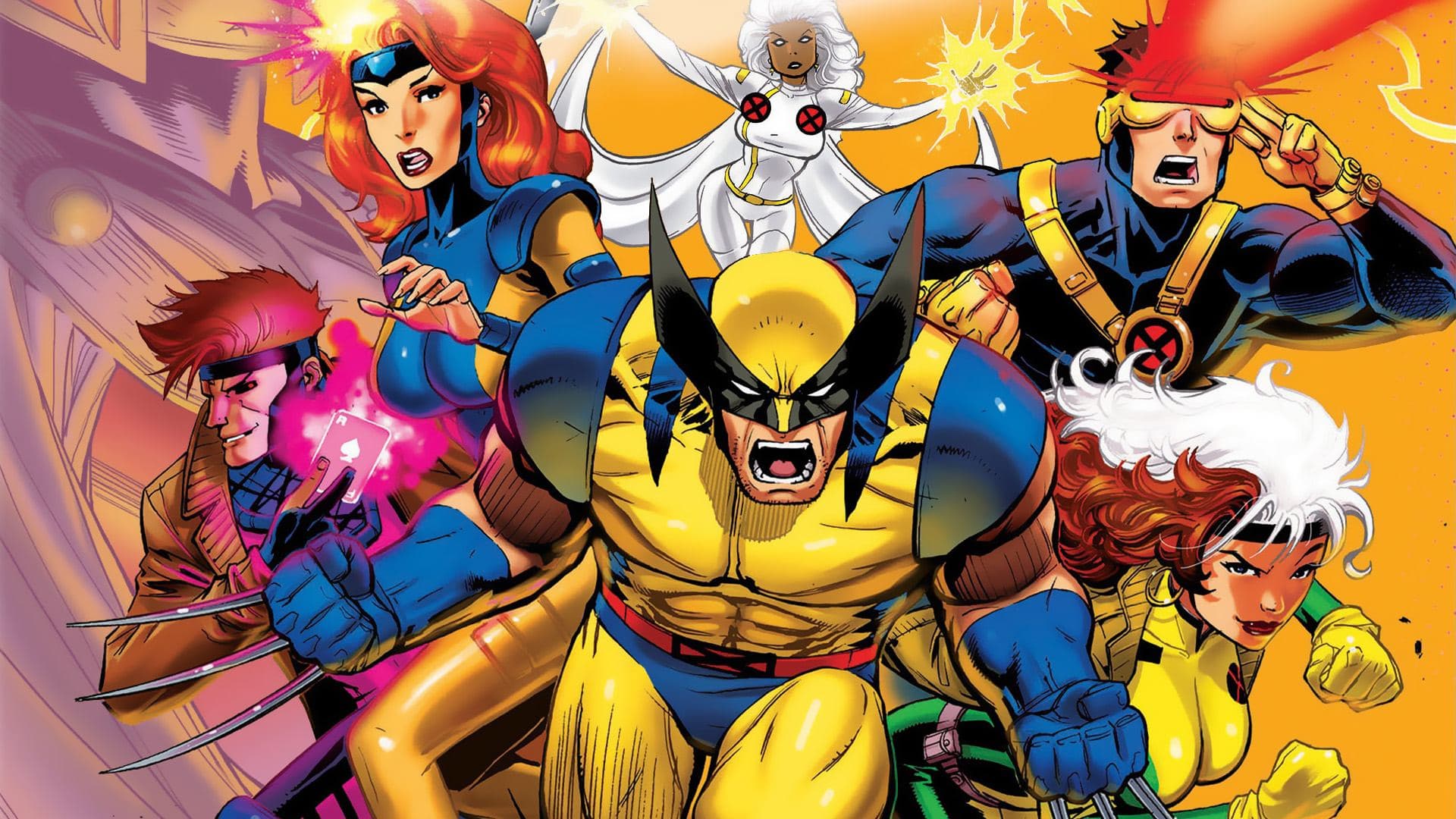
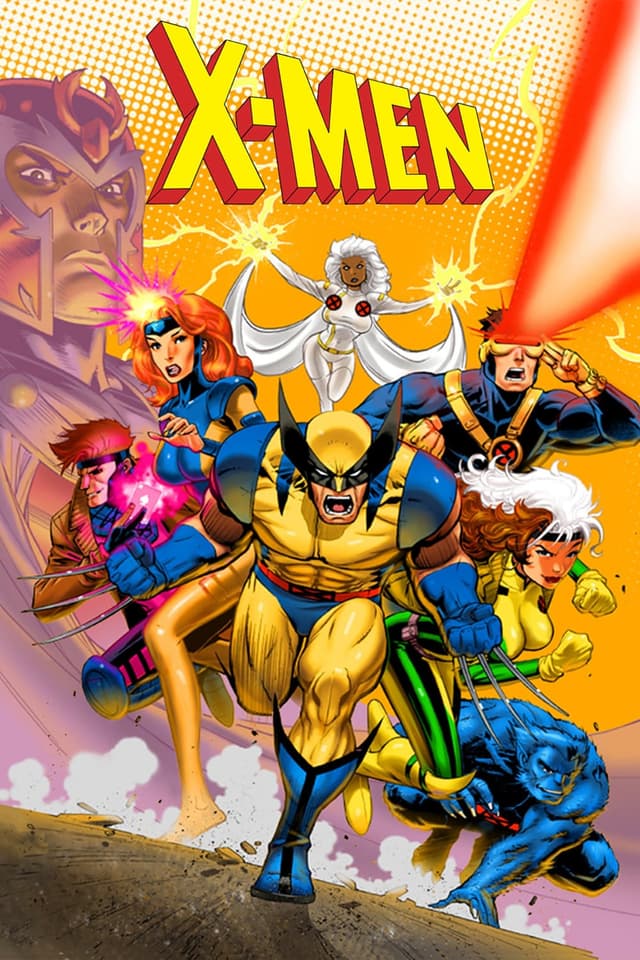
X-Men: The Animated Series chronicles the adventures of Professor Charles Xavier's team of mutant superheroes, the X-Men, as they battle bigotry, the Brotherhood of Mutants, the Sentinels, and the existential threat of an anti-mutant future. Drawing heavily from Chris Claremont and Jim Lee's early 1990s Marvel Comics run, the show adapted landmark stories including "The Dark Phoenix Saga," "Days of Future Past," and "Beyond Good and Evil" across its 76 episodes on Fox Kids from 1992 to 1997.
What Is the Budget of X-Men: The Animated Series (1992)?
X-Men: The Animated Series (1992) was produced on a per-episode budget typical of early 1990s syndicated Saturday morning animation, with industry estimates placing the cost in the range of $400,000 to $600,000 per half-hour episode. Across its 76-episode, five-season run on Fox Kids from October 31, 1992 to September 20, 1997, the series carried a total estimated production outlay in the range of $30,000,000 to $45,000,000, financed by a coalition of Marvel Films Animation, Saban Entertainment, Graz Entertainment, and the Fox Broadcasting Company. Marvel did not publish episode-by-episode budgets, and the financial picture was further complicated by the Marvel Entertainment Group bankruptcy that shadowed the final two seasons.
The investment was modest by 1990s primetime animation standards but generous for the Saturday morning slot it occupied. By comparison, Batman: The Animated Series, launched on Fox Kids the same fall, ran roughly $800,000 to $1,000,000 per episode at Warner Bros. Animation, nearly double the X-Men outlay. The X-Men team compensated for the tighter budget with denser storytelling, serialized arcs adapted directly from Chris Claremont era comics, and an explicit refusal to talk down to children, all of which became the show's defining commercial differentiators.
Key Budget Allocation Categories
The reported per-episode budget for X-Men: The Animated Series was distributed across several core animation-production areas:
- Overseas Animation Production: The bulk of every episode budget went to AKOM Production Company in Seoul, South Korea, which handled in-between animation, ink and paint, and final compositing for the majority of the run. Saban also routed work through Philippines-based houses and brought some season-five episodes in-house at Graz to absorb cost savings, a shift that produced the visible quality decline fans associate with the later seasons.
- Voice Cast: The Toronto-recorded ensemble, led by Cal Dodd as Wolverine, Norm Spencer as Cyclops, Lenore Zann as Rogue, Alison Sealy-Smith as Storm, Catherine Disher as Jean Grey, George Buza as Beast, Chris Potter as Gambit, and Cedric Smith as Professor X, was paid Toronto ACTRA scale, well below Los Angeles SAG rates. This was a deliberate cost play that also gave the show a distinct vocal identity separate from the contemporary American voice-acting pool.
- Writers Room and Story Editing: Showrunner Eric Lewald, head writer Mark Edward Edens, and a rotating roster of writers including Julia Lewald, Steven Levi, Sandy Scesny, and Robert N. Skir crafted serialized scripts that adapted "Days of Future Past," "The Dark Phoenix Saga," and "Days of Future Present" with unusual fidelity. After season one, Saban famously cut the per-script fee by $500, citing the show's success as leverage.
- Music and Score: Composers Ron Wasserman (who wrote the iconic opening theme), Shuki Levy, Haim Saban, Noam Kaniel, and Amotz Plessner produced the orchestral-electronic hybrid score that gave the show its high-energy signature. The 1990s Saban model of in-house composition kept music costs well below contemporary network averages.
- Character Design and Pre-Production: Producer Larry Houston and supervising producer Will Meugniot oversaw character model sheets, key-frame layouts, and storyboards in Los Angeles before each episode shipped overseas for animation. Costume fidelity to Jim Lee's 1991 X-Men #1 redesigns was a non-negotiable creative pillar that absorbed extra design time.
- Voice Direction and Post-Production: Dan Hennessey directed voice sessions at Toronto recording studios, with picture editing, sound mixing, and final masters assembled in Los Angeles. The split-continent pipeline added logistical overhead but kept union costs contained.
- Licensing and Marvel Consulting Fees: Marvel Productions and Marvel Films Animation collected creator and licensing fees on every episode, with Stan Lee credited as executive producer alongside Avi Arad. After Marvel's 1996 bankruptcy filing, these arrangements were renegotiated and contributed to the reduced budgets of seasons four and five.
- Network and Distribution Overhead: Fox Children's Network president Margaret Loesch, who had previously championed the property at Marvel Productions, fast-tracked the series after a soft pilot test in 1992. The Fox Kids block carried marketing, promotion, and affiliate clearance costs that were absorbed at the network level rather than charged back to the per-episode budget.
How Does X-Men: The Animated Series' Budget Compare to Similar Productions?
At an estimated $400,000 to $600,000 per episode, X-Men: The Animated Series sat in the middle tier of early 1990s animated programming, well below contemporary Warner Bros. animation but well above the lowest-cost syndicated cartoons of the era. The comparison set illustrates how the property fit into the broader animation market and how its budget shaped its eventual cultural footprint:
- Batman: The Animated Series (1992): Budget approximately $800,000 to $1,000,000 per episode | 85 episodes. Warner Bros. Animation's flagship debuted the same fall on Fox Kids with nearly double the per-episode budget, an entirely Los Angeles based animation pipeline (with select episodes at TMS Entertainment in Japan), and a Hollywood-orchestra score. The quality gap was visible, but X-Men out-rated Batman in households reached during their overlapping Fox Kids run.
- Spider-Man (1994): Budget approximately $400,000 to $600,000 per episode | 65 episodes. Marvel Films Animation's 1994 follow-up was greenlit explicitly because of X-Men's ratings success, used a similar Saban-financed and AKOM-animated pipeline, and ran for 65 episodes on Fox Kids through 1998. The two Marvel series shared writers, production overhead, and a serialized comics-faithful approach.
- X-Men (2000): Budget $75,000,000 | Worldwide $296,339,527. Bryan Singer's live-action feature, greenlit by Twentieth Century Fox in 1999, drew its tone, character beats, and the leather-uniform redesign concept directly from the 1992 animated series' adaptation strategy. The animated show's seven-season ratings dominance was a primary data point in Fox's decision to commit to the live-action property.
- X-Men: First Class (2011): Budget $160,000,000 | Worldwide $353,624,124. Matthew Vaughn's prequel reboot reused several plot beats from the animated series' Magneto-Xavier backstory and Cuban Missile Crisis-adjacent espionage tone, originally explored in the 1992 series' fourth-season "Sanctuary" two-parter and Magneto origin episodes.
- X-Men: Evolution (2000): Budget approximately $300,000 to $400,000 per episode | 52 episodes. The Kids WB follow-up cartoon spent less per episode, recast the team as teenagers in a contemporary high-school setting, and ran for four seasons. It never matched the original 1992 series' ratings ceiling or critical reception, despite its lower cost basis.
- X-Men '97 (2024): Budget undisclosed | 10 episodes in season one. Disney+'s direct continuation, developed by Beau DeMayo, reunited Cal Dodd, Lenore Zann, Alison Sealy-Smith, George Buza, and Christopher Britton from the original cast, returned the show to its 1990s costume design and serialized storytelling, and delivered Disney+'s most-watched animated series premiere since What If…? in 2021.
X-Men: The Animated Series Box Office and Distribution Performance
X-Men: The Animated Series did not have a theatrical release. Its commercial performance was measured in Saturday morning Nielsen ratings, household reach, syndication revenue, and the home video and merchandise tail that the show generated across its initial 1992 to 1997 run and its subsequent VHS, DVD, Blu-ray, and Disney+ streaming life. By every available metric, the show was a runaway success.
Against a total estimated production outlay in the range of $30,000,000 to $45,000,000, the Fox Kids broadcast generated advertiser revenue across two daily slots in many markets through its peak years of 1995 and 1996. Here is the financial and distribution breakdown:
Box Office Breakdown
X-Men

The series became the top-rated children's program on American television in 1993 and 1994, regularly drawing primetime-caliber ratings on Saturday morning and weekday afternoon repeats. Fox Kids ordered the original 65-episode commitment up front, an unusually large initial pickup for the era, and Saban funded an additional 11 episodes for season five despite Marvel's bankruptcy because the property's syndication and merchandise tail remained strong.
In long-term value, X-Men: The Animated Series is widely credited as the cultural bridge that made the 2000 Bryan Singer live-action film commercially viable. Fox Filmed Entertainment chairman Tom Rothman and producer Lauren Shuler Donner repeatedly cited the animated series as the property reference that demonstrated audience demand. The show's direct continuation as X-Men '97 on Disney+ in 2024 generated 4,000,000 views in its first five days, the streamer's biggest animated launch since What If…?, and was renewed for multiple additional seasons.
X-Men: The Animated Series Production History
Development began at Marvel Productions in the late 1980s under then-president Margaret Loesch, who pushed a feature-length X-Men pilot called "Pryde of the X-Men" through the company in 1989. The pilot aired but did not move forward to series at the time. When Loesch left Marvel Productions to take the presidency of the new Fox Children's Network in 1990, she carried the X-Men property with her as a priority for the upstart Saturday morning block.
Fox Kids commissioned a 13-episode first season in 1991, financed through Saban Entertainment with Marvel Films Animation as the creative partner. Mark Edward Edens, Sidney Iwanter, and Eric Lewald developed the series, with Lewald taking the showrunner role for the bulk of the run. The production was structured as a split pipeline: Los Angeles for writing, design, storyboards, and post-production, Toronto for voice recording, and Seoul, South Korea (primarily at AKOM Production Company) for the actual animation.
Principal voice recording took place at Toronto recording studios under voice director Dan Hennessey, drawing from the city's deep ACTRA voice talent pool. The decision to cast in Toronto was driven by both budget and creative differentiation: it kept costs below California SAG rates while delivering a vocal sound distinct from the Hollywood animation establishment. Cal Dodd, Norm Spencer, Lenore Zann, Alison Sealy-Smith, Catherine Disher, George Buza, and Cedric Smith carried the principal cast across the entire run, with Chris Potter playing Gambit through season four before Tony Daniels took over the role in season five.
Production challenges escalated across the run. AKOM's episode-by-episode quality varied, with the pilot famously rejected by Fox Kids in mid-1992 for animation errors that forced an emergency rework before the October premiere. Marvel Entertainment Group filed for Chapter 11 bankruptcy in December 1996, creating contract and rights complications during season five production. To absorb costs, Saban brought several season-five episodes in-house at Graz Entertainment instead of routing them through AKOM, which produced the dip in visual polish that audiences noticed in the show's final ten episodes.
The series' creative ambition was its calling card. Showrunner Eric Lewald and his writers room adapted "The Dark Phoenix Saga" across a five-part 1994 arc, the "Days of Future Past" two-parter, and "Beyond Good and Evil," a four-part 1995 saga that pulled directly from Chris Claremont's mid-1980s X-Men run. The series ran serialized story arcs across the season at a moment when most Saturday morning animation was strictly episodic, a creative bet that became a structural template for later Marvel animated series and for the X-Men '97 continuation.
Awards and Recognition
X-Men: The Animated Series did not receive significant Daytime Emmy recognition during its 1992 to 1997 broadcast run, an omission widely noted in retrospective coverage. The Daytime Emmy categories for animation were narrow in the early 1990s, with the Outstanding Animated Program category dominated by PBS, Disney Afternoon, and Nickelodeon entries, and Fox Kids series rarely broke through despite their commercial dominance.
The show did win the 1995 ICG Publicists Guild Award for Best Children's Animated Series and was nominated for multiple Saturn Awards from the Academy of Science Fiction, Fantasy and Horror Films during its run, including recognition for its serialized adaptation of "The Dark Phoenix Saga." It was inducted into the Saturn Awards' broader retrospective recognition of significant Marvel animation alongside Spider-Man: The Animated Series after the 2000 X-Men live-action film established the property's mainstream theatrical viability.
Retrospectively, the series has received some of the strongest critical reassessment of any 1990s American animated program. IGN ranked it among the top ten animated television series ever made in their 2009 list, and the show is routinely cited by Marvel Studios executives, including Kevin Feige and Brad Winderbaum, as a creative North Star for the studio's approach to ensemble superhero storytelling. The direct continuation as X-Men '97 on Disney+ in 2024 received the Emmy nomination for Outstanding Animated Program that the original series never earned, an outcome widely framed as belated recognition for the creative template the 1992 show established.
Critical Reception
X-Men: The Animated Series received broadly positive reviews during its broadcast run and has earned overwhelming retrospective acclaim. The series holds a 100% approval rating on Rotten Tomatoes based on critic reviews of its complete run, with audience scores in the 9 out of 10 range, and an 8.4 out of 10 user rating on IMDb across more than 50,000 votes. The Hollywood Reporter, in a 2017 retrospective by Aaron Couch, called it "the X-Men adaptation that made everything else possible," and Variety has repeatedly cited the show as the foundation of Marvel's eventual transmedia strategy.
Contemporary critics praised the show's willingness to engage real-world themes of prejudice, civil rights, and identity through the mutant metaphor at a level rarely seen in Saturday morning animation. The Los Angeles Times called the series "the most ambitious cartoon on television" in a 1994 profile, and TV Guide ranked it among the best-written animated shows of the decade. Critics also praised composer Ron Wasserman's iconic main theme, which has become one of the most recognized animation cues in American television history and was reprised intact for the X-Men '97 continuation in 2024.
Fan response was decisive. The show's Saturday morning Nielsen households peaked above 23,000,000 in 1994, an audience size more typical of network primetime than children's programming, and remained near that ceiling through the 1995 to 1996 season. International syndication into more than 60 territories made it one of the most widely distributed American children's programs of the decade. The retrospective consensus, captured by film critic Matt Singer and animation historian Jerry Beck across multiple essays and oral histories, is that X-Men: The Animated Series is the most influential American superhero animation of the 1990s and the single most important cultural precursor to the modern superhero film era.
Frequently Asked Questions
How much did it cost to make X-Men: The Animated Series (1992)?
Industry estimates place the per-episode budget in the range of $400,000 to $600,000 across the show's 76 episodes, for a total estimated production outlay of approximately $30,000,000 to $45,000,000. The production was co-financed by Marvel Films Animation, Saban Entertainment, Graz Entertainment, and the Fox Broadcasting Company. Marvel did not publish episode-by-episode budget figures, and the financial picture was complicated by the Marvel Entertainment Group bankruptcy filing in December 1996 that shadowed the final two seasons.
How many episodes and seasons of X-Men: The Animated Series are there?
The series ran for 76 episodes across five seasons on Fox Kids from October 31, 1992 to September 20, 1997. The original commitment was 65 episodes; Saban funded an additional 11 episodes for season five despite Marvel's ongoing bankruptcy because the show's syndication and merchandise tail remained strong. The breakdown is season one (13 episodes), season two (13), season three (19), season four (21), and season five (10).
Who produced X-Men: The Animated Series?
The series was produced by Marvel Films Animation, Saban Entertainment, and Graz Entertainment for the Fox Children's Network. Eric Lewald served as showrunner, with Mark Edward Edens and Sidney Iwanter as co-developers. Margaret Loesch, who had previously championed the property at Marvel Productions, greenlit the series after taking the Fox Children's Network presidency. Avi Arad, Stan Lee, Haim Saban, and Shuki Levy served as executive producers.
Where was X-Men: The Animated Series animated?
Animation production was outsourced primarily to AKOM Production Company in Seoul, South Korea, with additional work routed through Philippines-based animation houses. Several season-five episodes were brought in-house at Graz Entertainment to absorb cost savings during Marvel's bankruptcy, which produced the visible quality decline fans associate with the show's final ten episodes. Pre-production (character design, storyboards, layouts) was handled in Los Angeles, and voice recording was conducted in Toronto.
Who voiced the X-Men in the 1992 animated series?
The principal Toronto-recorded cast was Cal Dodd as Wolverine, Norm Spencer as Cyclops, Lenore Zann as Rogue, Alison Sealy-Smith as Storm (Iona Morris voiced Storm for season one), Catherine Disher as Jean Grey and Phoenix, George Buza as Beast, Chris Potter as Gambit through season four (Tony Daniels took over in season five), Cedric Smith as Professor X, and Alyson Court as Jubilee. Voice direction was handled by Dan Hennessey.
Was X-Men: The Animated Series a ratings success?
Yes. The series became the top-rated children's program on American television in 1993 and 1994, regularly drawing primetime-caliber ratings on Saturday morning and weekday afternoon repeats. At its peak in 1994, the show reached over 23,000,000 households, an audience size more typical of network primetime than children's programming. It was syndicated to more than 60 international territories, making it one of the most widely distributed American children's programs of the decade.
How does the 1992 animated series compare to the 2000 live-action X-Men film?
The 2000 Bryan Singer film, with a $75,000,000 budget that grossed $296,339,527 worldwide, drew its tone, character beats, and the leather-uniform redesign concept directly from the animated series' adaptation strategy. Fox Filmed Entertainment chairman Tom Rothman and producer Lauren Shuler Donner repeatedly cited the animated series as the property reference that demonstrated audience demand and made the live-action film commercially viable.
What is the relationship between X-Men: The Animated Series and X-Men '97?
X-Men '97, which premiered on Disney+ on March 20, 2024, is a direct continuation of X-Men: The Animated Series created by Beau DeMayo. The continuation reunited Cal Dodd, Lenore Zann, Alison Sealy-Smith, George Buza, and Christopher Britton from the original cast, returned the show to its 1990s costume design and serialized storytelling, retained Ron Wasserman's original theme music, and delivered Disney+'s most-watched animated series premiere since What If…? in 2021, drawing 4,000,000 views in its first five days.
What were the major storylines adapted from the comics?
Showrunner Eric Lewald and his writers room adapted "The Dark Phoenix Saga" across a five-part 1994 arc, the "Days of Future Past" two-parter from season one, "Beyond Good and Evil" as a four-part 1995 saga drawing from Chris Claremont's mid-1980s X-Men run, and "The Phalanx Covenant" as a season-four event. The series ran serialized story arcs at a moment when most Saturday morning animation was strictly episodic, a creative bet that became a structural template for later Marvel animated series.
Did X-Men: The Animated Series win any awards?
The series won the 1995 ICG Publicists Guild Award for Best Children's Animated Series and received multiple Saturn Award nominations from the Academy of Science Fiction, Fantasy and Horror Films during its run. It did not receive significant Daytime Emmy recognition during its broadcast, an omission widely noted in retrospective coverage; the Daytime Emmy animation categories of the era were dominated by PBS, Disney Afternoon, and Nickelodeon entries, with Fox Kids series rarely breaking through. The direct continuation X-Men '97 received the Outstanding Animated Program Emmy nomination in 2024 that the original series never earned.
Filmmakers
X-Men

Official Trailer
Build budgets like this one in Saturation
Start from an industry-standard feature film template, import the schedule and rates you already have, and let the cost report keep itself current as you spend. Real-time collaboration, no spreadsheets.