Power Rangers Budget
Updated
Synopsis
Five ordinary teenagers in the small mining town of Angel Grove stumble onto a buried alien spacecraft containing five magical Power Coins. Bound together by their discovery, they discover they are the Power Rangers, an ancient line of warriors chosen to protect Earth from the resurrected sorceress Rita Repulsa and her plan to summon a planet-destroying Megazord called Goldar.
What Is the Budget of Power Rangers (2017)?
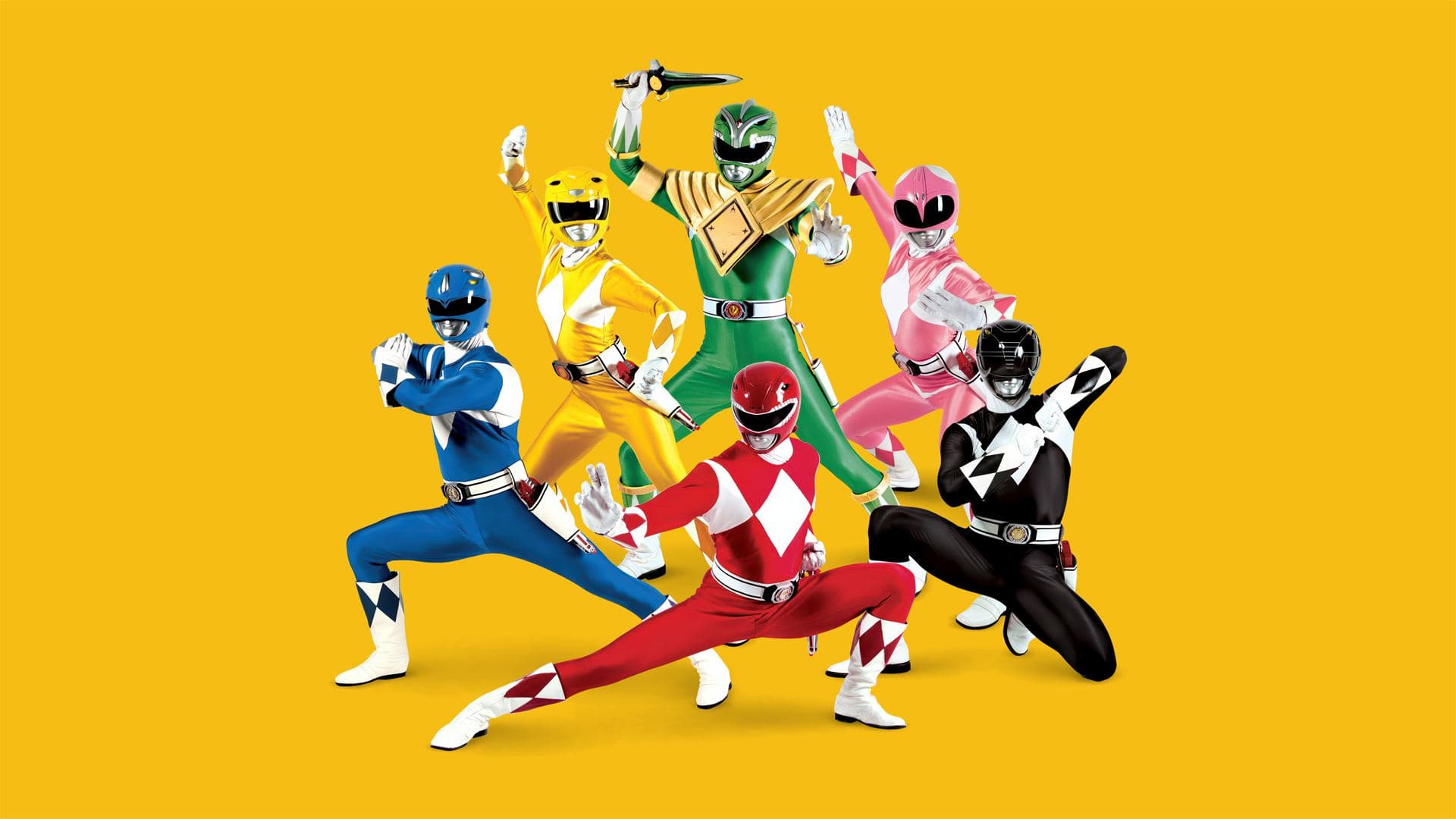
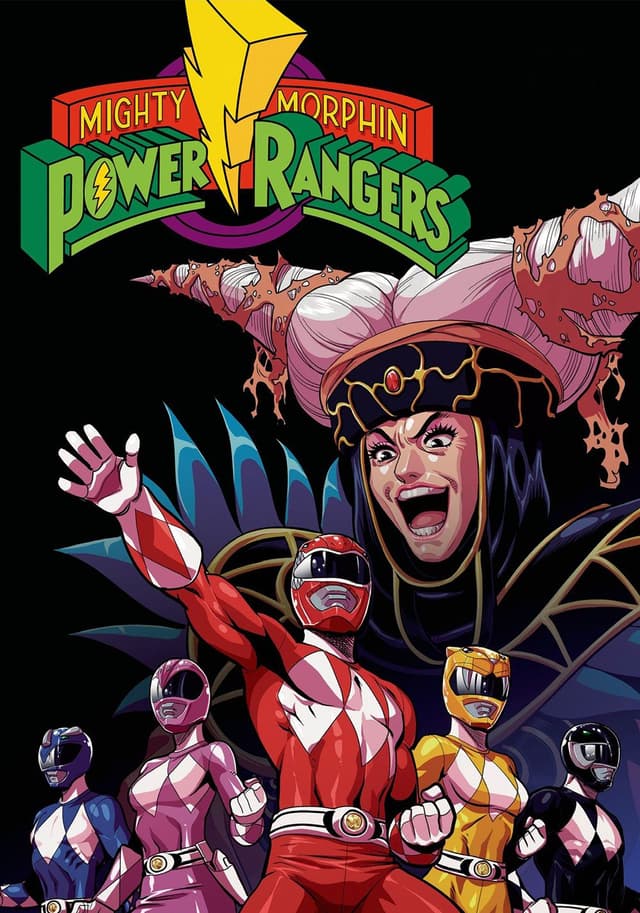
Power Rangers (2017), directed by Dean Israelite and distributed by Lionsgate, was produced on a reported budget of $100,000,000. The film served as a live-action reboot of the Mighty Morphin Power Rangers franchise, repositioning the long-running Saban Brands property around an origin story for the five teenage rangers rather than continuing the television and direct-to-video film canon that preceded it. Lionsgate, Saban Brands, Temple Hill Entertainment, and TIK Films co-financed the production as a launchpad for a planned six-film cinematic universe built around the Saban toy and merchandising property.
The investment reflected a calculated mid-budget franchise gamble. Lionsgate, coming off the wind-down of its Hunger Games series, needed a new tentpole property and bet on the recognition value of the Power Rangers brand among Millennial parents and their children. The math assumed the film would clear roughly $250,000,000 worldwide to break even after marketing, a target it ultimately missed.
Key Budget Allocation Categories
Power Rangers' $100,000,000 budget was distributed across several core production areas:
- Above-the-Line Talent: Director Dean Israelite, coming off the found-footage time-travel thriller Project Almanac (2015), commanded a feature-director rate appropriate to a tentpole. Bryan Cranston was cast as Zordon at a premium post-Breaking Bad rate, Elizabeth Banks as the villain Rita Repulsa, and Bill Hader as the comic-relief Alpha 5. The five young Ranger leads (Dacre Montgomery, Naomi Scott, RJ Cyler, Ludi Lin, Becky G) were cast as rising performers at scale rates with sequel options.
- Visual Effects: The bulk of the budget went into computer-generated work for the Zords, the Megazord battle, the Putty Patrol foot soldiers, the Goldar boss creature, the morphing sequences, and the Krispy Kreme-set climactic battle. Multiple vendor houses contributed shots, with Industrial Light & Magic handling the heaviest creature work.
- Production Design and Costumes: Production designer Andrew Menzies built the Command Center, the cliffside Power Coin discovery cavern, and the Zord bay as practical sets in Vancouver. Costume designer Kelli Jones designed the new Ranger suits as armored body-cast pieces incorporating LED elements, a deliberate departure from the spandex of the television series.
- Vancouver Location Shoot: Principal photography ran in Vancouver from February to May 2016 at sets built on stages at Vancouver Film Studios and Mammoth Studios, with the Krispy Kreme-set Angel Grove sequences shot in Squamish and Vancouver area locations.
- Score and Music: Composer Brian Tyler scored the film with an updated orchestral take on the established Mighty Morphin Power Rangers theme, with the soundtrack also featuring needle drops including Snap!'s The Power and a recurring use of the original 1993 series theme as a key emotional cue.
- Marketing and Release: Lionsgate positioned the film as a March 2017 wide release tentpole with extensive partner integration. The most notable marketing partnership was the Krispy Kreme tie-in, with Krispy Kreme stores featuring prominently in the film's third act.
How Does Power Rangers' Budget Compare to Similar Films?
At a reported $100,000,000, Power Rangers sits in the mid-range of recent action-fantasy franchise launches. The comparison set illustrates how its commercial outcome diverged from its budgetary peers:
- Transformers: The Last Knight (2017): Budget $217,000,000 | Worldwide $605,425,157. Michael Bay's contemporaneous toy-and-property tentpole cost more than twice as much and grossed more than four times Power Rangers worldwide, illustrating the gap between Hasbro's established theatrical franchise and Saban's relaunch.
- Pacific Rim: Uprising (2018): Budget $150,000,000 | Worldwide $290,937,917. The Steven S. DeKnight giant-robot sequel offers the closest genre comparison and grossed roughly twice Power Rangers worldwide on a 50% higher budget.
- Goosebumps (2015): Budget $58,000,000 | Worldwide $158,251,113. The Rob Letterman family-friendly Sony adaptation of the R.L. Stine property cost roughly 60% of Power Rangers and out-grossed it slightly, illustrating how a more modest budget can deliver a similar commercial outcome.
- Teenage Mutant Ninja Turtles (2014): Budget $125,000,000 | Worldwide $493,314,354. Jonathan Liebesman's Paramount reboot of the Mirage Comics property is the closest direct comparison for a Saturday-morning property relaunch and grossed more than three times Power Rangers on a 25% higher budget.
- Mighty Morphin Power Rangers: The Movie (1995): Budget $15,000,000 | Worldwide $66,433,194. The 20th Century-Fox theatrical extension of the contemporaneous television series cost roughly 15% of the 2017 reboot in nominal terms and earned 4.4x its budget worldwide, an ROI the 2017 version never approached.
Power Rangers Box Office Performance
Power Rangers opened on March 24, 2017 to $40,300,288 domestically over its opening weekend, finishing second behind Disney's Beauty and the Beast (in its second weekend). The opening figure trailed industry tracking that had projected $50,000,000-plus and signaled a soft theatrical trajectory. The film never broke out internationally, with the international gross of $56,972,790 weighted heavily toward the United Kingdom, Mexico, and Australia.
Against a reported production budget of $100,000,000, the film needed approximately $250,000,000 in worldwide gross to reach profitability when accounting for marketing and distribution costs. Here is the financial breakdown:
Box Office Breakdown
Power Rangers

Power Rangers returned approximately $0.71 in theatrical revenue for every $1 invested when measured against total estimated production and marketing spend. The domestic share of the gross was $85,364,450 against an international share of $56,972,790, a 60/40 split slightly favorable to North America but well below the 40/60 split typical of franchise tentpoles in 2017.
The shortfall killed the planned six-film franchise. Lionsgate and Saban had publicly mapped sequels through 2024 with new Ranger casts, a 1969 Zordon prequel, and an eventual Tommy Oliver Green Ranger arc; all were shelved within six months of the theatrical release. Hasbro acquired the Power Rangers property from Saban for $522,000,000 in 2018 and has since pursued a separate theatrical and streaming reboot through Jonathan Entwistle, with no connection to the 2017 cast or continuity.
Power Rangers Production History
Development on a Power Rangers reboot began in 2014 at Lionsgate, with Haim Saban (creator of the original Mighty Morphin Power Rangers television franchise) producing through Saban Brands alongside Twilight producers Marty Bowen and Wyck Godfrey at Temple Hill Entertainment. Roberto Orci was attached to write an early draft, with John Gatins, Matt Sazama, Burk Sharpless, and Michele and Kieran Mulroney handling subsequent rewrites and shooting drafts. Dean Israelite was attached to direct in April 2015 on the strength of Project Almanac (2015), and casting wrapped by January 2016.
Principal photography ran from February 22 to May 28, 2016 in Vancouver, British Columbia, utilizing the province's production tax credits to anchor the studio shoot and the new Command Center, cliffside cavern, and Zord bay sets. The Krispy Kreme-set Angel Grove sequences were shot in Squamish and Vancouver area locations. Lionsgate co-developed extensive partner-integration deals with Krispy Kreme, Toys "R" Us, and others as part of the franchise build-out plan.
The film was originally scheduled for January 13, 2017 before Lionsgate moved it to the more competitive March 24, 2017 wide-release frame. The shift placed it directly against Disney's Beauty and the Beast (still in its second weekend) and DreamWorks Animation's The Boss Baby (released March 31), a programming choice that contributed to the soft opening. The film was released on home video in June 2017 and on Netflix later that year, where it generated meaningful viewership but no measurable resurrection of the planned sequel slate.
Awards and Recognition
Power Rangers received limited awards recognition. The film was nominated at the Saturn Awards in the Best Comic-to-Film category and received Visual Effects Society nominations for the Megazord battle work. RJ Cyler's performance as the autistic Blue Ranger Billy Cranston was singled out by several disability-rights organizations as a notable on-screen depiction.
The film also avoided Razzie nominations despite its commercial underperformance, in part because the 2018 Razzies ceremony focused on more publicly maligned titles such as The Emoji Movie and Transformers: The Last Knight. Power Rangers' legacy within awards conversation has been almost entirely absent, reflecting both its limited cultural footprint and the genre ceiling that affects most live-action toy adaptations.
Critical Reception
Power Rangers received mixed reviews. The film holds a 50% approval rating on Rotten Tomatoes based on 271 critic reviews, with a critical consensus that called the reboot earnest but tonally inconsistent. On Metacritic, the film scored 44 out of 100, indicating mixed or average reviews. Audiences surveyed by CinemaScore gave the film an A, a result that was notably stronger than the critical reception but did not translate into the word-of-mouth multiplier Lionsgate had counted on for sequel-justifying performance.
Critics broadly praised the casting of the five young leads, RJ Cyler's autism-coded Blue Ranger performance, and the film's sincere coming-of-age first act, but objected to the muddled second act, the tonal mismatch between the character-drama opening and the visual-effects-heavy climax, and the Krispy Kreme product-integration ending. Variety's Owen Gleiberman called it "a Power Rangers movie that takes itself surprisingly seriously, which is both its biggest asset and its biggest problem," while The Hollywood Reporter's Frank Scheck wrote that the film "tries to be both Chronicle and the 1995 movie and ends up neither."
Genre-press reaction was more divided. IGN praised the character work while flagging the visual effects climax as derivative, and Collider noted that the film's reluctance to commit to either grounded YA realism or full Power Rangers pulp left it stranded between two audiences. The mixed reception, combined with the commercial underperformance, has cemented Power Rangers (2017) as a cautionary example of how a costly franchise relaunch can fail when its core creative choices alienate the property's established fanbase without converting new viewers.
Frequently Asked Questions
How much did it cost to make Power Rangers (2017)?
The reported production budget was $100,000,000. Lionsgate co-financed the production with Saban Brands, Temple Hill Entertainment, and TIK Films as a launchpad for a planned six-film cinematic universe built around the Saban toy and merchandising property.
How much did Power Rangers (2017) earn at the box office?
The film grossed $85,364,450 domestically and $56,972,790 internationally, for a worldwide total of $142,337,240. It opened to $40,300,288 in the United States on its March 24, 2017 weekend, finishing second behind Disney's Beauty and the Beast in that film's second weekend.
Was Power Rangers (2017) a box office bomb?
Yes. Against a $100,000,000 production budget and an estimated $80,000,000 to $100,000,000 in marketing spend, the film returned approximately $0.71 in worldwide gross for every $1 invested. It is widely cited as the reason Lionsgate shelved the planned six-film Power Rangers sequel slate within six months of release. The Power Rangers property was subsequently acquired by Hasbro from Saban for $522,000,000 in 2018, with separate reboot plans under Jonathan Entwistle.
Who directed Power Rangers (2017)?
Dean Israelite directed the film, working from a screenplay by John Gatins with revisions by Matt Sazama, Burk Sharpless, Michele Mulroney, and Kieran Mulroney. Israelite had previously directed the found-footage time-travel thriller Project Almanac (2015).
Where was Power Rangers filmed?
Principal photography took place in Vancouver, British Columbia from February 22 to May 28, 2016, taking advantage of the province's production tax credits. The Command Center, cliffside cavern, and Zord bay were built as practical sets on stages at Vancouver Film Studios and Mammoth Studios. The Krispy Kreme-set Angel Grove sequences were shot in Squamish and Vancouver area locations.
Who plays the Power Rangers in the 2017 film?
Dacre Montgomery plays Jason the Red Ranger, Naomi Scott plays Kimberly the Pink Ranger, RJ Cyler plays Billy the Blue Ranger, Becky G plays Trini the Yellow Ranger, and Ludi Lin plays Zack the Black Ranger. Bryan Cranston plays Zordon, Elizabeth Banks plays Rita Repulsa, and Bill Hader voices Alpha 5.
How does Power Rangers (2017) compare to the 1995 movie?
Mighty Morphin Power Rangers: The Movie (1995) cost approximately $15,000,000 and grossed $66,433,194 worldwide, a 4.4x return on its budget. The 2017 reboot cost roughly 6.7 times as much in nominal terms and grossed roughly 2.1 times as much worldwide, a meaningfully worse ratio that contributed to the franchise stalling out.
Why did Power Rangers (2017) not get a sequel?
Lionsgate had publicly mapped a six-film franchise running through 2024 with new Ranger casts, a 1969 Zordon prequel, and an eventual Tommy Oliver Green Ranger arc. All were shelved within six months of the theatrical release because the film's $142,337,240 worldwide gross was well below the $250,000,000 break-even target after marketing. Hasbro subsequently acquired the property from Saban for $522,000,000 in 2018 and has pursued separate reboot plans with no connection to the 2017 cast or continuity.
What did critics think of Power Rangers (2017)?
The film received mixed reviews, with a 50% approval rating on Rotten Tomatoes (based on 271 critics) and a 44 out of 100 score on Metacritic. Audiences gave it an A CinemaScore, notably stronger than the critical reception. Critics praised the casting of the five young leads and the sincere coming-of-age first act but objected to the muddled second act and the Krispy Kreme product-integration ending.
Did Power Rangers (2017) win any awards?
The film received limited awards recognition. It was nominated at the Saturn Awards in the Best Comic-to-Film category and earned Visual Effects Society nominations for the Megazord battle work. RJ Cyler's performance as the autistic Blue Ranger Billy Cranston was singled out by several disability-rights organizations as a notable on-screen depiction.
Filmmakers
Power Rangers

Official Trailer
Build budgets like this one in Saturation
Start from an industry-standard feature film template, import the schedule and rates you already have, and let the cost report keep itself current as you spend. Real-time collaboration, no spreadsheets.