Wolf Warrior 2 Budget
Updated
Synopsis
China's deadliest special forces operative settles into a quiet life on the sea. When sadistic mercenaries begin targeting nearby civilians, he must leave his newfound peace behind and return to his duties as a soldier and protector.
What Is the Budget of Wolf Warrior 2?
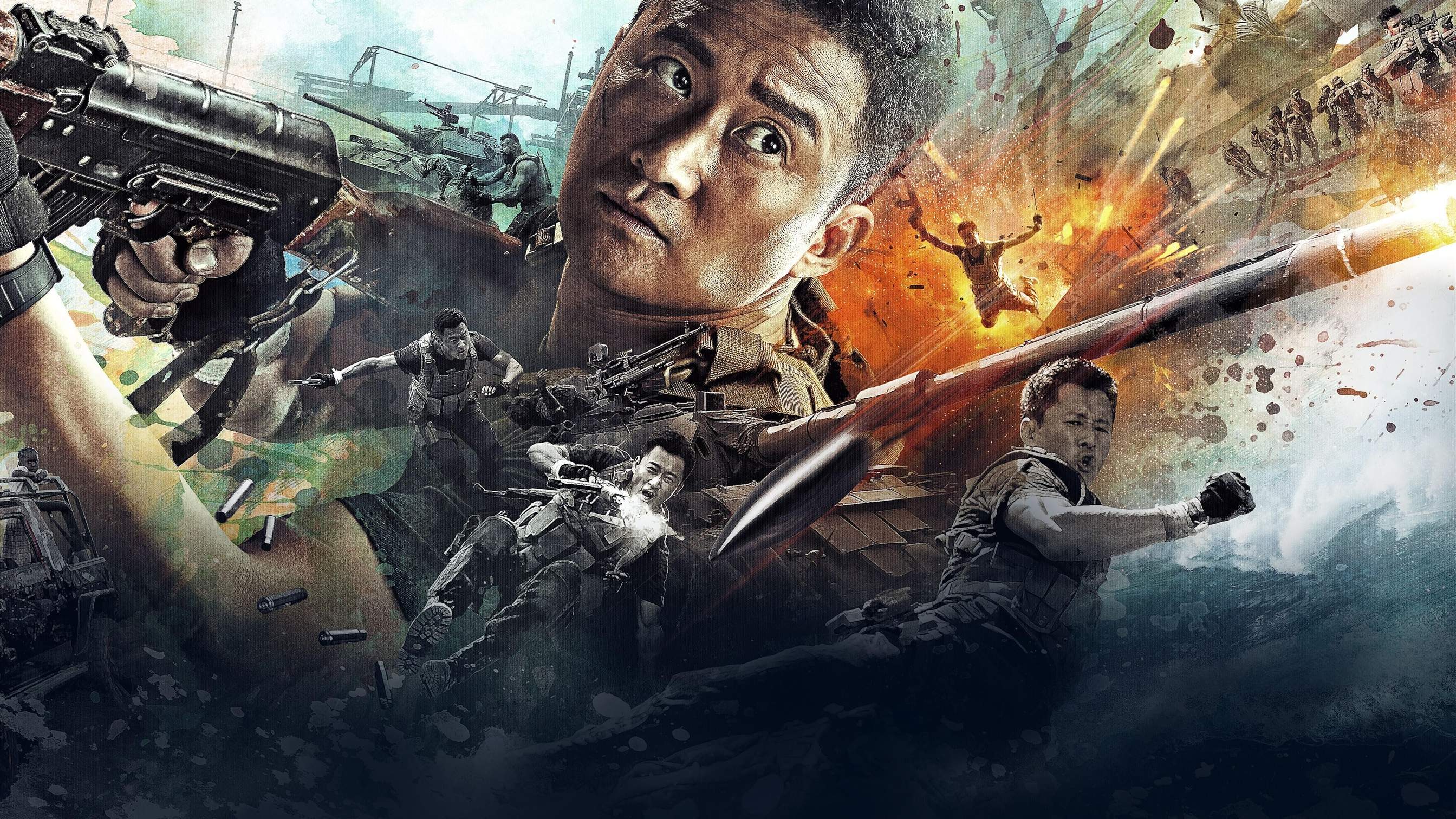
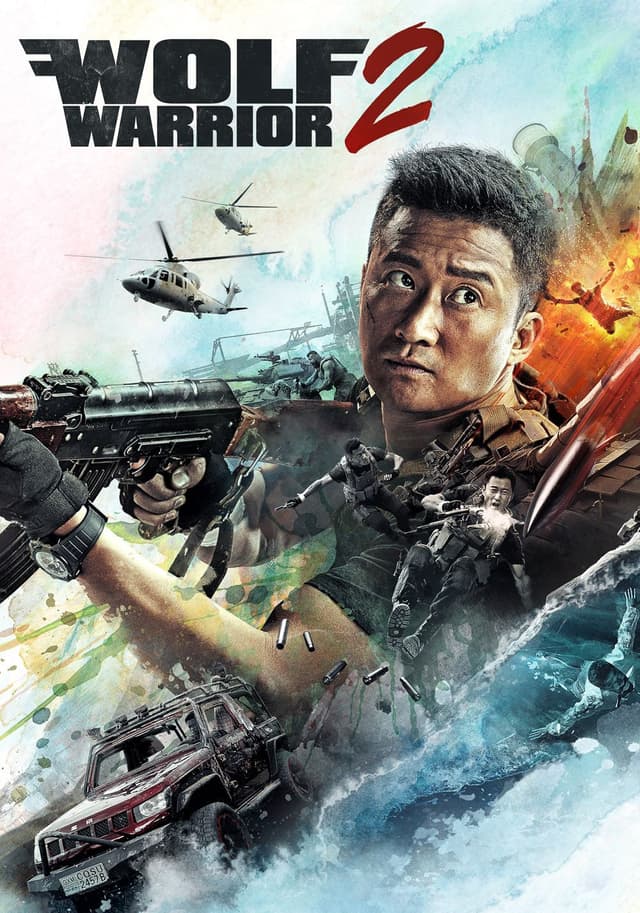
Wolf Warrior 2 (2017) was produced on an estimated budget of $30 million (roughly 200 million yuan). The financing came primarily from Beijing Culture and star/director Wu Jing himself, who reportedly mortgaged his own home to cover shortfalls when initial investors pulled out. For a Chinese action film featuring large-scale military sequences, underwater combat, and tank battles, $30 million was a lean spend that demanded creative resourcefulness at every stage of production.
The relatively modest budget made the film's eventual commercial performance all the more staggering. Wolf Warrior 2 became not only the highest-grossing Chinese film in history but the first non-English-language title to break into the all-time global top 100, proving that a mid-budget action film driven by a single filmmaker's vision could compete with Hollywood blockbusters costing five to ten times as much.
Key Budget Allocation Categories
With $30 million funding military-scale action across multiple countries, every dollar had to stretch. Below are the major cost categories that shaped the production.
- Action Choreography and Stunts: Wu Jing performed many of his own stunts, including an extended underwater single-take opening sequence. Stunt coordination drew on both Chinese martial arts teams and international action consultants, with Joe and Anthony Russo reportedly advising on large-scale action staging.
- Military Equipment and Vehicles: The production secured real tanks, armored personnel carriers, and military hardware for its African warzone sequences. Procuring and operating this equipment on location represented one of the largest single line items in the budget.
- Location Shooting: Principal photography took place across multiple African countries and Chinese locations. International logistics, including crew transport, security, and local permits, drove costs well beyond what a domestic-only shoot would have required.
- Visual Effects: VFX work covered explosions, bullet impacts, vehicle destruction, and the film's climactic missile sequence. Chinese VFX studios handled the bulk of the work, keeping costs lower than a comparable Hollywood production would have incurred.
- Cast Salaries: Frank Grillo commanded the largest supporting salary as the American antagonist. Wu Jing, serving as writer, director, producer, and lead actor, deferred significant compensation in exchange for back-end participation, a gamble that paid off spectacularly.
- Post-Production and Sound Design: Military sound design, Dolby Atmos mixing, and an orchestral score required dedicated post-production investment. The film's 159-minute runtime meant extensive editorial work across action, dialogue, and effects sequences.
How Does Wolf Warrior 2's Budget Compare to Similar Films?
Placing Wolf Warrior 2 alongside other action blockbusters highlights how efficiently it converted its budget into global revenue.
- Wolf Warrior (2015): Budget $10M | Worldwide $87M. The original film proved the franchise concept at a fraction of the sequel's scale, grossing enough to greenlight the far more ambitious follow-up.
- The Wandering Earth (2019): Budget $48M | Worldwide $700M. China's first major sci-fi blockbuster spent 60% more than Wolf Warrior 2 but earned $170 million less worldwide, underscoring just how exceptional the sequel's return was.
- Rambo: Last Blood (2019): Budget $50M | Worldwide $91M. A comparable one-man-army action film from Hollywood spent nearly double and grossed a fraction of what Wolf Warrior 2 earned, illustrating the power of the Chinese domestic market.
- Operation Red Sea (2018): Budget $70M | Worldwide $579M. This military action film from Dante Lam spent more than twice Wolf Warrior 2's budget. While commercially successful, its per-dollar return was significantly lower.
- John Wick: Chapter 2 (2017): Budget $40M | Worldwide $172M. Released the same year, the Keanu Reeves sequel had a 33% larger budget but earned less than one-fifth of Wolf Warrior 2's total gross.
Wolf Warrior 2 Box Office Performance
Wolf Warrior 2 delivered one of the most extraordinary box office runs in cinema history, driven almost entirely by the Chinese domestic market.
The film earned approximately $854 million in China (5.68 billion yuan), shattering every domestic record and holding the title of highest-grossing Chinese film of all time. Its limited international release added roughly $16 million, including $2.7 million from the United States, bringing the worldwide total to approximately $870 million.
With a production budget of $30 million, the film needed roughly $60 million at the global box office to break even after accounting for prints, advertising, and distribution costs. Wolf Warrior 2 exceeded that threshold by more than fourteen times. Using the standard ROI formula: ($870M - $30M) / $30M x 100 = 2,800% ROI, making it one of the most profitable action films ever produced.
The film's opening weekend of $142 million set a new record for a Chinese release. It held the number one position in China for over four consecutive weeks and remained in theaters for months, benefiting from repeat viewings and a wave of patriotic enthusiasm. Its release coincided with the 90th anniversary of the People's Liberation Army, fueling enormous cultural momentum.
- Production Budget: $30,100,000
- Estimated P&A: approximately $21,100,000
- Total Investment: approximately $51,200,000
- Worldwide Gross: $870,325,439
- Net Return: approximately +$819,200,000
- ROI (on production budget): approximately +2791%
Wolf Warrior 2 Production History
Development began shortly after the original Wolf Warrior proved that Chinese audiences had an appetite for homegrown military action. Wu Jing spent over two years writing the screenplay, drawing on real Chinese naval evacuation operations in Yemen and Libya as inspiration for the story of a special forces soldier rescuing citizens from an African civil war.
Financing proved difficult. Several investors withdrew during pre-production, leaving Wu Jing to cover the gap by mortgaging his house. Beijing Culture ultimately came on as the primary co-financier, a partnership that would generate massive returns for both parties.
Wu Jing sought international talent to elevate the film's action credentials. Frank Grillo was cast as the mercenary antagonist, and Celina Jade joined as the female lead. Joe and Anthony Russo, who had directed Captain America: The Winter Soldier and Civil War, reportedly consulted with Wu Jing on staging large-scale action sequences, bringing Hollywood-level choreography knowledge to the production.
Principal photography spanned multiple African locations and Chinese studios. The shoot was physically demanding: Wu Jing performed an extended underwater single-take sequence that required dozens of attempts, and several crew members were hospitalized during the more dangerous stunt work. The African locations posed logistical challenges including extreme heat, security concerns, and equipment transport across unpaved roads.
Post-production took several months, with VFX studios in China handling the bulk of the digital effects work. The film premiered in China on July 27, 2017, and its explosive opening weekend immediately signaled a cultural phenomenon. Word of mouth drove the film to sustained daily grosses that rivaled opening weekends for typical blockbusters, as audiences returned for repeat viewings and social media turned the film into a patriotic event.
Awards and Recognition
Wolf Warrior 2 received the Hundred Flowers Award for Best Picture, one of the most prestigious honors in Chinese cinema as voted by general audiences. The film also won the Golden Rooster Award for Best Director for Wu Jing, recognizing his achievement in mounting a technically ambitious action film on a constrained budget.
At the Chinese box office, the film set records that stood for years, including highest single-day gross, highest opening weekend, and highest total gross for a domestically produced film. It was selected as China's official submission for the Best Foreign Language Film category at the 90th Academy Awards, though it did not advance to the shortlist.
Beyond formal awards, the film's cultural impact was its most significant recognition. Wolf Warrior 2 became a touchstone for Chinese national pride, with its closing-credits message displaying a Chinese passport and the text "Citizens of the People's Republic of China: when you encounter danger in a foreign land, do not give up. Please remember, at your back stands a strong motherland." The phrase became a viral sensation and cemented the film's place in Chinese popular culture.
Critical Reception
Wolf Warrior 2 holds a 75% approval rating on Rotten Tomatoes, reflecting a split between Western and Chinese critical perspectives. Western reviewers acknowledged the film's impressive action sequences and Wu Jing's physical commitment to the role but noted the heavily nationalistic tone and thin characterization of its Western antagonists.
Chinese audiences and critics were overwhelmingly enthusiastic. The film earned a 7.1 on Douban, China's equivalent of IMDb, with viewers praising its patriotic themes, practical action sequences, and Wu Jing's everyman heroism. Many commentators drew direct comparisons to the Rambo franchise, positioning Wolf Warrior 2 as China's answer to the one-man-army action genre that Hollywood had popularized decades earlier.
The film's extraordinary commercial success reshaped the Chinese film industry's understanding of what domestic productions could achieve. It demonstrated that a star-driven, mid-budget action film could outperform Hollywood tentpoles in the world's second-largest movie market, opening the door for subsequent Chinese blockbusters like The Wandering Earth and Operation Red Sea to pursue similarly ambitious scales.
Frequently Asked Questions
How much did it cost to make Wolf Warrior 2 (2017)?
The production budget was $30,100,000, covering principal photography, cast and crew salaries, locations, sets, post-production, and music. Marketing and distribution (P&A) costs are estimated at an additional $15,050,000 - $24,080,000, bringing the total studio investment to approximately $45,150,000 - $54,180,000.
How much did Wolf Warrior 2 (2017) earn at the box office?
Wolf Warrior 2 grossed $2,721,100 domestic, $867,604,339 international, totaling $870,325,439 worldwide.
Was Wolf Warrior 2 (2017) profitable?
Yes. Against a production budget of $30,100,000 and estimated total costs of ~$75,250,000, the film earned $870,325,439 theatrically - a 2791% ROI on production costs alone.
What were the biggest costs in producing Wolf Warrior 2?
The primary cost drivers were above-the-line talent (Wu Jing, Frank Grillo, Celina Jade); talent compensation, authentic period production design, and meticulous post-production.
How does Wolf Warrior 2's budget compare to similar war films?
At $30,100,000, Wolf Warrior 2 is classified as a low-budget production. The median budget for wide-release war films in the 2010s ranges from $30 - 80M for mid-budget to $150M+ for tentpoles. Comparable budgets: A Hologram for the King (2016, $30,000,000); A Lot Like Love (2005, $30,000,000); Big Momma's House (2000, $30,000,000).
Did Wolf Warrior 2 (2017) go over budget?
There are no widely reported accounts of significant budget overruns for this production. However, studios rarely disclose precise budget overrun figures publicly. The reported production budget reflects the final estimated cost.
What was the return on investment (ROI) for Wolf Warrior 2?
The theatrical ROI was 2791.4%, calculated as ($870,325,439 − $30,100,000) ÷ $30,100,000 × 100. This measures gross revenue against production budget only - it does not account for P&A or exhibitor shares.
What awards did Wolf Warrior 2 (2017) win?
32 wins & 16 nominations total.
Who directed Wolf Warrior 2 and who were the key crew members?
Directed by Wu Jing, written by Wu Jing, Gao Yan, Dong Qun, Liu Yi, shot by Peter Ngor Chi-Kwan, with music by Joseph Trapanese, edited by Cheung Ka-Fai.
Where was Wolf Warrior 2 filmed?
Wolf Warrior 2 was filmed in China.
Filmmakers
Wolf Warrior 2

Official Trailer
Build budgets like this one in Saturation
Start from an industry-standard feature film template, import the schedule and rates you already have, and let the cost report keep itself current as you spend. Real-time collaboration, no spreadsheets.