Winter's Bone Budget
 DramaMystery1h 41m
Updated
Synopsis
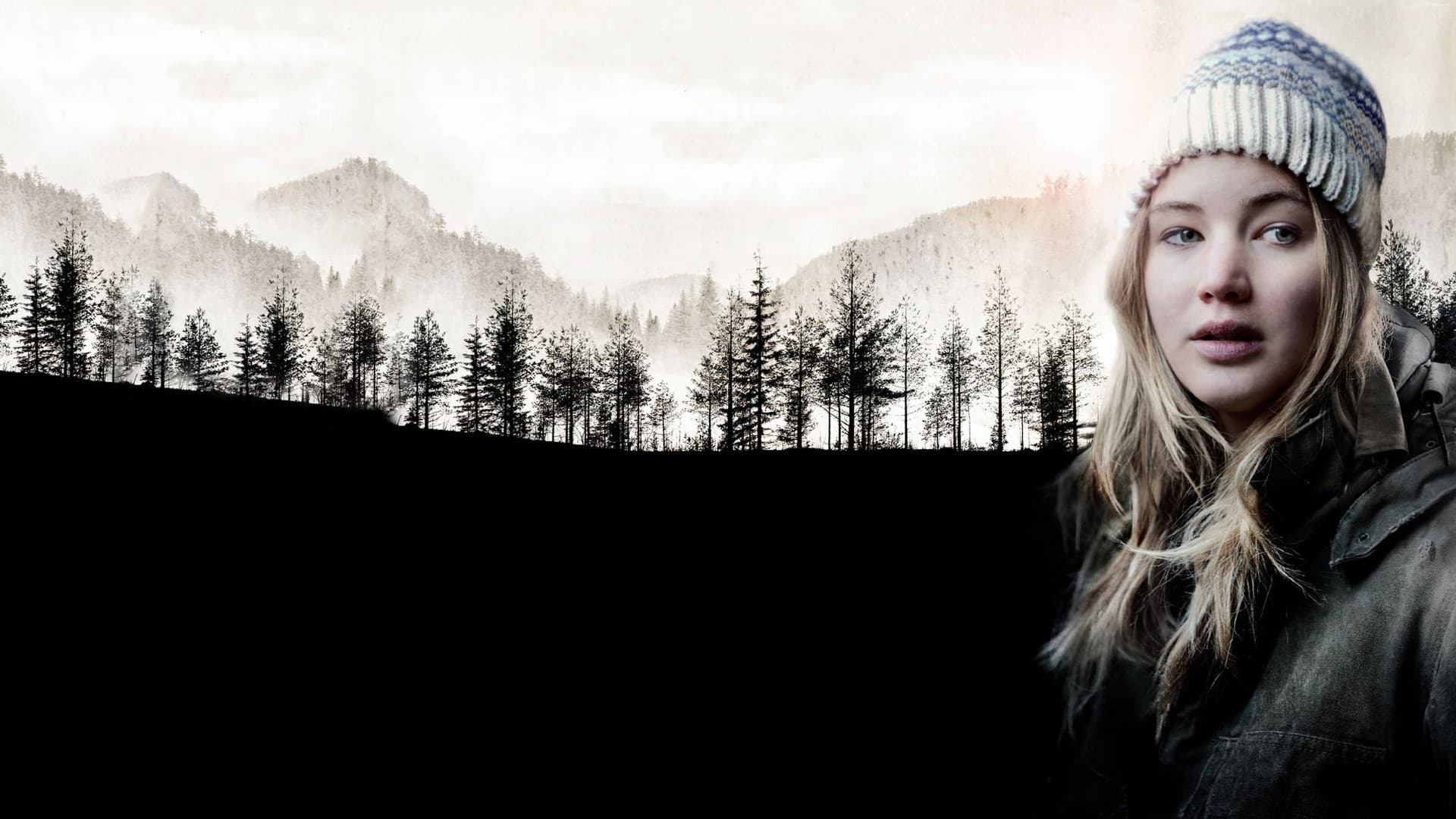
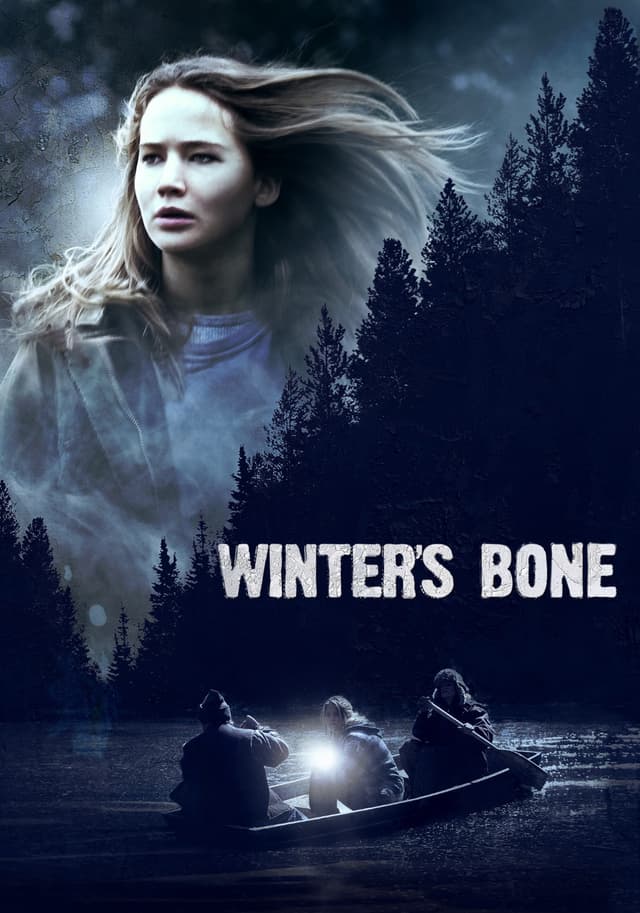
After discovering her father put their house up for his bail bond and then disappeared, 17-year-old Ree Dolly must confront the local criminal underworld and the harsh Ozark wilderness in order to to track down her father and save her family.
What Is the Budget of Winter's Bone?
Winter's Bone was produced on a budget of approximately $2 million, making it one of the most cost-effective prestige productions in recent American independent cinema history. The film was financed through Anonymous Content, a Los Angeles-based production company, and shot on location in the Missouri Ozarks with a lean crew and a mix of professional and non-professional actors. Distributed by Roadside Attractions and Lionsgate, the film earned $13.1 million worldwide, a return of more than six times its production cost.
The $2 million budget reflected the realities of independent filmmaking at the prestige level: enough to pay professional cast and crew, shoot on quality digital cameras, and conduct the post-production required for festival and awards submission, but leaving nothing for studio-scale amenities. Director Debra Granik's previous feature, Down to the Bone (2004), had been made for a similar budget, which meant the production structure was familiar territory for the team.
Key Budget Allocation Categories
- Jennifer Lawrence's Performance: Lawrence was 19 at the time of filming and largely unknown outside of small television roles. Her fee reflected her status rather than her future: the budget constraint that limited her pay was one of the conditions that made the film financially feasible. Her performance as Ree Dolly, a 17-year-old searching the Ozark Mountains for her disappeared father to save her family's home, anchored the film and earned her an Academy Award nomination.
- Location Shooting in the Missouri Ozarks: Granik refused to fake the Ozark landscape on a soundstage or in another region. The production spent significant time in Taney County, Missouri, earning the trust of local residents before cameras rolled. Casting non-professional actors from the community, including Dale Dickey and other local figures, saved on cast costs while delivering an authenticity that professional actors from outside the region could not have replicated.
- Michael McDonough's Cinematography: Cinematographer Michael McDonough shot Winter's Bone in the visual style of a documentary, using available light where possible and building sequences from the landscape outward rather than from the set inward. The approach suited the budget and the material: the Missouri Ozarks in winter is a naturally stark and cinematic environment that benefits from an observational camera rather than a highly constructed one.
- Post-Production and Festival Strategy: Winter's Bone was submitted to the Sundance Film Festival for its January 2010 premiere. The post-production budget was calibrated to deliver a print suitable for festival presentation, with the expectation that distribution deals struck after Sundance would fund further post-production costs for theatrical release. Roadside Attractions and Lionsgate acquired the film following its Sundance victories.
How Does Winter's Bone's Budget Compare to Similar Films?
Winter's Bone sits at the bottom of the Sundance prestige tier, demonstrating what an exceptional return on investment looks like in American independent cinema.
- Beasts of the Southern Wild (2012): Budget $1.8M | Worldwide $12.8M | Benh Zeitlin's debut feature, similarly shot in an underrepresented American region (the Louisiana bayou) with non-professional actors, achieved comparable worldwide results on a slightly smaller budget two years after Winter's Bone. Both films won the Sundance Grand Jury Prize and received Academy Award nominations.
- Frozen River (2008): Budget $1M | Worldwide $2.5M | Courtney Hunt's debut feature, which won the Sundance Grand Jury Prize the year before Winter's Bone, was produced for half the budget and earned less commercially despite similar critical reception. The comparison illustrates how much the Jennifer Lawrence star factor contributed to Winter's Bone's theatrical performance.
- Leave No Trace (2018): Budget $5M | Worldwide $8.7M | Granik's follow-up film, starring Ben Foster and Thomasin McKenzie, cost more than twice Winter's Bone's budget but earned less commercially, demonstrating that the perfect storm of Sundance timing, Jennifer Lawrence's emergence, and the film's Oscar campaign was not easily replicated.
- Silver Linings Playbook (2012): Budget $21M | Worldwide $236.8M | Jennifer Lawrence's next Oscar-winning performance, in David O. Russell's romantic drama, cost ten times Winter's Bone's budget and earned many times more, illustrating the commercial scale that Lawrence's star power, developed from Winter's Bone, could command two years later.
Winter's Bone Box Office Performance
Winter's Bone premiered at the Sundance Film Festival in January 2010, winning the Grand Jury Prize and the Waldo Salt Screenwriting Award. Roadside Attractions and Lionsgate acquired domestic distribution rights following the festival victories. The film opened in limited release on June 11, 2010, and expanded gradually through summer and fall 2010 as Academy Award buzz built.
The film earned $6.5 million domestically and $13.1 million worldwide on its $2 million production budget, a return of more than six times the production cost at the theatrical level. The studio share of the worldwide gross, at approximately 50 percent, returned an estimated $6.6 million in theatrical revenue against a $2 million production budget. After accounting for distribution costs, the film was substantially profitable from theatrical alone, before home video, digital, and television rights.
Box Office Breakdown
Winter's Bone

Winter's Bone earned roughly $6.56 for every $1 invested in production at the theatrical level, one of the strongest returns on a narrative feature in the Sundance generation. The ROI reflects both the exceptional critical reception that built word of mouth and the star-making quality of Lawrence's performance, which drove repeat viewings and helped sustain the theatrical run through the fall awards season.
Winter's Bone Production History
The project originated with director Debra Granik's response to Daniel Woodrell's 2006 novel of the same name. Granik, who had made Down to the Bone (2004) with a similarly observational approach to marginal American communities, saw in Woodrell's Ozark noir a story that suited her filmmaking instincts: specific in location, morally complex without being cynical, centered on a female protagonist navigating a world of tacit threat and masculine violence.
Granik and co-writer Anne Rosellini spent time in the Missouri Ozarks before production, researching the region's community structure, economy, and social codes. The production's approach was documentary-adjacent: Granik earned the participation of real Ozark community members as extras and supporting cast, cast non-professional local actors in key roles, and used actual homesteads and landscape rather than constructed sets. The approach required trust-building that took months before cameras rolled.
Jennifer Lawrence was cast as Ree Dolly after an audition that immediately convinced Granik she had found the center of the film. Lawrence was 19 at the time of filming, having worked primarily in small television roles. Her physical commitment to the role, which required her to convey both Ree's determination and vulnerability in an environment of real Missouri winter, was noted by the crew and became apparent in the final cut.
Principal photography took place during the winter of 2009-2010 in Taney County, Missouri. John Hawkes, cast as the terrifying and ultimately complex Teardrop, had worked extensively in television and small film roles; his performance was a revelation that earned him an Academy Award nomination. The film was completed and submitted to Sundance for the January 2010 festival. Its double win there transformed a small independent film into one of the most talked-about films of 2010.
Awards and Recognition
Winter's Bone won the Grand Jury Prize (Drama) and the Waldo Salt Screenwriting Award at the 2010 Sundance Film Festival, the festival's two most significant narrative prizes. It subsequently received four Academy Award nominations at the 83rd Academy Awards (2011): Best Picture, Best Actress (Jennifer Lawrence), Best Supporting Actor (John Hawkes), and Best Adapted Screenplay (Debra Granik and Anne Rosellini).
Lawrence's nomination at age 20 made her one of the youngest Best Actress nominees in Oscar history. Hawkes's nomination for his portrayal of Teardrop was equally celebrated; his performance is widely regarded as one of the finest supporting turns of the decade. The film won additional prizes from the National Society of Film Critics, the Independent Spirit Awards, and numerous critics circles. Jennifer Lawrence received the Marcello Mastroianni Award for Best Young Performer at the Venice Film Festival.
Critical Reception
Winter's Bone was met with near-universal critical praise upon its Sundance premiere and sustained that reception through its theatrical release. A.O. Scott in The New York Times called it "one of the year's best films," citing Jennifer Lawrence's performance as the discovery of 2010. Roger Ebert gave the film four stars. The film holds a 94 percent approval rating on Rotten Tomatoes.
Critical focus centered overwhelmingly on Lawrence's performance, which was described as a fully formed star turn from a then-unknown 19-year-old. Critics also praised Debra Granik's direction for its refusal to aestheticize or sentimentalize the Ozark environment, presenting the community's poverty, danger, and family loyalty with equal precision. The film's economy, a 100-minute runtime that wastes nothing, was noted as a model of independent narrative discipline.
The film's influence extended beyond its box office: it established Jennifer Lawrence as one of the most significant performers of her generation, directly enabling her casting as Katniss Everdeen in The Hunger Games (2012), and positioned Debra Granik as a major voice in American independent cinema.
Frequently Asked Questions
How much did it cost to make Winter's Bone (2010)?
The production budget was $2,000,000, covering principal photography, cast and crew salaries, locations, sets, post-production, and music. Marketing and distribution (P&A) costs are estimated at an additional $1,000,000 - $1,600,000, bringing the total studio investment to approximately $3,000,000 - $3,600,000.
How much did Winter's Bone (2010) earn at the box office?
Winter's Bone grossed $13,831,503 worldwide.
Was Winter's Bone (2010) profitable?
Yes. Against a production budget of $2,000,000 and estimated total costs of ~$5,000,000, the film earned $13,831,503 theatrically - a 592% ROI on production costs alone.
What were the biggest costs in producing Winter's Bone?
The primary cost drivers were above-the-line talent (Jennifer Lawrence, John Hawkes, Kevin Breznahan); talent compensation, authentic period production design, and meticulous post-production.
How does Winter's Bone's budget compare to similar drama films?
At $2,000,000, Winter's Bone is classified as a micro-budget production. The median budget for wide-release drama films in the 2010s ranges from $30 - 80M for mid-budget to $150M+ for tentpoles. Comparable budgets: Seven Samurai (1954, $2,000,000); The Great Dictator (1940, $2,000,000); Sing Sing (2024, $2,000,000).
Did Winter's Bone (2010) go over budget?
There are no widely reported accounts of significant budget overruns for this production. However, studios rarely disclose precise budget overrun figures publicly. The reported production budget reflects the final estimated cost.
What was the return on investment (ROI) for Winter's Bone?
The theatrical ROI was 591.6%, calculated as ($13,831,503 − $2,000,000) ÷ $2,000,000 × 100. This measures gross revenue against production budget only - it does not account for P&A or exhibitor shares.
Who directed Winter's Bone and who were the key crew members?
Directed by Debra Granik, written by Debra Granik, Anne Rosellini, shot by Michael McDonough, with music by Dickon Hinchliffe, edited by Affonso Gonçalves.
Where was Winter's Bone filmed?
Winter's Bone was filmed in United States of America.
Filmmakers
Winter's Bone

Build budgets like this one in Saturation
Start from an industry-standard feature film template, import the schedule and rates you already have, and let the cost report keep itself current as you spend. Real-time collaboration, no spreadsheets.