Who Killed Captain Alex Budget
Updated
Synopsis
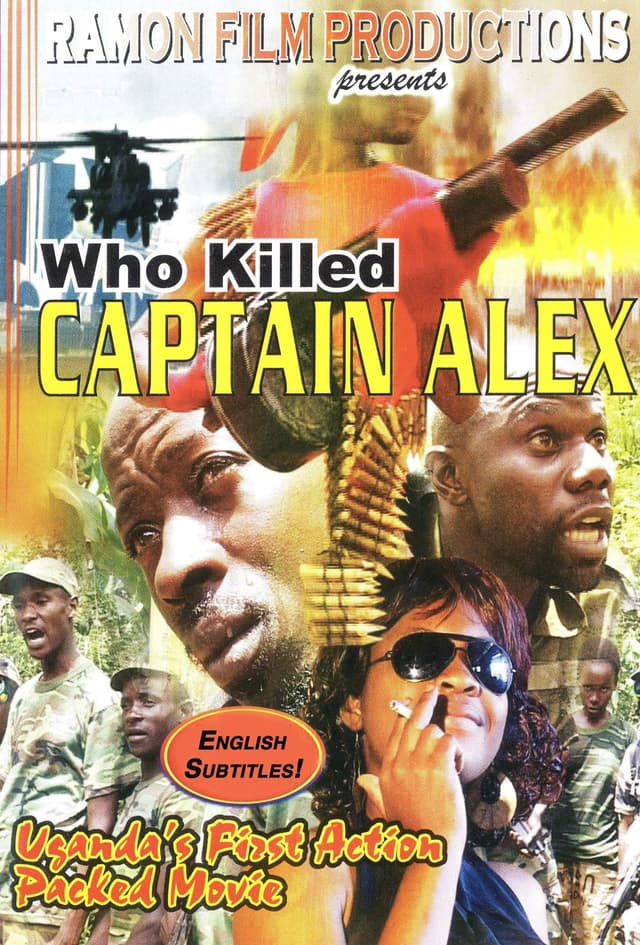
Who Killed Captain Alex? follows the aftermath of a Kampala police raid in which the titular Captain Alex of the Ugandan People's Defence Force is killed, triggering an escalating gang war as Alex's brother seeks revenge against the Tiger Mafia crime syndicate. Directed, shot, edited, and produced by Isaac Godfrey Geoffrey Nabwana for approximately $200, the film is recognized as Uganda's first action film and the foundational work of the Wakaliwood movement.
What Is the Budget of Who Killed Captain Alex? (2010)?
Who Killed Captain Alex? (2010), written, directed, shot, and edited by Isaac Godfrey Geoffrey Nabwana under his Nabwana IGG credit, was produced on a budget of approximately $85 to $200, a figure widely cited in the international film press following the film's viral YouTube emergence in 2015. The cost represents the entirety of Ramon Film Productions' working capital at the time, with the higher end of the estimate including post-production and the lower end representing only the physical-shoot expenses. The film is recognized as the first action film made in Uganda and as the foundational work of the Wakaliwood movement.
Wakaliwood is the informal designation for the action-cinema cottage industry that has grown around Nabwana's home and back lot in Wakaliga, a low-income neighborhood on the western outskirts of Kampala. Nabwana built his own computer from scavenged parts, taught himself filmmaking from internet tutorials, and shot Who Killed Captain Alex? using a borrowed handheld digital camera, props built from junkyard scrap metal, and a cast and crew drawn entirely from neighborhood volunteers including children, family members, and his own martial-arts students.
Key Budget Allocation Categories
The roughly $200 budget covered:
- Props and Sets: Replica weapons built from junkyard metal, scrap wood, and welded scrap, including AK-47 props that Nabwana fabricated himself. Helicopters, military vehicles, and police equipment were built or modified from scrap in the Wakaliga back lot.
- Stage Blood and Effects: Practical squib effects, fake blood mixed from local ingredients, and the trademark exploding-head effects all built and triggered on set by Nabwana and his crew. The blood and effects budget consumed a significant fraction of the total spend.
- Camera and Power: A borrowed handheld digital camera was the only meaningful equipment cost. Power for shooting and for Nabwana's self-built editing computer was managed around Wakaliga's unreliable grid, with shooting often timed around outage windows.
- Cast and Crew: An entirely unpaid volunteer ensemble drawn from the Wakaliga neighborhood, including children playing supporting roles, family members across multiple departments, and Nabwana's own martial-arts students performing the choreographed combat.
- Post-Production: Nabwana edited the film on a computer he built himself from secondhand and scavenged parts, using free or pirated editing software. No external post-production costs were incurred.
- Distribution and Marketing: Initial distribution was on burned VCDs sold informally around Kampala. The 2015 YouTube viral moment, which generated millions of views and brought the film to international attention, required no marketing spend.
How Does Who Killed Captain Alex's Budget Compare to Similar Films?
At approximately $200, Who Killed Captain Alex? is one of the lowest-budgeted feature films ever to achieve sustained international cult recognition:
- Tarnation (2003): Budget approximately $218 | Worldwide $1,162,014. Jonathan Caouette's autobiographical documentary, edited on iMovie from home-video archives, established the sub-$300 feature budget as a viable creative model.
- Primer (2004): Budget approximately $7,000 | Worldwide $841,926. Shane Carruth's self-financed science-fiction feature cost roughly thirty-five times Who Killed Captain Alex? but is still cited alongside it in surveys of micro-budget filmmaking.
- Paranormal Activity (2007): Budget approximately $15,000 | Worldwide $193,300,000. Oren Peli's found-footage horror, made for seventy-five times Captain Alex's budget, achieved Hollywood-scale commercial success after Paramount acquisition.
- Bad Black (2016): Budget approximately $200 | Worldwide cult release. Nabwana IGG's 2016 Wakaliwood follow-up, made for the same micro-budget as Captain Alex, has reached similar international cult audiences through festival programming.
Who Killed Captain Alex? Box Office Performance
Who Killed Captain Alex? did not have a traditional theatrical release. Initial distribution in 2010 was on hand-burned VCDs sold informally around Kampala for the equivalent of one to two US dollars each. The film became internationally visible in 2015 when a trailer with VJ Emmie's English-language Ugandan video-jockey commentary went viral on YouTube. Cumulative YouTube views have since exceeded twenty million.
Box Office Breakdown
Who Killed Captain Alex

Conventional ROI calculations do not meaningfully apply to a $200 production whose primary revenue stream is YouTube and informal VCD sales. The film's commercial value has come through subsequent international film-festival programming, mail-order Wakaliwood VCDs and DVDs sold by US-based distributor Alan Hofmanis, branded merchandise, and the broader Wakaliwood touring presence at events including the Fantastic Fest in Austin and the Toronto International Film Festival.
Alan Hofmanis, an American film festival programmer who saw the 2015 viral trailer and traveled to Wakaliga to meet Nabwana, became the international producer for subsequent Wakaliwood releases including Bad Black (2016) and a planned Captain Alex 2. Hofmanis has handled the international touring and festival circuit, providing meaningful long-tail income to a production company whose original cash budget would not have covered a Kampala restaurant meal for two.
Who Killed Captain Alex? Production History
Isaac Godfrey Geoffrey Nabwana, born in Wakaliga in 1973, grew up watching martial-arts cinema imported on VHS from Hong Kong and the United States. He built his first computer from scavenged parts in the early 2000s, taught himself film editing and special effects from internet tutorials and pirated software, and began shooting short action sequences with neighborhood friends in 2005. By 2009, he had completed shorter actioners and was ready to attempt a full feature.
Who Killed Captain Alex? was shot in 2010 across the Wakaliga neighborhood of western Kampala, primarily on Nabwana's own property and surrounding lots. The cast and crew were drawn entirely from neighborhood volunteers, including his wife Harriet Nabwana, his children, his own martial-arts students from the Tiger Mafia karate club he co-founded, and local schoolchildren who appear in the chase and combat sequences.
Nabwana built all of the film's weaponry himself from junkyard scrap, including AK-47 props, mock helicopters, and modified vehicles. Practical effects including squib hits and the trademark exploding-head sequences were designed and triggered on set by Nabwana, with fake blood mixed from locally sourced ingredients. The shoot ran approximately three months in 2010, with production scheduled around the unreliable Wakaliga power grid and Nabwana's day job.
Post-production took place on Nabwana's self-built editing computer, using free and pirated software including a copy of After Effects acquired through informal Kampala distribution channels. The completed film was burned onto VCDs for informal Kampala distribution starting in late 2010. The film achieved local cult status but remained largely invisible outside Uganda until 2015, when a trailer with VJ Emmie's signature live-narration commentary went viral on YouTube.
Alan Hofmanis, the American festival programmer, saw the viral trailer and traveled to Wakaliga in mid-2015 to meet Nabwana. Hofmanis effectively relocated to Uganda to serve as international producer for subsequent Wakaliwood titles. The 2015 viral moment generated invitations to Fantastic Fest, the Toronto International Film Festival, and a sustained international touring presence that has continued for nearly a decade.
Awards and Recognition
Who Killed Captain Alex? has been programmed at numerous international film festivals since 2015 including Fantastic Fest in Austin, the Toronto International Film Festival, the BFI London Film Festival's experimental strand, and the Locarno Film Festival's Open Doors program for emerging-territory cinema. While the film has not won major mainstream industry awards, its festival-circuit recognition has been substantial and sustained.
The film and the broader Wakaliwood movement have been featured in The New York Times, The Guardian, Vice, Wired, and dozens of international outlets. Nabwana IGG was the subject of a 2017 New York Times profile, a Vice documentary short, and an extended Wired feature in 2018. The Wakaliwood production model has been cited in academic film studies as a pioneering example of micro-budget action cinema from the African continent.
Critical Reception
Who Killed Captain Alex? has received predominantly enthusiastic critical reception since its 2015 international emergence. The film holds a 100% approval rating on Rotten Tomatoes based on 11 critic reviews, with the consensus highlighting the film's exuberant inventiveness and the broader Wakaliwood project's cultural significance. A formal Metacritic score is not listed. The film does not carry a CinemaScore grade because it bypassed wide theatrical release.
Vice's Patrick Lyons described the film as 'a delirious, low-budget masterpiece that single-handedly invented Ugandan action cinema.' The Guardian's Andrew Pulver called it 'a punk-rock landmark, made for $200, watched by millions, beloved by everyone who finds it.' The New York Times' Wesley Morris highlighted the film as 'a triumph of will, ingenuity, and what cinema can be when it answers only to its own community.'
Frequently Asked Questions
How much did Who Killed Captain Alex? cost to make?
The film was produced for approximately $85 to $200, a figure widely cited in the international press following the film's 2015 YouTube viral moment. The lower estimate covers physical-shoot expenses only; the higher figure includes the borrowed digital camera, junkyard-scrap props, locally mixed blood and effects, and the self-built editing computer.
Who directed Who Killed Captain Alex?
Isaac Godfrey Geoffrey Nabwana, working under the Nabwana IGG credit, wrote, directed, shot, edited, and produced the film. Nabwana built his own editing computer from scavenged parts, taught himself filmmaking from internet tutorials, and runs his Ramon Film Productions banner from his home in Wakaliga, on the western outskirts of Kampala.
Where was Who Killed Captain Alex? filmed?
All filming took place in and around the Wakaliga neighborhood of western Kampala, Uganda, primarily on Nabwana's own property and surrounding lots. The cast and crew were drawn entirely from neighborhood volunteers including the director's family, his own martial-arts students, and local schoolchildren.
Is the film really only 68 minutes long?
Yes. The completed feature runs approximately 68 minutes, a deliberately compact runtime that reflects the practical constraints of the $200 budget, the unreliable Wakaliga power grid, and Nabwana's intent to deliver a self-contained action feature without padding.
What is VJ Emmie's role in the film?
VJ Emmie (Emmanuel Kalanzi) is a Ugandan video jockey who provides English-language live-narration commentary over the film, a tradition rooted in Kampala's VCD-and-cinema-hall culture where VJs translate and comment on foreign-language films for local audiences. The Emmie-narrated trailer is what went viral on YouTube in 2015 and brought the film to international attention.
How did Who Killed Captain Alex? become internationally known?
A trailer with VJ Emmie's live-narration commentary was uploaded to YouTube in mid-2015 and went viral, accumulating tens of millions of views over the following years. American festival programmer Alan Hofmanis saw the viral trailer, traveled to Wakaliga to meet Nabwana, and effectively relocated to Uganda to serve as international producer for subsequent Wakaliwood releases.
What is Wakaliwood?
Wakaliwood is the informal designation for the action-cinema cottage industry that has grown around Nabwana IGG's home and back lot in Wakaliga, a neighborhood on the western outskirts of Kampala. The studio has since produced multiple additional features including Bad Black (2016) and continues to operate as a community-based action-cinema studio.
What did critics think of Who Killed Captain Alex?
The film has received predominantly enthusiastic critical reception since its 2015 international emergence, holding a 100% approval rating on Rotten Tomatoes based on 11 critic reviews. Vice described it as 'a delirious, low-budget masterpiece,' and The Guardian called it 'a punk-rock landmark, made for $200, watched by millions, beloved by everyone who finds it.'
Where can I watch Who Killed Captain Alex?
The film is freely available to watch on Wakaliwood's official YouTube channel, including the VJ Emmie-narrated version that became internationally famous. Physical VCD and DVD copies are sold through the Wakaliwood website, and the film has periodically screened at international festivals and repertory cinemas.
Will there be a Captain Alex sequel?
A Captain Alex sequel has been announced and in development for several years, with international producer Alan Hofmanis confirming the project at multiple festival appearances. The release timeline depends on Wakaliwood's ongoing production schedule, which balances local Kampala filmmaking with international touring obligations.
Filmmakers
Who Killed Captain Alex

Official Trailer
Build budgets like this one in Saturation
Start from an industry-standard feature film template, import the schedule and rates you already have, and let the cost report keep itself current as you spend. Real-time collaboration, no spreadsheets.