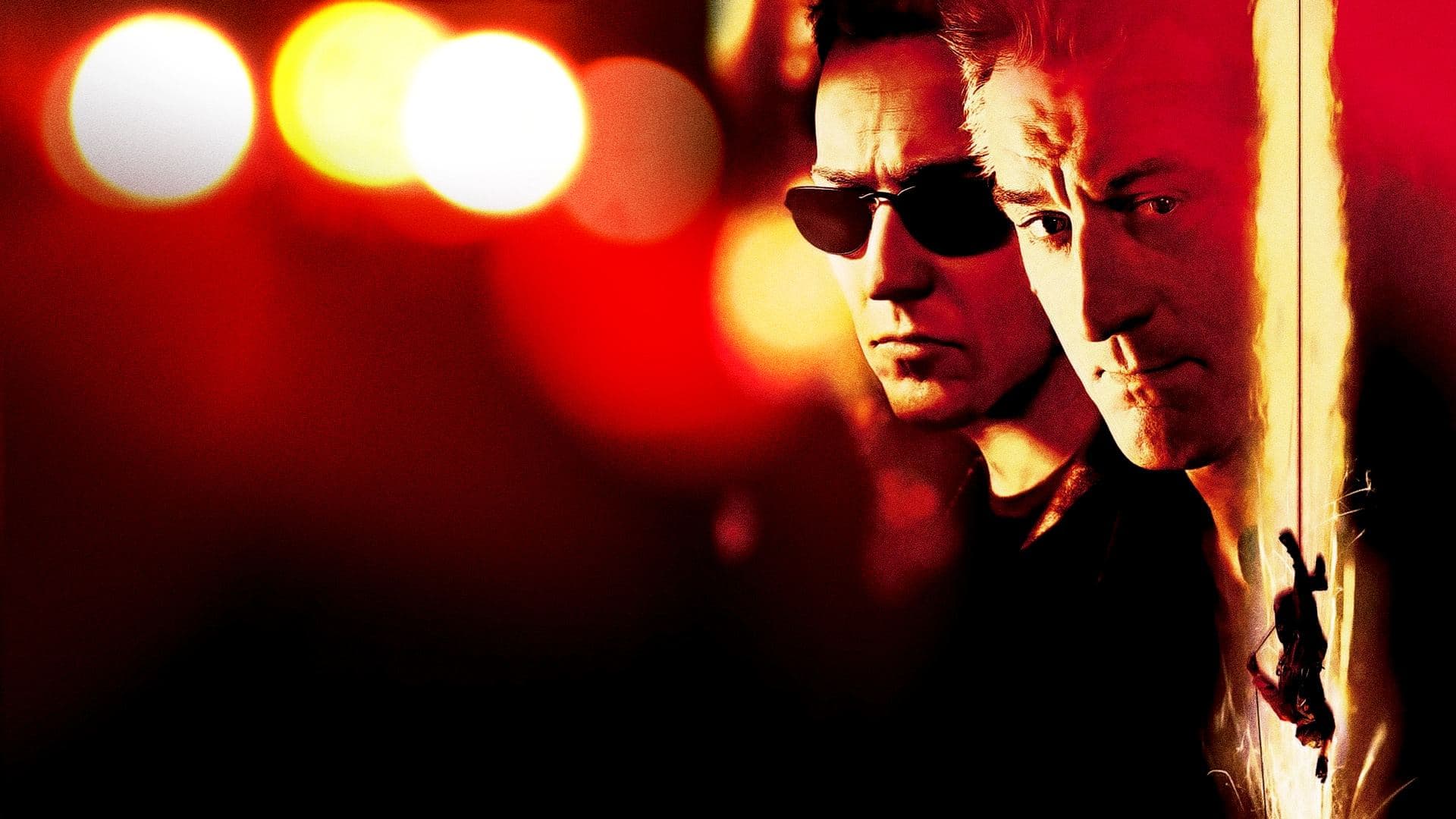
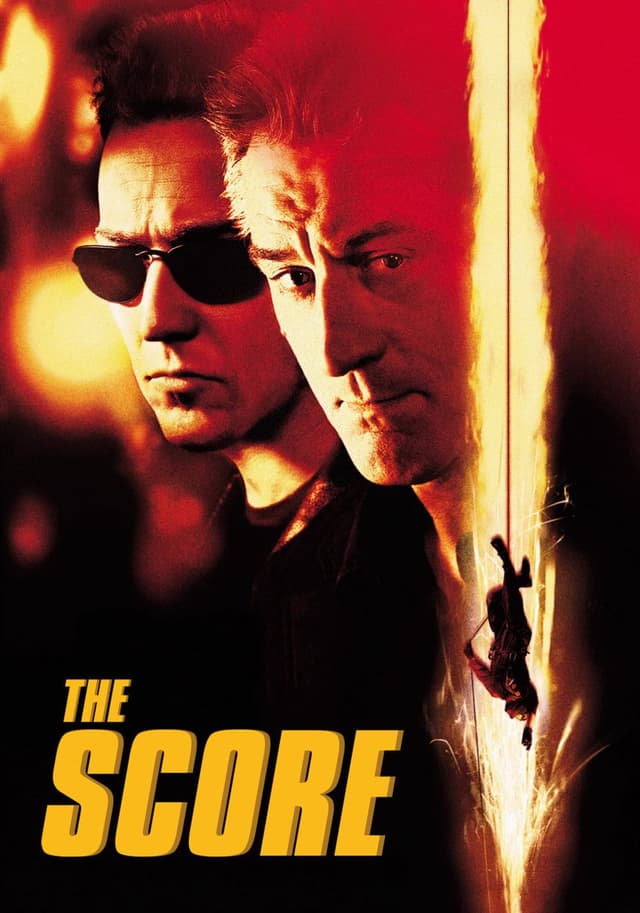
The Score Budget
 ActionCrimeThrillerMysteryDrama2h 4m
Updated
Synopsis
An aging thief hopes to retire and live off his ill-gotten wealth when a young kid convinces him into doing one last heist.
What Is the Budget of The Score?
The Score (2001) was produced with a budget of $68 million, a substantial investment for a character-driven heist thriller. Paramount Pictures and Mandalay Entertainment financed the project, banking on the unprecedented pairing of three generations of acting royalty: Robert De Niro, Marlon Brando, and Edward Norton. The budget reflected the combined star power required to assemble this cast, with significant portions allocated to above-the-line talent deals that made the film one of the more expensive thrillers of its era.
Key Budget Allocation Categories
- Above-the-Line Talent: The combined salaries for De Niro, Brando, and Norton consumed a large share of the budget. De Niro served as both lead actor and producer, while Brando commanded a premium fee despite his semi-retired status.
- Location Filming: Principal photography took place entirely on location in Montreal, Canada. The production utilized real Montreal landmarks including the Old Port district and various heritage buildings to create an authentic backdrop for the heist sequences.
- Production Design: The film required elaborate set construction for the Montreal Customs House interiors, including a detailed recreation of the basement vault system that serves as the centerpiece of the heist.
- Music and Score: Howard Shore composed the jazz-inflected score, bringing his signature atmospheric approach to the material. Shore's involvement added both prestige and cost to the post-production budget.
- Stunt Coordination and Special Effects: The heist sequences demanded precision stunt work, underwater filming, and practical effects for the vault break-in scenes, all requiring specialized crews and safety measures.
How Does The Score's Budget Compare to Similar Films?
- Heat (1995): Budget $60M | Worldwide $187M. Michael Mann's crime epic paired De Niro with Al Pacino and earned strong returns, setting a benchmark for prestige heist films that The Score aimed to follow.
- The Italian Job (2003): Budget $60M | Worldwide $176M. This heist remake matched The Score's budget and significantly outperformed it at the box office, benefiting from a younger ensemble cast and more action-oriented marketing.
- Ocean's Eleven (2001): Budget $85M | Worldwide $450M. Released the same year as The Score, Steven Soderbergh's stylish heist film cost more but earned four times as much, demonstrating audience preference for lighter, ensemble-driven heist entertainment.
- Heist (2001): Budget $39M | Worldwide $28M. David Mamet's heist film, also released in 2001, cost nearly half as much as The Score but performed far worse commercially, showing that even lower budgets could not guarantee returns in a crowded year for the genre.
- The Thomas Crown Affair (1999): Budget $48M | Worldwide $124M. This stylish heist film with Pierce Brosnan cost less and earned more, suggesting audiences responded better to glamorous heist films with romantic subplots.
The Score Box Office Performance
The Score opened on July 13, 2001 and earned $71,071,291 domestically and $113,071,291 worldwide. With a production budget of $68 million, the film needed approximately $136 million at the worldwide box office to break even after accounting for prints and advertising costs (roughly 2x the production budget). Falling $23 million short of that threshold, The Score was a modest commercial disappointment for Paramount.
The film's ROI works out to approximately 66% based on raw box office returns: ($113,071,291 - $68,000,000) / $68,000,000 x 100 = 66.3%. While the gross exceeded the production budget, the additional marketing and distribution expenses meant the theatrical run did not generate meaningful profit. Home video and television licensing revenues likely helped the film reach profitability over time, but the theatrical performance fell short of the expectations set by its star-studded cast.
Box Office Breakdown
The Score

The Score Production History
Development of The Score began with a screenplay by Kario Salem, later revised by Lem Dobbs and Scott Marshall Smith. The project gained momentum when Robert De Niro signed on as both star and producer through his Tribeca Productions banner. De Niro envisioned the film as a showcase for a multigenerational cast of Method actors and personally recruited both Edward Norton and Marlon Brando for their respective roles.
Director Frank Oz, best known for comedies like Bowfinger and In & Out, was an unconventional choice for a crime thriller. His selection became a source of tension once production began. Brando, who had largely withdrawn from Hollywood following a string of poorly received films in the 1990s, agreed to the project primarily because of De Niro's involvement. However, Brando famously refused to take direction from Oz, reportedly calling him "Miss Piggy" (a reference to Oz's work as the Muppet character's puppeteer). De Niro stepped in to direct Brando's scenes personally, serving as an intermediary between the aging star and the frustrated director.
Principal photography took place on location in Montreal throughout 2000. The production made extensive use of the city's Old Port district and architectural landmarks. Brando's declining health and unconventional working methods created scheduling challenges, as the actor sometimes arrived on set in his pajamas or requested unusual accommodations. Despite these difficulties, the production wrapped on schedule. The Score marked Brando's final appearance in a theatrically released film before his death on July 1, 2004, and remains the only film to feature De Niro, Brando, and Norton together on screen.
Awards and Recognition
The Score received limited awards attention upon its release. The film's primary recognition came from its performances rather than its technical elements. Edward Norton earned praise from critics for his portrayal of the duplicitous young thief Jack Teller, particularly his convincing performance as a man feigning a developmental disability to infiltrate the customs house. The film was nominated for the Teen Choice Award for Choice Movie: Drama but did not win.
While the film did not earn major industry nominations, its lasting significance lies in its casting achievement. As the only film to unite three of the most celebrated actors in American cinema history, The Score holds a unique place in film history regardless of its awards footprint. Howard Shore's atmospheric score also received positive notices from music critics, though it was not singled out for major awards consideration.
Critical Reception
The Score holds a 59% approval rating on Rotten Tomatoes, reflecting a divided critical response. Reviewers generally praised the performances while finding fault with the pacing and predictability of the heist narrative. Roger Ebert gave the film three out of four stars, noting that the pleasure of the film lay in watching De Niro, Brando, and Norton work together rather than in the mechanics of the plot.
Critics singled out Edward Norton's dual performance as a highlight, with his portrayal of a con artist pretending to be disabled drawing particular attention for its commitment and technical skill. Brando's work divided opinion: some reviewers found his eccentric performance distracting, while others viewed it as a fitting capstone to his legendary career. De Niro's understated lead turn was praised as a return to the restrained intensity that defined his earlier work with directors like Michael Mann and Martin Scorsese.
The most common criticism centered on Frank Oz's direction, which some reviewers felt was too workmanlike for material that demanded more visual flair. The heist sequences, while competently staged, were seen as lacking the tension and inventiveness of comparable films like Heat or The Thomas Crown Affair. Despite these reservations, The Score has aged into a well-regarded late-career entry for its three leads, valued more for its performances and historical significance than for its contribution to the heist genre.
Frequently Asked Questions
How much did it cost to make The Score (2001)?
The production budget was $68,000,000, covering principal photography, visual effects, cast and crew salaries, locations, sets, post-production, and music. Marketing and distribution (P&A) costs are estimated at an additional $34,000,000 - $54,400,000, bringing the total studio investment to approximately $102,000,000 - $122,400,000.
How much did The Score (2001) earn at the box office?
The Score grossed $71,107,711 domestic, $42,472,207 international, totaling $113,579,918 worldwide.
Was The Score (2001) profitable?
The film did not break even theatrically, earning $113,579,918 against an estimated $170,000,000 needed. Ancillary revenue may have improved the picture.
What were the biggest costs in producing The Score?
The primary cost drivers were above-the-line talent (Robert De Niro, Edward Norton, Marlon Brando); visual effects, practical stunts, and A-list talent compensation; international production across Germany, United States of America.
How does The Score's budget compare to similar action films?
At $68,000,000, The Score is classified as a mid-budget production. The median budget for wide-release action films in the 2000s ranges from $30 - 80M for mid-budget to $150M+ for tentpoles. Comparable budgets: Fury (2014, $68,000,000); The Twilight Saga: Eclipse (2010, $68,000,000); Nope (2022, $68,000,000).
Did The Score (2001) go over budget?
There are no widely reported accounts of significant budget overruns for this production. However, studios rarely disclose precise budget overrun figures publicly. The reported production budget reflects the final estimated cost.
What was the return on investment (ROI) for The Score?
The theatrical ROI was 67.0%, calculated as ($113,579,918 − $68,000,000) ÷ $68,000,000 × 100. This measures gross revenue against production budget only - it does not account for P&A or exhibitor shares.
What awards did The Score (2001) win?
1 win & 1 nomination total.
Who directed The Score and who were the key crew members?
Directed by Frank Oz, written by Scott Marshall Smith, Lem Dobbs, Kario Salem, Daniel E. Taylor, shot by Rob Hahn, with music by Howard Shore, edited by Richard Pearson.
Where was The Score filmed?
The Score was filmed in Germany, United States of America.
Filmmakers
The Score

Official Trailer
Build budgets like this one in Saturation
Start from an industry-standard feature film template, import the schedule and rates you already have, and let the cost report keep itself current as you spend. Real-time collaboration, no spreadsheets.