White House Down Budget
 Thriller/Suspense
Updated
Synopsis
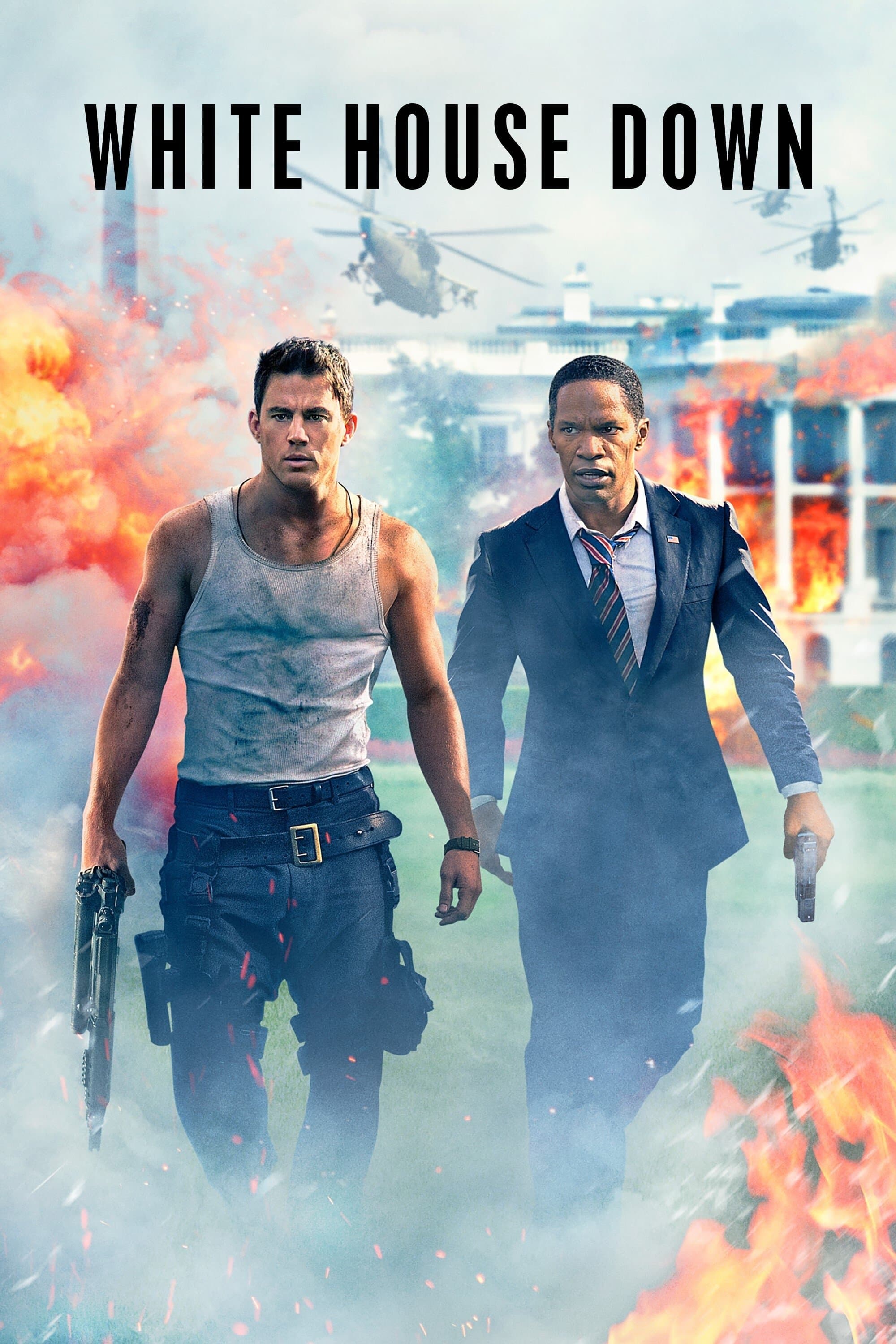
While on a tour of the White House with his young daughter, a Capitol Policeman springs into action to save his child and protect the president from a heavily armed group of paramilitary invaders. As the team led by a vengeful former Secret Service director seizes the West Wing, only the off duty officer stands between the President of the United States and a coup that would put a hardline successor in command of the nuclear codes.
What Is the Budget of White House Down (2013)?
White House Down (2013), directed by Roland Emmerich and distributed by Sony Pictures through its Columbia Pictures label, was produced on a reported budget of $150,000,000. The film was financed by Columbia Pictures alongside Mythology Entertainment and Emmerich and Harald Kloser's Centropolis Entertainment, positioning it as a summer tentpole built around an action-comedy premise: a Capitol policeman trapped inside a besieged White House protecting the President of the United States. The investment placed White House Down squarely in the upper tier of 2013 summer event films, alongside studio bets like Pacific Rim, The Lone Ranger, and After Earth.
The budget reflected a deliberate strategy by Sony to back a Roland Emmerich destruction spectacle while paying premium fees for two A-list leads in Channing Tatum and Jamie Foxx. The math assumed worldwide ticket sales of roughly $325,000,000 to $400,000,000 to clear theatrical break-even after marketing, a target the film would miss by a wide margin once it ran into a same-summer competitor with an almost identical premise.
Key Budget Allocation Categories
White House Down's reported $150,000,000 budget was distributed across several core production areas:
- Emmerich Scale Visual Effects and Destruction: Roland Emmerich, the director responsible for Independence Day, The Day After Tomorrow, and 2012, brought his trademark large scale destruction sequences to White House Down. The visual effects budget covered the aerial assault on the South Lawn, the missile attack that demolishes the Capitol dome, the destruction of Air Force One on the tarmac at Andrews, and the multi-stage interior firefights that gut wings of the executive mansion. Uncharted Territory, Scanline VFX, and Pixomondo split the heavy effects work, with Volker Engel and Marc Weigert producing the visual effects pipeline they had built with Emmerich on prior projects.
- White House Practical Sets: Production designer Kirk M. Petruccelli oversaw the construction of a full scale practical White House at Mel's Cite du Cinema studios in Montreal, including the Oval Office, the West Wing corridors, the State Dining Room, the East Room, the Press Briefing Room, and the underground Presidential Emergency Operations Center. The practical builds allowed Emmerich to stage extended gunfights and chase sequences without relying entirely on greenscreen, but they consumed significant carpentry, set decoration, and sourcing budgets to achieve federal accuracy.
- Channing Tatum and Jamie Foxx Lead Fees: Tatum, coming off back to back hits including 21 Jump Street, Magic Mike, and The Vow, commanded a reported $10,000,000 plus first dollar gross participation for his first major action lead role. Foxx, an Oscar winner playing President James Sawyer, took a salary in a comparable range with backend points. Combined above the line talent fees consumed roughly 15 to 20 percent of the production budget.
- Large Supporting Cast: The script required an unusually deep bench of credible character actors. Maggie Gyllenhaal played Secret Service Special Agent Carol Finnerty, Jason Clarke played the lead mercenary Emil Stenz, James Woods played the retiring Secret Service Director Martin Walker, Richard Jenkins played Speaker of the House Eli Raphelson, Joey King played Tatum's young daughter Emily, Nicolas Wright played White House tour guide Donnie, and Jimmi Simpson played the cyberterrorist Skip Tyler. Compensation for this group, several of whom were Oscar nominees or Emmy winners, added meaningfully to the negative cost.
- Action Unit and Stunts: Second unit director Brian Smrz and stunt coordinator Charlie Picerni Jr. ran an extended action shoot covering vehicular chase sequences on the South Lawn, helicopter wirework, the Marine One escape, and the Beast presidential limousine chase around the fountain. The film's action style emphasized practical squibs, real pyrotechnics, and live driving, all of which carried higher per day costs than fully digital alternatives.
- Score and Composer Fees: Harald Kloser and Thomas Wander, Emmerich's long term composer collaborators, scored the film with a full orchestra, contributing to a soundtrack budget that covered original composition, orchestral recording, music editorial, and licensing for source cues placed in trailers and key set pieces.
How Does White House Down's Budget Compare to Similar Films?
At $150,000,000, White House Down sits in the upper budget tier for President in peril action thrillers, and its commercial outcome is most often evaluated against its direct same year competitor:
- Olympus Has Fallen (2013): Budget $70,000,000 | Worldwide $170,300,000. Antoine Fuqua's thriller, released three months earlier in March 2013 with Gerard Butler and Aaron Eckhart, cost less than half of White House Down and earned 83 percent of its worldwide total. Olympus reached the same audience first with a leaner, harder R-rated take and effectively cannibalized White House Down's premise before Sony could release.
- Air Force One (1997): Budget $85,000,000 | Worldwide $315,156,409. Wolfgang Petersen's Harrison Ford vehicle is the genre's commercial benchmark, earning more than three times its budget. White House Down spent 76 percent more than Air Force One and earned 35 percent less worldwide, illustrating how the premise had matured into a saturated subgenre by 2013.
- London Has Fallen (2016): Budget $60,000,000 | Worldwide $205,800,000. The Olympus sequel matched White House Down's worldwide gross on 40 percent of the budget, confirming that the Butler led Has Fallen franchise had established the audience economics that White House Down could not.
- Independence Day (1996): Budget $75,000,000 | Worldwide $817,400,891. Emmerich's own destruction template, with a White House detonation set piece that defined the 1990s blockbuster, doubled White House Down's worldwide gross on half the budget. The diminishing returns on the same director's landmark visual gag are stark.
- 2012 (2009): Budget $200,000,000 | Worldwide $791,200,000. Emmerich's last truly global destruction epic before White House Down had grossed more than five times what White House Down would earn worldwide, signaling a meaningful decline in audience appetite for his maximalist disaster style by the mid 2010s.
White House Down Box Office Performance
White House Down opened on June 28, 2013 to $24,852,915 across 3,222 domestic locations, finishing fourth on a crowded summer weekend behind The Heat ($39,100,000), Monsters University ($30,400,000), and World War Z ($29,800,000). The fourth place opening was widely read as a soft launch given the budget and marketing scale, and the film struggled to hold against Despicable Me 2 and Pacific Rim in the weeks that followed. Domestic word of mouth was favorable but the Olympus Has Fallen audience comparison was inescapable.
Against a reported production budget of $150,000,000, the film needed approximately $375,000,000 in worldwide gross to reach theatrical break even after marketing. Here is the financial breakdown:
Box Office Breakdown
White House Down (2013)

White House Down returned approximately $0.91 in theatrical revenue for every $1 invested when measured against the midpoint of estimated total spend, placing it among Sony's most visible losses of the 2013 calendar year. The domestic share of the gross was $73,103,784 against an international share of $132,336,603, a 36/64 split that was healthier overseas than at home but not strong enough to convert the international result into profitability.
Recovery in ancillary markets, including home entertainment, premium cable, and television syndication, eventually narrowed the gap and home video receipts plus pay TV deals helped the title clear theatrical losses several years after release. The film became a recurring rotation title on FX and Syfy, where it now functions as a Channing Tatum vehicle decoupled from its disappointing summer 2013 opening narrative.
White House Down Production History
Development on White House Down began in early 2012 when Sony Pictures acquired James Vanderbilt's spec script in a competitive bidding war reportedly in the $3,000,000 range, one of the largest spec sales of the year. Vanderbilt, coming off Zodiac and The Amazing Spider Man, pitched a President in peril action piece designed for Roland Emmerich's sensibility. Sony fast tracked the project, attaching Emmerich and Centropolis Entertainment with co producers Bradley J. Fischer, Larry Franco, Laeta Kalogridis, and Harald Kloser. Emmerich, who had spent the late 2000s on global disaster pictures, took the assignment as his first project anchored to a single location and a contained premise.
Channing Tatum signed in May 2012 for what was billed as his first traditional action lead, a transition from the comedy and dance roles that had defined his preceding two years. Jamie Foxx joined in June 2012 as President James Sawyer, a part Foxx took partly because he liked the idea of playing a sneaker wearing, basketball loving commander in chief modeled in spirit on Barack Obama. Principal photography ran from July to November 2012 at Mel's Cite du Cinema studios in Montreal, Quebec, with the production claiming significant Quebec production tax credits and Canadian Film or Video Production Tax Credits that helped offset what would otherwise have been an even larger negative cost in Los Angeles or Washington DC dollars.
The Olympus Has Fallen problem was visible to the production from the start. Millennium Films had announced Antoine Fuqua's Olympus Has Fallen in early 2012 and accelerated its release to March 22, 2013, more than three months ahead of White House Down. Sony considered shifting the White House Down release window but ultimately stayed with the June 28, 2013 date Emmerich had been targeting. The studio bet on Tatum, Foxx, and PG-13 accessibility to differentiate the picture from the harder R rated Olympus, but the press cycle through spring 2013 framed both films as direct rivals and audiences turned to the first arrival.
Post production continued through spring 2013 with visual effects completed across multiple vendor houses. Sony's marketing campaign emphasized the buddy action chemistry between Tatum and Foxx and leaned away from the destruction scale that had defined Emmerich's previous trailers, an attempt to avoid direct visual comparison with Olympus. The film opened on June 28, 2013 and the underperformance was clear within the opening weekend's Friday gross.
Awards and Recognition
White House Down received no major awards recognition. The film was not nominated at the Academy Awards, the Saturn Awards, the Visual Effects Society Awards, or the Motion Picture Sound Editors Golden Reels. Its visual effects, despite the scale of the destruction work, were overshadowed in awards conversation by Gravity, Iron Man 3, and The Hobbit: The Desolation of Smaug, which dominated the technical categories that season.
At the 34th Golden Raspberry Awards in March 2014, White House Down received a single nomination for Worst Supporting Actor for Jamie Foxx (a combined nomination that cited Foxx for both White House Down and The Amazing Spider Man 2 the following year). It did not win. Channing Tatum and Roland Emmerich were not nominated despite the film's critical and commercial reception, and the Razzie body of voters ultimately concentrated its attention on lower profile releases such as Movie 43 and Grown Ups 2 that year.
Critical Reception
White House Down received mixed reviews. The film holds a 52% approval rating on Rotten Tomatoes based on 232 critic reviews, with a critical consensus that called it "loud, preposterous, and overlong, but undeniably entertaining in its determined dumbness." On Metacritic, the film scored 52 out of 100, indicating mixed or average reviews. Audiences surveyed by CinemaScore gave the film an A minus, an unusually warm reception for a film whose theatrical performance was widely characterized as a disappointment, suggesting that the people who did show up enjoyed the buddy action premise even as the broader public chose Olympus first.
Critics praised the chemistry between Channing Tatum and Jamie Foxx, the practical action staging, and Emmerich's set piece craft, while objecting to a bloated 131 minute runtime, an overly familiar villain plot, and a tonal mismatch between the film's lighter buddy beats and its September 11 inflected destruction imagery. Variety's Justin Chang wrote that the film "delivers exactly what you'd expect from a Roland Emmerich blowout, no more and no less," while The Hollywood Reporter's Todd McCarthy called it "an Olympus Has Fallen remake done bigger but not smarter."
Genre comparison fatigue dominated the review cycle. Almost every major outlet led with the Olympus Has Fallen pairing, and that framing has persisted in retrospective coverage. In the decade since release the film has been re evaluated more generously as a Channing Tatum showcase and as an example of Roland Emmerich's craftsmanship at a defined scale, but the original 2013 reception remains the dominant data point in any conversation about the film's legacy.
Frequently Asked Questions
How much did it cost to make White House Down (2013)?
The reported production budget was $150,000,000. The film was financed by Sony Pictures through its Columbia Pictures label, with Roland Emmerich and Harald Kloser's Centropolis Entertainment and Bradley J. Fischer's Mythology Entertainment co producing. Quebec production tax credits and Canadian Film or Video Production Tax Credits earned through the Montreal shoot offset a meaningful portion of the negative cost.
How much did White House Down earn at the box office?
White House Down grossed $73,103,784 domestically and $132,336,603 internationally for a worldwide total of $205,440,387. It opened to $24,852,915 across 3,222 North American theaters on June 28, 2013, finishing fourth that weekend behind The Heat, Monsters University, and World War Z.
Was White House Down a box office bomb?
Yes, by the standard theatrical math. Against a $150,000,000 production budget and an estimated $75,000,000 to $100,000,000 in marketing spend, the film needed roughly $375,000,000 in worldwide gross to reach break even and earned $205,440,387. It is one of the more frequently cited Sony Pictures losses of 2013, although ancillary revenue from home entertainment, premium cable, and television syndication eventually narrowed the gap.
Who directed White House Down?
Roland Emmerich directed White House Down, working from a spec script by James Vanderbilt that Sony Pictures had acquired in a competitive 2012 bidding war reportedly in the $3,000,000 range. Emmerich had previously directed Independence Day, The Day After Tomorrow, 2012, and Anonymous, and approached White House Down as his first contained single location project after a decade of global disaster films.
Where was White House Down filmed?
Principal photography ran from July to November 2012 at Mel's Cite du Cinema studios in Montreal, Quebec, where production designer Kirk M. Petruccelli oversaw the construction of full scale practical White House sets including the Oval Office, the West Wing, the State Dining Room, and the Presidential Emergency Operations Center. The Quebec production base allowed the film to claim significant provincial and federal Canadian production tax credits.
How does White House Down compare to Olympus Has Fallen?
Olympus Has Fallen, directed by Antoine Fuqua and starring Gerard Butler, was released on March 22, 2013, more than three months before White House Down's June 28, 2013 release. Olympus cost $70,000,000 against a worldwide gross of $170,300,000 and is widely viewed as having cannibalized the audience for White House Down's nearly identical premise. White House Down spent more than twice as much and earned only 21 percent more worldwide.
Who plays the President in White House Down?
Jamie Foxx plays President James Sawyer, a sneaker wearing, basketball loving commander in chief whose progressive Middle East peace agenda triggers the film's domestic terrorist plot. Channing Tatum plays John Cale, the Capitol Police officer turned aspiring Secret Service agent who happens to be on a White House tour with his daughter when the attack begins. The casting paired an Oscar winner with a rising action lead and was central to Sony's differentiation strategy against the harder R rated Olympus Has Fallen.
How much did Channing Tatum and Jamie Foxx earn for White House Down?
Channing Tatum reportedly earned approximately $10,000,000 plus first dollar gross participation, his largest paycheck to that point and a confirmation of his post 21 Jump Street ascent. Jamie Foxx took a comparable salary in the upper seven to low eight figure range with backend points. Combined above the line talent fees consumed roughly 15 to 20 percent of the production budget.
What did critics think of White House Down?
White House Down received mixed reviews with a 52 percent approval rating on Rotten Tomatoes based on 232 critic reviews and a 52 out of 100 score on Metacritic. Audiences gave it an A minus CinemaScore, a notably warmer audience reception than the broader cultural narrative would suggest. Critics praised the Tatum and Foxx chemistry and Emmerich's practical action staging but objected to a 131 minute runtime and the unavoidable comparison to Olympus Has Fallen.
Did White House Down win any awards?
No. White House Down received no major awards recognition. It earned a single Golden Raspberry Award nomination for Jamie Foxx for Worst Supporting Actor (combining his work on White House Down with The Amazing Spider Man 2) and did not win. The film was not nominated at the Academy Awards, the Saturn Awards, the Visual Effects Society Awards, or the Motion Picture Sound Editors Golden Reels.
Filmmakers
White House Down (2013)

Build budgets like this one in Saturation
Start from an industry-standard feature film template, import the schedule and rates you already have, and let the cost report keep itself current as you spend. Real-time collaboration, no spreadsheets.