The Bank Job Budget
 Thriller/Suspense
Updated
Synopsis
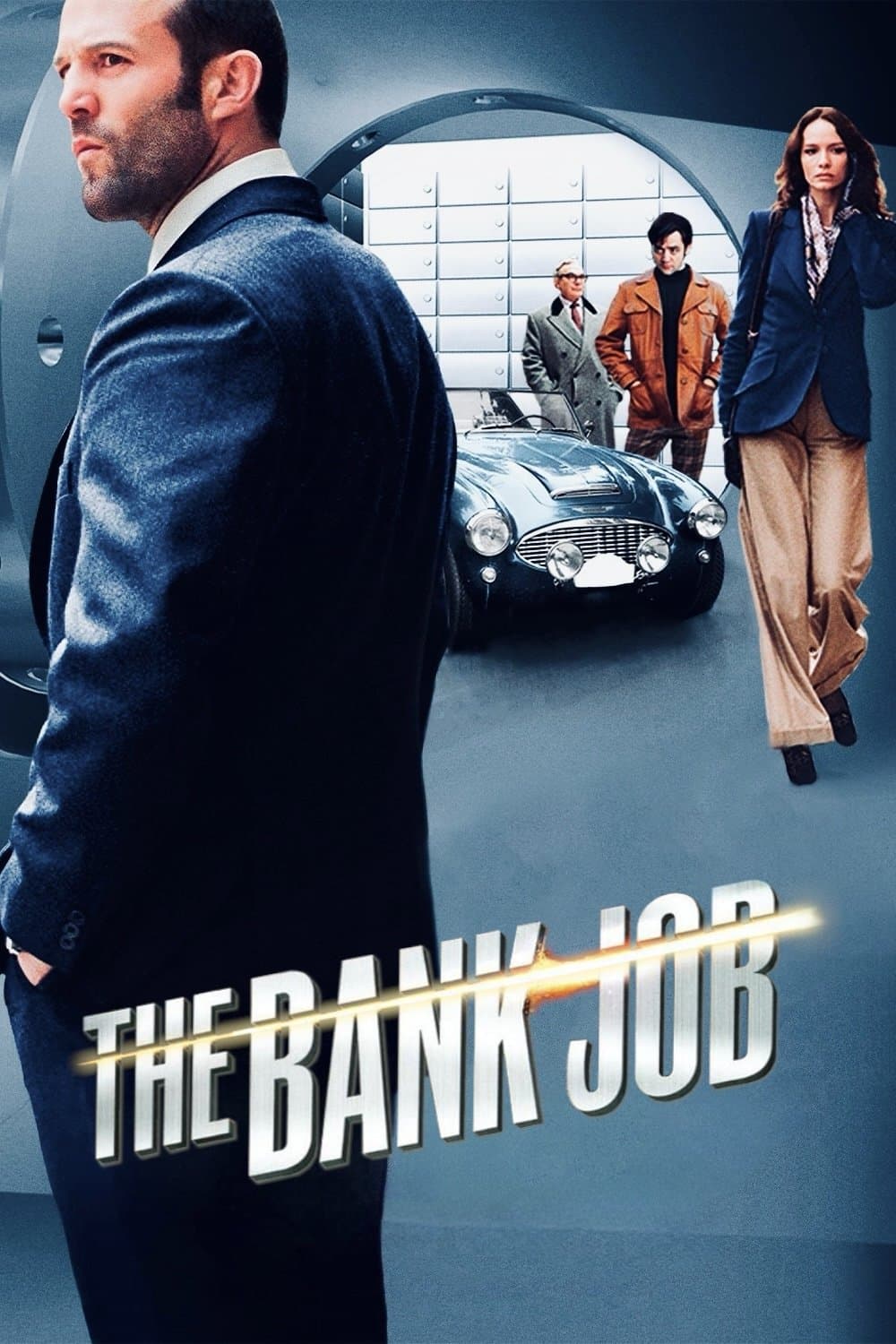
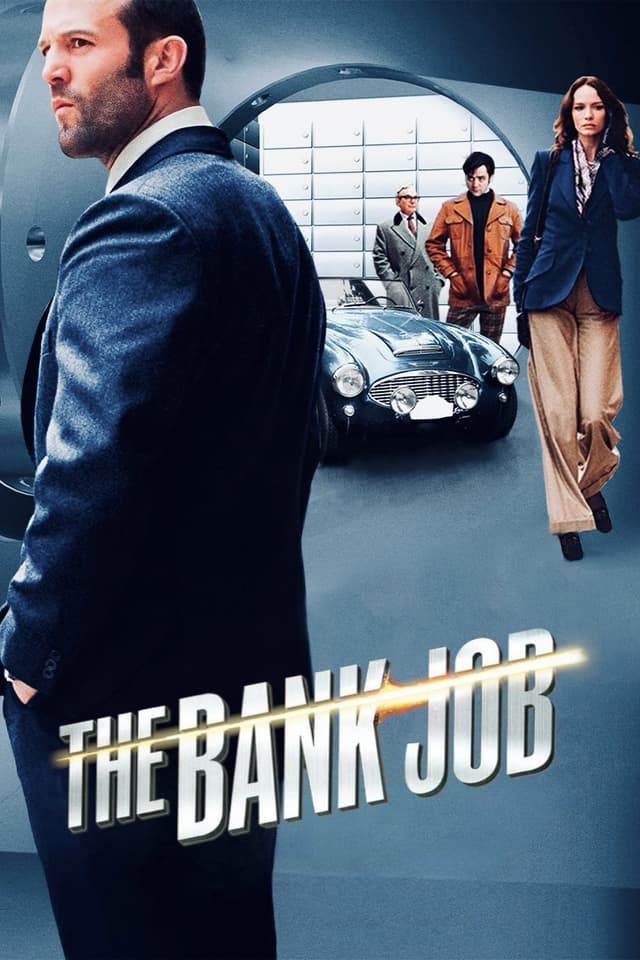
Car dealer Terry Leather is offered the chance of a lifetime when his ex-girlfriend Martine returns from years abroad with a tip on a vault full of safe deposit boxes at a Lloyds Bank branch on Baker Street. As Terry assembles a crew and tunnels beneath the bank in September 1971, he discovers the boxes contain not only cash and jewels but compromising material that will pit him against pornographers, corrupt police, MI5, and the British government itself.
What Is the Budget of The Bank Job (2008)?
The Bank Job (2008), directed by Roger Donaldson and distributed by Lionsgate, was produced on a reported budget of $20,000,000. The British heist thriller dramatized the real 1971 Baker Street robbery, in which a gang tunneled into the safe deposit vault of Lloyds Bank on Baker Street in London and made off with cash, jewelry, and reportedly compromising material that the gang did not realize they were stealing. Mosaic Media Group and Skyline Productions co-financed the film with Relativity Media, positioning it as a mid-budget star vehicle for Jason Statham at a moment when the actor was transitioning from the Transporter franchise into more grounded dramatic roles.
The $20,000,000 figure reflected a disciplined British production model. Roger Donaldson, a New Zealand director with a track record on similarly scaled fact-based thrillers (Thirteen Days, The World's Fastest Indian), worked from a screenplay by veteran British writing partners Dick Clement and Ian La Frenais. The shoot used real London locations, a period-accurate 1970s production design, and a largely British ensemble of supporting players in place of expensive Hollywood co-leads, all of which kept the negative cost well below the typical American studio crime drama of the same year.
Key Budget Allocation Categories
The Bank Job's $20,000,000 budget was distributed across several core production areas:
- Period Production Design: Recreating 1971 London required extensive set dressing, vintage vehicles, era-appropriate wardrobe, and dressed-down exteriors that could pass as Baker Street and surrounding Marylebone forty years earlier. Production designer Simon Elliott and his team sourced period telephones, banking equipment, signage, and street furniture to keep the look consistent across the heist sequences and the surrounding social and political milieu.
- Jason Statham Lead Performance Fee: Coming off Crank (2006), War (2007), and the first two Transporter films, Statham commanded a fee that anchored the film's above-the-line costs. The film was structured around his presence as Terry Leather, the small-time car dealer who organizes the crew, and the budget reflected the marketing value of his name in international markets.
- London Location Shoot: Principal photography took place largely on practical London streets, in real interiors, and at British studio stages. Shooting in the United Kingdom rather than recreating London on a backlot raised location, permit, and crew costs but delivered the period authenticity the script demanded, and the production used UK film tax relief to offset a portion of the spend.
- British Ensemble Cast: Saffron Burrows as Martine Love, David Suchet as pornographer Lew Vogel, Stephen Campbell Moore, Daniel Mays, James Faulkner, Richard Lintern, and Peter De Jersey filled out a deep supporting cast at British television and stage-actor rates rather than at American studio quotes, keeping the ensemble affordable while still delivering the texture the script needed.
- Stunt and Heist Sequences: The tunneling sequences, the vault break, the rooftop ham-radio interception, and the climactic confrontations required practical stunt work, controlled demolitions for the tunnel breakthrough, and coordinated multi-camera coverage of cramped underground spaces. A dedicated stunt unit and special effects supervisor delivered the work without the digital effects spend that a comparable American film would have absorbed.
- Score and Sound Design: Composer J. Peter Robinson delivered a tense, period-flavored score blending orchestral cues with 1970s-era instrumentation. The sound design budget covered Foley work on the tunnel sequences, the radio chatter that gives the film its procedural texture, and licensing of period needle drops used throughout.
How Does The Bank Job's Budget Compare to Similar Films?
At a reported $20,000,000, The Bank Job sits at the lean end of the heist thriller spectrum, well below its American studio peers and roughly in line with other British crime films of the period. The comparison set illustrates how a disciplined budget can produce a strong ROI when the genre and execution align:
- Inside Man (2006): Budget $45,000,000 | Worldwide $184,376,790. Spike Lee's Manhattan bank heist with Denzel Washington and Clive Owen cost more than twice The Bank Job and earned nearly three times the worldwide gross, but its ROI was comparable thanks to the star wattage that drove a much larger marketing push.
- The Italian Job (2003): Budget $60,000,000 | Worldwide $176,070,171. F. Gary Gray's remake spent three times The Bank Job's budget on Mark Wahlberg, Charlize Theron, and the Mini Cooper-driven Los Angeles chase set pieces, illustrating the cost gap between a Hollywood ensemble heist and a London-based period piece.
- Hell or High Water (2016): Budget $12,000,000 | Worldwide $37,094,520. David Mackenzie's Texas bank-robbery drama is the closest budget-to-result comparison, demonstrating that a disciplined, character-driven heist film can deliver a strong return at well under $20,000,000.
- Layer Cake (2004): Budget $6,500,000 | Worldwide $11,471,656. Matthew Vaughn's breakout London crime film cost roughly a third of The Bank Job and earned a fraction of its gross, showing how Statham's international name recognition expanded The Bank Job's commercial ceiling beyond the typical British crime indie.
- Lock, Stock and Two Smoking Barrels (1998): Budget $1,350,000 | Worldwide $28,300,000. Guy Ritchie's low-budget London caper, which launched Jason Statham's film career, returned more than twenty times its budget and remains the high-water mark for ROI in the modern British crime genre.
The Bank Job Box Office Performance
The Bank Job opened in the United States on March 7, 2008, finishing third at the domestic box office with $5,895,627 over its opening weekend behind 10,000 BC and the third weekend of The Spiderwick Chronicles. Lionsgate platformed the film into 1,613 theaters and held its release pattern steady through March and April, riding strong word of mouth and review coverage to a long-tail domestic run.
Against a reported production budget of $20,000,000, the film needed approximately $50,000,000 in worldwide gross to reach profitability when accounting for marketing and distribution costs. Here is the financial breakdown:
Box Office Breakdown
The Bank Job (2008)

The Bank Job returned approximately $1.47 to $1.65 in theatrical revenue for every $1 invested when measured against total estimated production and marketing spend, a strong result for a mid-budget British heist film without major American stars beyond Statham. The domestic share of the gross was $30,060,660 against an international share of $36,082,345, a roughly 45/55 split that confirmed the property traveled well to UK, European, and Asian markets where Statham's name carried genre weight.
The result strengthened Statham's case as a bankable lead for grounded action and crime material and reinforced Lionsgate's willingness to acquire mid-budget British genre titles for North American distribution. Donaldson did not direct another theatrical feature for several years, but the financial and critical performance of The Bank Job kept the screenwriting team of Clement and La Frenais active on subsequent British film and television projects.
The Bank Job Production History
The screenplay by Dick Clement and Ian La Frenais grew out of years of research into the September 1971 Baker Street robbery, an audacious tunnel-and-vault job at the Lloyds Bank branch at 185 Baker Street, London. The robbers used the abandoned Le Sac handbag shop two doors down to dig a forty-foot tunnel beneath the intervening chicken restaurant, broke through the floor of the vault on a Saturday night, and emerged on Monday morning with the contents of more than 250 safe deposit boxes. The case became one of the most discussed crimes of the era after a ham-radio enthusiast intercepted the robbers' walkie-talkie chatter live and alerted police, and persistent reports surfaced that the resulting D-notice issued by the British government suppressed news coverage because compromising material on a member of the Royal Family had been recovered from a box belonging to a London pornographer.
Clement and La Frenais, the writing partnership behind The Likely Lads, Porridge, Auf Wiedersehen Pet, and the Lock, Stock screenplay polish for Guy Ritchie, used the official cone of silence around the case as license to construct a speculative dramatization. Their script wove the robbery into a wider story involving Princess Margaret, MI5, a Trinidadian black-power activist named Michael X who allegedly held the compromising photographs, and a network of Soho pornographers and corrupt Metropolitan Police officers. The screenwriters worked with British investigative journalist George McIndoe, whose research underpinned much of the film's claim to factual grounding.
Roger Donaldson was attached to direct in 2006 on the strength of his fact-based thriller pedigree. Producers Charles Roven and Steven Chasman financed the project through Mosaic Media Group and Skyline Productions with Relativity Media co-financing. Principal photography ran in 2007 in London, England, with location work along Baker Street and Marylebone, interior shooting at British studio stages, and additional photography in Australia for a small number of sequences. The UK film tax credit offset a portion of the negative cost and made London the obvious choice over an American backlot recreation.
The Bank Job premiered at the 2008 Berlin International Film Festival before its March 7, 2008 wide release in the United States and its February 29, 2008 release in the United Kingdom. The film served as a mid-career bridge for Jason Statham, demonstrating that he could carry a grounded, dialogue-heavy ensemble piece rather than the high-concept action vehicles that had defined his post-Transporter output. Within two years he had moved into The Expendables and reinforced his status as a top-tier action star, with The Bank Job standing as one of the more critically respected films of his pre-Expendables filmography.
Awards and Recognition
The Bank Job received modest awards attention concentrated in British and genre circles. The film was nominated for the Empire Award for Best British Film at the 2009 Empire Awards, losing to In Bruges. At the 2008 British Independent Film Awards consideration, the film drew positive notices but did not convert to nominations in the major categories. Composer J. Peter Robinson was recognized at the 2008 BMI Film Music Awards for the score.
Critically, the film featured on a number of year-end mid-budget surprise lists for 2008 and was cited by several British film publications as a strong example of the homegrown crime genre operating at international scale. It did not factor into the major American awards conversation, which tracked toward higher-profile fare such as No Country for Old Men, The Dark Knight, and Slumdog Millionaire across the 2008 season, but its standing in the modern British heist canon has only strengthened in the years since.
Critical Reception
The Bank Job opened to broadly positive reviews and holds a 79% approval rating on Rotten Tomatoes based on 167 critic reviews, with a critical consensus that praised its taut storytelling, period detail, and adult tone. On Metacritic, the film scored 65 out of 100, indicating generally favorable reviews. Audiences surveyed by CinemaScore gave the film a B+, a solid grade for an R-rated heist drama opening against family-oriented competition.
Critics highlighted Roger Donaldson's steady direction, the dense Clement and La Frenais screenplay, and Jason Statham's most restrained leading performance to that point in his career. Roger Ebert awarded the film three and a half stars out of four, writing that "this is the rarest of crime movies, one in which we care about almost everyone, even some of the villains," and praising the way Donaldson handled the multiple threads of robbers, police, and government operatives. A. O. Scott of The New York Times called it "a cleverly constructed, thoroughly engrossing piece of work" that delivered "old-school pleasures with a contemporary sense of moral complexity."
British critical reaction was equally positive. Peter Bradshaw of The Guardian praised the script's "sly, dense detailing" and the way the film treated the audience as adults, while Empire magazine gave the film four stars and singled out Saffron Burrows and David Suchet for performances that elevated what could have been pulp into something more substantial. The Bank Job has since become a frequent reference point in writeups of modern British heist filmmaking and a recurring entry on lists of the strongest Jason Statham performances, with its reputation continuing to grow on streaming and home video.
Frequently Asked Questions
How much did it cost to make The Bank Job (2008)?
The reported production budget was $20,000,000. The film was co-financed by Lionsgate, Mosaic Media Group, Skyline Productions, and Relativity Media, with UK film tax relief offsetting a portion of the negative cost. The disciplined budget reflected the British production model, a largely London-based shoot, and a supporting ensemble drawn from British stage and television rather than American studio quotes.
How much did The Bank Job earn at the box office?
The film grossed $30,060,660 domestically and $36,082,345 internationally, for a worldwide total of $66,143,005. It opened to $5,895,627 in the United States on March 7, 2008, finishing third behind 10,000 BC and The Spiderwick Chronicles before riding strong reviews to a long domestic run.
Was The Bank Job a box office success?
Yes. Against a $20,000,000 production budget and an estimated $20,000,000 to $25,000,000 in marketing spend, the film returned approximately $1.47 to $1.65 in worldwide gross for every $1 invested. It is one of the more profitable British heist films of the 2000s on a percentage basis and is widely cited as a high point of Jason Statham's pre-Expendables filmography.
Who directed The Bank Job?
New Zealand director Roger Donaldson directed the film, working from a screenplay by veteran British writing partners Dick Clement and Ian La Frenais. Donaldson came to the project on the strength of earlier fact-based thrillers including Thirteen Days, Cadillac Man, and The World's Fastest Indian.
Is The Bank Job based on a true story?
Yes. The film dramatizes the September 1971 Baker Street robbery, in which a gang tunneled forty feet under a chicken restaurant on Baker Street and broke into the safe deposit vault of the Lloyds Bank branch at 185 Baker Street, London. A ham-radio enthusiast intercepted the gang's walkie-talkie chatter and alerted police, and the case has been the subject of persistent reports that the British government issued a D-notice suppressing news coverage because compromising material was recovered from a safe deposit box.
Where was The Bank Job filmed?
Principal photography took place in 2007 in London, England, with location work on Baker Street and across Marylebone, and interior photography at British studio stages. The production also did a small amount of additional photography in Australia. The UK film tax credit was a key factor in keeping the negative cost at $20,000,000.
How does The Bank Job compare to other heist films?
At $20,000,000, The Bank Job cost less than half what Inside Man (2006) spent at $45,000,000 and one third what The Italian Job (2003) spent at $60,000,000. Its worldwide gross of $66,143,005 trailed both films in absolute terms but matched or exceeded them on a return-on-investment basis. Closer comparisons such as Hell or High Water (2016) and Layer Cake (2004) confirm that disciplined mid-budget heist filmmaking can deliver strong returns when execution aligns with the genre.
Who stars in The Bank Job?
Jason Statham stars as Terry Leather, the car dealer who organizes the crew. Saffron Burrows plays Martine Love, the ex-girlfriend with the inside tip, David Suchet plays Soho pornographer Lew Vogel, and Stephen Campbell Moore, Daniel Mays, James Faulkner, Richard Lintern, and Peter De Jersey fill out the supporting cast.
What did critics think of The Bank Job?
The film received broadly positive reviews, with a 79% approval rating on Rotten Tomatoes based on 167 critic reviews and a 65 out of 100 score on Metacritic. Audiences gave it a B+ CinemaScore. Roger Ebert awarded the film three and a half stars out of four, and A. O. Scott of The New York Times called it a cleverly constructed, thoroughly engrossing piece of work. British critics including Peter Bradshaw of The Guardian and Empire magazine also gave the film strongly favorable reviews.
Did The Bank Job win any awards?
The Bank Job received a nomination for the Empire Award for Best British Film at the 2009 Empire Awards, losing to In Bruges. Composer J. Peter Robinson was recognized at the 2008 BMI Film Music Awards for the score. The film did not factor into the major American awards conversation in a season dominated by No Country for Old Men, The Dark Knight, and Slumdog Millionaire, but its standing in the modern British heist canon has continued to grow.
Filmmakers
The Bank Job (2008)

Build budgets like this one in Saturation
Start from an industry-standard feature film template, import the schedule and rates you already have, and let the cost report keep itself current as you spend. Real-time collaboration, no spreadsheets.