Up Budget
 AnimationComedyFamilyAdventure1h 36m
Updated
Synopsis
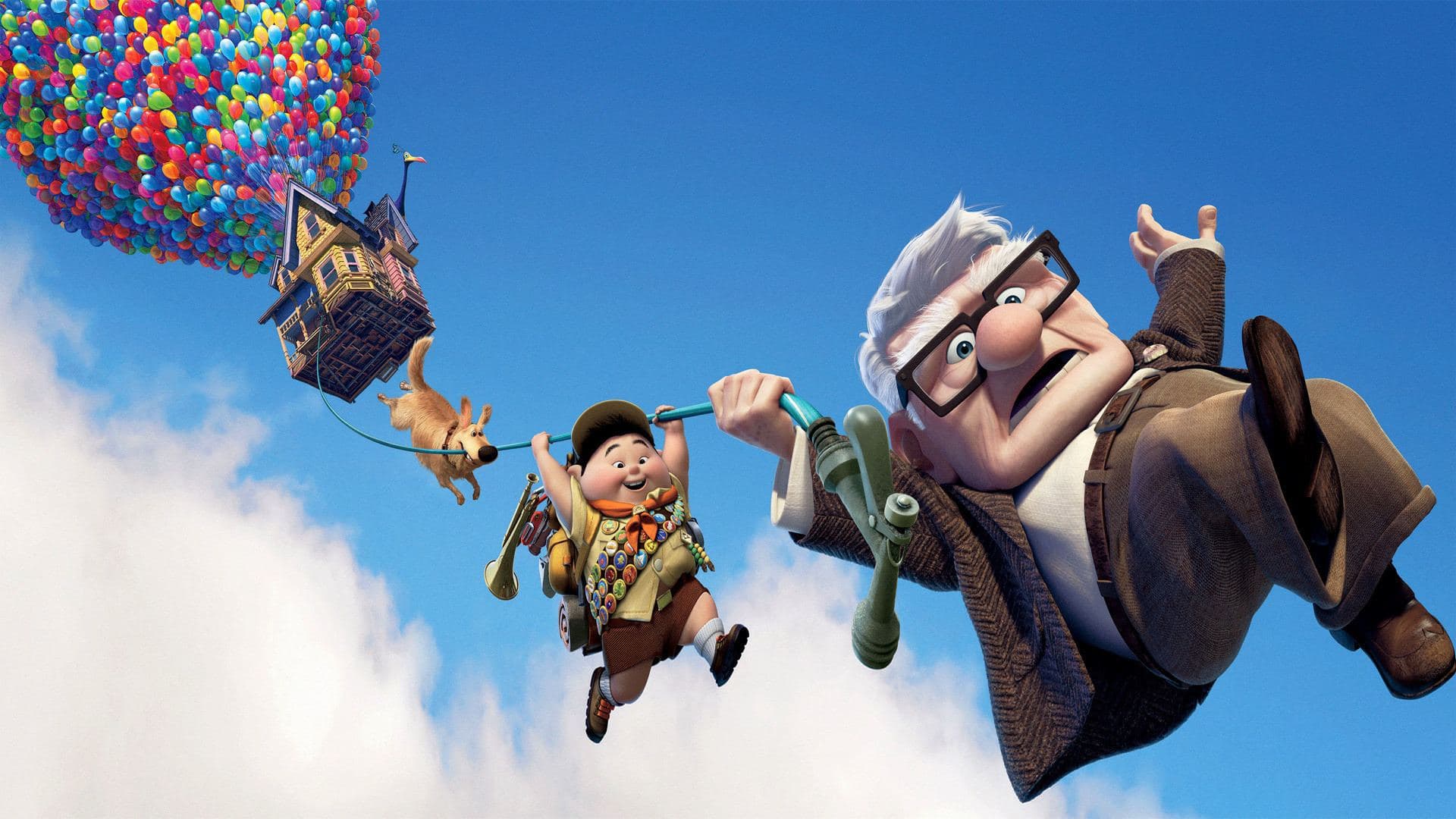
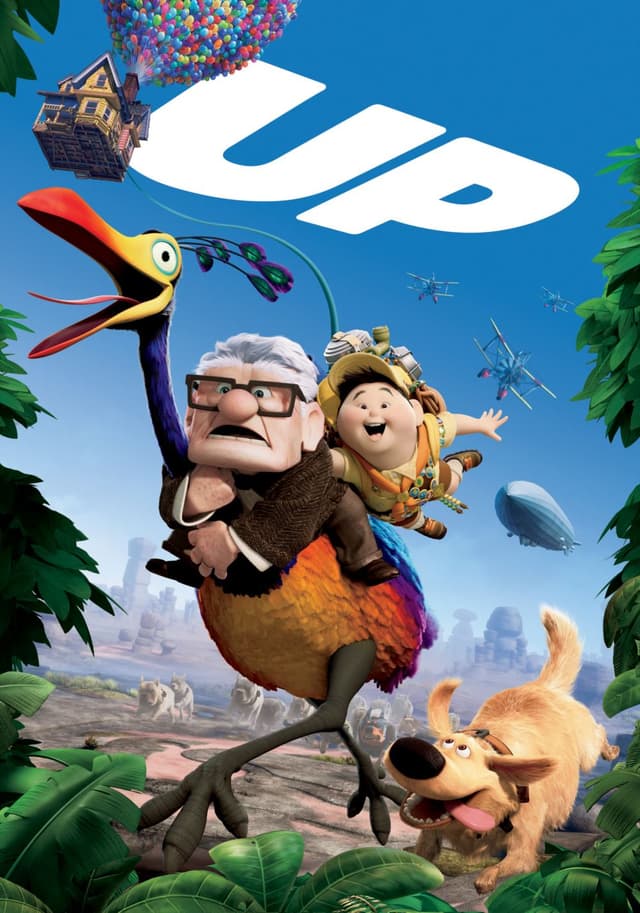
Seventy-eight-year-old widower Carl Fredricksen, facing eviction to a retirement home, ties thousands of balloons to his house and lifts off for South America to fulfill a promise he made to his late wife Ellie. An unexpected stowaway, eight-year-old Wilderness Explorer Russell, joins Carl on the journey to Paradise Falls, where they encounter a rare bird, a pack of talking dogs, and the famous explorer who inspired Carl's childhood dreams of adventure.
What Is the Budget of Up?
Up (2009), directed by Pete Docter and distributed by Walt Disney Studios Motion Pictures, was produced by Pixar Animation Studios on a budget of $175,000,000. Jonas Rivera produced the film, which was Pixar's tenth feature and their first to be released in Disney Digital 3D. The budget reflects the studio's premium approach to animated filmmaking, where every frame is crafted through a multi-year pipeline of story development, character animation, and technical innovation.
At $175 million, Up sits in the upper range of Pixar's production budgets for the era, comparable to WALL-E ($180 million) and Ratatouille ($150 million). The investment was justified by Pixar's track record of converting high production costs into outsized theatrical returns and long-tail merchandise revenue. The film's ambitious concept, combining intimate emotional storytelling with large-scale adventure set pieces across multiple distinct environments, required a production scope that matched the narrative ambition.
Key Budget Allocation Categories
Up's $175 million budget was allocated across the areas that define Pixar's production model:
- Character Animation and Design: The film's stylized character designs presented unique animation challenges. Carl Fredricksen's geometric, block-shaped proportions required custom rigging systems, and rendering realistic cloth movement on his body was one of the production's most technically demanding tasks. Russell's rounded design and the extensive cast of dogs with distinct personalities each required dedicated character development pipelines.
- Environment Design and Research: Pete Docter and 11 Pixar artists traveled to Venezuela for three days to study the tepui formations that inspired Paradise Falls. The research trip informed the textures, lighting, and botanical detail of the South American environments. The film required building multiple distinct worlds: Carl's neighborhood, the skies during the balloon flight, the tepui plateau, and the interior of Muntz's airship.
- Balloon Simulation and Technical Effects: The film's signature image, Carl's house lifted by thousands of balloons, required developing new simulation technology. Each scene featured between 10,297 and 20,622 individual balloons, each with independent physics for movement, light interaction, and string dynamics. This single visual element consumed a disproportionate share of the technical effects budget.
- 3D Stereoscopic Pipeline: As Pixar's first stereoscopic 3D release, Up required building a new production pipeline for 3D rendering. Every shot needed to be composed and lit for depth in addition to the standard 2D composition, adding complexity to every stage of the animation process. The 3D work was supervised to enhance the emotional storytelling rather than create spectacle, particularly in the film's opening montage.
- Score and Sound Design: Michael Giacchino composed the score, which would go on to win the Academy Award for Best Original Score. The music was central to the film's emotional impact, particularly the "Married Life" montage that opens the film with minimal dialogue. Giacchino's orchestral approach, recorded with a full symphony, represented a significant post-production investment.
How Does Up's Budget Compare to Similar Films?
At $175,000,000, Up sits in the premium tier of animated features. The comparison with contemporaneous animated films reveals Pixar's position in the market:
- WALL-E (2008): Budget $180,000,000 | Worldwide $521,300,000. Pixar's previous film had a slightly higher budget but lower worldwide gross, making Up the more commercially efficient production.
- Ratatouille (2007): Budget $150,000,000 | Worldwide $623,700,000. Brad Bird's culinary adventure achieved strong returns at a lower budget, though neither matched Up's combination of critical and commercial success.
- Ice Age: Dawn of the Dinosaurs (2009): Budget $90,000,000 | Worldwide $886,700,000. Blue Sky Studios achieved higher worldwide gross at roughly half Up's budget, though without comparable critical recognition.
- Coraline (2009): Budget $60,000,000 | Worldwide $124,600,000. Laika's stop-motion debut shows how independent animation studios operate at a fraction of Pixar's scale.
- Toy Story 3 (2010): Budget $200,000,000 | Worldwide $1,067,000,000. Pixar's next release carried a higher budget and became the studio's first film to cross $1 billion, setting the benchmark for the franchise model.
Up Box Office Performance
Up opened on May 29, 2009, earning $68.2 million in its domestic opening weekend. The film was the sixth-highest-grossing release of 2009 and became another Pixar hit in a streak that had included Finding Nemo, The Incredibles, Cars, Ratatouille, and WALL-E. The film's emotional depth attracted audiences beyond the typical animated film demographic, contributing to strong holdover performance through the summer.
Against a production budget of $175,000,000, the film needed approximately $400,000,000 to $450,000,000 in worldwide gross to reach break-even when accounting for marketing and distribution costs. Here is the financial breakdown:
Box Office Breakdown
Up

At 320% ROI on production costs alone, Up was a clear commercial success that reinforced Pixar's position as the most consistently profitable animation studio in the industry. The film's performance was particularly strong in international markets, where the universal themes of love, loss, and adventure translated across cultures. Home video and merchandise revenue extended the film's commercial life well beyond its theatrical run, with the characters, particularly Dug the dog and Russell, becoming enduring parts of the Disney Parks and consumer products ecosystem.
Up Production History
Pete Docter began developing Up in 2004, originally under the working title "Heliums." The concept grew from Docter's desire to create a story about escape, specifically an elderly man who uses balloons to fly his house to South America rather than move to a retirement home. Bob Peterson, who also voiced the dog Dug and the bird Kevin, co-wrote the screenplay and served as co-director through much of the production before stepping into a supporting role.
To ensure the South American environments felt authentic, Docter led a team of 11 Pixar artists on a three-day research trip to the tepui formations in Venezuela. The flat-topped mountains, with their isolated ecosystems and otherworldly appearance, became the visual foundation for Paradise Falls. The team documented textures, plant life, rock formations, and atmospheric conditions that informed every aspect of the film's environmental design.
The character design process was driven by geometric principles: Carl was built from squares and rectangles to convey his rigidity and stubbornness, while Russell was designed with circles and curves to suggest openness and energy. Ed Asner was cast as Carl after Docter heard the "squint in his voice," as Docter described it. Nine-year-old Jordan Nagai was cast as Russell after an open audition where his natural tendency to keep talking after the director called "cut" convinced the team he embodied Russell's restless energy.
Up made history as the first animated film and the first 3D film to open the Cannes Film Festival, premiering on May 13, 2009. The Cannes selection signaled the film industry's recognition that animated filmmaking had reached the same artistic tier as live-action cinema. The film was also Pixar's first stereoscopic 3D release, a format that would become standard for the studio's subsequent features.
Awards and Recognition
Up won two Academy Awards: Best Animated Feature and Best Original Score for Michael Giacchino. The film was also nominated for Best Picture, becoming only the second animated film in history to receive that nomination after Beauty and the Beast (1991). Additional Oscar nominations included Best Original Screenplay and Best Sound Editing.
The film won both of its Golden Globe nominations (Best Animated Feature and Best Original Score) and took home two BAFTA Awards from four nominations. Giacchino's score, particularly the "Married Life" suite that accompanies the film's celebrated opening montage, became one of the most recognized pieces of film music from the 2000s. The film regularly appears on lists of the greatest animated films ever made, with the wordless opening montage frequently cited as one of the most emotionally powerful sequences in cinema history.
Critical Reception
Up received near-universal acclaim, earning a 98% approval rating on Rotten Tomatoes from 291 critics with an average score of 8.7 out of 10. On Metacritic, the film scored 88 out of 100, indicating "universal acclaim." Audiences gave it an A+ via CinemaScore, the highest possible grade.
Critics praised the film's emotional sophistication, particularly the opening montage depicting Carl and Ellie's life together, which was widely described as one of the most moving sequences in any film, animated or otherwise. The balance between intimate character drama and large-scale adventure was cited as a hallmark of Pixar's storytelling at its peak. Roger Ebert gave the film four stars, calling it "a wonderful film" that "is not about adventures, or down through the ages, or through a child, or into legend. It is about life itself."
The film's Best Picture nomination at the Academy Awards was seen as a watershed moment for animation, arriving the same year the Academy expanded the category from five to ten nominees. While some viewed the expansion as the enabler of the nomination, critics argued that Up would have merited consideration under any format, given the quality of its storytelling and the universal emotional response it generated. The film's reputation has only strengthened over time, with the "Married Life" montage becoming a cultural touchstone for visual storytelling without dialogue.
Frequently Asked Questions
How much did it cost to make Up (2009)?
The production budget was $175,000,000, covering Pixar's multi-year animation pipeline including character design, environment creation, balloon simulation technology, and the studio's first stereoscopic 3D pipeline. Marketing and distribution costs through Disney are estimated at an additional $150,000,000 to $175,000,000.
How much did Up (2009) earn at the box office?
Up grossed $293,004,164 domestically and $442,099,790 internationally, totaling $735,103,954 worldwide. It opened with $68.2 million in its domestic opening weekend.
Was Up (2009) profitable?
Yes. Against a production budget of $175,000,000 and estimated total costs of $325,000,000 to $350,000,000, the film earned $735,103,954 theatrically, representing a 320% ROI on production costs. Home video and merchandise revenue added substantially to the total return.
What were the biggest costs in producing Up?
The primary cost drivers were character animation (particularly Carl's cloth simulation and the stylized character rigging), balloon simulation technology (10,297 to 20,622 individual balloons per scene), environment design informed by a Venezuela research trip, the new stereoscopic 3D pipeline, and Michael Giacchino's orchestral score.
How does Up's budget compare to other Pixar films?
At $175,000,000, Up sits in the mid-to-upper range for Pixar. Comparable budgets: WALL-E (2008, $180,000,000), Ratatouille (2007, $150,000,000), Toy Story 3 (2010, $200,000,000). Later Pixar films like Inside Out 2 (2024) would exceed $200,000,000.
What awards did Up (2009) win?
Up won two Academy Awards: Best Animated Feature and Best Original Score (Michael Giacchino). It was also nominated for Best Picture, becoming only the second animated film to receive that nomination. Additional honors include two Golden Globes and two BAFTA Awards.
Was Up nominated for Best Picture at the Oscars?
Yes. Up was the second animated film in history to receive a Best Picture nomination at the Academy Awards, after Beauty and the Beast (1991). The nomination came in the first year the category expanded from five to ten nominees.
Who directed Up and who were the key crew members?
Directed by Pete Docter, co-written by Docter and Bob Peterson, produced by Jonas Rivera, with music by Michael Giacchino and editing by Kevin Nolting. Produced by Pixar Animation Studios for Walt Disney Pictures.
Where was Up's research conducted?
Pete Docter and 11 Pixar artists traveled to Venezuela for three days to study the tepui formations that inspired the film's Paradise Falls. The team documented textures, plant life, rock formations, and atmospheric conditions to ensure environmental authenticity.
What did critics think of Up (2009)?
Up received near-universal acclaim with a 98% Rotten Tomatoes score from 291 critics (8.7/10 average), 88/100 on Metacritic, and an A+ CinemaScore. The opening "Married Life" montage is widely cited as one of the most emotionally powerful sequences in cinema history.
Filmmakers
Up

Official Trailer
Build budgets like this one in Saturation
Start from an industry-standard feature film template, import the schedule and rates you already have, and let the cost report keep itself current as you spend. Real-time collaboration, no spreadsheets.