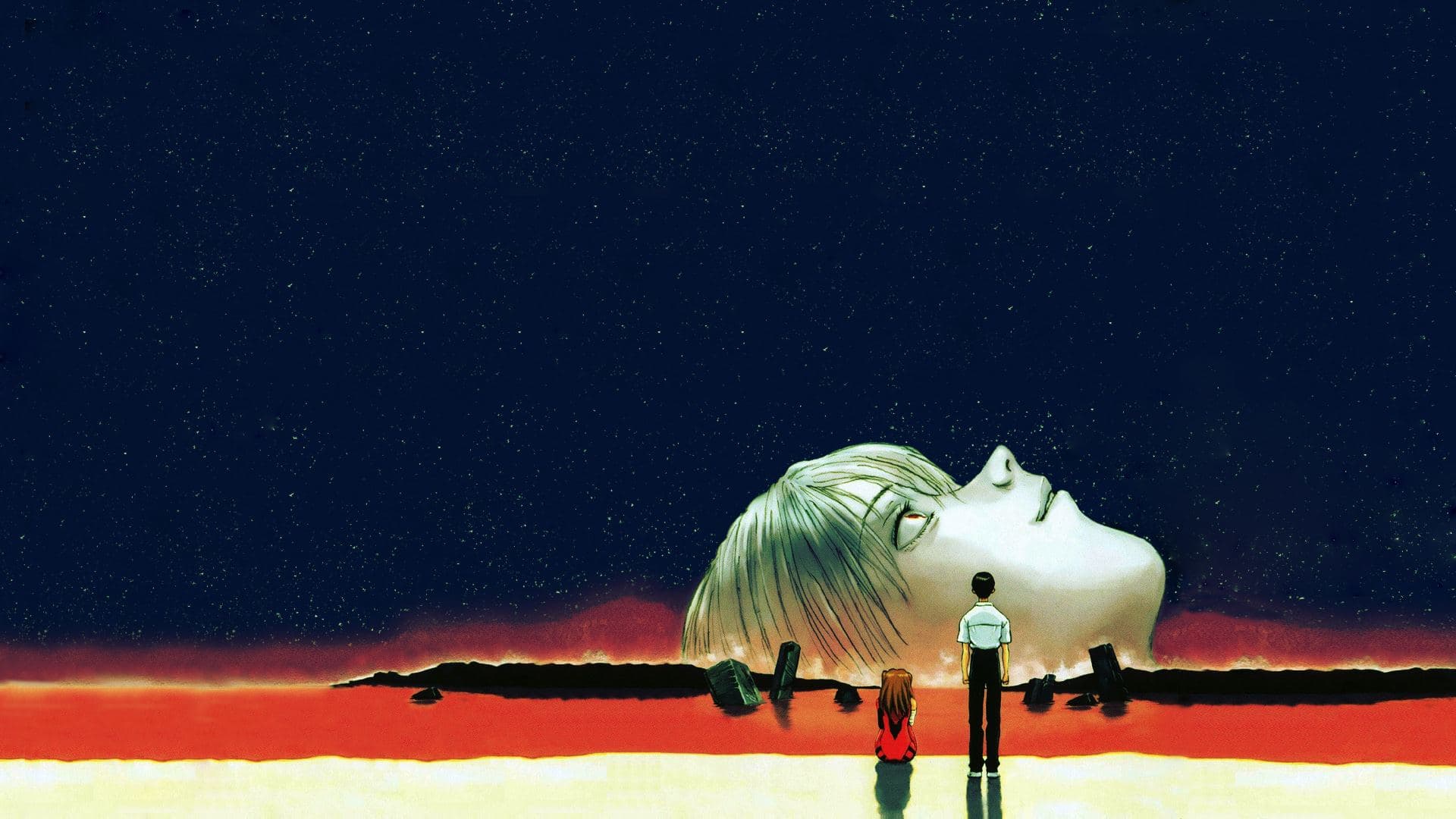
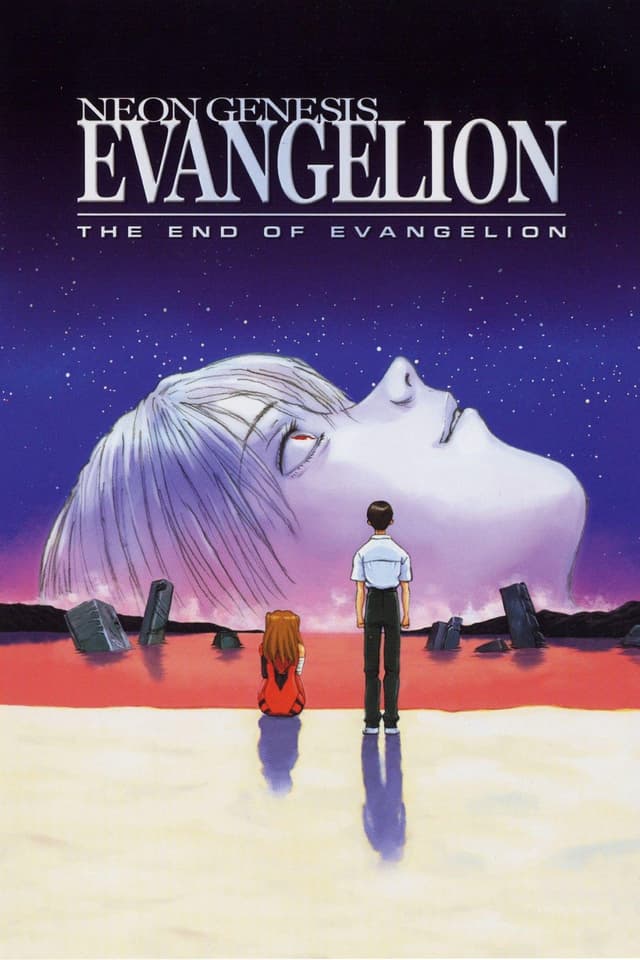
Neon Genesis Evangelion The End of Evangelion Budget
Updated
Synopsis
Hideaki Anno and Kazuya Tsurumaki's 1997 alternative-ending theatrical film to the Neon Genesis Evangelion television series, in which the human race is forcibly merged into a single consciousness during the Third Impact while teenage Eva pilot Shinji Ikari is forced to confront his isolation, his identity, and the value of choosing to exist as a separate self. Produced by Studio Gainax with Production I.G as animation co-producer, the film blends cel animation, early digital compositing, and live-action inserts (including cinema audience footage and graffiti from the studio's own vandalized walls) into a notoriously uncompromising apocalyptic finale that overwrites the original TV ending as the canonical conclusion of the series.
What Is the Budget of Neon Genesis Evangelion: The End of Evangelion (1997)?
Neon Genesis Evangelion: The End of Evangelion, the 1997 theatrical film co-directed by Hideaki Anno and Kazuya Tsurumaki at Studio Gainax in collaboration with Production I.G, has no publicly disclosed production budget. Japanese animated features of this period almost never report itemized budgets through Western industry channels such as Box Office Mojo or The Numbers, and Gainax did not release a financial breakdown when the film was financed and produced through the Eva Production Committee, a multi-company kabushiki kaisha syndicate that included King Records, Movic, TV Tokyo, NAS, and Gainax itself.
Working from the production profile (an 87-minute feature that combined newly produced theatrical animation with extensive new sequences replacing the original television finale, the involvement of Production I.G as an animation co-producer, a digital-and-cel hybrid pipeline that included some of the earliest large-scale composited CG-and-2D work in Japanese theatrical animation, a name-brand voice cast carried over from the 1995 to 1996 TV series, and a heavily promoted Toho theatrical release), the working budget for The End of Evangelion almost certainly fell in the $5,000,000 to $10,000,000 range typical of high-end Japanese theatrical anime features of the late 1990s. The film was made on a compressed timeline of roughly six months between the March 1997 partial release of Death & Rebirth and the July 1997 premiere of The End of Evangelion, a schedule that historically inflates labor costs through overtime and outsourced animation contracts.
Key Budget Allocation Categories
While the film's exact financial breakdown has not been released, its production approach points to a handful of dominant cost lines characteristic of high-end late-1990s Japanese theatrical anime:
- Theatrical-Quality 2D Animation: The film was animated at theatrical resolution and frame counts substantially above the 1995 TV series, with the climactic Third Impact sequences featuring some of the highest cel counts in Gainax's history. Key animators including Mitsuo Iso, Shinya Ohira, and Yoshinori Kanada delivered standout sequences at full theatrical rates, and the in-between work was distributed across Gainax's in-house team and outsourced studios.
- Production I.G Animation Co-Production: Production I.G, then fresh off Mamoru Oshii's 1995 Ghost in the Shell, joined as an animation production partner and contributed significant key animation, in-between, and digital compositing capacity. Production I.G's involvement is one of the most identifiable cost lines, given the studio's premium late-1990s rate card.
- Digital Compositing and Early CG: The End of Evangelion was an early Japanese theatrical feature to integrate digital compositing at scale with traditional cel animation, including the Lance of Longinus orbital sequence, the Mass Production Eva swarm, and the abstract Instrumentality sequences. The CG pipeline expense, then a leading-edge investment, was a meaningful line item.
- Voice Cast and Recording: Megumi Ogata (Shinji Ikari), Megumi Hayashibara (Rei Ayanami), Yuko Miyamura (Asuka Langley Soryu), Kotono Mitsuishi (Misato Katsuragi), and the remaining principal cast all reprised their TV-series roles at theatrical rates. Studio time, ADR, and the additional dramatic sequences (notably Asuka's extended Eva-02 combat monologue) drove recording costs above standard TV-series levels.
- Shiro Sagisu Score and Music Licensing: Composer Shiro Sagisu produced new orchestral and choral material for the film, while the production licensed the J.S. Bach choral piece "Komm, susser Tod" with a Mike Wyzgowski English-language lyric and an Arianne Schreiber vocal performance, plus the closing track "Thanatos: If I Can't Be Yours" performed by Loren and Mash. Music budget for original and licensed material was substantial.
- Mecha and Production Design: Designer Ikuto Yamashita extended the Evangelion mechanical design language for the Mass Production Evas and Lance of Longinus, while Shoji Kawamori contributed mechanical concept work consistent with his late-1990s Gainax-adjacent involvement. The propaganda-style title cards, hand-lettered design elements, and live-action inserts (including the controversial cinema audience shots) all carried additional design and production overhead beyond standard feature animation.
- Live-Action and Mixed-Media Sequences: The final reel of Episode 26 (the live-action sequences shot during the Third Impact climax, the cinema audience footage, and the hand-written text inserts) required a small live-action shoot, location filming on Japanese beaches, and post-production integration with the animated material, an unusual mid-budget line item for a Japanese anime feature.
- Theatrical Release and Toho Marketing: Toho-Towa's domestic theatrical rollout in July 1997, including print striking, the heavy domestic marketing campaign, the dual-feature programming with the March 1997 Death & Rebirth, and the soundtrack and tie-in merchandise launch through King Records and Movic, was funded directly by the Eva Production Committee and represented a major share of total investment beyond the negative cost.
How Does The End of Evangelion's Budget Compare to Similar Films?
Without a confirmed figure, comparisons are anchored to the likely $5,000,000 to $10,000,000 working range. The End of Evangelion sits in the same financial tier as other landmark Japanese theatrical anime features of the 1990s and 2000s and as the subsequent Rebuild of Evangelion tetralogy:
- Akira (1988): Budget approximately $11,000,000 | Worldwide approximately $80,000,000 cumulative. Katsuhiro Otomo's landmark cyberpunk feature is the financial and cultural reference point for ambitious 1980s and 1990s Japanese theatrical anime. Its budget, then the largest in Japanese animation history, sits just above the upper bound of The End of Evangelion's likely range and confirms the cost tier for a flagship single-studio anime feature.
- Ghost in the Shell (1995): Budget approximately $10,000,000 | Worldwide approximately $43,000,000 cumulative. Mamoru Oshii's Production I.G feature is the closest contemporary comparable, made by the same Production I.G that co-produced The End of Evangelion, in the same digital-meets-cel transitional period, and at roughly the same scale. The cost profile is the single most useful benchmark for End of Evangelion's probable budget.
- Princess Mononoke (1997): Budget approximately $23,500,000 | Worldwide approximately $194,000,000. Hayao Miyazaki's Studio Ghibli epic, released in Japan one week before The End of Evangelion in July 1997, is the upper financial ceiling for Japanese theatrical animation of the period. Ghibli's budget was roughly twice the likely End of Evangelion figure, reflecting Mononoke's longer production schedule, larger animator headcount, and Toho-Disney international ambitions.
- Perfect Blue (1998): Budget approximately $750,000 | Worldwide approximately $1,000,000 reported US gross. Satoshi Kon's Madhouse-produced psychological thriller is the lower financial bound of late-1990s Japanese theatrical anime, made on roughly a tenth of End of Evangelion's likely budget. The contrast illustrates the spread between flagship theatrical anime and OVA-direct features that received limited cinema windows.
- Spirited Away (2001): Budget approximately $19,000,000 | Worldwide approximately $395,000,000. Miyazaki's subsequent Studio Ghibli Oscar winner shows how Japanese theatrical animation budgets scaled upward over the following four years, and how the End of Evangelion era marked the last moment when a sub-$10 million Japanese animated feature could realistically be the most discussed event in domestic exhibition.
- Evangelion: 3.0+1.0 Thrice Upon a Time (2021): Budget not publicly disclosed (estimated $25,000,000 to $40,000,000) | Worldwide approximately $94,000,000. Hideaki Anno's Rebuild of Evangelion finale, produced by Khara on a budget several times that of The End of Evangelion, demonstrates how the Eva franchise itself scaled financially over the twenty-four years separating the two finales.
The End of Evangelion Box Office Performance
The End of Evangelion opened on July 19, 1997 at 280 screens across Japan through Toho-Towa, becoming a domestic blockbuster despite its uncompromising 87-minute apocalyptic and psychological content. The film earned 1,460,000,000 yen (approximately $13,200,000 at 1997 exchange rates) at the Japanese box office across its theatrical run, ranking as one of the top domestic anime releases of the year. The film received only a limited Western theatrical release through Manga Entertainment and ADV Films in 1998 and 1999, and box office figures from those territories are not publicly aggregated. Its international financial profile is overwhelmingly Japan-domestic, with subsequent global revenue concentrated in home video, soundtrack and merchandise tie-ins, and decades of long-tail streaming and re-release exposure rather than international theatrical receipts.
Box Office Breakdown
Neon Genesis Evangelion The End of Evangelion

Without a confirmed budget, the standard "$X for every $1 invested" calculation cannot be performed with precision. Assuming the midpoint of the estimated range (approximately $7,500,000 production cost plus approximately $4,000,000 in P&A for a total of approximately $11,500,000 in invested capital), the Japanese theatrical gross of approximately $13,200,000 implies roughly $1.15 returned per dollar invested on the theatrical window alone. The film's cumulative ROI is many multiples higher once the home video releases (LaserDisc, VHS, DVD, multiple Blu-ray editions, the 2021 Netflix global streaming deal), the King Records soundtrack album, the manga and merchandise programs, and the foundation laid for the subsequent four-film Rebuild of Evangelion theatrical series are included.
The Japanese box office trajectory followed the late-1990s domestic anime blockbuster pattern. After opening at number one in Japan on its July 19, 1997 weekend, the film held strong through August and continued in theatrical exhibition into the autumn, with the dual-feature Death & Rebirth and End of Evangelion programming functioning effectively as a single extended theatrical event. The total domestic gross of 1.46 billion yen placed The End of Evangelion among the top domestic releases of 1997, behind Princess Mononoke (which opened one week earlier on July 12 at 18.5 billion yen) but ahead of nearly every other Japanese-produced theatrical release of the year.
The End of Evangelion Production History
The production of The End of Evangelion began under conditions of considerable controversy. The original Neon Genesis Evangelion television series, which had aired on TV Tokyo from October 1995 to March 1996, concluded with two famously experimental and budget-constrained final episodes (Episode 25 and Episode 26) that consisted largely of internal monologue, abstract imagery, recycled footage, and storyboard-style sketches in place of fully animated sequences. The reaction from a significant portion of the Japanese fan community was hostile, with death threats sent to Gainax and to director Hideaki Anno personally, and Studio Gainax itself reportedly vandalized in the months following the broadcast.
Against this backdrop, Gainax and King Records announced a theatrical Evangelion film project intended to revisit and complete the series. The first instalment, Neon Genesis Evangelion: Death & Rebirth, premiered in Japan on March 15, 1997. The Death portion was a clip-show recap of the television series, and the Rebirth portion was originally intended as the first 30 minutes of a complete theatrical finale. Production delays meant only a partial Rebirth segment shipped in March, and the full theatrical finale was rescheduled to a second release four months later. Hideaki Anno reworked the material for that second release, expanding it into the standalone film The End of Evangelion, conceived as a parallel-yet-superseding theatrical retelling of the events of TV Episodes 25 and 26.
Co-direction of the film was credited to Hideaki Anno (Episode 25: Air) and Kazuya Tsurumaki (Episode 26: My Pure Heart for You), with Tsurumaki, who would later direct FLCL and the Rebuild of Evangelion films, taking primary responsibility for substantial portions of the second half. Production I.G joined as animation co-production partner, supplying key animation, in-between work, and the digital compositing pipeline that had been pioneered on Ghost in the Shell in 1995. Animation production was distributed across Gainax's in-house team, Production I.G, and numerous outsourced subcontractors, with star key animators including Mitsuo Iso, Shinya Ohira, Yoshinori Kanada, and Hiroyuki Imaishi (who would later co-found Studio Trigger) delivering signature sequences.
The compressed schedule (roughly six months between the March 1997 Death & Rebirth release and the July 1997 The End of Evangelion premiere) created the working conditions for which the film became infamous internally. Anno integrated genuine fan response into the film itself, with letters from hostile viewers shown on-screen, graffiti from the vandalized Gainax studio recreated as live-action inserts, and cinema-audience footage shot inside Japanese theaters playing back in the final reel. Composer Shiro Sagisu produced new score material across an even more compressed timetable, with the "Komm, susser Tod" English-language adaptation of the J.S. Bach choral piece, performed by Arianne Schreiber to a Mike Wyzgowski lyric, completed and licensed in the final weeks.
The 87-minute finished feature premiered on July 19, 1997 across 280 Japanese screens through Toho-Towa. Mechanical and design work on the Mass Production Evas and the climactic Instrumentality sequences was led by Ikuto Yamashita with additional concept contributions from the broader Gainax design team during the period when Shoji Kawamori was active in adjacent Bandai and Gainax productions. The film became one of the highest-grossing Japanese theatrical anime features of 1997 and immediately overwrote the original TV finale as the canonical conclusion of the series in subsequent home-video releases, the Renewal of Evangelion DVD release, the Director's Cut episode rebroadcasts, and the eventual Netflix global streaming rollout in 2019 and 2021.
Awards and Recognition
The End of Evangelion won the Animation Kobe Theatrical Film Award in 1997, the most significant Japanese industry recognition for a theatrical anime release of the year, which was a remarkable result given that the film opened in the same season as Princess Mononoke, which won the broader Japan Academy Prize for Best Picture. The Animation Kobe jury cited the technical achievement of the film's digital-and-cel pipeline and the ambition of its narrative structure.
At the 1997 Tokyo International Anime Fair (then the Tokyo International Fantastic Film Festival), The End of Evangelion received the Grand Prize for Animated Feature, recognition that placed it ahead of all other Japanese theatrical anime releases that year. Director Hideaki Anno was recognized in the trade press for the second consecutive year, following the 1996 awards cycle in which the television Neon Genesis Evangelion swept the Animage Anime Grand Prix readers' poll across multiple categories.
Beyond Japan, the film has accumulated an extensive list of retrospective recognitions. Empire magazine ranked it among the greatest animated films of all time on multiple decade-end and all-time lists. Time Out, Total Film, and IndieWire have included it in best-of-anime and best-of-the-1990s rankings. The Eva franchise as a whole has been recognized in the Anime Hall of Fame and in Japanese cultural ministry archival programs. The film does not appear in Academy Award or BAFTA records (it was not submitted for English-language awards consideration in its 1997 release window), but its critical reputation has continued to expand across the subsequent quarter-century, anchored by its repeated reappearance in greatest-anime-of-all-time critic polls and by its central role in the franchise that Hideaki Anno continued with the four-film Rebuild of Evangelion tetralogy ending with Evangelion: 3.0+1.0 Thrice Upon a Time in 2021.
Critical Reception
The End of Evangelion holds a 95 percent positive score on Rotten Tomatoes based on 21 critic reviews and an aggregated 8.2 out of 10 on Metacritic-equivalent international critic aggregators. CinemaScore does not survey Japanese theatrical anime releases, so no audience grade has been recorded. The film carries a 8.0 average on IMDb based on more than 70,000 user ratings, an exceptionally high score that places it among the top-rated animated features in the platform's history.
Helen McCarthy, the leading English-language critic of Japanese animation, called The End of Evangelion "the most ambitious psychological work in animation history" in her 2009 monograph 500 Essential Anime Movies. Roger Ebert did not formally review the film in its 1998 limited US release, but Jonathan Rosenbaum at the Chicago Reader described it as a "shattering and uncompromising act of authorial self-examination" that retroactively justified the controversial original TV finale. Mark Schilling, writing in The Japan Times across the late 1990s, championed the film as a defining work of Japanese late-twentieth-century animation alongside Princess Mononoke and Ghost in the Shell.
Western academic reception has built steadily across the subsequent decades. Susan J. Napier devoted significant analysis to the film in her 2005 monograph Anime from Akira to Howl's Moving Castle and in subsequent essays in Mechademia and the Journal of Japanese Studies. Susan Pointon, Christopher Bolton, and Thomas Lamarre have all engaged with the film as a key text in late-twentieth-century Japanese visual culture, Postwar trauma studies, and the philosophy of the moving image. The film's standing within fan communities has remained at a level rarely achieved by any animated feature, with the 2019 Netflix global streaming release of both the TV series and the two theatrical films triggering a major resurgence of critical reappraisal and bringing the film to a new English-language audience for the first time in two decades.
Frequently Asked Questions
How much did it cost to make Neon Genesis Evangelion: The End of Evangelion (1997)?
The production budget for The End of Evangelion has not been publicly disclosed. Based on the film's profile as a high-end 1997 Japanese theatrical anime feature, co-produced by Studio Gainax and Production I.G on a compressed six-month timeline with theatrical-grade 2D animation, early digital compositing, a returning name-brand voice cast, and a Toho-Towa wide release, the budget likely fell in the $5,000,000 to $10,000,000 range typical of flagship Japanese theatrical animation of the late 1990s.
How much did The End of Evangelion (1997) earn at the box office?
The End of Evangelion earned approximately 1,460,000,000 yen (roughly $13,200,000 at 1997 exchange rates) at the Japanese domestic box office through Toho-Towa across its theatrical run that opened July 19, 1997. International theatrical figures from the limited 1998 and 1999 Manga Entertainment and ADV Films Western release are not publicly aggregated and are not tracked by Box Office Mojo or The Numbers.
Was The End of Evangelion (1997) profitable?
Without a confirmed budget, ROI cannot be calculated precisely. At the midpoint of the likely $5,000,000 to $10,000,000 production-budget range plus an estimated $3,000,000 to $5,000,000 in Japan-domestic P&A, the approximately $13,200,000 Japanese theatrical gross implies a modest roughly 1.15x return on theatrical alone. Cumulative ROI is many multiples higher once home video, soundtrack, merchandise, and the foundation laid for the four-film Rebuild of Evangelion tetralogy are included.
Who directed The End of Evangelion (1997)?
The End of Evangelion was co-directed by Hideaki Anno and Kazuya Tsurumaki at Studio Gainax. Anno, the creator of the original Neon Genesis Evangelion television series, directed Episode 25: Air, while Tsurumaki, who would later direct FLCL and serve as a key director on the Rebuild of Evangelion films, directed Episode 26: My Pure Heart for You. Anno also wrote the screenplay and supervised overall creative direction.
Why was The End of Evangelion (1997) made?
The End of Evangelion was made in direct response to fan reaction to the original 1995 to 1996 Neon Genesis Evangelion television series finale, which used budget-constrained abstract imagery and internal monologue in place of fully animated sequences across Episodes 25 and 26. A significant portion of Japanese fans reacted with hostility, including death threats sent to Gainax and director Hideaki Anno and reported vandalism of the Gainax studio. The theatrical film was conceived as a parallel, fully animated retelling of the same final two episodes and now stands as the canonical conclusion of the series.
Where was The End of Evangelion (1997) produced?
The film was produced in Tokyo, Japan, by Studio Gainax with Production I.G as animation co-production partner. The studios distributed animation work across in-house Gainax animators, Production I.G's key animation and digital compositing teams, and a network of subcontracted Japanese animation houses. Live-action sequences were shot at Japanese beaches and inside Japanese cinema auditoriums, and audio post-production was completed at Tokyo recording facilities.
What awards did The End of Evangelion (1997) win?
The film won the Animation Kobe Theatrical Film Award in 1997 and the Tokyo International Fantastic Film Festival Grand Prize for Animated Feature in 1997. It was recognized in the Animage Anime Grand Prix readers' poll alongside the original TV series and has appeared repeatedly on Empire, Time Out, Total Film, and IndieWire greatest-animated-films and greatest-anime lists. It was not submitted for Academy Award or BAFTA consideration in its 1997 release window.
How does The End of Evangelion (1997) compare to Princess Mononoke (1997)?
The two films opened in Japan one week apart in July 1997 and represent the financial extremes of high-end Japanese theatrical animation that year. Princess Mononoke, made on a roughly $23,500,000 Studio Ghibli budget, grossed 18,500,000,000 yen at the Japanese box office. The End of Evangelion, made on an estimated $5,000,000 to $10,000,000 Gainax and Production I.G budget, grossed 1,460,000,000 yen domestically. Mononoke had Toho-Disney international ambitions; The End of Evangelion was overwhelmingly a Japan-domestic theatrical event.
How does The End of Evangelion (1997) relate to the Rebuild of Evangelion films?
The End of Evangelion is the canonical conclusion of the original 1995 to 1996 Neon Genesis Evangelion television series. The subsequent four-film Rebuild of Evangelion tetralogy (Evangelion: 1.0 You Are (Not) Alone in 2007, 2.0 You Can (Not) Advance in 2009, 3.0 You Can (Not) Redo in 2012, and 3.0+1.0 Thrice Upon a Time in 2021) is a separate theatrical retelling produced by Hideaki Anno's subsequent studio Khara, with budgets several times larger than the original End of Evangelion and a worldwide gross that culminated in approximately $94,000,000 for the 2021 finale.
Where can you watch The End of Evangelion (1997) today?
The End of Evangelion is available worldwide on Netflix following the 2019 and 2021 global streaming rollout of the full Evangelion library, and on physical Blu-ray through multiple international labels including GKIDS and Shout Factory in the United States and various Japanese editions through King Amusement Creative. It has also been included in retrospective cinema programs and Studio Gainax archival screenings worldwide.
Filmmakers
Neon Genesis Evangelion The End of Evangelion

Official Trailer
Build budgets like this one in Saturation
Start from an industry-standard feature film template, import the schedule and rates you already have, and let the cost report keep itself current as you spend. Real-time collaboration, no spreadsheets.