Ugetsu Budget
Updated
Synopsis
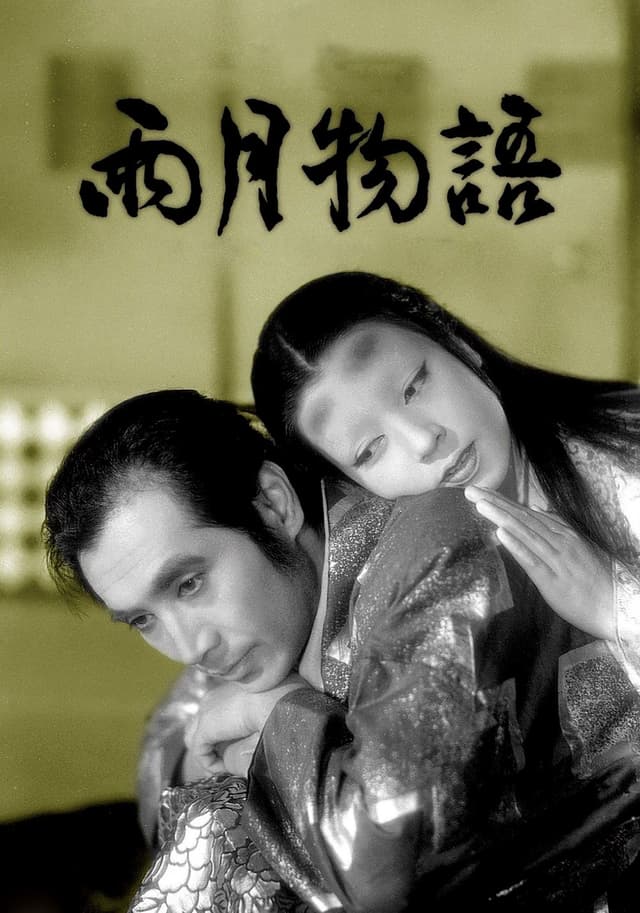
In 16th century Japan, peasants Genjuro and Tobei sell their earthenware pots to a group of soldiers in a nearby village, in defiance of a local sage's warning against seeking to profit from warfare. Genjuro's pursuit of both riches and the mysterious Lady Wakasa, as well as Tobei's desire to become a samurai, run the risk of destroying both themselves and their wives, Miyagi and Ohama.
What Is the Budget of Ugetsu?
Ugetsu (1953), known in Japan as Ugetsu monogatari, was produced by Daiei Film on a modest budget typical of mid-tier Japanese studio productions of the early 1950s. While Daiei never disclosed a precise figure, industry records from the period suggest the film cost considerably less than the studio's prestige samurai epics. Mizoguchi was known for working efficiently within tight financial constraints, and Daiei allocated resources carefully, trusting his reputation to deliver a profitable picture without lavish spending.
Despite its restrained budget, the film's production values are remarkably high. Cinematographer Kazuo Miyagawa, who had already shot Rashomon (1950) for Akira Kurosawa, brought a visual sophistication to Ugetsu that belied its financial limitations. The decision to shoot on location at Lake Biwa and to construct period-accurate village sets required careful planning, but these choices gave the film an atmospheric quality that studio-bound alternatives could not have achieved.
Key Budget Allocation Categories
- Production Design and Set Construction : period village sets, a kiln workshop, and a ruined mansion were built to evoke 16th-century Omi Province. The art department prioritized authenticity over scale, using weathered materials and natural landscapes to create a convincing wartime setting.
- Cinematography : Kazuo Miyagawa's work required specialized equipment for the film's signature long takes and fluid camera movements. The famous Lake Biwa boat sequence demanded waterproof rigging and multiple takes under unpredictable weather conditions.
- Cast Salaries : the ensemble included established stars Masayuki Mori and Machiko Kyo, both of whom commanded respectable fees following their roles in Rashomon, along with the legendary Kinuyo Tanaka, one of Japan's most respected actresses.
- Location Shooting : filming at Lake Biwa and various rural locations in the Shiga Prefecture added transportation and lodging costs but eliminated the need for expensive water-tank studio work.
- Special Effects and Atmosphere : the ghostly sequences, particularly those involving Lady Wakasa's mansion, required fog machines, careful lighting setups, and practical effects to achieve their otherworldly quality without optical compositing.
- Music and Sound : composer Fumio Hayasaka, who also scored Kurosawa's major films, created a score blending traditional Japanese instruments with Western orchestration. Sound design was critical to the film's eerie tone.
How Does Ugetsu's Budget Compare to Similar Films?
Ugetsu was produced during a golden age of Japanese cinema, when studios like Daiei, Toho, and Shochiku were releasing dozens of films annually. Comparing it to contemporary productions helps illustrate where Mizoguchi's film sat in the financial landscape.
- Rashomon (1950) : also produced by Daiei with Kazuo Miyagawa as cinematographer, Rashomon was made on a similarly modest budget. Its unexpected international success at Venice in 1951 proved that low-cost Japanese films could achieve global recognition, a precedent that directly benefited Ugetsu's distribution.
- Gate of Hell (1953) : Daiei's other major 1953 release was shot in Eastmancolor, making it substantially more expensive than Ugetsu. Gate of Hell won the Palme d'Or at Cannes in 1954, but its higher production costs meant it needed stronger box office returns to break even.
- Tokyo Story (1953) : Yasujiro Ozu's masterpiece, produced by Shochiku, was made on a comparable budget. Both films relied on skilled direction and strong performances rather than spectacle, demonstrating that artistic achievement in postwar Japan did not require large expenditures.
- Seven Samurai (1954) : Kurosawa's Toho epic was one of the most expensive Japanese films of the decade, with elaborate battle sequences, a large cast, and an extended shooting schedule. Ugetsu achieved comparable international acclaim at a fraction of the cost.
- Sansho the Bailiff (1954) : Mizoguchi's own follow-up at Daiei operated on a similar budget level. Like Ugetsu, it combined period settings with intimate human drama, proving that Mizoguchi could consistently produce world-class cinema within the studio's standard financial parameters.
Ugetsu Box Office Performance
Ugetsu performed solidly at the Japanese domestic box office upon its March 1953 release. Daiei's distribution network ensured wide theatrical coverage across Japan, and the film benefited from the popularity of its lead actors, particularly Machiko Kyo, who was one of the country's biggest stars. The domestic returns were sufficient to cover the production budget and generate a healthy profit for the studio.
The film's international profile grew dramatically after it won the Silver Lion at the Venice Film Festival in September 1953. This recognition opened doors to European and North American distribution deals that were unusual for Japanese films at the time. Edward Harrison acquired the American distribution rights, and the film played in art house cinemas across the United States and Europe throughout 1954 and 1955, generating additional revenue that significantly exceeded Daiei's initial projections.
Over the decades, Ugetsu has continued to generate revenue through repertory screenings, home video releases, and the Criterion Collection's definitive restoration. Its enduring presence in "greatest films" lists ensures ongoing commercial viability that few 1953 releases can match. The total lifetime earnings, including theatrical reissues and home media, represent a remarkable return on a production that cost a fraction of Hollywood contemporaries.
Ugetsu Production History
The origins of Ugetsu lie in two supernatural tales from Ueda Akinari's 1776 collection "Ugetsu monogatari" (Tales of Moonlight and Rain): "The House in the Thicket" and "The Lust of the White Serpent." Screenwriter Yoshikata Yoda, Mizoguchi's longtime collaborator, combined elements from both stories and added material inspired by Guy de Maupassant's short story "How He Got the Legion of Honour," which provided the framework for the Tobei subplot about a farmer who abandons his wife to pursue samurai glory.
Kenji Mizoguchi had already established himself as one of Japan's foremost directors by the early 1950s, with a career stretching back to the silent era. Following the international success of The Life of Oharu (1952), which won the International Prize at Venice, Daiei was eager to back another Mizoguchi period film. The studio saw an opportunity to replicate the formula of auteur-driven historical drama that was finding audiences abroad.
Principal photography took place in late 1952 and early 1953, primarily on location in Shiga Prefecture near Lake Biwa. Mizoguchi was famously demanding of his cast and crew, often requiring dozens of takes to achieve the precise emotional register he wanted. Kinuyo Tanaka, who played the devoted wife Miyagi, later described the shoot as one of the most grueling of her career, though she also called it among the most rewarding.
The Lake Biwa boat sequence, in which the two families cross a misty lake and encounter a dying boatman, became one of the most celebrated shots in cinema history. Miyagawa used a combination of real fog and machine-generated mist to create the sequence's haunting atmosphere. The shot required careful coordination between the camera boat and the actors' vessel, and Mizoguchi insisted on shooting during the early morning hours when natural light conditions matched his vision.
Post-production was completed in early 1953, with Fumio Hayasaka delivering a score that seamlessly wove traditional gagaku court music elements with Western harmonic structures. The film premiered domestically in March 1953 and was selected as Japan's entry for the Venice Film Festival later that year.
Awards and Recognition
Ugetsu won the Silver Lion (second place Grand Prize) at the 1953 Venice International Film Festival, cementing Mizoguchi's reputation as a master filmmaker on the world stage. This followed his International Prize for The Life of Oharu at Venice in 1952, making him the rare director to receive consecutive major honors at the festival.
The film has been a fixture on critical best-of lists for over seven decades. It appeared on the Sight & Sound critics' poll of the greatest films ever made in 1962, 1972, 1982, 1992, 2002, 2012, and 2022, a consistency matched by only a handful of films in polling history. In the 2012 poll, it ranked 50th overall among critics and appeared prominently on the directors' list as well. The British Film Institute, Cahiers du Cinema, and numerous national film institutes have recognized it as essential world cinema.
The Criterion Collection released a restored version as part of its prestigious catalog, further solidifying the film's canonical status. In Japan, it is recognized by Kinema Junpo as one of the finest achievements in the country's film history.
Critical Reception
Ugetsu holds a 97% approval rating on Rotten Tomatoes, reflecting near-universal critical admiration spanning seven decades of review. Upon its initial release in the West, critics were struck by the film's ability to blend realism with the supernatural in a way that felt organic rather than contrived. Bosley Crowther of The New York Times praised its "weird beauty" and compared its visual poetry to the finest European art cinema.
Critics have consistently highlighted Kazuo Miyagawa's cinematography as one of the film's defining achievements. His use of long takes, lateral tracking shots, and carefully controlled natural light gave Ugetsu a visual fluidity that influenced generations of filmmakers. The seamless transitions between the mundane world and the spirit realm remain a masterclass in visual storytelling, achieved without the optical effects that Western studios would have relied upon.
The performances have drawn equal praise. Machiko Kyo's portrayal of the spectral Lady Wakasa is considered one of the great screen performances in world cinema, balancing seduction with melancholy in a way that makes the character both alluring and tragic. Kinuyo Tanaka's Miyagi, the faithful wife, provides the film's moral and emotional anchor, and her final scenes are regarded as among the most moving in the medium's history.
Mizoguchi's thematic concerns, particularly the suffering of women at the hands of male ambition and the futility of war profiteering, have ensured the film's continued relevance. Modern critics note that Ugetsu's antiwar message and its compassionate depiction of ordinary people caught in historical upheaval speak as powerfully today as they did in 1953. Directors including Martin Scorsese, Andrei Tarkovsky, and Jean-Luc Godard have cited it as a formative influence on their own work.
Frequently Asked Questions
How much did it cost to make Ugetsu (1953)?
The production budget has not been publicly disclosed.
How much did Ugetsu (1953) earn at the box office?
Box office figures are not publicly available.
Was Ugetsu (1953) profitable?
Insufficient data for a profitability assessment.
What were the biggest costs in producing Ugetsu?
Specific cost breakdowns are not publicly available.
How does Ugetsu's budget compare to similar fantasy films?
Without a confirmed budget, comparison is not possible.
Did Ugetsu (1953) go over budget?
There are no widely reported accounts of significant budget overruns for this production. However, studios rarely disclose precise budget overrun figures publicly. The reported production budget reflects the final estimated cost.
What awards did Ugetsu (1953) win?
Nominated for 1 Oscar. 6 wins & 2 nominations total.
Who directed Ugetsu and who were the key crew members?
Directed by Kenji Mizoguchi, written by Yoshikata Yoda, Hisakazu Tsuji, shot by Kazuo Miyagawa, with music by Tamekichi Mochizuki, Ichirō Saitō, edited by Mitsuzō Miyata.
Where was Ugetsu filmed?
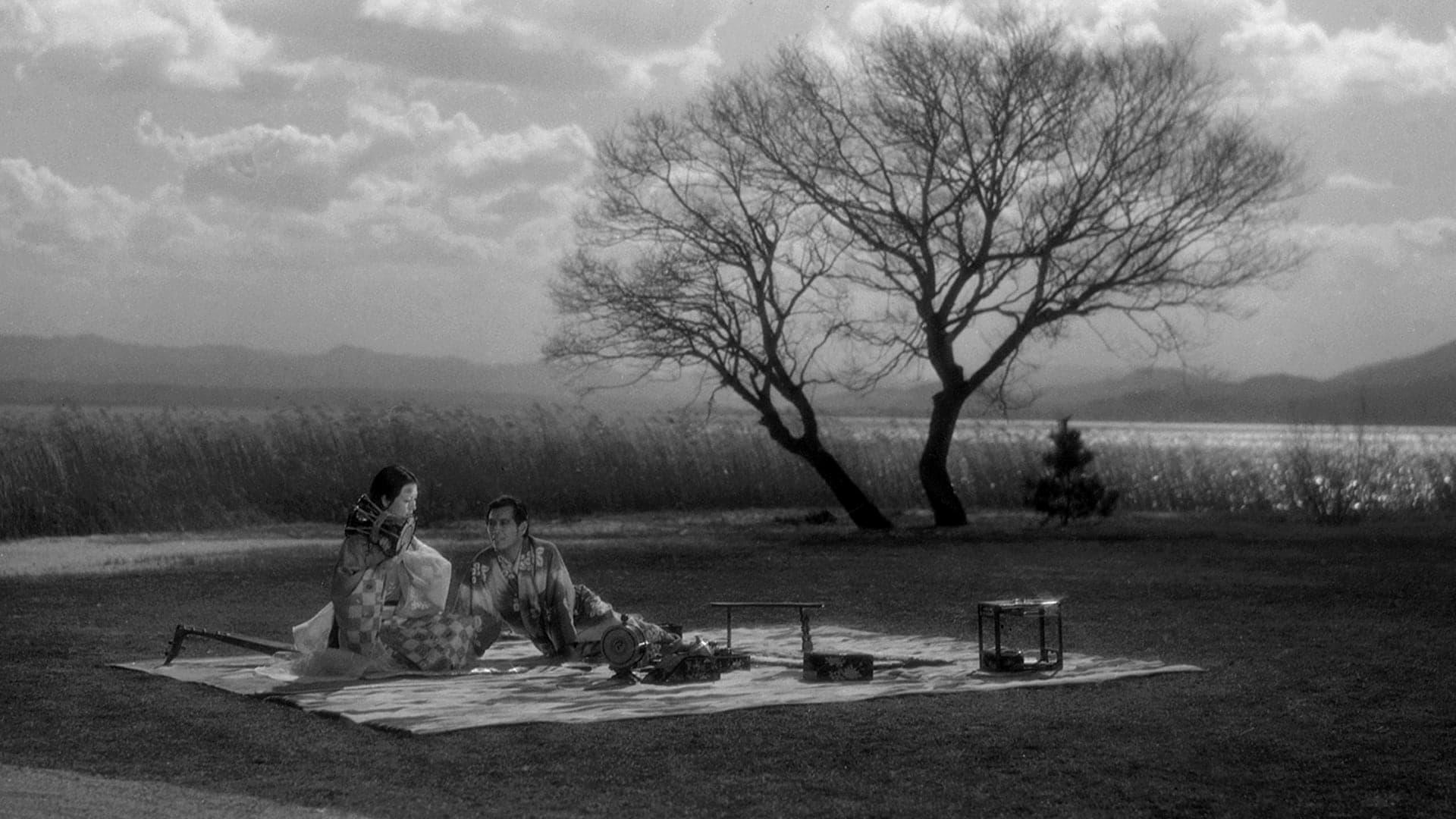
Ugetsu was filmed in Japan. 200px|Mizoguchi told his cinematographer Kazuo Miyagawa that he wanted the film "to unroll seamlessly like a scroll-painting". The film has been praised for its cinematography, such as the opening shot and the scene where Genjūrō and Lady Wakasa have sex by a stream and the camera follows the flow of the water instead of lingering on the two lovers.
Filmmakers
Ugetsu

Official Trailer
Build budgets like this one in Saturation
Start from an industry-standard feature film template, import the schedule and rates you already have, and let the cost report keep itself current as you spend. Real-time collaboration, no spreadsheets.