It's a Wonderful Life Budget
 DramaFamilyFantasy2h 11m
Updated
Synopsis
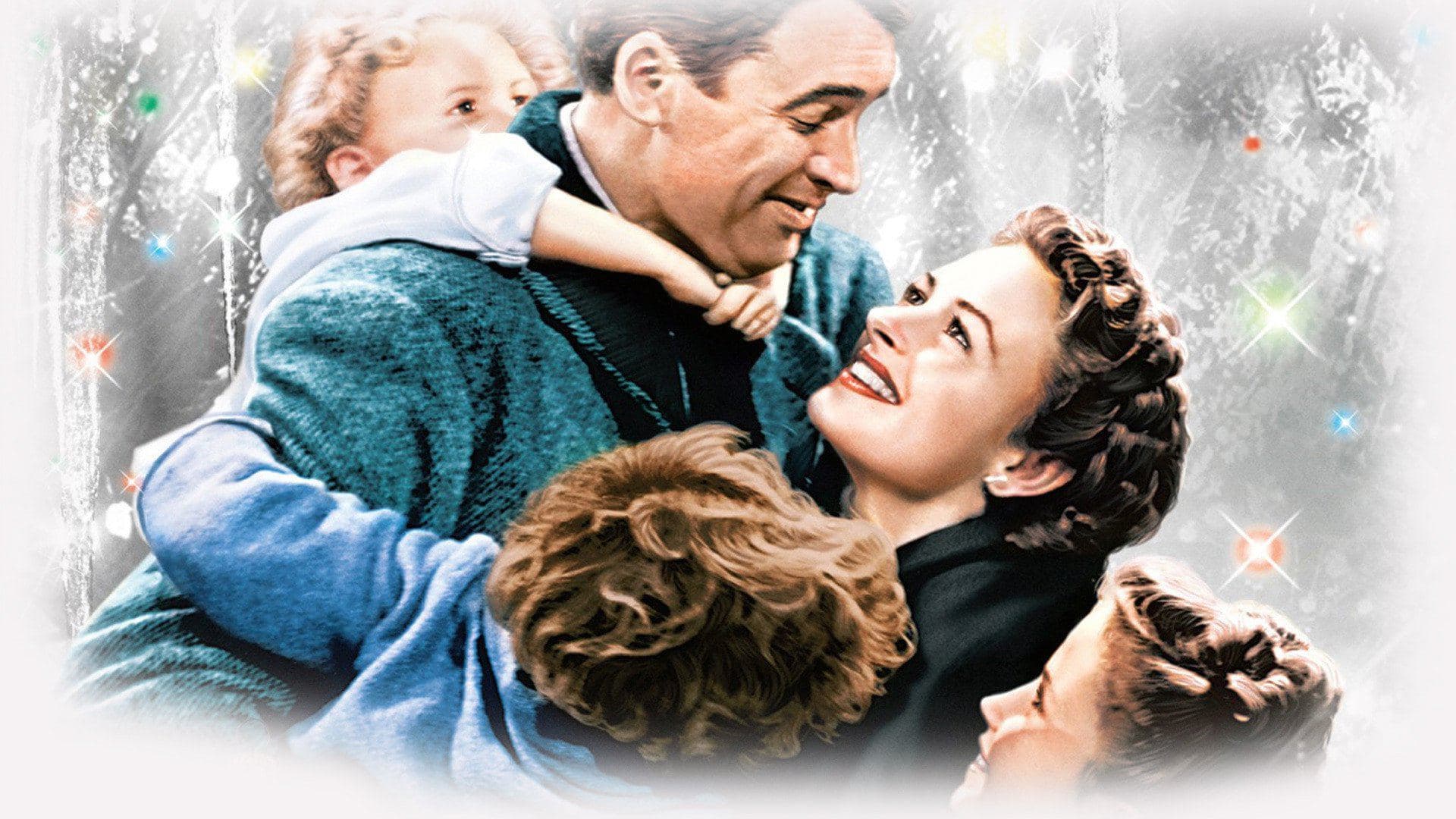
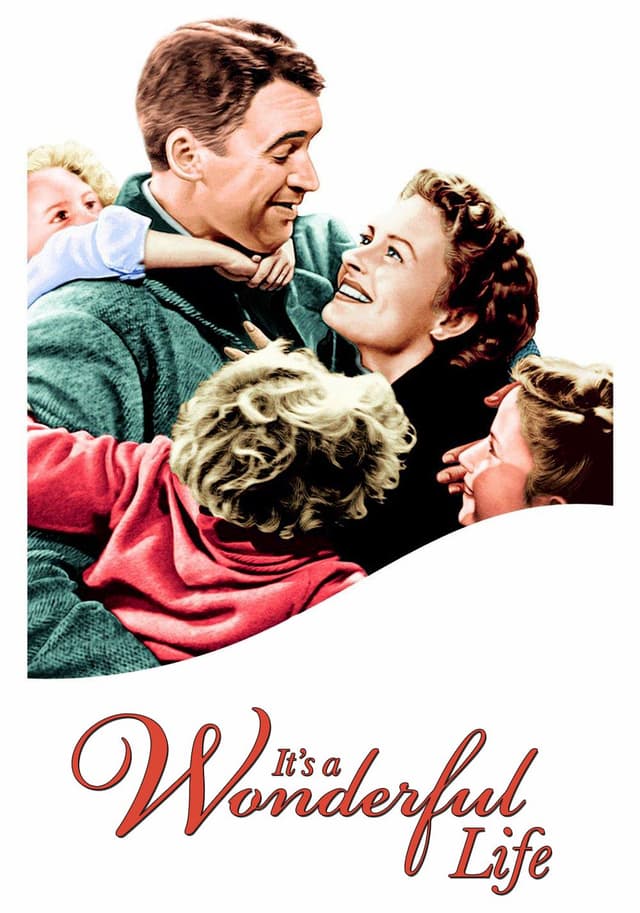
George Bailey has spent his entire life giving of himself to the people of Bedford Falls. He has always longed to travel but never had the opportunity in order to prevent rich skinflint Mr. Potter from taking over the entire town. All that prevents him from doing so is George's modest building and loan company, which was founded by his generous father. But on Christmas Eve, George's Uncle Billy loses the business's $8,000 while intending to deposit it in the bank. Potter finds the misplaced money and hides it from Billy. When the bank examiner discovers the shortage later that night, George realizes that he will be held responsible and sent to jail and the company will collapse, finally allowing Potter to take over the town. Thinking of his wife, their young children, and others he loves will be better off with him dead, he contemplates suicide. But the prayers of his loved ones result in a gentle angel named Clarence coming to earth to help George, with the promise of earning his wings. He shows George what things would have been like if he had never been born.
What Is the Budget of It’s a Wonderful Life?
The production budget for It’s a Wonderful Life (1946) was approximately $3,180,000 — some sources cite figures as high as $3.7 million depending on which elements are included in the accounting. In 1946 dollars, that sum is equivalent to roughly $50 million in 2024 purchasing power, making it a substantial investment for any studio of the era.
Frank Capra financed the film through Liberty Films, the independent production company he co-founded after World War II with directors William Wyler and George Stevens. It was the most expensive project Capra had ever undertaken as a producer, and the financial pressure was considerable. The original release was widely considered a commercial disappointment that nearly ended Liberty Films as a going concern.
The story of how It’s a Wonderful Life became the most beloved American Christmas film is inseparable from a copyright accident. RKO sold the rights cheaply to a television distributor in the early 1970s. When the copyright inadvertently lapsed in 1974, any television station in the country could broadcast it for free. Local stations aired it repeatedly every December, and a generation of Americans grew up watching it annually. By the time copyright protection was restored in 1993, the film had already achieved the cultural status it holds today.
Key Budget Allocation Categories
- James Stewart’s Fee and the Above-the-Line Gamble: Stewart had spent five years flying combat missions with the United States Army Air Forces over Germany and had not made a film since 1941. Capra’s decision to cast him as George Bailey was a calculated risk on whether prewar stardom would survive a five-year gap. Stewart’s fee reflected both his status as one of Hollywood’s top leading men before the war and the uncertainty surrounding his return. The bet paid off, though not at the box office.
- Bedford Falls — A Full Town Built from Scratch: The fictional town of Bedford Falls was constructed on a four-acre RKO ranch in Encino, California. The production built approximately 75 storefronts and structures along a full-scale Main Street, complete with a working lake used for the pool scene and the iconic ice-skating sequence. The exterior set was one of the largest and most elaborate location builds in Hollywood history to that point. It stood through the summer shoot and was demolished after production wrapped.
- Snow Effects Innovation: Cinematographers Joseph Walker and Joseph Biroc worked with RKO’s technical department to develop a new snow formula that could be used cleanly with the directional microphones that had become standard in postwar production. The previous industry standard, painted cornflakes, made too much noise when actors walked through them. The new formula combined aluminum powder, foamite, and soap flakes, creating a quieter, visually convincing snow effect. The Academy recognized this innovation with a Special Technical Achievement Award.
- Lionel Barrymore and Ensemble Above-the-Line Costs: Barrymore, one of the most celebrated and recognizable character actors in Hollywood, commanded a significant fee for his portrayal of the villainous Henry F. Potter. Supporting the cast with actors of the caliber of Thomas Mitchell, Henry Travers, Ward Bond, Gloria Grahame, and Frank Faylen added substantially to above-the-line costs, as each brought established screen presences that Capra valued for the film’s emotional ensemble scenes.
- Dimitri Tiomkin’s Score: Tiomkin composed an extensive orchestral score that underpins the film’s emotional arc from George Bailey’s childhood through the noir-tinged Pottersville sequence and into the redemptive finale. Full orchestral recording sessions across multiple weeks of post-production represented a significant post-production cost. Tiomkin’s score was later recognized as one of the finest in classical Hollywood cinema.
How Does It’s a Wonderful Life’s Budget Compare to Similar Films?
At $3.18 million, It’s a Wonderful Life was one of the more expensive productions of the 1946 release year, yet it delivered far below what its budget warranted at the domestic box office. The comparison films below contextualize both its production ambitions and its commercial underperformance.
- Mr. Smith Goes to Washington (1939): Budget approximately $1.5 million | Domestic gross approximately $9 million. Capra’s previous James Stewart film, made at Columbia Pictures with the backing of a major studio infrastructure, cost roughly half as much and earned nearly three times the domestic gross. The commercial gap between the two films illustrates the difficulty of independent production economics, even for an established director.
- The Best Years of Our Lives (1946): Budget approximately $2.1 million | Domestic gross $23.7 million. The other major postwar drama of 1946 and the Best Picture winner at the 19th Academy Awards. William Wyler’s film, also about returning veterans, was made at a lower budget and dramatically outperformed It’s a Wonderful Life at the box office, receiving universal critical acclaim in its initial release rather than the mixed reviews Capra’s film received.
- Miracle on 34th Street (1947): Budget approximately $1.5 million | Domestic gross approximately $10 million. Released the following year, the other defining American Christmas film of the studio era found greater immediate commercial success on a smaller budget. Its story, centered on a department store and a department store Santa, played to more straightforward audience expectations than the dark psychological territory of It’s a Wonderful Life.
- It Happened One Night (1934): Budget approximately $325,000 | Domestic gross approximately $4.8 million. An earlier Capra classic, made at a fraction of the cost and returning multiples of its budget domestically. The contrast underscores how Liberty Films’ independent model, without a major studio’s marketing machinery, made It’s a Wonderful Life’s economics much more precarious.
It’s a Wonderful Life Box Office Performance
It’s a Wonderful Life was released December 20, 1946, distributed by RKO Radio Pictures. The original domestic theatrical run earned approximately $3.3 million, against a production cost of $3.18 million plus an estimated $2 million in prints and advertising costs. By any studio-era accounting, the film did not recoup its investment in its initial theatrical window.
Total initial investment: $3.18 million production plus $2 million estimated P&A equals approximately $5.18 million. With theaters retaining roughly 50 percent of the gross, RKO’s share of the $3.3 million domestic gross was approximately $1.65 million. The film failed to cover its production cost alone, to say nothing of distribution expenses. It was, by the standards of the time, a genuine commercial failure. Liberty Films folded shortly afterward, with Capra eventually returning to work for the major studios.
- Production Budget: $3,180,000
- Estimated P&A: $2,000,000
- Total Investment: $5,180,000
- Original Domestic Gross (1946–47): $3,300,000
- Original Worldwide Gross: $6,000,000
- Estimated Studio Share (50%): $1,650,000
- ROI on Production Budget (original release): approximately -58%
- Copyright Status: Public domain 1974–1993; unlimited free television broadcast during this period
In its original release, It’s a Wonderful Life earned roughly $0.42 for every dollar invested in production. That figure tells only a fraction of the story. The inadvertent copyright lapse from 1974 to 1993 transformed the film into one of the most broadcast properties in American television history. Conservative estimates suggest the film now generates tens of millions of dollars annually through licensing, streaming rights, home video sales, and merchandising. Its cumulative value across all windows almost certainly exceeds hundreds of millions of dollars, making it among the most profitable films ever made when measured across its full commercial life.
It’s a Wonderful Life Production History
The origin of It’s a Wonderful Life traces to a short story called "The Greatest Gift" written in 1943 by Philip Van Doren Stern, a historian and author who had spent years unable to sell the story to magazines. Stern printed 200 copies and distributed them as Christmas cards to friends and family. One copy made its way to Hollywood, and RKO purchased the rights for $10,000. The studio developed several screenplay drafts but shelved the project. Frank Capra, forming Liberty Films after leaving the Army, acquired the property from RKO and made it the centerpiece of his independent career.
Capra assembled the screenplay across multiple writers over an extended development period. Frances Goodrich and Albert Hackett, the celebrated husband-and-wife team, took the project through several drafts. Jo Swerling contributed additional scenes. Capra himself did significant rewriting. Casting James Stewart as George Bailey was Capra’s priority from early in development. Stewart, who had risen to the top tier of Hollywood leading men before the war and served with genuine distinction as a combat pilot, was ambivalent about returning to acting. Capra persuaded him. Donna Reed was selected after a search for an actress who could play Mary Hatch with warmth and intelligence without being overshadowed by Stewart’s commanding presence.
Principal photography began in April 1946 and ran through July 1946. The production schedule required completing much of the exterior work on the Bedford Falls set in summer heat while the script called for winter. The snow effects formula developed by cinematographers Joseph Walker and Joseph Biroc was essential for making the exterior sequences believable under those conditions. Interior sequences were filmed on RKO soundstages. The pool scene, in which the gymnasium floor opens to reveal a pool, used an actual high school gym in Beverly Hills. The film wrapped approximately three months after it began.
It’s a Wonderful Life premiered in New York on December 20, 1946. Reviews were mixed. Bosley Crowther at the New York Times called it "a figment of simple Pollyanna platitudes," and other critics found its sentimentality excessive against the more cynical postwar mood. At the Academy Awards, it received five nominations but won none. RKO sold the copyright cheaply to a television syndicator in the early 1970s. When the copyright status became uncertain around 1974, television stations began broadcasting it without restriction every December. Over the next two decades, that free and repeated exposure built the cultural attachment that official re-releases, Paramount’s eventual restoration of a licensing claim, and streaming rights have since monetized.
Awards and Recognition
It’s a Wonderful Life received five Academy Award nominations at the 19th Academy Awards ceremony in 1947: Best Picture, Best Director (Frank Capra), Best Actor (James Stewart), Best Film Editing, and Best Sound Recording. It won none of these awards. The Best Picture prize went to The Best Years of Our Lives; Fredric March won Best Actor for the same film; William Wyler won Best Director. The Academy separately recognized the film’s snow-effects innovation with a Special Technical Achievement Award.
In the decades since its initial release, the film has accumulated an extraordinary critical and cultural legacy. The American Film Institute named it the number-one Most Inspirational American Film on its 100 Years...100 Cheers list and ranked it 11th on its updated list of the 100 Greatest American Films in 2007. The Library of Congress selected It’s a Wonderful Life for preservation in the National Film Registry in 1990, citing it as "culturally, historically, or aesthetically significant." James Stewart consistently cited George Bailey as the role he was most proud of across a career spanning six decades.
Critical Reception
Critical reception to It’s a Wonderful Life in 1946 was divided. The film’s frank willingness to inhabit dark psychological territory, including George Bailey’s suicidal despair and the nightmare Pottersville sequence, surprised reviewers accustomed to conventional seasonal fare. Bosley Crowther of the New York Times dismissed it as overdone sentiment. Other critics praised Stewart’s performance while questioning whether Capra’s populist style had grown too familiar.
The rehabilitation of its critical reputation was gradual and driven almost entirely by the television exposure it received after the copyright lapse. A generation of Americans who encountered the film annually on local television stations through the late 1970s and 1980s arrived at adulthood with deep attachments to it. Critics revisiting the film in this context began writing about it differently, with closer attention to the darkness underneath the warmth, the complexity of Stewart’s performance, and the film’s genuinely radical portrait of how economic power crushes ordinary lives.
It currently holds a 94 percent approval rating on Rotten Tomatoes, reflecting a contemporary critical consensus that the film’s emotional intelligence is extraordinary rather than saccharine. Roger Ebert, who reconsidered the film in detail in his later career, described Stewart’s performance as one of the most demanding in classical Hollywood cinema, noting that Bailey’s breakdown in the car before the bridge is among the most honestly distressing moments in any American film of the era.
Frequently Asked Questions
How much did it cost to make It's a Wonderful Life (1946)?
The production budget was $3,180,000, covering principal photography, cast and crew salaries, locations, sets, post-production, and music. Marketing and distribution (P&A) costs are estimated at an additional $1,590,000 - $2,544,000, bringing the total studio investment to approximately $4,770,000 - $5,724,000.
How much did It's a Wonderful Life (1946) earn at the box office?
It's a Wonderful Life grossed $1,474,573 domestic, $8,169,551 international, totaling $9,644,124 worldwide.
Was It's a Wonderful Life (1946) profitable?
Yes. Against a production budget of $3,180,000 and estimated total costs of ~$7,950,000, the film earned $9,644,124 theatrically - a 203% ROI on production costs alone.
What were the biggest costs in producing It's a Wonderful Life?
The primary cost drivers were above-the-line talent (James Stewart, Donna Reed, Lionel Barrymore); talent compensation, authentic period production design, and meticulous post-production.
How does It's a Wonderful Life's budget compare to similar drama films?
At $3,180,000, It's a Wonderful Life is classified as a micro-budget production. The median budget for wide-release drama films in the era ranges from $30 - 80M for mid-budget to $150M+ for tentpoles. Comparable budgets: The Man Who Shot Liberty Valance (1962, $3,200,000); Cool Hand Luke (1967, $3,200,000); Sorry to Bother You (2018, $3,200,000).
Did It's a Wonderful Life (1946) go over budget?
There are no widely reported accounts of significant budget overruns for this production. However, studios rarely disclose precise budget overrun figures publicly. The reported production budget reflects the final estimated cost.
What was the return on investment (ROI) for It's a Wonderful Life?
The theatrical ROI was 203.3%, calculated as ($9,644,124 − $3,180,000) ÷ $3,180,000 × 100. This measures gross revenue against production budget only - it does not account for P&A or exhibitor shares.
What awards did It's a Wonderful Life (1946) win?
Nominated for 5 Oscars. 11 wins & 7 nominations total.
Who directed It's a Wonderful Life and who were the key crew members?
Directed by Frank Capra, written by Frances Goodrich, Albert Hackett, Frank Capra, shot by Joseph F. Biroc, Joseph Walker, with music by Dimitri Tiomkin, edited by William Hornbeck.
Where was It's a Wonderful Life filmed?
It's a Wonderful Life was filmed in United States of America.
Filmmakers
It's a Wonderful Life

Build budgets like this one in Saturation
Start from an industry-standard feature film template, import the schedule and rates you already have, and let the cost report keep itself current as you spend. Real-time collaboration, no spreadsheets.