Twilight Budget
 Thriller/Suspense
Updated
Synopsis
Retired private investigator Harry Ross, living quietly above the garage of his old Hollywood friends Jack and Catherine Ames, agrees to deliver a package for Jack. The errand opens a 20-year-old missing-persons case that draws Harry back into the city's underworld and into a dangerous reckoning with secrets the Ames family has spent two decades trying to bury.
What Is the Budget of Twilight (1998)?
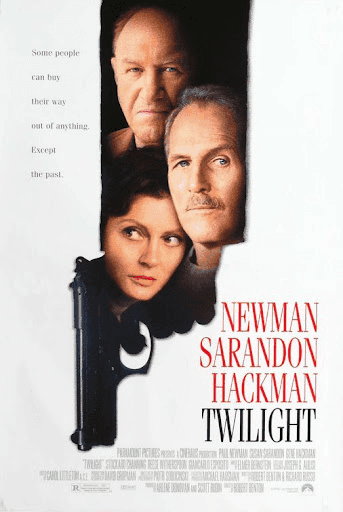
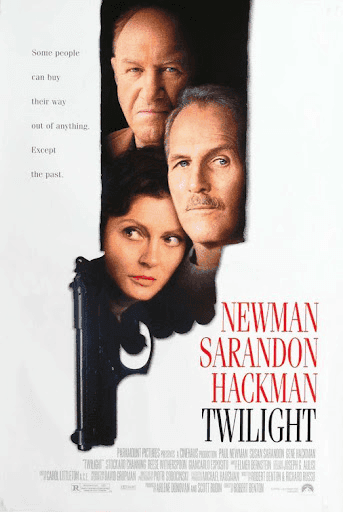
Twilight (1998), directed by Robert Benton and distributed by Paramount Pictures, was produced on a reported budget of $20,000,000. The film, a low-key neo-noir built around an ensemble of veteran movie stars, paired Benton (Kramer vs. Kramer, Places in the Heart, Nobody's Fool) with Paul Newman in their second collaboration following Nobody's Fool (1994). The script, written by Benton and Richard Russo, leaned into the conventions of classic Los Angeles detective fiction and was tailored specifically to Newman's late-career screen persona as a wounded, observant man past his prime.
The budget reflected the modest scale of the production. There were no large action set pieces, no significant visual effects, and the cast worked at well-below-quote rates to participate in the project. The bulk of the spend went to assembling four Academy Award winners (Newman, Susan Sarandon, Gene Hackman, James Garner) plus a strong supporting bench including Reese Witherspoon, Stockard Channing, Liev Schreiber, and Giancarlo Esposito, and shooting on practical Los Angeles locations across roughly six weeks.
Key Budget Allocation Categories
Twilight's $20,000,000 budget was distributed across several core production areas:
- Above-the-Line Talent: Paul Newman, Susan Sarandon, Gene Hackman, and James Garner each commanded star compensation, with Newman taking a backend participation rather than his full quote in order to keep the budget down. Director Robert Benton and writer Richard Russo were paid feature scale rates appropriate to their Oscar-winning credentials.
- Supporting Cast: Reese Witherspoon (post-Pleasantville), Stockard Channing (post-Six Degrees of Separation), Liev Schreiber, Giancarlo Esposito, John Spencer, and M. Emmet Walsh filled out the ensemble, with each role requiring negotiated weekly fees rather than scale.
- Los Angeles Location Shoot: Principal photography took place across Hollywood Hills mansions, the Pacific Coast Highway, and downtown Los Angeles practical locations. Permits, location fees, equipment trucks, and Teamster transportation in the city carried meaningful cost.
- Cinematography: Piotr Sobocinski, the Polish cinematographer best known for Krzysztof Kieslowski's Three Colors: Red, shot the film in a deliberately restrained, low-key style influenced by 1970s American crime films. Lighting setups for the dimly lit interiors required substantial prep time and grip equipment.
- Production Design: David Gropman's production design drew on the visual vocabulary of The Long Goodbye and Chinatown, with carefully aged interiors of the Ames mansion serving as the primary set. Wardrobe by Joseph G. Aulisi placed Newman in a tailored late-1990s update of the classic gumshoe silhouette.
- Score and Music: Composer Elmer Bernstein, a frequent Benton collaborator, scored the film with a jazz-inflected orchestral palette that nodded to his work on To Kill a Mockingbird and Sweet Smell of Success.
- Editorial and Post: Editor Carol Littleton (E.T., The Big Chill, Body Heat) cut the film, and the post timeline ran tight to make a March 6, 1998 release window.
How Does Twilight's Budget Compare to Similar Films?
At $20,000,000, Twilight sits at the lower end of late-1990s mid-budget star-driven dramas. The comparison set illustrates how its modest financial outcome diverged from its closest genre peers:
- L.A. Confidential (1997): Budget $35,000,000 | Worldwide $126,200,000. Curtis Hanson's noir cost 75% more, won two Academy Awards, and out-grossed Twilight by more than eight times, demonstrating the commercial ceiling that period or stylized noir could reach with a younger ensemble.
- Nobody's Fool (1994): Budget $25,000,000 | Worldwide $39,500,000. Benton's previous Paul Newman collaboration cost slightly more, earned Newman an Oscar nomination, and roughly doubled Twilight's worldwide gross, suggesting audience appetite for Newman in this register was thinner four years later.
- The Limey (1999): Budget $9,000,000 | Worldwide $3,200,000. Steven Soderbergh's lower-budgeted Terence Stamp neo-noir came in at less than half of Twilight's spend but earned even less, highlighting how difficult older-actor neo-noir was to monetize at the end of the decade.
- Mystic River (2003): Budget $25,000,000 | Worldwide $156,800,000. Clint Eastwood's ensemble crime drama cost only 25% more than Twilight and grossed more than ten times as much, showing what a stronger script and a Best Picture nomination could do for the same broad demographic.
- Twilight (2008): Budget $37,000,000 | Worldwide $407,000,000. The unrelated Stephenie Meyer adaptation, sharing only the title, demonstrates how thoroughly the search term for "Twilight" pivoted away from the 1998 film within a decade of its release.
Twilight Box Office Performance
Twilight opened domestically on March 6, 1998 and earned $5,562,679 over its opening weekend across 1,261 theaters, finishing fourth behind Titanic, U.S. Marshals, and The Wedding Singer. The film never expanded substantially and ended its domestic theatrical run with $15,055,348. International returns were minimal. Here is the financial breakdown:
Box Office Breakdown
Twilight (1998)

Twilight returned approximately $0.38 in theatrical revenue for every $1 invested when measured against total estimated production and marketing spend, placing it among the clearer commercial disappointments of the 1998 spring corridor. The film recouped a portion of its losses through Paramount's home video release on VHS and laserdisc later in 1998, with a DVD release in 2000, but the property never developed a meaningful afterlife in syndication or streaming.
The financial result effectively ended the late-career Benton-Newman collaboration as a viable commercial proposition. Benton would direct only two more theatrical features (The Human Stain in 2003 and Feast of Love in 2007) and Newman moved further into supporting and voice work for the remaining decade of his career.
Twilight Production History
Development began at Paramount Pictures in 1996 when Robert Benton and novelist Richard Russo, fresh off their collaboration on Nobody's Fool, set out to write a contemporary Los Angeles detective film for Paul Newman. Russo, the eventual Pulitzer Prize winner for Empire Falls, brought a literary sensibility to the script while Benton handled the noir architecture. Producers Arlene Donovan and Scott Rudin packaged the project for Paramount in 1996, with Rudin's overall deal at the studio providing the production infrastructure.
Newman attached as Harry Ross in early 1997 and the cast filled out rapidly around him. Susan Sarandon, coming off her Best Actress win for Dead Man Walking, played Catherine Ames. Gene Hackman, fresh off The Birdcage and Absolute Power, took the role of Jack Ames. James Garner, in one of his few late-career theatrical appearances, played the retired police investigator Raymond Hope. Reese Witherspoon, then 21 years old, played the Ames daughter Mel.
Principal photography ran from June to August 1997 in California, primarily in the Hollywood Hills and at the historic estates above Sunset Boulevard, with second-unit pickups along the Pacific Coast Highway and at Los Angeles International Airport. Cinematographer Piotr Sobocinski, who would tragically die just three years later at age 42, shot the film in his characteristic low-light style. Editor Carol Littleton cut the picture through the autumn for a March 1998 release.
Test screenings in late 1997 revealed audience confusion about the plot, and Benton recut the third act to clarify the central blackmail mechanic. The studio scheduled the film against the closing weeks of Titanic's record-setting run, a calendar slot Paramount believed offered counter-programming to an older demographic but which ultimately limited the film's screen count and marketing oxygen.
Awards and Recognition
Twilight received limited awards recognition. The film was nominated for two Satellite Awards in 1999: Best Supporting Actor (Drama) for Gene Hackman and Best Original Score for Elmer Bernstein. Paul Newman received scattered critics-circle attention for his performance but did not break through to the major end-of-year ceremonies. The film registered no nominations at the Academy Awards, the Golden Globes, or the Screen Actors Guild Awards.
In retrospective critical surveys, the film is frequently cited as the last of the classic Newman-Benton collaborations and as a coda to a generation of Hollywood neo-noir that began with The Long Goodbye in 1973. Its modest profile within Newman's filmography reflects both the commercial result and the dense competition from the other films Newman made in the same era, particularly Nobody's Fool and Road to Perdition.
Critical Reception
Twilight received mixed reviews on release. The film holds a 52% approval rating on Rotten Tomatoes based on 33 reviews, with critics broadly praising the ensemble cast but objecting to the predictable plot machinery. On Metacritic, the film scored 56 out of 100, indicating mixed or average reviews. Roger Ebert gave the film three out of four stars, writing that "the movie is content to drift along with these wonderful actors, in no hurry to push the story." Janet Maslin in The New York Times praised the "elegant melancholy" of Newman's performance while noting that "the plot is no match for the people."
Negative reviews focused on the conventional shape of the mystery. The Washington Post's Desson Howe wrote that the film "wastes its astonishing cast on a story you can solve before the second commercial break," and Owen Gleiberman of Entertainment Weekly observed that "Benton seems more interested in his actors' faces than in the case they're working." The CinemaScore for the film was not officially reported.
Subsequent reappraisals have been kinder. Twilight is now generally regarded as a graceful, lower-key entry in the late Newman canon, prized more for the ensemble chemistry between Newman, Hackman, Sarandon, and Garner than for its plotting. The film has retained a small cult audience among admirers of 1990s neo-noir, though it remains overshadowed by the higher-profile L.A. Confidential released six months earlier.
Frequently Asked Questions
How much did it cost to make Twilight (1998)?
The reported production budget was $20,000,000. Paramount Pictures financed the production through Scott Rudin's and Arlene Donovan's production companies, with Paul Newman taking a backend participation rather than his full upfront quote to keep the budget contained.
How much did Twilight (1998) earn at the box office?
The film grossed $15,055,348 in worldwide theatrical release, almost all of which came from the domestic market. It opened to $5,562,679 over its March 6, 1998 opening weekend across 1,261 theaters, finishing fourth at the domestic box office that weekend.
Was Twilight (1998) a box office bomb?
Yes. Against a $20,000,000 production budget and an estimated $15,000,000 to $20,000,000 in marketing spend, the film returned approximately $0.38 in worldwide gross for every $1 invested. The shortfall effectively ended the late-career Benton-Newman commercial collaboration.
Who directed Twilight (1998)?
Robert Benton directed the film, working from a screenplay he co-wrote with Richard Russo. Benton had previously directed Newman in Nobody's Fool (1994) and would go on to direct The Human Stain in 2003.
Where was Twilight (1998) filmed?
Principal photography took place in Los Angeles from June to August 1997, primarily in the Hollywood Hills and at historic estates above Sunset Boulevard, with second-unit pickups along the Pacific Coast Highway and at Los Angeles International Airport.
Who stars in Twilight (1998)?
The cast includes Paul Newman as retired investigator Harry Ross, Susan Sarandon as Catherine Ames, Gene Hackman as Jack Ames, James Garner as Raymond Hope, Reese Witherspoon as Mel Ames, Stockard Channing as Lieutenant Verna Hollander, Liev Schreiber, and Giancarlo Esposito.
Is Twilight (1998) related to the Stephenie Meyer Twilight franchise?
No. The 1998 Robert Benton neo-noir starring Paul Newman is unrelated to the 2008 vampire romance directed by Catherine Hardwicke and based on Stephenie Meyer's novels. The two films share only the title.
Who wrote Twilight (1998)?
The screenplay was co-written by director Robert Benton and novelist Richard Russo. Russo would go on to win the Pulitzer Prize for Fiction for Empire Falls in 2002. The pair previously collaborated on Nobody's Fool (1994).
What did critics think of Twilight (1998)?
The film received mixed reviews, holding a 52% approval rating on Rotten Tomatoes (33 reviews) and a 56 out of 100 Metacritic score. Roger Ebert gave it three out of four stars. Critics broadly praised the ensemble cast while objecting to the predictable plot.
Did Twilight (1998) win any awards?
No. The film received two Satellite Award nominations in 1999 (Best Supporting Actor for Gene Hackman and Best Original Score for Elmer Bernstein) but no nominations at the Academy Awards, Golden Globes, or Screen Actors Guild Awards.
Filmmakers
Twilight (1998)
Build budgets like this one in Saturation
Start from an industry-standard feature film template, import the schedule and rates you already have, and let the cost report keep itself current as you spend. Real-time collaboration, no spreadsheets.