The Juror Budget
 Thriller/Suspense
Updated
Synopsis
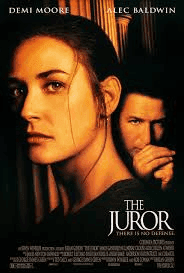
A New York single mother named Annie Laird is selected as a juror in a high-profile mob trial and finds herself manipulated by a charming, ruthless enforcer known only as the Teacher. As the Teacher's threats escalate to her young son, Annie is forced to vote for acquittal and is then drawn into a deadly confrontation that culminates in Guatemala.
What Is the Budget of The Juror (1996)?
The Juror (1996), directed by Brian Gibson and distributed by Columbia Pictures, was produced on a reported budget of $44,000,000. The crime thriller was financed by Columbia Pictures with co-financing from Irwin Winkler's Winkler Films, and was developed as a star-driven February release vehicle pairing Demi Moore, then one of the highest-paid actresses in Hollywood, with Alec Baldwin in a villain role. Producer Irwin Winkler structured the production to support a substantial New York location shoot and to give Moore a follow-up to The Scarlet Letter (1995), her previous Columbia drama.
The investment was a star-driven commercial bet. Columbia wanted a property that could anchor February 1996 as adult-thriller counter-programming and demonstrate that Moore could carry a contemporary suspense vehicle outside the Indecent Proposal and Disclosure mold. The math required roughly $100,000,000 in worldwide gross to break even after marketing, a target the film fell well short of.
Key Budget Allocation Categories
The Juror's $44,000,000 budget was distributed across several core production areas:
- Above-the-Line Talent: Demi Moore commanded a reported $7,500,000 acting fee at the height of her industry premium, with Alec Baldwin taking a substantial supporting fee for the Teacher role. Joseph Gordon-Levitt was cast as Moore's son in an early-career role, with Anne Heche, James Gandolfini, Lindsay Crouse, and Tony Lo Bianco filling out supporting parts at working-actor rates. The combined above-the-line cost consumed a substantial portion of the budget.
- Brian Gibson Directing Fee: Director Brian Gibson, coming off What's Love Got to Do with It (1993) and The Josephine Baker Story (1991), commanded a mid-tier feature-director fee. His prior work on character-driven prestige material made him an unusual choice for a contemporary thriller, and Columbia paid for the additional shooting time his approach required.
- New York Location Shoot: Principal photography took place primarily in New York City and surrounding areas during the spring and summer of 1995. The Manhattan courtroom and apartment sequences, along with the climactic Guatemala-set finale, required substantial location work and air travel. The New York shoot pre-dated the modern state film tax credit but kept the production close to Winkler Films' East Coast base.
- Guatemala Unit Photography: The film's climactic confrontation takes place in Guatemala, requiring an international unit shoot for exteriors and rural village sequences. Travel, lodging, local crew, and weapons handling for the finale added a significant line item that a fully New York-based production would have avoided.
- Score and Music: Composer James Newton Howard scored the film, blending orchestral suspense elements with the more atmospheric textures that had defined his Wyatt Earp and Outbreak work. The score budget was substantial but in line with star-driven thriller standards of the mid-1990s.
- Marketing and Reshoots: Columbia invested in an aggressive marketing campaign positioning the film as a Demi Moore prestige thriller, with the Alec Baldwin villain reveal as the central hook. Limited reshoots in late 1995 added marginal cost. Domestic marketing spend was estimated in the $25,000,000 to $30,000,000 range.
How Does The Juror's Budget Compare to Similar Films?
At $44,000,000, The Juror sat in the mid-range of mid-1990s star-driven thrillers:
- Disclosure (1994): Budget $55,000,000 | Worldwide $214,015,089. Demi Moore's previous adult thriller cost 25% more and earned roughly 4x what The Juror grossed worldwide, the closer comparable that defined audience expectations.
- Indecent Proposal (1993): Budget $38,000,000 | Worldwide $266,614,059. Moore's breakout star vehicle cost less than The Juror and earned more than 5x its worldwide gross, the commercial peak from which The Juror represented a decline.
- The Devil's Advocate (1997): Budget $57,000,000 | Worldwide $152,653,335. The contemporary legal thriller cost roughly 30% more than The Juror and earned 3x its worldwide gross, the genre comparable that succeeded where The Juror failed.
- Just Cause (1995): Budget $30,000,000 | Worldwide $36,853,222. The Sean Connery legal thriller cost less than The Juror and earned somewhat less, a comparison reflective of the broader 1995-96 crowded mid-budget thriller market.
- Primal Fear (1996): Budget $30,000,000 | Worldwide $102,592,000. Paramount's contemporary legal thriller cost roughly 70% of The Juror and earned more than twice its worldwide gross, the spring-1996 success that out-flanked The Juror by a wide margin.
The Juror Box Office Performance
The Juror opened on February 2, 1996 to $9,800,000 across 1,847 theaters, finishing first at the domestic box office in a weak corner of the calendar. The opening was modestly ahead of Columbia's internal projections but the film immediately dropped in subsequent weeks as word-of-mouth turned negative and Primal Fear arrived in April to dominate the spring thriller window.
Against a $44,000,000 production budget the film needed approximately $100,000,000 worldwide to clear breakeven after marketing. Here is the financial breakdown:
Box Office Breakdown
The Juror

The Juror returned approximately $0.49 in theatrical revenue for every $1 invested when measured against total estimated production and marketing spend, a significant commercial loss that signaled an inflection point in Demi Moore's leading-lady run. The domestic share of the gross was $22,825,000 against an international share of $13,233,000, a 63/37 split heavily weighted toward North America for a film positioned as a global thriller.
Home video provided modest recovery. VHS rentals through 1996 and 1997 returned the film to consistent rotation, and the film became a recurring cable title. The commercial failure, combined with Striptease later in 1996 and G.I. Jane in 1997, marked the end of Moore's above-the-title commercial era through the late 1990s.
The Juror Production History
Development on The Juror began at Columbia Pictures in 1994 with a screenplay by Ted Tally adapting George Dawes Green's 1995 novel of the same name. Producer Irwin Winkler, who had previously produced Goodfellas and Rocky, acquired the rights and developed the project as a star vehicle. Brian Gibson was attached to direct in early 1995 on the strength of his What's Love Got to Do with It work, with Columbia and Winkler agreeing that his character-driven approach would distinguish the film from competing thrillers.
Demi Moore signed on as Annie Laird in spring 1995, reportedly for $7,500,000. Alec Baldwin signed shortly after as the Teacher, the mob enforcer who manipulates Moore's character into voting to acquit. Joseph Gordon-Levitt was cast as her son after his television work on Third Rock from the Sun, with Anne Heche, James Gandolfini, and Tony Lo Bianco rounding out the supporting players.
Principal photography ran from May to August 1995 in New York City and surrounding areas, with the climactic Guatemala sequence shot on location in Antigua and rural villages. The international unit added logistical complexity that contributed to a budget overrun reported at the time. Post-production extended through fall 1995 at Columbia's Culver City facilities, with the score by James Newton Howard recorded in late 1995. The film opened on February 2, 1996.
Awards and Recognition
The Juror received almost no significant industry awards recognition. The film failed to register at the major ceremonies and earned no nominations at the Saturn Awards, the Golden Globes, or the Edgar Awards for mystery and thriller writing.
Demi Moore received a Razzie Award nomination for Worst Actress for her combined work in The Juror and The Scarlet Letter. The combined critical reception of these mid-1990s Moore projects contributed to a press narrative about the actress's career trajectory that persisted for years afterward, though it was substantially recalibrated by her later work.
Critical Reception
The Juror received negative reviews. The film holds a 22% approval rating on Rotten Tomatoes based on 36 critic reviews, with a critical consensus calling it an implausible thriller wasted on a strong central premise and capable cast. On Metacritic, the film scored 42 out of 100, indicating generally unfavorable reviews. Audiences surveyed by CinemaScore gave the film a C+, weak for a star-driven thriller.
Critics broadly praised Alec Baldwin's menacing performance and James Newton Howard's score, but objected to the implausible final act in Guatemala, the underdeveloped supporting cast, and what Roger Ebert called "a thriller that betrays its own premise the moment it goes on the road." Janet Maslin of The New York Times wrote that the film "starts as an interesting study of jury intimidation and ends as a routine action picture with a Latin American backdrop." Variety's Brian Lowry called it "a thriller with diminishing returns."
Demi Moore's performance was the most divisive element. Some critics defended her work as appropriately restrained for the everywoman role; others viewed her against-type casting as miscast in a part requiring a softer presence. The Juror has remained a footnote in Moore's filmography, rarely revisited in critical reassessment of her 1990s output.
Frequently Asked Questions
How much did it cost to make The Juror (1996)?
The reported production budget was $44,000,000. Columbia Pictures financed the production with Irwin Winkler's Winkler Films, with a substantial share of the budget going to Demi Moore's reported $7,500,000 acting fee and the international unit photography in Guatemala.
How much did The Juror earn at the box office?
The film grossed $22,825,000 domestically and $13,233,000 internationally, for a worldwide total of $36,058,000. It opened to $9,800,000 in the United States on February 2, 1996, finishing first at the domestic box office in a weak corner of the calendar.
Was The Juror a box office bomb?
Yes. Against a $44,000,000 production budget and an estimated $25,000,000 to $30,000,000 in marketing spend, the film returned approximately $0.49 in worldwide gross for every $1 invested. It is among the clearest commercial misses of Demi Moore's 1990s leading-lady run.
Who directed The Juror?
Brian Gibson directed the film, working from a screenplay by Ted Tally adapting George Dawes Green's 1995 novel. Gibson had previously directed What's Love Got to Do with It (1993) and The Josephine Baker Story (1991), making him an unusual choice for a contemporary thriller.
Who stars in The Juror?
Demi Moore stars as Annie Laird, a New York single mother selected as a juror in a mob trial. Alec Baldwin plays the Teacher, the mob enforcer who manipulates her. Joseph Gordon-Levitt plays her son in an early-career role, with Anne Heche, James Gandolfini, Lindsay Crouse, and Tony Lo Bianco in supporting parts.
Where was The Juror filmed?
Principal photography ran from May to August 1995 primarily in New York City and surrounding areas. The climactic confrontation was shot on location in Antigua, Guatemala and surrounding rural villages, with the international unit adding logistical complexity and contributing to a reported budget overrun.
How does The Juror compare to other Demi Moore films?
The Juror ($36,058,000 worldwide against $44,000,000 budget) underperformed Moore's Disclosure (1994, $214,015,089 worldwide against $55,000,000) and Indecent Proposal (1993, $266,614,059 worldwide against $38,000,000) by enormous margins. The film, combined with Striptease and G.I. Jane, marked an inflection point in her commercial trajectory.
What did critics think of The Juror?
The film received negative reviews, with a 22% approval rating on Rotten Tomatoes (based on 36 critics) and a 42 out of 100 score on Metacritic. Audiences gave it a C+ CinemaScore. Critics praised Alec Baldwin's menacing performance but objected to the implausible Guatemala-set final act.
Was The Juror based on a book?
Yes. The film is based on George Dawes Green's 1995 novel of the same name, adapted by screenwriter Ted Tally, who had previously won an Academy Award for adapting The Silence of the Lambs.
Did The Juror win any awards?
No. The Juror received no significant industry awards recognition. Demi Moore received a Razzie Award nomination for Worst Actress for her combined work in The Juror and The Scarlet Letter, reflecting the polarized critical reception of her mid-1990s output.
Filmmakers
The Juror

Build budgets like this one in Saturation
Start from an industry-standard feature film template, import the schedule and rates you already have, and let the cost report keep itself current as you spend. Real-time collaboration, no spreadsheets.