Train Dreams Budget
 Drama1h 42m
Updated
Synopsis
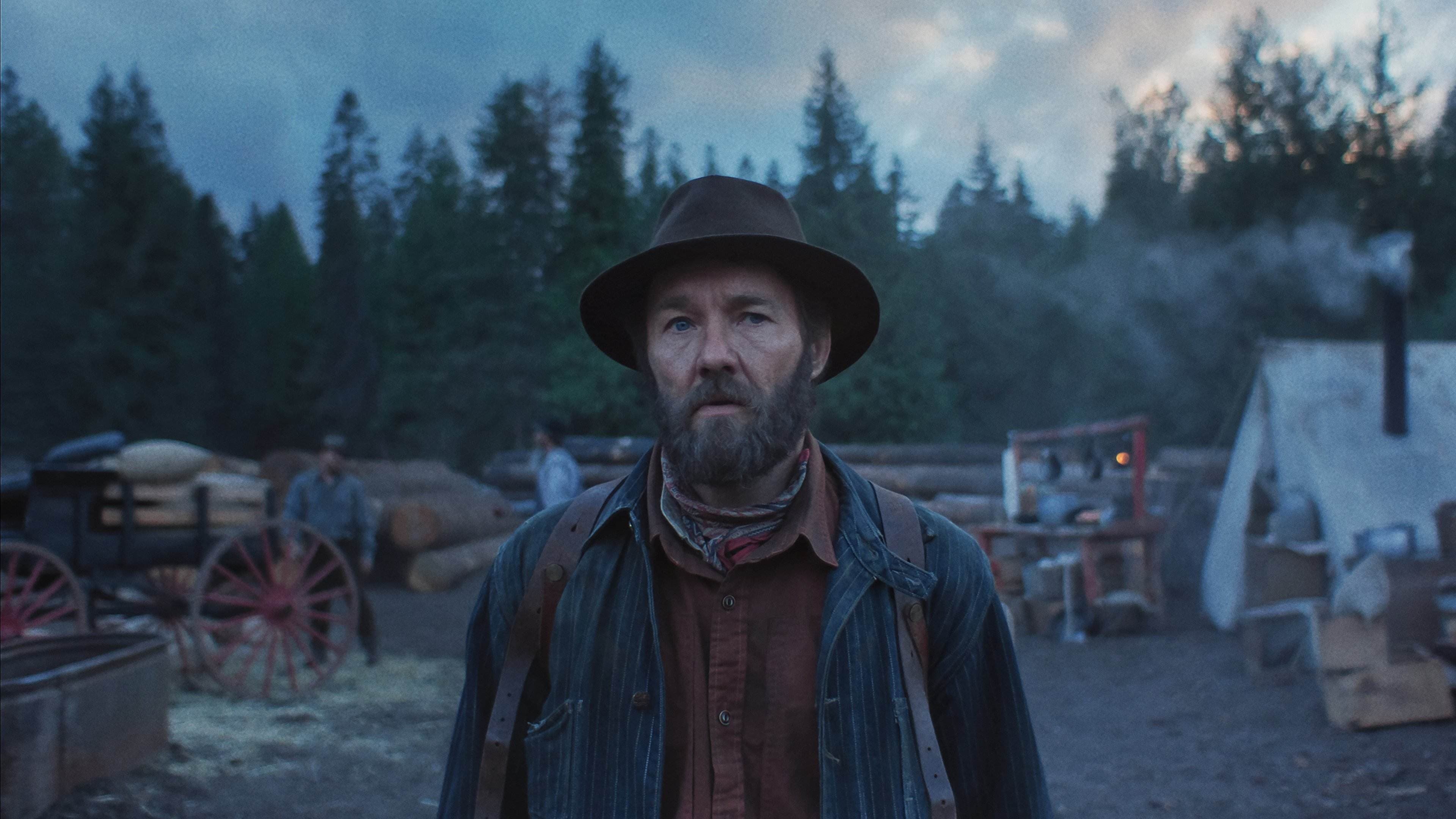
Robert Grainier, an orphaned railroad logger working in the forests of the early-twentieth-century Pacific Northwest, builds a quiet life with his wife Gladys and their infant daughter in a remote Idaho cabin. When a catastrophic wildfire takes everything he loves, Grainier spends the rest of his long life as a solitary witness to the closing of the American frontier, an era of monumental change rendered through one ordinary man's enduring grace.
What Is the Budget of Train Dreams (2025)?
Train Dreams (2025), directed by Clint Bentley and based on Denis Johnson's 2002 novella, was produced on a reported budget of $10,000,000. The independent period drama was financed and produced by Black Bear Pictures alongside Kamala Films, with producers Marissa McMahon and Ashley Schlaifer (Kamala) joining Teddy Schwarzman, Will Janowitz, and Michael Heimler (Black Bear). The film shot independently in Washington State during 2023, then premiered at the 2025 Sundance Film Festival on January 26, where Netflix acquired worldwide rights in a deal reported in the high-teen millions, well above the production cost.
The figure reflects a tightly-managed indie production: a roughly 30-day shoot in rural Washington logging country, a lean above-the-line cast led by Joel Edgerton and Felicity Jones, and naturalistic production design that leaned on practical locations rather than constructed sets. By the time Netflix concluded its post-Sundance acquisition for the high-teen-million range, the combined investment, production plus rights fee, sat in the $25 to $30 million bracket, before any theatrical or marketing spend.
Key Budget Allocation Categories
The $10 million production budget was distributed across these areas:
- Above-the-Line Cast: Joel Edgerton in the leading role of railroad logger Robert Grainier anchored the production, with Felicity Jones as his wife Gladys, William H. Macy as fellow laborer Arn Peeples, and Kerry Condon as Claire Thompson. The ensemble worked at independent-film rates with deferred or backend components, well below studio quotes, reflecting the project's character-driven, awards-oriented framing rather than a star-vehicle commercial play.
- Director, Writers, and Producer Fees: Clint Bentley directed and co-wrote the adapted screenplay with Greg Kwedar, his Sing Sing collaborator, both drawing combined writer-director-producer compensation through their shared filmmaking partnership. Producer fees went to Marissa McMahon and Ashley Schlaifer of Kamala Films, plus Teddy Schwarzman, Will Janowitz, and Michael Heimler of Black Bear Pictures, which also financed the production.
- Pacific Northwest Location Filming: Principal photography took place in rural Washington State, in Tekoa, Snoqualmie, Spokane, Metaline Falls, and Colville, doubling for the early-twentieth-century railroad and logging camps of Idaho and the Pacific Northwest. The remote shoot required transportation, lodging, and per diem for an out-of-state crew, plus location agreements with timber companies and rail operators, alongside the meaningful logistical cost of moving a film unit through dense forest terrain.
- Cinematography and Camera Package: Cinematographer Adolpho Veloso shot the film on a deliberately restrained package designed for natural-light forest interiors and dawn-and-dusk exteriors. The Oscar-nominated cinematography prioritized long takes and available light over heavy lighting rigs, but specialty mounts for period train and biplane sequences, plus the cost of stabilized handheld and dolly work through wooded terrain, absorbed a meaningful share of the below-the-line budget.
- Period Production Design and Costume: Production designer Aaron Hutchinson rebuilt the 1920s and 1930s logging-camp world: bunkhouses, wagons, hand-tools, rail equipment, and the rebuilt cabin at the film's emotional center. Costume designer Aimee Ricca dressed an ensemble of laborers, settlers, and itinerant workers in period-correct wool, denim, and leather, all sourced through period rental houses and bespoke construction rather than a contemporary studio stock supply.
- Music and Original Song: The National guitarist Bryce Dessner composed the orchestral score, leaning on string and woodwind textures that match the natural-light visual register. The title song "Train Dreams," co-written by Nick Cave and Bryce Dessner, was nominated for the Academy Award for Best Original Song. Composer fees, orchestra recording, and master rights for the original song formed a discrete music line within the budget.
- Editorial, Sound, and Post: Editor Parker Laramie assembled the contemplative 102-minute cut over an extended post window. Sound design carried significant weight for a film built around forest ambience, railroad noise, and Will Patton's narration, requiring a multi-month sound mix and a Dolby Atmos theatrical pass to support the limited theatrical release.
- Sundance Premiere and Marketing: Producers funded the Sundance premiere campaign, including the festival print, talent travel to Park City for the January 26, 2025 world premiere, and the buyer's outreach that produced the Netflix sale. Netflix's subsequent theatrical and streaming marketing through November 2025 was funded separately by the streamer and is not part of the production budget figure.
How Does Train Dreams's Budget Compare to Similar Films?
Train Dreams sits among other prestige Netflix dramas and period Americana films with disclosed production costs:
- The Power of the Dog (2021): Budget $35,000,000 | Worldwide $1,800,000. Jane Campion's Netflix western, also a contemplative character study and Oscar Best Picture nominee, spent more than three times Train Dreams's production budget on a New Zealand shoot doubling for Montana. Both films illustrate Netflix's prestige drama financing thesis.
- Marriage Story (2019): Budget $18,000,000 | Worldwide $2,300,000. Noah Baumbach's Netflix drama with Adam Driver and Scarlett Johansson cost nearly double Train Dreams but operated in a similar adult-drama, awards-circuit register. Both films are commercial outliers for streaming, valued by Netflix for prestige and library depth rather than ticket revenue.
- Mank (2020): Budget $25,000,000 | Worldwide $284,000. David Fincher's black-and-white biographical drama for Netflix cost 2.5 times Train Dreams, reflecting period reconstruction at a studio scale rather than location-based naturalism. Both projects represent the studio-quality period filmmaking Netflix has positioned around its theatrical-eligibility window.
- News of the World (2020): Budget $38,000,000 | Worldwide $13,500,000. Paul Greengrass's Universal western with Tom Hanks operated at nearly four times the Train Dreams budget, with broader-scope action and a wider theatrical release. The comparison highlights how a contained character piece like Train Dreams can deliver the period-Americana texture at a fraction of the cost.
- The Revenant (2015): Budget $135,000,000 | Worldwide $533,000,000. Alejandro G. Iñárritu's frontier survival epic with Leonardo DiCaprio cost more than 13 times Train Dreams. The contrast underlines the difference between a studio-financed wilderness spectacle and an indie-scale rural drama with comparable Pacific Northwest visual DNA.
- Killers of the Flower Moon (2023): Budget $200,000,000 | Worldwide $156,800,000. Martin Scorsese's Apple-financed period epic cost twenty times Train Dreams. Both films interrogate the human cost of early-twentieth-century American expansion, but at radically different scales of investment and theatrical ambition.
Train Dreams Box Office Performance
Train Dreams received a limited theatrical release from Netflix in select North American and international markets beginning November 6, 2025, ahead of its global streaming debut on Netflix on November 21, 2025. Netflix does not publicly report grosses from its qualifying theatrical windows, and Box Office Mojo and The Numbers list no reported domestic box office for the film. The release strategy was an awards-qualifying engagement to support the picture's Oscar campaign, not a wide commercial run.
The full financial breakdown reflects the festival-acquisition and streaming-launch model:
Box Office Breakdown
Train Dreams

Conventional ROI math does not apply: Netflix is recouping its high-teen-million acquisition through subscriber retention, awards-season prestige, and long-tail library value, not theatrical receipts. Industry estimates suggest that an Oscar Best Picture nominee with this critical profile generates roughly $20 to $50 million in equivalent subscriber value across the streamer's first-year viewership window.
Strong post-release viewership made Train Dreams one of the most-watched Netflix films of late 2025 and early 2026 in the prestige category. Beyond the immediate streaming window, four Academy Award nominations, including Best Picture, position the film for sustained library viewership and international subscriber value through the 2026 awards cycle and beyond.
Train Dreams Production History
The project originated with director Clint Bentley and his frequent writing partner Greg Kwedar, who co-wrote the screenplay adapting Denis Johnson's 2002 novella Train Dreams. Johnson, the National Book Award winning author of Tree of Smoke, published Train Dreams as a Paris Review serialization in 2002 before its 2011 book publication, and the novella was a finalist for the 2012 Pulitzer Prize for Fiction. Bentley and Kwedar, who had collaborated on Jockey (2021) and Sing Sing (2023), spent several years developing the adaptation before financing came together with Black Bear Pictures and Kamala Films.
Joel Edgerton signed on to play Robert Grainier, the orphan railroad worker turned logger whose 80-year life forms the novella's emotional arc, with Will Patton providing the narrative voice that frames Grainier's interior life. Felicity Jones joined as Gladys, Grainier's wife, with William H. Macy as the older laborer Arn Peeples and Kerry Condon as the social worker Claire Thompson. Nathaniel Arcand, John Diehl, Paul Schneider, Clifton Collins Jr., and Alfred Hsing rounded out the ensemble of camp workers, settlers, and rail crew.
Principal photography took place in 2023 across rural Washington State, with the production basing its work in Tekoa, Snoqualmie, Spokane, Metaline Falls, and Colville. The Pacific Northwest doubled for the early-twentieth-century Idaho panhandle of the novella, and the production worked with active timber and rail operators to capture period-correct labor on real terrain. Cinematographer Adolpho Veloso shot in natural light wherever possible, including the wildfire and biplane sequences that bookend Grainier's life, and editor Parker Laramie cut a contemplative 102-minute final version through 2024.
The film premiered at the 2025 Sundance Film Festival on January 26, 2025, where it screened in the U.S. Dramatic Competition section. Distribution interest was intense, and within days of the premiere Netflix closed a worldwide acquisition deal reported in the high-teen millions. The streamer then mounted a year-long awards campaign, ultimately delivering four Academy Award nominations, three Independent Spirit Awards wins (Best Feature, Best Director, Best Cinematography), and a Golden Globe nomination for Edgerton's lead performance.
Awards and Recognition
Train Dreams emerged as one of the most-decorated films of the 2025-2026 awards season. At the 98th Academy Awards, the film received four nominations: Best Picture, Best Adapted Screenplay (Clint Bentley and Greg Kwedar), Best Cinematography (Adolpho Veloso), and Best Original Song for the title track Train Dreams, written by Nick Cave and Bryce Dessner. The Best Picture nomination placed Train Dreams alongside the season's largest studio releases despite its $10 million indie origin and Netflix streaming distribution.
At the 41st Independent Spirit Awards in 2026, the film won three of the evening's top honors: Best Feature, Best Director for Clint Bentley, and Best Cinematography for Adolpho Veloso, plus a Best Lead Performance nomination for Joel Edgerton. The Golden Globes nominated Edgerton for Best Actor in a Motion Picture, Drama, with a second Globe nomination for Best Original Song. The Critics' Choice Awards and the Los Angeles Film Critics Association named Veloso Best Cinematography, and the Writers Guild of America nominated Bentley and Kwedar for Best Adapted Screenplay. BAFTA recognized the cinematography with a nomination as well.
The National Board of Review named Train Dreams one of its Top Ten Films of 2025 and awarded Bentley and Kwedar its Best Adapted Screenplay prize, while the American Film Institute included it in the AFI Top Ten Films of the year. The Gotham Awards nominated the film for Best Feature and Best Adapted Screenplay, the Chicago International Film Festival presented an Artistic Achievement Award to Bentley and Edgerton, and the Camerimage festival recognized Edgerton with its Actor's Award. The 2025 Sundance premiere also drove early-year critics' lists from outlets including IndieWire, The Hollywood Reporter, and Variety naming it among the festival's strongest titles.
Critical Reception
Train Dreams received some of the most universally positive reviews of the 2025 awards season. The film holds a 94% approval rating on Rotten Tomatoes based on 244 reviews, with the critical consensus describing it as a gorgeous meditation on America, ably shouldered by one of Joel Edgerton's very best performances, balancing brutal reality and wistful poetry. On Metacritic, the film scored 88 out of 100 based on 43 reviews, indicating universal acclaim.
Champions of the film, including Manohla Dargis at The New York Times and David Rooney at The Hollywood Reporter, praised Bentley's restraint and Veloso's photography, with Variety and Deadline highlighting Edgerton's interior, near-wordless performance and the elegiac power of Will Patton's narration. Critics across IndieWire, The Atlantic, and The Guardian described the film as a quietly devastating American epic, with multiple year-end lists placing it among the best releases of 2025. Audience response was warmer than the typical adult-drama Netflix release: the film ranked among the platform's most-streamed prestige titles in the weeks following its November 21, 2025 streaming launch and saw a measurable lift in viewership following the Oscar nominations announcement.
Detractors were rare but tended to focus on the film's deliberate pace and elliptical structure. A minority of critics, notably at Slant Magazine and Sight and Sound, argued that the novella's interior monologue resisted dramatic adaptation and that the film's lyrical voiceover occasionally tipped toward sentimentality. Even those reservations acknowledged the technical excellence of the cinematography, score, and lead performance, framing the film overall as a serious and accomplished work of American period filmmaking.
Frequently Asked Questions
How much did it cost to make Train Dreams (2025)?
Train Dreams had a reported production budget of approximately $10 million. The independent period drama was financed by Black Bear Pictures alongside Kamala Films, with a roughly 30-day shoot in rural Washington State during 2023. Netflix subsequently acquired worldwide rights for a reported high-teen-million sum after the film's January 2025 Sundance Film Festival premiere.
How much did Train Dreams earn at the box office?
Netflix released Train Dreams in select theaters internationally starting November 6, 2025, and in North America on November 7, 2025, ahead of its global streaming launch on November 21, 2025. As a Netflix release, no theatrical grosses were publicly reported by Box Office Mojo or The Numbers. The limited theatrical run was an awards-qualifying engagement rather than a wide commercial release.
Who directed Train Dreams?
Clint Bentley directed Train Dreams. He co-wrote the screenplay with longtime collaborator Greg Kwedar, adapting Denis Johnson's 2002 novella. Bentley and Kwedar previously worked together on Jockey (2021) and Sing Sing (2023), and they signed an indie-centric first-look deal with Netflix following the success of Train Dreams.
Is Train Dreams based on a true story?
Train Dreams is fiction, based on Denis Johnson's 2002 novella of the same name. The book was first serialized in The Paris Review in 2002, published as a standalone volume in 2011, and named a finalist for the 2012 Pulitzer Prize for Fiction. While the novella draws on the real history of early-twentieth-century railroad and logging labor in the Pacific Northwest, Robert Grainier and the other characters are entirely invented.
Where was Train Dreams filmed?
Principal photography took place in 2023 across rural Washington State, with location work in Tekoa, Snoqualmie, Spokane, Metaline Falls, and Colville. The Pacific Northwest doubled for the early-twentieth-century Idaho panhandle of the novella, and the production worked with active timber and rail operators to capture period-correct labor on real terrain.
Who stars in Train Dreams?
Joel Edgerton plays Robert Grainier, the orphaned railroad worker and logger at the center of the film. Felicity Jones plays his wife Gladys, William H. Macy plays the older laborer Arn Peeples, and Kerry Condon plays social worker Claire Thompson. The supporting ensemble includes Nathaniel Arcand, John Diehl, Paul Schneider, Clifton Collins Jr., and Alfred Hsing, with Will Patton providing the narration.
What did critics think of Train Dreams?
Train Dreams received some of the strongest reviews of the 2025 awards season. The film holds a 94% approval rating on Rotten Tomatoes based on 244 reviews and an 88 out of 100 score on Metacritic, indicating universal acclaim. Critics praised Clint Bentley's restraint, Adolpho Veloso's natural-light cinematography, and Joel Edgerton's interior lead performance.
How many Oscar nominations did Train Dreams receive?
Train Dreams received four nominations at the 98th Academy Awards: Best Picture, Best Adapted Screenplay (Clint Bentley and Greg Kwedar), Best Cinematography (Adolpho Veloso), and Best Original Song for the title track written by Nick Cave and Bryce Dessner. The film also won Best Feature, Best Director, and Best Cinematography at the 41st Independent Spirit Awards in 2026.
When was Train Dreams released?
Train Dreams had its world premiere at the Sundance Film Festival on January 26, 2025, in the U.S. Dramatic Competition section. It then received a limited theatrical release internationally beginning November 6, 2025 and in North America on November 7, 2025, before launching globally on Netflix on November 21, 2025.
Who wrote the music for Train Dreams?
Composer Bryce Dessner, guitarist for the band The National, wrote the orchestral score for Train Dreams. The title song, also called Train Dreams, was co-written by Nick Cave and Bryce Dessner and received an Academy Award nomination for Best Original Song. The score leans on string and woodwind textures to match the film's natural-light visual register.
Filmmakers
Train Dreams

Official Trailer
Build budgets like this one in Saturation
Start from an industry-standard feature film template, import the schedule and rates you already have, and let the cost report keep itself current as you spend. Real-time collaboration, no spreadsheets.