Three Colours Blue Budget
 Drama1h 38m
Updated
Synopsis
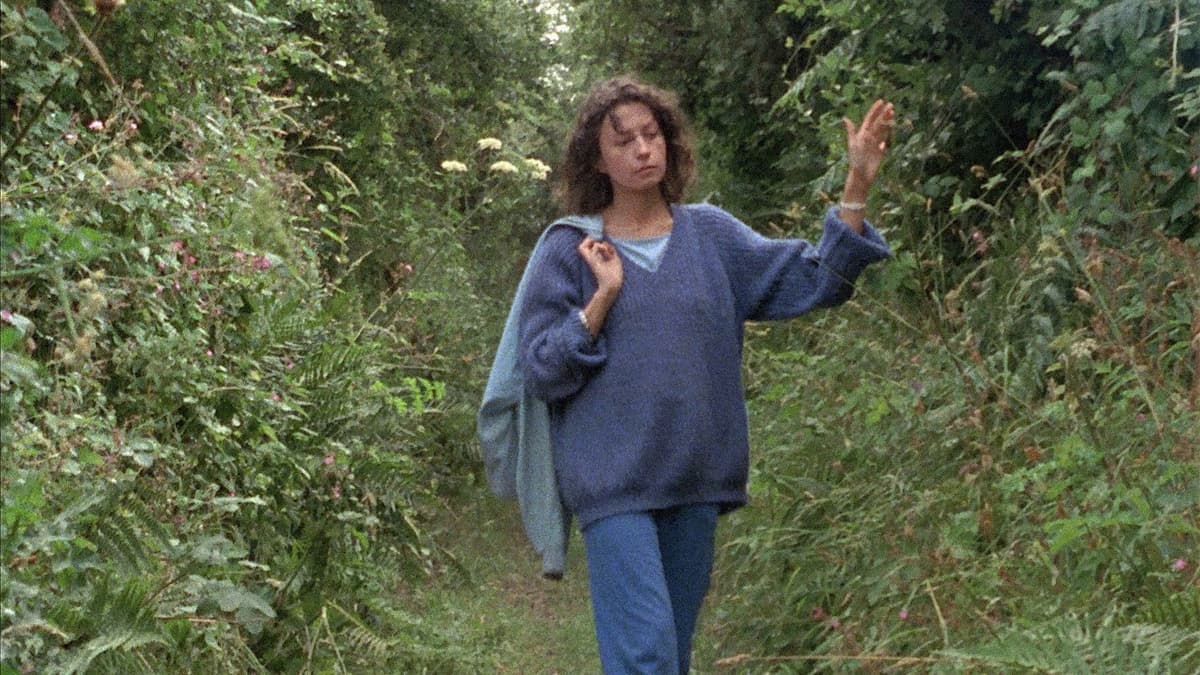
After her composer husband and young daughter die in a car accident, Julie attempts to escape her past by erasing every connection to her former life. As she settles into anonymous solitude in Paris, the unfinished commissions of her husband and the appearance of a young woman with a claim on him force her to confront the freedom she had hoped to find.
What Is the Budget of Three Colours: Blue (1993)?
Three Colours: Blue (1993), directed by Krzysztof Kieślowski and distributed internationally by MK2 and Miramax, was produced as the first film in the Three Colours trilogy. The production was a French-Polish-Swiss co-production with no fully public budget figure. Industry sources and the British Film Institute have placed the budget at approximately $4,000,000 to $5,000,000, with the trilogy as a whole reportedly produced for around $12,000,000 across all three films.
The film was produced by Marin Karmitz through MK2 Productions in Paris, with Kieślowski's longtime collaborator Krzysztof Piesiewicz co-writing the screenplay. Karmitz had previously backed Kieślowski's The Double Life of Veronique (1991) and committed to the full trilogy as a package, an unusual structural commitment for European art cinema of the era. The financing reflected the prestige of Kieślowski's name after Veronique and the international art-house demand for his work.
Key Budget Allocation Categories
Three Colours: Blue's estimated $4,000,000 to $5,000,000 budget broke down across the following European art-cinema categories:
- Above-the-Line Talent: Juliette Binoche commanded a leading-actress rate appropriate to her post-The Unbearable Lightness of Being status. Supporting cast included Benoît Régent as Olivier, Florence Pernel as Sandrine, and Charlotte Véry as the prostitute Lucille. European leading-actor fees in 1993 were substantially below American equivalents but still represented the largest single line item.
- Paris Location Shoot: Principal photography took place across Paris in France, utilizing apartment interiors, cafes, and street locations. Location permitting and dressing in Paris is more expensive than studio work but was essential to the film's grounding in a recognizable French urban setting.
- Score and Music: Composer Zbigniew Preisner, Kieślowski's regular collaborator, provided the central "Song for the Unification of Europe" score, which functions as both diegetic music within the story and as the film's emotional backbone. The choral and orchestral recordings for the score absorbed a significant share of the budget, including recording sessions with full orchestra and chorus.
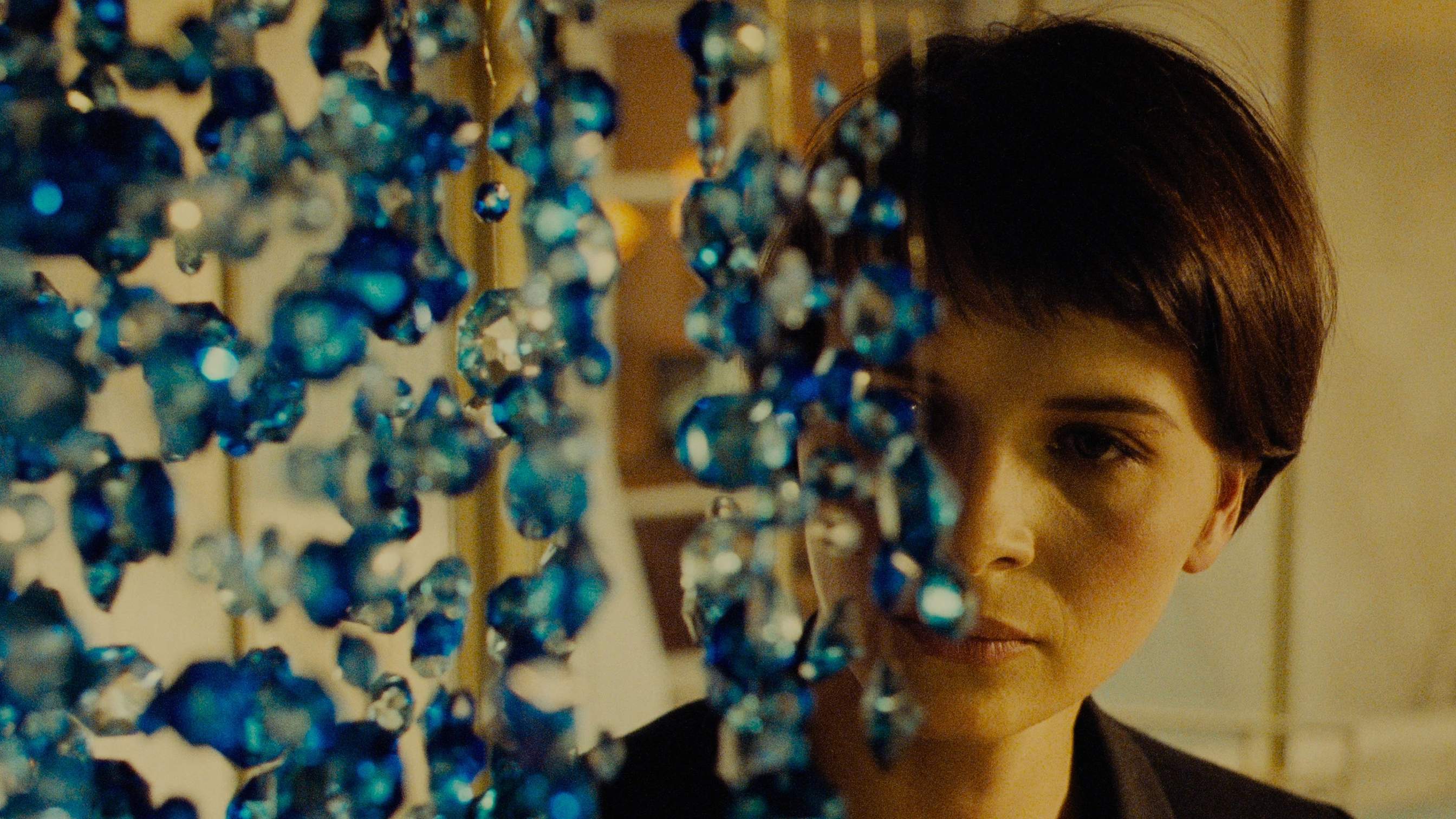
- Cinematography and Specialty Lenses: Director of photography Sławomir Idziak collaborated with Kieślowski on the film's distinctive blue color palette, achieved through filters, lighting, and selective use of in-camera effects. The cinematographic approach required custom filter and lens setups that exceeded standard art-house production overhead.
- Multi-National Co-Production Coordination: The French-Polish-Swiss financing structure required coordination across multiple national funding agencies, including the French CNC, Polish state funding, and Swiss federal cinema funds. Administrative and legal costs associated with multi-nation co-production added meaningful overhead.
- Post-Production in Paris: Editing, sound, and final mix were completed at MK2's Paris facilities, with editor Jacques Witta. The color grading process to achieve the trademark blue tonality required extensive post-production work.
How Does Three Colours: Blue's Budget Compare to Similar Films?
Continental European auteur cinema of the early 1990s clustered in a relatively narrow budget band. Comparable productions include:
- Three Colours: White (1994): Budget approximately $4,000,000 | Worldwide approximately $1,300,000 (US gross alone). The middle film of the trilogy was produced on a similar budget and released six months after Blue.
- Three Colours: Red (1994): Budget approximately $5,000,000 | Worldwide approximately $4,000,000 (US gross). The trilogy capstone was produced on a slightly larger budget reflecting the Swiss financing partner's deeper involvement.
- The Double Life of Veronique (1991): Budget approximately $4,000,000 | US gross approximately $2,000,000. Kieślowski and Marin Karmitz's previous collaboration provides the closest single-film reference point.
- Blue Is the Warmest Color (2013): Budget approximately $5,500,000 | Worldwide $19,517,041. The Abdellatif Kechiche Palme d'Or winner, included for its scale comparison among French-language auteur features released two decades later.
- Caché (2005): Budget approximately $9,400,000 | Worldwide $17,061,000. Michael Haneke's French-Austrian co-production, included as a comparison for prestige European auteur cinema across the decades following Three Colours.
Three Colours: Blue Box Office Performance
Three Colours: Blue grossed approximately $1,300,000 in the United States during its 1993 to 1994 art-house release and accumulated additional grosses across European, Japanese, and other international territories. Comprehensive worldwide gross figures are not published, but European trade press reporting suggests a total theatrical gross in the $4,000,000 to $7,000,000 range across all markets.
The financial breakdown using mid-range industry assumptions for European art cinema of the period:
Box Office Breakdown
Three Colours Blue

The Three Colours trilogy as a whole has generated decades of catalog revenue through Criterion Collection home video releases, broadcaster licensing in multiple territories, and streaming deals with platforms including the Criterion Channel, Max, and Mubi. The films' continued canonical status in film school curricula and retrospective programming has sustained ongoing return well beyond the initial theatrical window.
Juliette Binoche's subsequent career trajectory, including her Academy Award for The English Patient (1996), increased the cultural and commercial value of the film over time. Three Colours: Blue is regularly cited as one of her defining performances and a touchstone of 1990s European cinema.
Three Colours: Blue Production History
Development on the Three Colours trilogy began in earnest in 1991, with Krzysztof Kieślowski and screenwriter Krzysztof Piesiewicz constructing the project around the three colors of the French flag and the values of liberty, equality, and fraternity. Kieślowski and Piesiewicz had previously collaborated on the Dekalog television series and The Double Life of Veronique. Producer Marin Karmitz at MK2 backed all three films as a single financing package.
Principal photography for Blue took place in Paris across 1992. The shoot involved location work at Paris apartment buildings, the Café de la Mairie at Place Saint-Sulpice, the Pont des Arts, and a residential block in Mézy-sur-Seine that doubled for the country house. Director of photography Sławomir Idziak worked closely with Kieślowski to develop the film's blue-saturated palette, using filters, color-tinted production design, and selective lighting.
Post-production took place at MK2 facilities in Paris through early 1993. The film premiered at the 50th Venice International Film Festival in September 1993, where it won the Golden Lion. The trilogy was released sequentially: Blue in September 1993, White in January 1994, and Red in May 1994, an unusual structural rollout that allowed each film to find its own theatrical window while building anticipation for the next entry.
Awards and Recognition
Three Colours: Blue received significant international awards recognition. The film won the Golden Lion at the 50th Venice International Film Festival in September 1993, the highest honor at the festival. Juliette Binoche won the Volpi Cup for Best Actress at the same festival. The film also won three César Awards in 1994: Best Editing (Jacques Witta), Best Sound (William Flageollet, Jean-Claude Laureux), and a Best Actress nomination for Binoche.
Cinematographer Sławomir Idziak won the European Film Award for Best Cinematographer, and the film was nominated for the European Film Award for Best Film. Composer Zbigniew Preisner received the European Film Award for Best Composer, recognizing the central role of the score in the film's achievement. The film also received critical recognition at the Berlin International Film Festival and the Toronto International Film Festival as part of its sustained festival run.
Critical Reception
Three Colours: Blue received widespread critical acclaim and has retained its canonical status in international art cinema. The film holds a 95% approval rating on Rotten Tomatoes based on 65 critic reviews, with a critical consensus describing it as a deeply moving, formally rigorous examination of liberty and grief anchored by Juliette Binoche's extraordinary performance. On Metacritic, the film scored 82 out of 100, indicating universal acclaim.
Critics praised Binoche's lead performance, Sławomir Idziak's cinematography, Zbigniew Preisner's score, and Kieślowski's integration of the trilogy's thematic ambition with concrete emotional storytelling. Roger Ebert awarded the film four stars and described it as "a film of haunting beauty and the kind of moral seriousness American cinema has nearly forgotten how to attempt." The Village Voice's J. Hoberman called it "a meditation on freedom that uses cinema's formal possibilities with rare confidence."
The film has been included on multiple BFI Sight and Sound critic and director polls as one of the greatest films of the modern era. It is regularly programmed in retrospective screenings, taught in film schools, and cited as an influence by filmmakers ranging from Tom Tykwer (whose Run Lola Run drew directly on Idziak's color work) to Wes Anderson. The trilogy as a whole is considered one of the defining achievements of 1990s European cinema.
Frequently Asked Questions
How much did it cost to make Three Colours: Blue (1993)?
The film's budget was never publicly disclosed in full. Industry sources and the British Film Institute have placed the budget at approximately $4,000,000 to $5,000,000, with the trilogy as a whole reportedly produced for around $12,000,000 across all three films.
Who directed Three Colours: Blue?
Polish filmmaker Krzysztof Kieślowski directed the film. Kieślowski is also known for the Dekalog television series and The Double Life of Veronique (1991). He co-wrote the screenplay with longtime collaborator Krzysztof Piesiewicz.
Where can you watch Three Colours: Blue?
The film is available on Blu-ray and DVD through the Criterion Collection, plus streaming on the Criterion Channel, Max, and Mubi in various territories. International streaming availability varies by region.
Did Three Colours: Blue win the Golden Lion?
Yes. The film won the Golden Lion at the 50th Venice International Film Festival in September 1993. Juliette Binoche also won the Volpi Cup for Best Actress at the same festival.
How is Three Colours: Blue connected to Three Colours: White and Three Colours: Red?
The three films form a trilogy organized around the colors of the French flag and the values of liberty (Blue), equality (White), and fraternity (Red). They were produced as a single financing package by Marin Karmitz at MK2 and released sequentially between September 1993 and May 1994.
Who composed the music for Three Colours: Blue?
Polish composer Zbigniew Preisner composed the score, including the central "Song for the Unification of Europe" that functions as both diegetic music and the film's emotional backbone. Preisner won the European Film Award for Best Composer for his work on the film.
Where was Three Colours: Blue filmed?
Principal photography took place in Paris, France, across 1992. Locations included Paris apartment buildings, the Café de la Mairie at Place Saint-Sulpice, the Pont des Arts, and the village of Mézy-sur-Seine, which doubled for Julie's country house.
How was Three Colours: Blue received by critics?
The film received widespread critical acclaim, with a 95% approval rating on Rotten Tomatoes based on 65 critic reviews and a Metacritic score of 82 out of 100. Roger Ebert awarded it four stars. It is regularly cited on BFI Sight and Sound polls as one of the greatest films of the modern era.
Did Juliette Binoche win awards for Three Colours: Blue?
Yes. She won the Volpi Cup for Best Actress at the Venice Film Festival and received a César Award nomination for Best Actress. The film won three Césars overall for Best Editing, Best Sound, and Best Female Newcomer (Florence Pernel).
How long is Three Colours: Blue?
The film has a running time of 98 minutes, in line with the formal compression that defines all three Three Colours films.
Filmmakers
Three Colours Blue

Official Trailer
Build budgets like this one in Saturation
Start from an industry-standard feature film template, import the schedule and rates you already have, and let the cost report keep itself current as you spend. Real-time collaboration, no spreadsheets.