Top Gun Budget
 ActionDramaRomance1h 50m
Updated
Synopsis
For Lieutenant Pete 'Maverick' Mitchell and his friend and co-pilot Nick 'Goose' Bradshaw, being accepted into an elite training school for fighter pilots is a dream come true. But a tragedy, as well as personal demons, will threaten Pete's dreams of becoming an ace pilot.
What Is the Budget of Top Gun (1986)?
Top Gun was produced on a budget of $15 million by Don Simpson and Jerry Bruckheimer, the producing duo whose high-concept, MTV-influenced blockbuster formula defined mainstream Hollywood in the mid-1980s. Paramount Pictures distributed the film, which opened on May 16, 1986, and quickly became the highest-grossing domestic release of the year.
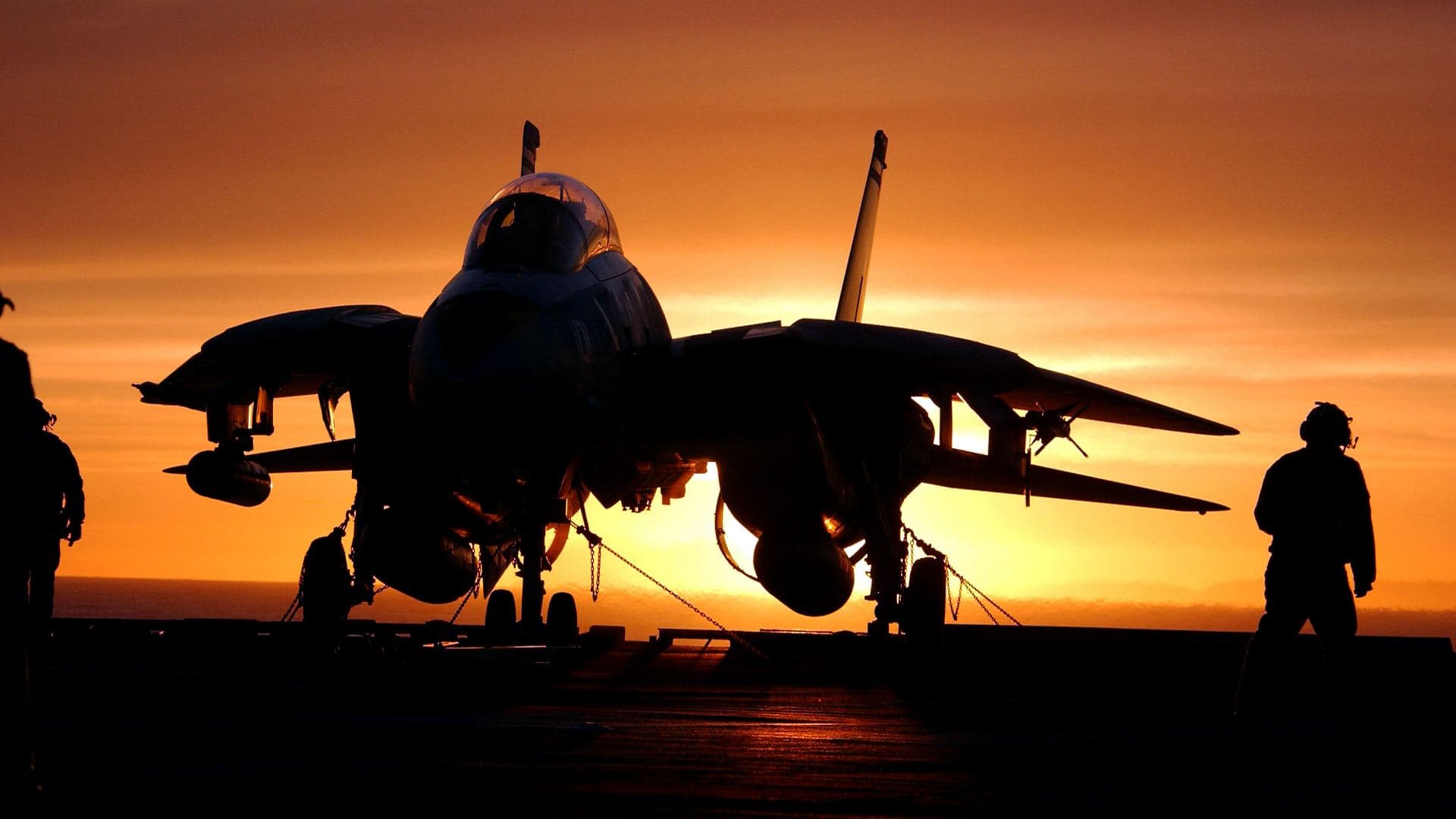
The $15 million cash budget significantly understates the total production value. The US Navy provided aircraft carriers, operational F-14 Tomcat jets, access to Naval Air Station Miramar in San Diego, and thousands of hours of flight time at no direct cost to the production, in exchange for the film portraying Navy aviation favorably. The in-kind value of this cooperation has been estimated at tens of millions of dollars, making Top Gun one of the most heavily subsidized major studio productions in Hollywood history on a per-dollar basis.
Key Budget Allocation Categories
- Above-the-Line Talent: Tom Cruise was a rising star fresh off Risky Business (1983) and All the Right Moves (1983), but had not yet commanded the premium fees he would after Top Gun. His salary consumed a meaningful share of the budget but remained within the range expected for a $15 million production, rather than the $20 million fees he would later negotiate post-Top Gun. Tony Scott, coming off The Hunger (1983) in the UK, was hired at a directing rate consistent with an emerging Hollywood talent.
- US Navy Cooperation: The Navy provided F-14 Tomcat aircraft and pilots, multiple aircraft carriers including the USS Enterprise (CVN-65) and USS Ranger (CV-61), and unrestricted access to NAS Miramar in San Diego, the actual home of the Navy Fighter Weapons School. This cooperation, provided in exchange for favorable portrayal of military aviation, would have cost many times the entire $15 million cash budget to replicate through private charter or CGI, making it the single most consequential below-the-line contribution to the production.
- Tony Scott Visual Style and Camera Equipment: Scott's signature approach on Top Gun was the first major studio film to consistently apply color filtration gels, slow-motion photography, and music-video-era rapid cutting to a mainstream action film. Cinematographer Jeffrey L. Kimball required specialized camera mounts, high-speed film stocks, and a lighting package significantly more elaborate than a conventional action film of the era, driving below-the-line equipment costs above what the budget tier would normally support.
- Harold Faltermeyer Score and Licensed Soundtrack: Harold Faltermeyer composed the film's synth-driven score, including the iconic "Danger Zone"-adjacent instrumental themes. The production also licensed Kenny Loggins's "Danger Zone" and Berlin's "Take My Breath Away" (which won the Academy Award for Best Original Song). The soundtrack album, released on Columbia Records, became one of the best-selling soundtracks of the 1980s and generated revenue that far exceeded the licensing costs, but those licensing fees were charged to the production budget.
- Aerial Photography and Stunt Coordination: Filming real F-14 Tomcats in flight required camera operators physically mounted inside chase aircraft, specialized high-speed cameras, and close coordination with Navy air traffic control over the Pacific Ocean off San Diego and above the Nevada desert near Fallon. Even with the Navy providing the aircraft and crews at no direct cost, the logistics, aviation photography specialists, and safety coordination represented a significant portion of the production's below-the-line budget.
How Does Top Gun's Budget Compare to Similar Films?
Top Gun's return of more than 23 times its production budget on worldwide grosses makes it one of the most efficient blockbusters of the 1980s. Comparing it to films with similar producers, the same star, or the same genre context shows how distinctly well it performed relative to its investment.
- Beverly Hills Cop (1984): Budget $15M | Worldwide $316.4M. The prior Simpson/Bruckheimer hit shows their formula already working at this budget tier before Top Gun. Beverly Hills Cop's success gave Paramount confidence to greenlight Top Gun at the same budget level, and Top Gun then exceeded it.
- Top Gun: Maverick (2022): Budget $170M | Worldwide $1.49B. The sequel illustrates how 36 years of franchise inflation affects both the investment required and the ceiling achievable. Maverick required more than 11 times the original's cash budget and earned over four times as much, reflecting both inflation and Cruise's post-1986 star premium.
- Iron Eagle (1986): Budget $17M | Worldwide $23M. Released the same year as Top Gun, also centered on military aviation and fighter jets, but without Navy cooperation. Iron Eagle demonstrates concretely what the Navy deal meant: a comparable budget and genre, but without access to real aircraft and authentic settings, produced a film that barely recouped.
- Cocktail (1988): Budget $20M | Worldwide $171M. Tom Cruise's follow-up two years after Top Gun illustrates how the film transformed his commercial value. Cruise commanded a higher fee on Cocktail than he had on Top Gun, and the film still earned 8.5 times its budget purely on his star power, demonstrating how Top Gun's success elevated his market position.
Top Gun Box Office Performance
Top Gun opened in wide release on May 16, 1986 through Paramount Pictures, earning $8.2 million in its opening weekend from 1,028 theaters. The film held exceptionally well through the summer, driven by repeat viewings from younger male audiences and strong word-of-mouth from its aerial sequences and soundtrack. It finished with $179.8 million domestically and $356.8 million worldwide, making it the highest-grossing film of 1986 at the domestic box office and the top-grossing film globally for the year.
Against a $15 million production budget and an estimated $12 million in prints and advertising, Paramount's total investment was approximately $27 million. Theaters typically retain around 50 percent of box office revenue, leaving the studio with roughly $178.4 million from worldwide grosses. That represents a return of more than six times the total investment, and more than 23 times the production budget alone, making Top Gun among the most efficient tentpole investments in 1980s Hollywood.
Box Office Breakdown
Top Gun

Top Gun earned roughly $23.79 for every $1 invested in production, a figure that rises further when the Navy's in-kind contribution is excluded from the denominator. Even accounting for the full $27 million investment including prints and advertising, the film returned more than $6.60 per dollar spent, a return that few studio films of any era have matched.
Top Gun Production History
Top Gun originated from a May 1983 article in California magazine titled "Top Guns" by journalist Ehud Yonay, which profiled the Navy's elite Fighter Weapons School at NAS Miramar in San Diego. Producers Don Simpson and Jerry Bruckheimer optioned the article through their partnership at Paramount Pictures and hired screenwriters Jim Cash and Jack Epps Jr. to adapt it into a feature screenplay. The concept was pitched around a simple high-octane formula: the best fighter pilots in the US Navy compete to be the best, set against a romantic subplot and a commercial soundtrack.
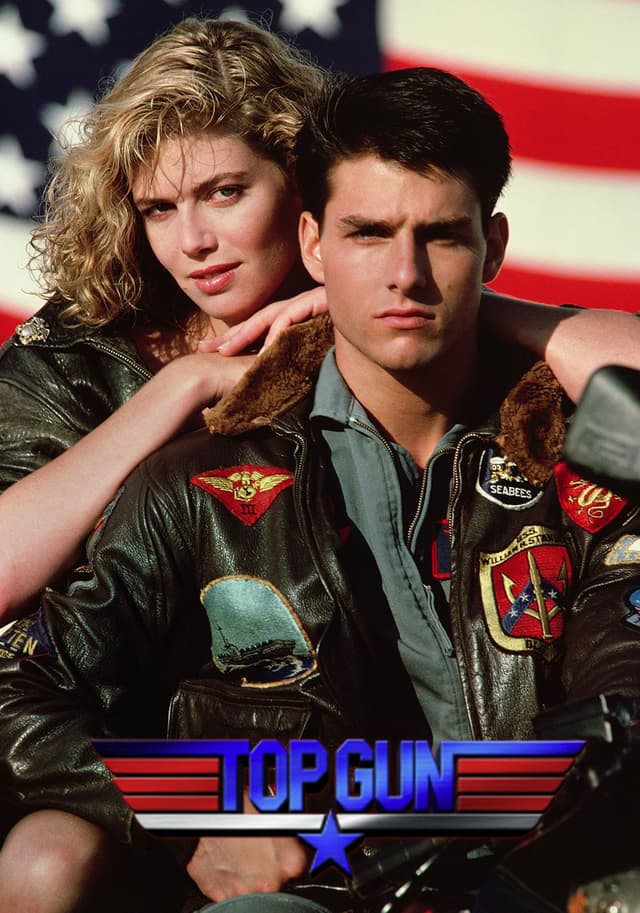
Simpson and Bruckheimer brought in British director Tony Scott, who had made his Hollywood debut with The Hunger (1983), a visually stylized thriller with David Bowie and Catherine Deneuve. Scott's MTV-era sensibility and his skill with kinetic commercial imagery made him the producers' choice for a film that needed to feel viscerally exciting rather than militarily realistic. Tom Cruise was cast as Lt. Pete "Maverick" Mitchell, bringing to the role the cocky intensity he had established in Risky Business. Kelly McGillis was cast as Charlie, Maverick's civilian love interest, and Val Kilmer joined as rival pilot "Iceman."
Securing US Navy cooperation required significant negotiation. The Navy's public affairs office reviewed the screenplay and agreed to provide aircraft, facilities, and personnel in exchange for favorable portrayal of Navy aviation and the opportunity to set up recruiting booths in theater lobbies during the film's run. The agreement gave the production access to NAS Miramar, operational F-14 Tomcat aircraft and pilots, and aircraft carriers including the USS Enterprise and USS Ranger. Principal photography took place at NAS Miramar in San Diego, with aerial sequences filmed over the Pacific Ocean off the California coast and above the Nevada desert near Fallon, Nevada, home of the Navy's secondary strike fighter training facility.
The film opened May 16, 1986 in wide release and immediately became a cultural phenomenon. The Navy reported that applications to become Navy pilots increased sharply following the film's release, with recruiting representatives stationed in theater lobbies across the country reporting sustained interest through the summer. The soundtrack, featuring Kenny Loggins's "Danger Zone" and Berlin's "Take My Breath Away," became one of the best-selling movie soundtracks of the decade. The film's success established Simpson and Bruckheimer as the defining producer brand of the era and transformed Tom Cruise into the biggest male star in Hollywood.
Awards and Recognition
Top Gun received four Academy Award nominations at the 59th Academy Awards (1987), winning one. The film won Best Original Song for "Take My Breath Away," written by Giorgio Moroder and Tom Whitlock and performed by Berlin. The film was also nominated for Best Sound (Donald O. Mitchell, Kevin O'Connell, Rick Kline, and William B. Kaplan), Best Film Editing (Billy Weber and Chris Lebenzon), and Best Sound Editing (Cecelia Hall and George Watters II). The sound and editing nominations reflected the genuine technical achievement of cutting together aerial sequences filmed over months at multiple Navy facilities into coherent, dynamic action.
Beyond the Academy, Top Gun became one of the defining cultural artifacts of the Reagan era, expressing a vision of American military confidence and youth that resonated broadly with 1986 audiences. The film's impact on US Navy pilot recruitment was documented by the Navy, which reported a measurable increase in applications at recruiting stations set up in theater lobbies during its run. The film remains one of the most commercially successful military-themed features ever produced, and its reputation grew further when Top Gun: Maverick (2022) became the highest-grossing film of Tom Cruise's career.
Critical Reception
Top Gun received mixed notices from critics on release, with many finding it narratively thin while acknowledging the visceral effectiveness of its aerial sequences and visual style. Roger Ebert gave the film 2.5 out of 4 stars, writing that it was "the movie equivalent of a music video" and that it prioritized sensation over story, but acknowledged that on its own terms the flying sequences delivered genuine excitement. Pauline Kael and other literary critics were largely dismissive of the film's romantic subplot and its overt recruitment-film quality.
Audiences disagreed with critics entirely. Top Gun scored an A CinemaScore grade and generated enormous repeat viewership, with many customers returning multiple times to see the aerial sequences in the large-format theatrical presentation. Its performance as the number-one film of 1986 by a wide margin demonstrated a gap between critical consensus and commercial appeal that would define the Simpson/Bruckheimer formula throughout the decade.
Critical reassessment since the 1980s has treated Top Gun more generously, recognizing Tony Scott's visual innovation as genuinely influential on mainstream action cinema rather than merely shallow. The success of Top Gun: Maverick in 2022, which was acclaimed by critics and audiences alike while deliberately evoking the tone and style of the original, effectively rehabilitated the 1986 film's reputation. Maverick's critical praise extended backward, with many reviewers revisiting the original as a formative text rather than a guilty pleasure.
Frequently Asked Questions
How much did it cost to make Top Gun (1986)?
The production budget was $15,000,000, covering principal photography, visual effects, cast and crew salaries, locations, sets, post-production, and music. Marketing and distribution (P&A) costs are estimated at an additional $7,500,000 - $12,000,000, bringing the total studio investment to approximately $22,500,000 - $27,000,000.
How much did Top Gun (1986) earn at the box office?
Top Gun grossed $180,258,178 domestic, $176,572,423 international, totaling $356,830,601 worldwide.
Was Top Gun (1986) profitable?
Yes. Against a production budget of $15,000,000 and estimated total costs of ~$37,500,000, the film earned $356,830,601 theatrically - a 2279% ROI on production costs alone.
What were the biggest costs in producing Top Gun?
The primary cost drivers were above-the-line talent (Tom Cruise, Kelly McGillis, Val Kilmer); visual effects, practical stunts, and A-list talent compensation.
How does Top Gun's budget compare to similar action films?
At $15,000,000, Top Gun is classified as a low-budget production. The median budget for wide-release action films in the era ranges from $30 - 80M for mid-budget to $150M+ for tentpoles. Comparable budgets: A Dangerous Method (2011, $15,000,000); Ben-Hur (1959, $15,000,000); Land of the Dead (2005, $15,000,000).
Did Top Gun (1986) go over budget?
There are no widely reported accounts of significant budget overruns for this production. However, studios rarely disclose precise budget overrun figures publicly. The reported production budget reflects the final estimated cost.
What was the return on investment (ROI) for Top Gun?
The theatrical ROI was 2278.9%, calculated as ($356,830,601 − $15,000,000) ÷ $15,000,000 × 100. This measures gross revenue against production budget only - it does not account for P&A or exhibitor shares.
What awards did Top Gun (1986) win?
Won 1 Oscar. 11 wins & 9 nominations total.
Who directed Top Gun and who were the key crew members?
Directed by Tony Scott, written by Jim Cash, Jack Epps Jr., shot by Jeffrey L. Kimball, Rick Fichter, with music by Harold Faltermeyer, Tom Whitlock, edited by Billy Weber, Chris Lebenzon.
Where was Top Gun filmed?
Top Gun was filmed in United States of America.
Filmmakers
Top Gun

Official Trailer
Build budgets like this one in Saturation
Start from an industry-standard feature film template, import the schedule and rates you already have, and let the cost report keep itself current as you spend. Real-time collaboration, no spreadsheets.