The Sugarland Express Budget
 CrimeDramaComedy1h 50m
Updated
Synopsis
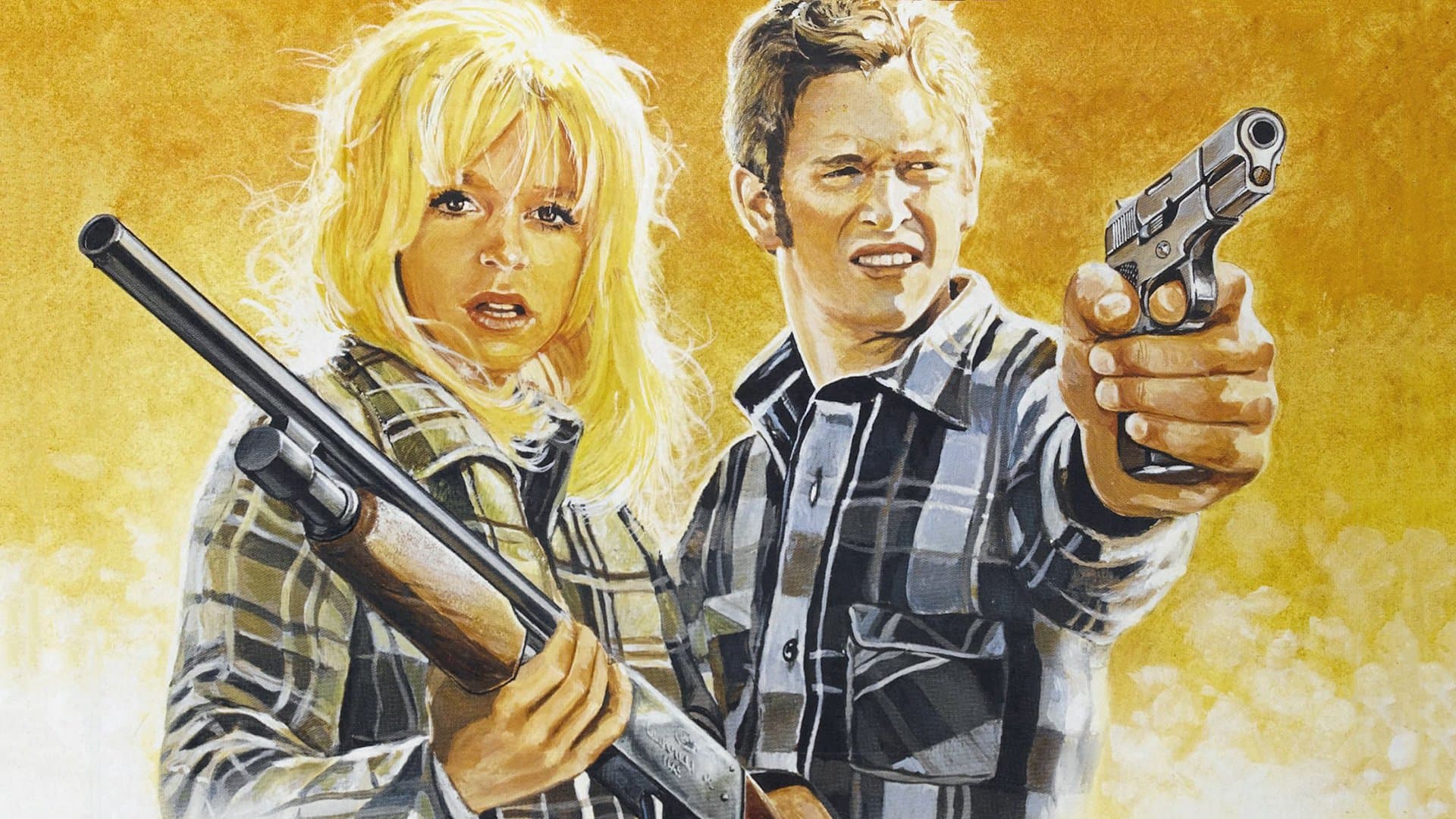
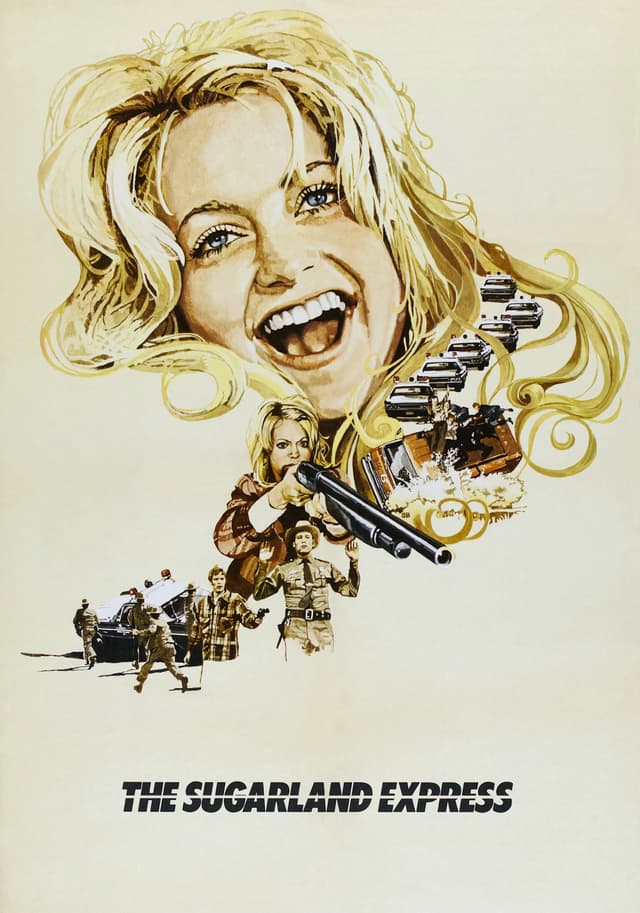
Married small-time crooks Lou-Jean and Clovis Poplin lose their baby to the state of Texas and resolve to do whatever it takes to get him back. Lou-Jean gets Clovis out of jail, and the two steal their son from his foster home, in addition to taking a highway patrolman hostage. As a massive dragnet starts to pursue them across Texas, the couple become unlikely folk heroes and even start to bond with the captive policeman.
What Is the Budget of The Sugarland Express?
The Sugarland Express was produced on a budget of approximately $3 million, a modest figure even by early 1970s standards. Universal Pictures financed the project, with Richard D. Zanuck and David Brown serving as producers. For Zanuck and Brown, this was part of a string of collaborations with young filmmakers that would soon yield Jaws, one of the highest-grossing films of all time.
Steven Spielberg was 26 years old when he directed The Sugarland Express, making it his first theatrical feature after the made-for-television film Duel (1971). The relatively low budget reflected Universal's cautious investment in a director who had proven himself on television but had yet to open a studio film in theaters. Spielberg used the tight financial constraints to his advantage, shooting on location across Texas and relying on practical car stunts rather than costly special effects.
Key Budget Allocation Categories
- Cast Salaries Goldie Hawn commanded the largest salary as the film's marquee name, while supporting players Ben Johnson, William Atherton, and Michael Sacks were cast at more modest rates. Hawn's star power was essential to securing the greenlight from Universal.
- Location Filming in Texas The production shot extensively on Texas highways and small towns, capturing the authentic landscape of the true story. Location work kept costs lower than building sets but required significant coordination with local authorities for road closures and traffic management.
- Vehicle Stunts and Car Chases The film features an extended police convoy pursuing the protagonists across hundreds of miles. Coordinating dozens of patrol cars, stunt drivers, and camera vehicles consumed a meaningful share of the budget, requiring careful choreography for each sequence.
- Cinematography Vilmos Zsigmond, already acclaimed for his work on McCabe & Mrs. Miller and Deliverance, brought a naturalistic visual style that relied on available light and long lenses. His approach minimized the need for elaborate lighting setups while giving the film a distinctive, sun-bleached look.
- Music Score John Williams composed the score, marking the first collaboration between Spielberg and the composer who would go on to create the music for Jaws, Close Encounters of the Third Kind, Raiders of the Lost Ark, and dozens more. At this early stage, Williams was a respected television and film composer but not yet the industry icon he would become.
- Post-Production Editing, sound mixing, and the film's optical effects were handled at Universal's facilities. The relatively straightforward narrative structure kept post-production costs contained compared to effects-heavy productions.
How Does The Sugarland Express's Budget Compare to Similar Films?
Placed alongside other early-1970s chase films and debut features from the New Hollywood generation, The Sugarland Express sits at the lower end of the budget spectrum.
- Badlands (1973) Budget $300K | Worldwide $11M. Terrence Malick's debut cost a fraction of The Sugarland Express and told a similarly road-based crime story. Both films launched major directing careers, though Malick worked with almost no studio support.
- The Getaway (1972) Budget $3.5M | Worldwide $36M. Sam Peckinpah's heist-and-chase thriller carried a comparable budget and starred Steve McQueen, demonstrating that the car-chase genre could deliver strong returns with controlled spending.
- Vanishing Point (1971) Budget $1.5M | Worldwide $13M. This cult road film cost half of what Spielberg spent and became a touchstone of 1970s car cinema, proving that audiences responded to stripped-down highway action.
- American Graffiti (1973) Budget $775K | Worldwide $140M. George Lucas directed this coming-of-age film for well under $1 million. Its massive return on investment made it one of the most profitable films in history and set the standard for what low-budget New Hollywood productions could achieve.
- Duel (1971) Budget $450K | TV ratings success. Spielberg's own television film cost significantly less and proved his ability to build sustained tension from a vehicle-based premise. The Sugarland Express expanded on that template with a larger cast and real locations.
The Sugarland Express Box Office Performance
The Sugarland Express earned approximately $7.5 million domestically and an estimated $12 million worldwide. Against its $3 million production budget, the film needed roughly $6 million at the box office to break even after accounting for prints, advertising, and distribution fees (the standard 2x multiplier for theatrical releases).
By that measure, the domestic gross alone covered the break-even threshold, and the worldwide total pushed the film into modest profitability. The return on investment works out to approximately 300% using the formula (Worldwide Gross minus Budget) divided by Budget times 100: ($12M minus $3M) / $3M x 100 = 300%.
Despite these numbers, Universal considered the film a commercial disappointment. The studio had hoped Goldie Hawn's star power would drive stronger opening weekend numbers, but the film struggled to find its audience in a marketplace dominated by The Sting and The Exorcist. Critics championed the film far more enthusiastically than ticket buyers did, a pattern that would reverse dramatically with Spielberg's next project for Zanuck and Brown: Jaws.
Box Office Breakdown
The Sugarland Express

The Sugarland Express Production History
The screenplay was written by Hal Barwood and Matthew Robbins, based on the true story of Bobby and Ila Faye Dent. In 1969, the Dents attempted to reclaim their child from foster care by taking a Texas highway patrolman hostage and leading a massive police caravan across the state. The incident captivated local media and ended in a fatal confrontation.
Spielberg discovered the story while working in television at Universal and developed it with Barwood and Robbins, who were classmates from the UCLA film school. The three collaborated on shaping the real events into a narrative that balanced dark comedy, genuine tension, and emotional weight. Spielberg pushed for location shooting in Texas rather than doubling California locations, arguing that the flat, sun-baked landscape was essential to the story's authenticity.
Goldie Hawn signed on to play Lou Jean Poplin (the fictionalized Ila Faye), a departure from the broad comedies that had defined her career since Laugh-In. William Atherton played her husband Clovis, and Michael Sacks took the role of the kidnapped patrolman. Ben Johnson, fresh from his Oscar-winning turn in The Last Picture Show, played the pursuing Captain Tanner.
The Texas shoot required extensive coordination with state and local police, who provided real patrol vehicles and officers as extras. Spielberg orchestrated the lengthy convoy sequences with a precision that foreshadowed the logistical ambition of his later action films. Vilmos Zsigmond shot with long lenses to compress the lines of police cars into striking visual compositions, and the natural Texas light gave the film a distinctive warmth that contrasted with its increasingly desperate storyline.
Awards and Recognition
The Sugarland Express received its highest honor at the 1974 Cannes Film Festival, where Hal Barwood and Matthew Robbins won the Best Screenplay Award. The Cannes recognition was particularly significant for Spielberg, placing him alongside established international filmmakers at a moment when he was still largely unknown outside of television.
The film did not receive Academy Award nominations, which was not unusual for a modestly performing debut feature in a year dominated by The Godfather Part II and Chinatown. However, the critical community recognized the technical achievements, with particular praise for Zsigmond's cinematography and Williams's score. Both collaborators would go on to earn Oscars on future Spielberg projects: Zsigmond for Close Encounters of the Third Kind (1977) and Williams for multiple scores beginning with Fiddler on the Roof (1971, pre-Spielberg) and later Jaws, Star Wars, and Schindler's List.
Critical Reception
The Sugarland Express holds a 90% approval rating on Rotten Tomatoes, reflecting the strong consensus among critics that Spielberg's debut announced a major filmmaking talent. Reviews at the time of release praised the film's visual ambition, its tonal balance between comedy and tragedy, and Spielberg's assured handling of large-scale action sequences.
Pauline Kael of The New Yorker called it one of the most phenomenal debut films in the history of movies, singling out Spielberg's ability to orchestrate complex vehicular sequences while maintaining emotional engagement with the characters. Other critics noted the film's debt to Bonnie and Clyde and its exploration of media spectacle, themes that would become increasingly relevant in American cinema.
The film's reputation has grown steadily in the decades since its release. Modern reassessments consistently position The Sugarland Express as the essential first chapter in understanding Spielberg's career, containing early versions of the populist storytelling instincts, technical virtuosity, and emotional directness that would define his work from Jaws onward. The collaboration with Zsigmond and the first pairing with Williams are cited as foundational creative relationships that shaped the sound and look of some of the most successful films ever made.
Frequently Asked Questions
How much did it cost to make The Sugarland Express (1974)?
The production budget was $3,000,000, covering principal photography, cast and crew salaries, locations, sets, post-production, and music. Marketing and distribution (P&A) costs are estimated at an additional $1,500,000 - $2,400,000, bringing the total studio investment to approximately $4,500,000 - $5,400,000.
How much did The Sugarland Express (1974) earn at the box office?
The Sugarland Express grossed $12,800,000 worldwide.
Was The Sugarland Express (1974) profitable?
Yes. Against a production budget of $3,000,000 and estimated total costs of ~$7,500,000, the film earned $12,800,000 theatrically - a 327% ROI on production costs alone.
What were the biggest costs in producing The Sugarland Express?
The primary cost drivers were above-the-line talent (Goldie Hawn, William Atherton, Ben Johnson); talent compensation, location cinematography, and tension-driven editorial.
How does The Sugarland Express's budget compare to similar crime films?
At $3,000,000, The Sugarland Express is classified as a micro-budget production. The median budget for wide-release crime films in the era ranges from $30 - 80M for mid-budget to $150M+ for tentpoles. Comparable budgets: Ghost in the Shell (1995, $3,000,000); Witness for the Prosecution (1957, $3,000,000); Perfect Blue (1998, $3,000,000).
Did The Sugarland Express (1974) go over budget?
There are no widely reported accounts of significant budget overruns for this production. However, studios rarely disclose precise budget overrun figures publicly. The reported production budget reflects the final estimated cost.
What was the return on investment (ROI) for The Sugarland Express?
The theatrical ROI was 326.7%, calculated as ($12,800,000 − $3,000,000) ÷ $3,000,000 × 100. This measures gross revenue against production budget only - it does not account for P&A or exhibitor shares.
Who directed The Sugarland Express and who were the key crew members?
Directed by Steven Spielberg, written by Hal Barwood, Matthew Robbins, Steven Spielberg, shot by Vilmos Zsigmond, with music by John Williams, edited by Edward M. Abroms, Verna Fields.
Where was The Sugarland Express filmed?
The Sugarland Express was filmed in United States of America.
Filmmakers
The Sugarland Express

Official Trailer
Build budgets like this one in Saturation
Start from an industry-standard feature film template, import the schedule and rates you already have, and let the cost report keep itself current as you spend. Real-time collaboration, no spreadsheets.