The Conversation Budget
 CrimeDramaMystery1h 54m
Updated
Synopsis
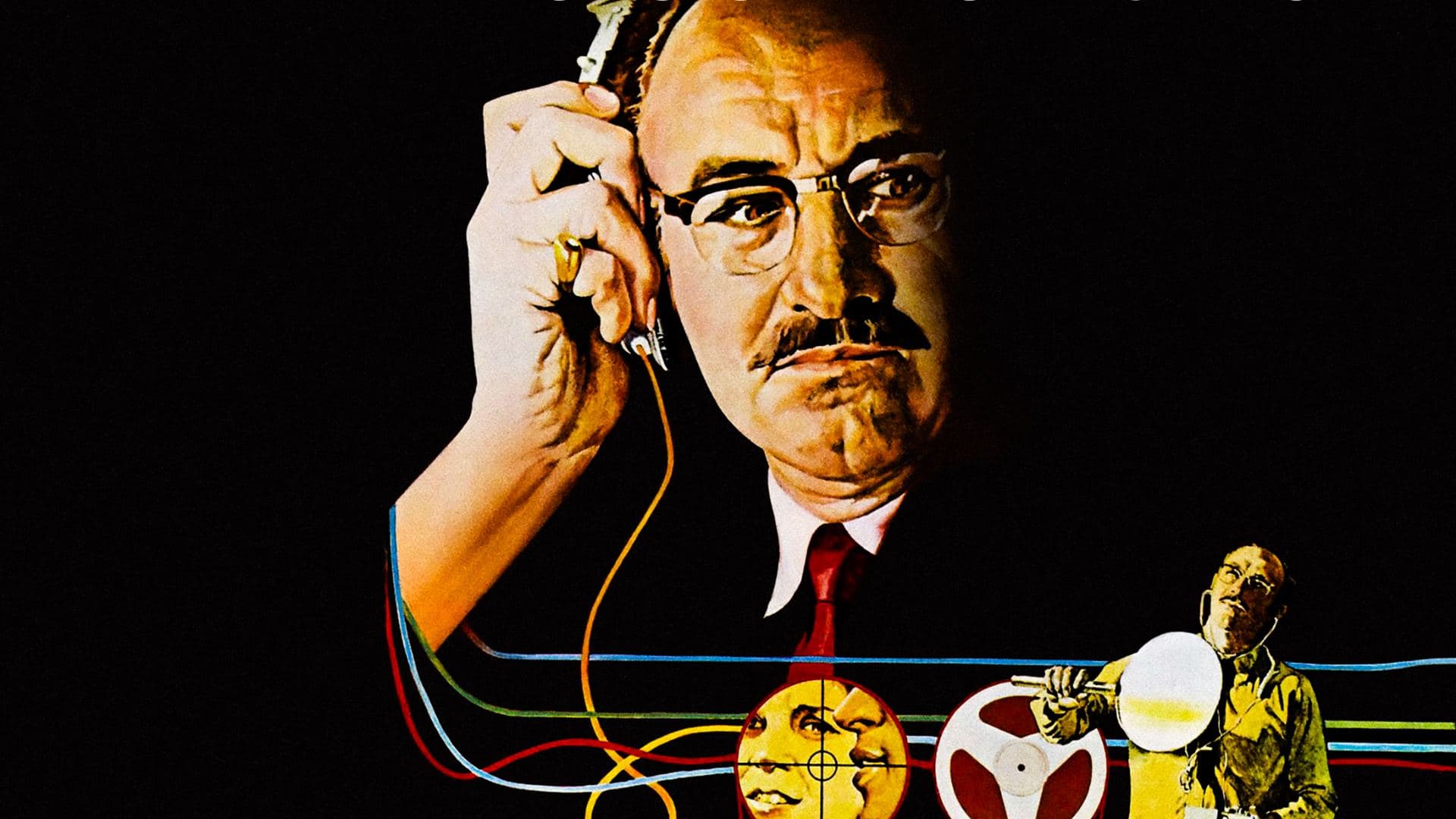
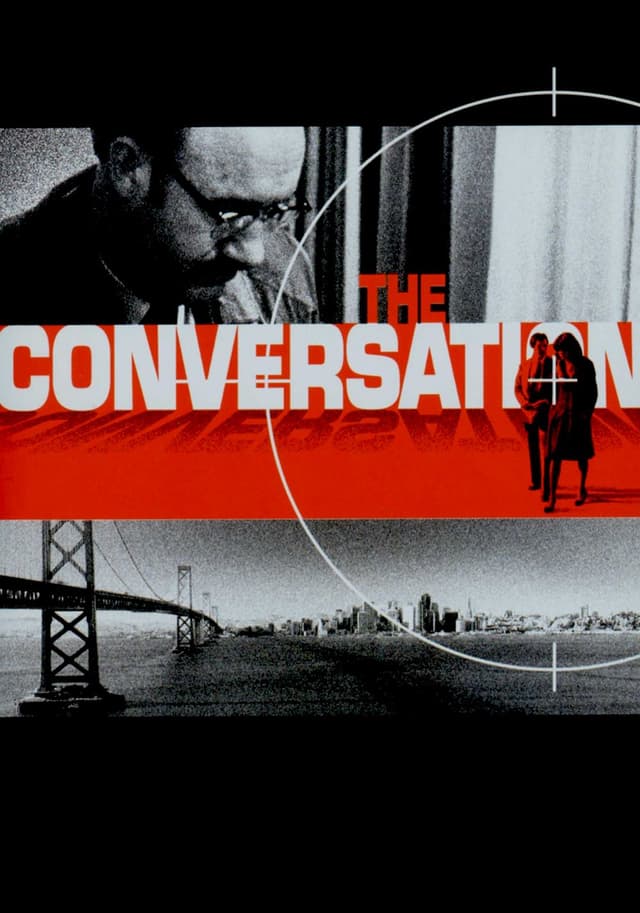
A paranoid, secretive surveillance expert has a crisis of conscience when he suspects that the couple he is spying on will be murdered.
What Is the Budget of The Conversation?
The Conversation was produced on a budget of $1.6 million, a modest sum even by 1974 standards. Francis Ford Coppola financed the film through The Directors Company, a short-lived production venture he co-founded with Peter Bogdanovich and William Friedkin under the Paramount Pictures umbrella. Coppola had written the screenplay in the late 1960s, well before The Godfather catapulted him to the top of Hollywood, and he approached the project as a personal, character-driven thriller rather than a studio tentpole.
The tight budget reflected the film's intimate scope. Nearly the entire story follows a single protagonist through a handful of San Francisco locations, and the production relied on resourcefulness over spectacle. Coppola channeled savings from limited locations and a small cast into the areas that mattered most: Walter Murch's groundbreaking sound design and the meticulous post-production work that gives the film its layered, paranoid texture.
Key Budget Allocation Categories
With only $1.6 million to work with, every dollar was allocated deliberately. The production prioritized sound technology and performance-driven storytelling over visual effects or large-scale set construction.
- Above-the-Line Talent: Gene Hackman anchored the cast as Harry Caul, with supporting roles filled by John Cazale, Allen Garfield, Frederic Forrest, Cindy Williams, Harrison Ford, and Robert Duvall. Most of these actors were early in their careers or worked for modest fees, keeping talent costs manageable.
- Sound Design and Recording: Walter Murch's pioneering sound work was the production's signature investment. The film demanded specialized recording equipment, multi-track mixing capabilities, and extensive post-production sound editing that was ahead of its time. Murch layered ambient sound, surveillance recordings, and David Shire's piano score into a seamless auditory experience.
- Cinematography and Camera: Bill Butler shot the film with a naturalistic eye, using available light and real San Francisco locations. The opening sequence in Union Square required long-lens photography and careful choreography to capture the surveillance scenario convincingly on a public plaza.
- Location Filming: San Francisco served as both setting and character. The production used real hotels, office buildings, warehouses, and streets rather than building sets, which kept construction costs low but required flexibility with permits and ambient noise.
- Music and Score: David Shire composed a spare, hypnotic piano score that became inseparable from the film's atmosphere. The minimalist approach kept music costs low while producing one of the most recognizable scores in 1970s cinema.
- Post-Production and Editing: The editing process was unusually long and complex. Coppola and his team restructured the narrative during post-production, and Murch's sound design required far more mixing time than a conventional drama. This extended timeline consumed a significant portion of the budget.
How Does The Conversation's Budget Compare to Similar Films?
The Conversation belongs to a wave of 1970s paranoia thrillers that achieved outsized cultural impact on lean budgets. Comparing it to peers reveals how efficiently Coppola worked within his constraints.
- The Parallax View (1974) Budget: $1.8M | Worldwide: $12.1M. Alan J. Pakula's conspiracy thriller operated on a similarly modest budget but had a wider commercial release. Both films channeled Watergate-era anxiety into intimate, surveillance-driven narratives.
- Klute (1971) Budget: $2M | Worldwide: $12.4M. Pakula's earlier thriller starring Jane Fonda explored similar themes of surveillance and privacy invasion. Its slightly larger budget allowed for more elaborate production design, but both films relied on performance and atmosphere over spectacle.
- Three Days of the Condor (1975) Budget: $5.5M | Worldwide: $33.5M. Sydney Pollack's spy thriller had more than three times The Conversation's budget, reflecting its bigger stars (Robert Redford, Faye Dunaway) and broader commercial ambitions. The Conversation achieved comparable critical standing at a fraction of the cost.
- The Godfather (1972) Budget: $6M | Worldwide: $250M. Coppola's own previous film cost nearly four times as much and became one of the highest-grossing films in history. The Conversation was a deliberate step back from that scale, proving Coppola could work at any budget level.
- Chinatown (1974) Budget: $6M | Worldwide: $29.2M. Roman Polanski's neo-noir, released the same year, had a significantly larger budget for period recreation and star power (Jack Nicholson). The Conversation's contemporary setting and smaller cast allowed it to achieve a similar level of craft for far less.
The Conversation Box Office Performance
The Conversation earned $4.42 million domestically and approximately $4.79 million worldwide against its $1.6 million production budget. While these numbers appear modest, the financial picture is more nuanced than a simple gross-to-budget comparison suggests.
Box Office Breakdown
The Conversation

The film cleared its break-even threshold comfortably, making it a profitable venture for Paramount and The Directors Company. Its release timing was both a blessing and a curse: opening in April 1974, just months before Nixon's resignation, the film's surveillance themes resonated powerfully with audiences living through the Watergate scandal. However, it also competed for attention with Coppola's own The Godfather Part II later that year, which overshadowed its commercial run. The Conversation's true financial legacy extends well beyond theatrical receipts, as decades of home video, television licensing, and streaming revenue have made it one of the most enduringly profitable films of the New Hollywood era relative to its production cost.
The Conversation Production History
Francis Ford Coppola wrote the screenplay for The Conversation in the late 1960s, drawing inspiration from Michelangelo Antonioni's Blowup (1966) and his own fascination with surveillance technology. The script explored what would happen if a sound surveillance expert overheard something that implicated him in a crime. Coppola shelved the project when Paramount hired him to direct The Godfather in 1970, but the enormous success of that film gave him the leverage to make The Conversation on his own terms.
Production began in late 1972 in San Francisco, with Gene Hackman cast as Harry Caul, a reclusive wiretapping specialist tormented by the moral implications of his work. Coppola assembled a remarkable supporting cast that included John Cazale, Harrison Ford (then relatively unknown), Robert Duvall, Frederic Forrest, Cindy Williams, and Allen Garfield. The shoot lasted approximately eleven weeks, with key sequences filmed in Union Square, the Embarcadero, and various hotels and office buildings throughout the city.
The film's most celebrated technical achievement was Walter Murch's sound design, which became a character in its own right. Murch developed innovative techniques for layering and manipulating recorded audio, creating the illusion of a conversation being pieced together from multiple surveillance recordings. His work on The Conversation is widely credited with establishing sound design as a recognized discipline in filmmaking.
Post-production proved lengthy and transformative. Coppola restructured significant portions of the film in the editing room, shifting the narrative emphasis and altering the ending from his original screenplay. The extended post-production timeline overlapped with pre-production on The Godfather Part II, meaning Coppola was effectively working on two landmark films simultaneously throughout much of 1973.
Awards and Recognition
The Conversation received three Academy Award nominations at the 47th Oscars in 1975: Best Picture, Best Original Screenplay (Francis Ford Coppola), and Best Sound (Walter Murch and Art Rochester). In a remarkable twist, it lost Best Picture to Coppola's own The Godfather Part II, making Coppola one of the few filmmakers in history to compete against himself in the top category.
At the 1974 Cannes Film Festival, The Conversation won the Palme d'Or, the festival's highest honor. The jury, led by Rene Clair, chose Coppola's film over entries from established international directors, cementing its reputation as a work of global significance. The Cannes win was particularly meaningful because the film's themes of privacy invasion and institutional distrust transcended American politics and spoke to universal anxieties about state power.
In 1995, the Library of Congress selected The Conversation for preservation in the United States National Film Registry, recognizing it as "culturally, historically, or aesthetically significant." The film has since appeared on numerous all-time best lists, including the American Film Institute's rankings and Sight & Sound's decennial polls. Walter Murch's sound work on the film is routinely cited in textbooks and film school curricula as a foundational example of the craft.
Critical Reception
The Conversation holds a 96% approval rating on Rotten Tomatoes, reflecting near-universal critical admiration spanning five decades. Upon its initial release, critics praised the film for its intelligence, restraint, and Gene Hackman's understated performance as a man consumed by professional paranoia.
Roger Ebert, who awarded the film four stars, called it "a study in guilt and paranoia" and highlighted Hackman's ability to make Harry Caul both sympathetic and unsettling. Pauline Kael praised Coppola's willingness to let silence and ambiguity carry the narrative, noting that the film trusted its audience in ways that mainstream Hollywood rarely attempted. Vincent Canby of The New York Times described it as "a terrifying and beautiful film" that revealed Coppola's range beyond the epic scale of The Godfather.
The film's reputation has only grown with time. Its themes of surveillance, privacy erosion, and the moral cost of complicity feel more relevant in the digital age than they did during Watergate. Modern critics frequently cite The Conversation as the best film of Coppola's career, arguing that its disciplined focus and moral complexity surpass even The Godfather films. Walter Murch's sound design is now studied as a landmark achievement, and the film's final image of Hackman dismantling his own apartment remains one of the most haunting endings in American cinema.
Frequently Asked Questions
How much did it cost to make The Conversation (1974)?
The production budget was $1,600,000, covering principal photography, cast and crew salaries, locations, sets, post-production, and music. Marketing and distribution (P&A) costs are estimated at an additional $800,000 - $1,280,000, bringing the total studio investment to approximately $2,400,000 - $2,880,000.
How much did The Conversation (1974) earn at the box office?
The Conversation grossed $4,671,805 domestic, $122,652 international, totaling $4,794,457 worldwide.
Was The Conversation (1974) profitable?
Yes. Against a production budget of $1,600,000 and estimated total costs of ~$4,000,000, the film earned $4,794,457 theatrically - a 200% ROI on production costs alone.
What were the biggest costs in producing The Conversation?
The primary cost drivers were above-the-line talent (Gene Hackman, John Cazale, Allen Garfield); talent compensation, location cinematography, and tension-driven editorial.
How does The Conversation's budget compare to similar crime films?
At $1,600,000, The Conversation is classified as a micro-budget production. The median budget for wide-release crime films in the era ranges from $30 - 80M for mid-budget to $150M+ for tentpoles. Comparable budgets: Gangs of Wasseypur - Part 2 (2012, $1,670,000); Satantango (1994, $1,500,000); City Lights (1931, $1,500,000).
Did The Conversation (1974) go over budget?
There are no widely reported accounts of significant budget overruns for this production. However, studios rarely disclose precise budget overrun figures publicly. The reported production budget reflects the final estimated cost.
What was the return on investment (ROI) for The Conversation?
The theatrical ROI was 199.7%, calculated as ($4,794,457 − $1,600,000) ÷ $1,600,000 × 100. This measures gross revenue against production budget only - it does not account for P&A or exhibitor shares.
What awards did The Conversation (1974) win?
Nominated for 3 Oscars. 14 wins & 17 nominations total.
Who directed The Conversation and who were the key crew members?
Directed by Francis Ford Coppola, written by Francis Ford Coppola, shot by Bill Butler, Haskell Wexler, with music by David Shire, edited by Richard Chew.
Where was The Conversation filmed?
The Conversation was filmed in United States of America.
Filmmakers
The Conversation

Official Trailer
Build budgets like this one in Saturation
Start from an industry-standard feature film template, import the schedule and rates you already have, and let the cost report keep itself current as you spend. Real-time collaboration, no spreadsheets.