The Spirit of the Beehive Budget
Updated
Synopsis
In a small Castilian village in 1940, the year after the Spanish Civil War, six-year-old Ana is profoundly affected by a screening of James Whale's Frankenstein. Convinced that the monster is real and lives nearby, she begins searching the Castilian plains for him, drifting deeper into a private inner world as her parents remain locked in their own postwar alienation.
What Is the Budget of The Spirit of the Beehive (1973)?
The Spirit of the Beehive (1973, original title El espíritu de la colmena), directed by Víctor Erice, was produced on an undisclosed budget that contemporary Spanish film accounting and Elías Querejada production records suggest fell in the range of 12,000,000 to 18,000,000 Spanish pesetas, equivalent to approximately $200,000 to $300,000 USD at 1973 exchange rates. The film was produced by Elías Querejeta, the central producer of Spain's anti-Franco art cinema generation, who financed it through his independent production company Elías Querejeta Producciones Cinematográficas with the support of the Spanish film subsidy system that paradoxically funded much of the New Spanish Cinema even under censorship.
The modest budget reflects the economics of late-Franco Spanish art cinema. Made during the final years of the dictatorship, the film deployed minimal locations, a small cast led by child actresses Ana Torrent and Isabel Tellería alongside Fernando Fernán Gómez and Teresa Gimpera, and a tight Castilian shooting schedule. The investment was vindicated by the film's international festival success, which established Erice and Querejeta as central figures in European cinema.
Key Budget Allocation Categories
The Spirit of the Beehive's modest peseta budget was distributed across several core production areas:
- Above-the-Line Talent: Director Víctor Erice, making his feature debut after a short-film career, worked at scale appropriate to first-time art-cinema directors. Fernando Fernán Gómez and Teresa Gimpera anchored the adult cast, with both commanding established-actor rates by Spanish industry standards. Child performers Ana Torrent (age six during shooting) and Isabel Tellería were paid minor-actor scale, though Torrent's performance would become one of the most celebrated child performances in European cinema.
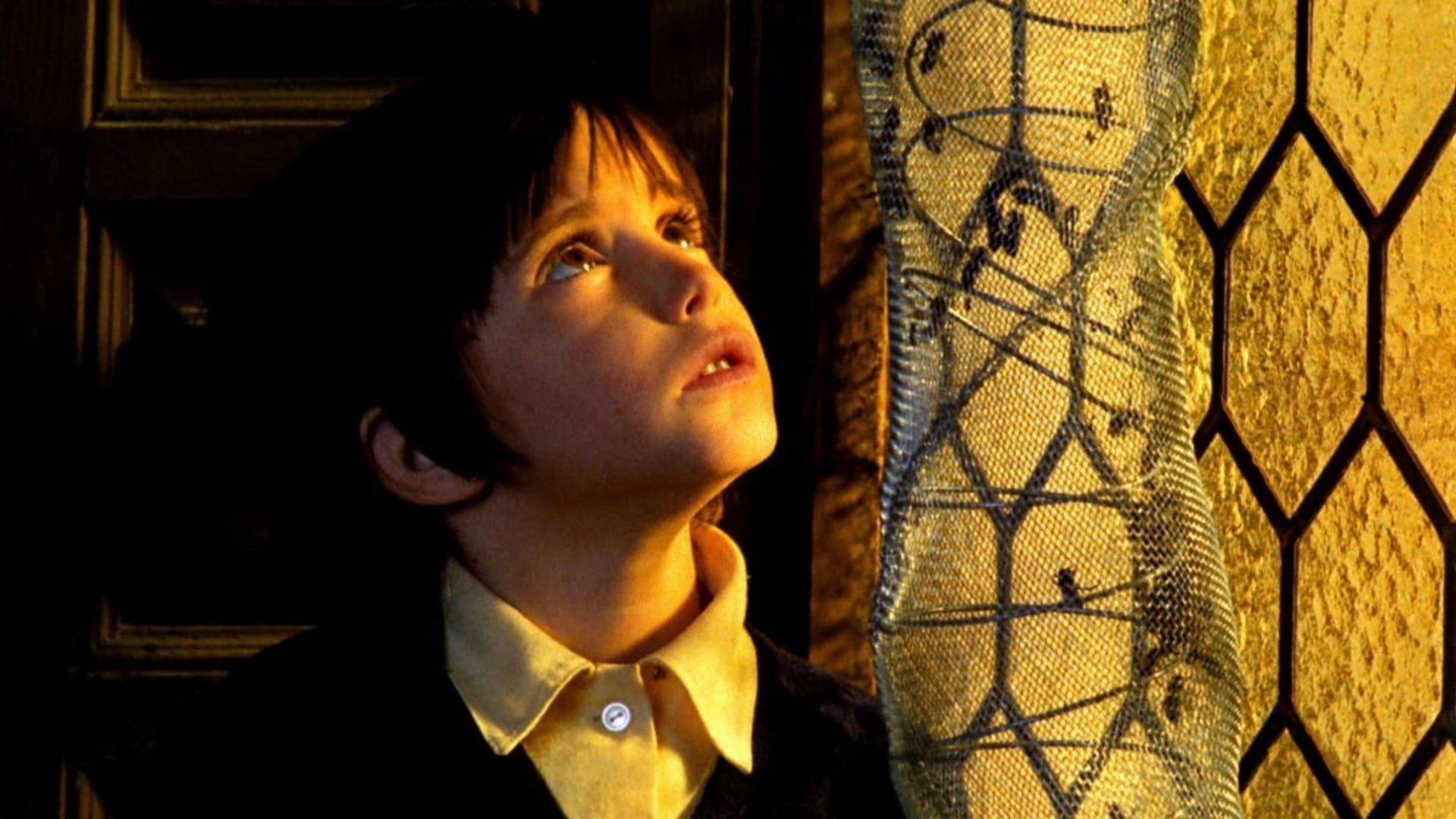
- Castile Location Shoot: Principal photography took place in and around the village of Hoyuelos in the province of Segovia, Castile, during autumn 1972. The Castilian meseta plains, the empty stone village, and the beehive-pattern stained glass of the family home are central to the film's visual identity, and shooting on location rather than in studio kept costs low while delivering irreplaceable production value.
- Cinematography: Director of photography Luis Cuadrado, who would later go blind during the shooting of Cría cuervos, captured the film in a honey-toned palette that became one of the most influential visual treatments in Spanish cinema. The work required careful daylight management on the Castilian plain and minimal artificial lighting setups.
- Production Design: Production designer Jaime Chávarri dressed the family's rural manor with beehive iconography, period furniture, and the specific 1940 wartime aesthetic appropriate to the immediate post-Civil War setting. The hexagonal stained-glass windows are an enduring image of the film.
- Score and Music: Composer Luis de Pablo, a leading figure in postwar Spanish modernist composition, scored the film with a sparse, dissonant palette dominated by piano and woodwind. The score occupies minimal screen time, allowing ambient sound and silence to dominate.
- Post-Production Under Censorship: The film passed through the Franco-era Spanish film censorship board, which approved it despite its veiled political content (the parents' alienation, the wounded Republican fugitive, the broader sense of postwar trauma). Post-production was completed in Madrid in 1973.
How Does The Spirit of the Beehive's Budget Compare to Similar Films?
At an estimated $200,000 to $300,000 USD in 1973 dollars, The Spirit of the Beehive sits at the modest end of European art cinema of its era. The comparison set illustrates the budget envelope:
- Cría cuervos (1976): Budget approximately $400,000 | Worldwide N/A. Carlos Saura's subsequent Querejeta production with Ana Torrent in the lead cost roughly twice The Spirit of the Beehive and remains the closest companion film in the Spanish New Cinema canon.
- The Garden of Delights (1970): Budget approximately $250,000 | Worldwide N/A. Carlos Saura's late-Franco satire offers a near-peer Spanish art-film comparison.
- Aguirre, the Wrath of God (1972): Budget approximately $370,000 | Worldwide N/A. Werner Herzog's contemporary German auteur production illustrates the European art-film mid-tier of the early 1970s.
- The Discreet Charm of the Bourgeoisie (1972): Budget approximately $1,000,000 | Worldwide $2,500,000. Luis Buñuel's Spanish-born French-financed Oscar winner shows the top end of late-Franco-era Spanish-language art cinema.
- The Mother and the Whore (1973): Budget approximately $200,000 | Worldwide N/A. Jean Eustache's landmark French art film of the same year sits at a near-identical budget level.
The Spirit of the Beehive Box Office Performance
The Spirit of the Beehive opened at the 1973 San Sebastián International Film Festival on September 13, 1973, where it won the Concha de Oro, the top prize. The Spanish theatrical release followed in October 1973. Detailed Spanish box office figures from the Franco era are incomplete, but trade tracking and Querejeta records indicate the film earned approximately 15,000,000 to 25,000,000 pesetas in initial Spanish theatrical play, recouping its production cost.
Against the estimated $200,000 to $300,000 production cost, the film's commercial path ran through international festivals and arthouse distribution rather than wide theatrical play. Here is the financial breakdown:
Box Office Breakdown
The Spirit of the Beehive

The film's commercial life has extended through five decades of repertory bookings, home video editions including the 2006 Criterion Collection DVD and the subsequent 4K restoration Blu-ray, and ongoing academic licensing. Its long-tail value far exceeds the initial theatrical recoup, and it remains one of the most studied works in Spanish-language film education.
The Spirit of the Beehive Production History
Development on The Spirit of the Beehive began with Víctor Erice and writer Ángel Fernández Santos in 1971. Erice had been working in Spanish television and short films, and the project emerged as his feature debut under the wing of producer Elías Querejeta, who had built his independent production company on Carlos Saura's films and was positioning Erice as a second auteur in his stable.
The screenplay was developed over more than a year, with the central premise drawn from Erice's own childhood encounter with James Whale's Frankenstein (1931) and the immediate post-Civil War Spanish landscape. Ana Torrent was cast as the six-year-old protagonist Ana through an open audition; Erice's direction of the child performer involved minimal verbal coaching and instead relied on the actor's reactions to in-the-moment stimuli, an approach that produced the film's celebrated unmediated quality.
Principal photography ran during autumn 1972 in Hoyuelos and the surrounding plains of Spain's Segovia province, with interiors shot in a manor house dressed by Jaime Chávarri. The shoot was tightly compressed by Spanish-industry standards of the era, with Cuadrado's daylight-driven cinematography requiring careful planning around autumn light.
Post-production took place in Madrid through early 1973. The film passed Franco-era censorship despite its politically suggestive subtext, in part because the censors read the wounded fugitive as ambiguous and the family's emotional alienation as personal rather than political. The film premiered at San Sebastián in September 1973 and won the festival's top prize.
Awards and Recognition
The Spirit of the Beehive won the Concha de Oro (Golden Shell) for Best Film at the 1973 San Sebastián International Film Festival, the highest honor in Spanish cinema. The win established Víctor Erice as a major international auteur and validated Elías Querejeta's production model.
The film has been retrospectively recognized as one of the greatest Spanish films of all time. Sight & Sound's 2012 Critics' Poll ranked it among the top 100 films ever made, and the 2022 poll continued to include it. Multiple Spanish film critics' organizations have named it the best Spanish film of the twentieth century. The Spanish Academy of Cinematographic Arts and Sciences has honored Erice with retrospectives and lifetime achievements, and the film has been preserved as a national cinematic patrimony asset.
Critical Reception
The Spirit of the Beehive received universal critical acclaim and has held that reputation across five decades. The film holds a 96% approval rating on Rotten Tomatoes based on aggregated retrospective reviews, with the critical consensus calling it a masterpiece of childhood subjectivity and political allegory.
Pauline Kael of The New Yorker called the film "one of the most beautiful films ever made," and Sight & Sound's Tony Rayns wrote that Erice "created a perfect cinematic poem about the survival of imagination under tyranny." Roger Ebert, writing decades later in a Great Movies essay, called it "a film of such infinite mystery and beauty that we feel ourselves in the presence of a masterpiece from its first shots."
Contemporary academic film studies regularly cite The Spirit of the Beehive as a foundational text on the representation of childhood in cinema, on post-Civil War Spanish memory, and on cinephilia (the Frankenstein film-within-a-film). The film continues to receive new restorations and theatrical retrospectives, and Erice's long-delayed follow-up Close Your Eyes (2023) brought renewed critical attention to The Spirit of the Beehive on its fiftieth anniversary.
Frequently Asked Questions
How much did it cost to make The Spirit of the Beehive (1973)?
The exact budget was not publicly disclosed, but contemporary Spanish film accounting and Elías Querejeta production records suggest the film cost approximately 12,000,000 to 18,000,000 Spanish pesetas, equivalent to roughly $200,000 to $300,000 USD at 1973 exchange rates.
Who directed The Spirit of the Beehive?
Víctor Erice directed The Spirit of the Beehive. It was his feature directorial debut, made after a career in Spanish short films. Erice would direct only two more features over the next fifty years: El Sur (1983) and Close Your Eyes (2023).
Who plays the little girl Ana in The Spirit of the Beehive?
Ana Torrent, who was six years old during the autumn 1972 shoot, plays Ana. She was cast through an open audition, and her performance is regarded as one of the most celebrated child performances in European cinema. Torrent went on to a major Spanish film career and remained associated with Erice and Carlos Saura throughout the 1970s.
Where was The Spirit of the Beehive filmed?
Principal photography took place in autumn 1972 in and around the village of Hoyuelos in the province of Segovia, Castile, Spain. The Castilian meseta plains, the empty stone village, and the manor with beehive-pattern stained glass are central to the film's visual identity.
What is The Spirit of the Beehive about?
The film is set in 1940, immediately after the Spanish Civil War, in a small Castilian village. Six-year-old Ana sees a traveling screening of James Whale's Frankenstein and becomes convinced the monster is real and lives nearby. As she searches the Castilian landscape for him, the film traces the private inner world of childhood under the political and emotional weight of the postwar period.
Did The Spirit of the Beehive win any awards?
Yes. The film won the Concha de Oro (Golden Shell) for Best Film at the 1973 San Sebastián International Film Festival, the highest honor in Spanish cinema. It has been retrospectively recognized as one of the greatest Spanish films of all time, included in Sight & Sound's top 100 films polls and named by multiple Spanish critics organizations as the best Spanish film of the twentieth century.
How did The Spirit of the Beehive pass Franco-era censorship?
The Franco regime's film censorship board approved the film despite its politically suggestive subtext. The wounded Republican fugitive who appears mid-film, the family's emotional alienation, and the broader sense of postwar trauma were read by censors as ambiguous or personal rather than overtly political, allowing the film to bypass the cuts that would have been demanded of more explicit material.
What did critics think of The Spirit of the Beehive?
The film received universal critical acclaim and has held that reputation across five decades. It holds a 96% approval rating on Rotten Tomatoes. Pauline Kael of The New Yorker called it "one of the most beautiful films ever made," and Roger Ebert called it "a masterpiece" in his Great Movies essay.
How does The Spirit of the Beehive use Frankenstein?
The 1931 James Whale Frankenstein is the central cinematic and emotional reference point. The film begins with a traveling screening of Frankenstein in the village, and Ana's subsequent imaginative life is structured around her belief that the monster is real. The film is widely studied as a foundational cinephile text on how children encounter cinema and how cinema shapes interior experience.
Is The Spirit of the Beehive available to stream?
The film is available on the Criterion Channel in North America and on various European streaming services. Criterion released a DVD edition in 2006 and a 4K restoration Blu-ray in subsequent years, and the film remains in continuous repertory theatrical circulation.
Filmmakers
The Spirit of the Beehive

Official Trailer
Build budgets like this one in Saturation
Start from an industry-standard feature film template, import the schedule and rates you already have, and let the cost report keep itself current as you spend. Real-time collaboration, no spreadsheets.