Who's Afraid of Virginia Woolf Budget
Updated
Synopsis
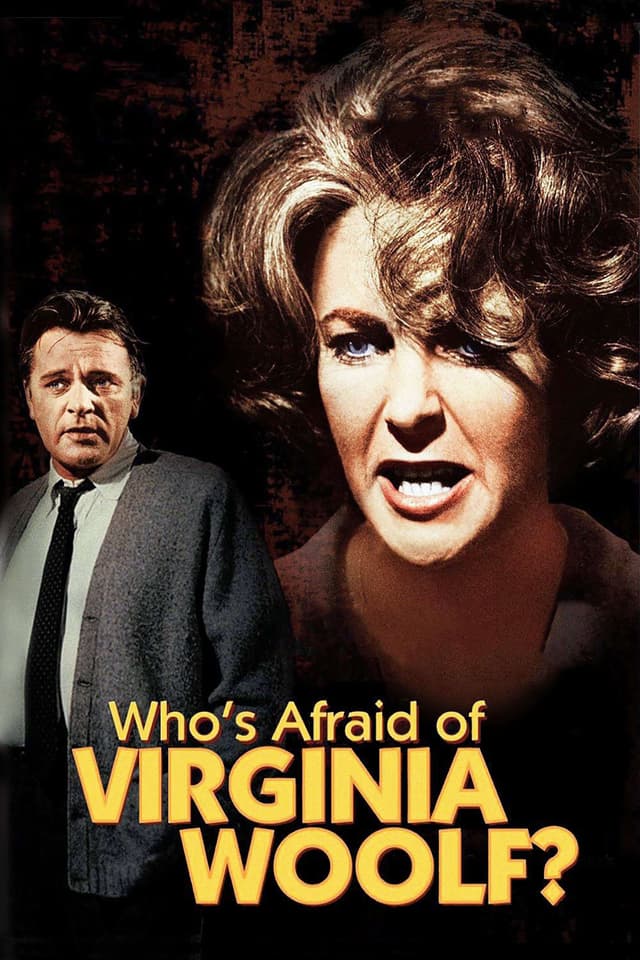
A history professor and his wife entertain a young couple who are new to the university's faculty. As the drinks flow, secrets come to light, and the middle-aged couple unload onto their guests the full force of the bitterness, dysfunction, and animosity that defines their marriage.
What Is the Budget of Who's Afraid of Virginia Woolf?
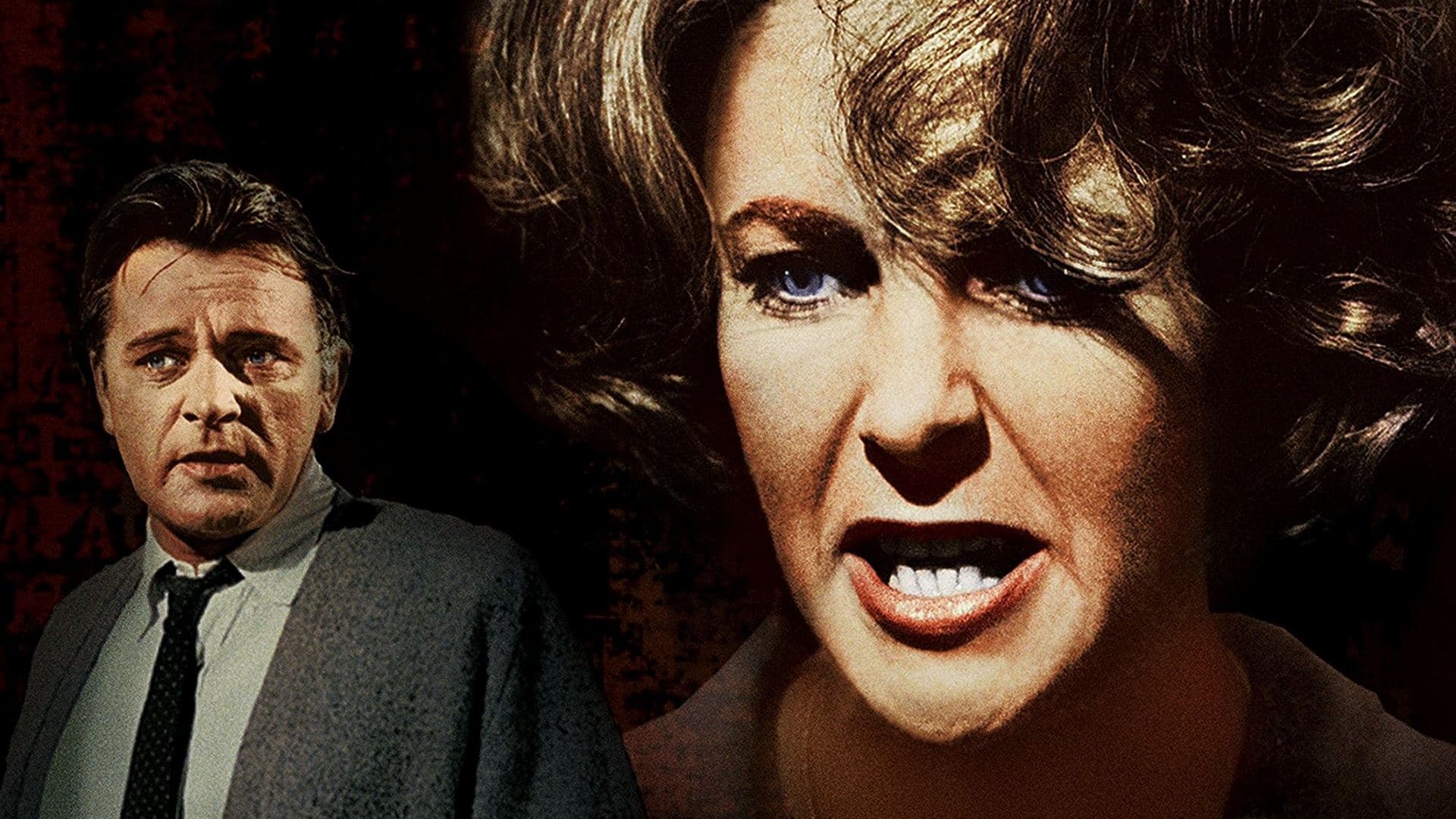
Who's Afraid of Virginia Woolf? was produced on a budget of $7.5 million, an extraordinary sum for a black-and-white drama shot almost entirely in a single interior location. The cost was driven overwhelmingly by one factor: Elizabeth Taylor and Richard Burton. The two most bankable stars in Hollywood in 1966, who were also married to each other, commanded fees that placed the film in a budget tier typically reserved for large-scale productions. Warner Bros. accepted this cost in exchange for the virtually guaranteed commercial interest that the Burtons' names brought to any project.
The film was produced by Ernest Lehman, who also wrote the screenplay adaptation of Edward Albee's 1962 stage play. Lehman's decision to shoot the film in black and white, unusual for a major studio release in the mid-1960s when color had become standard, was both an artistic choice and a commercial risk. Warner Bros. accepted it, recognizing that the Burton-Taylor draw made the film a commercial proposition regardless of format.
Key Budget Allocation Categories
- Elizabeth Taylor and Richard Burton: Taylor was paid $1.1 million plus a percentage of the gross for her role as Martha, making her one of the highest-paid performers in Hollywood history at that point. Burton received $750,000. Their combined fees accounted for nearly a quarter of the entire $7.5 million budget. The investment was calculated: no other pairing could have opened a difficult, adult, black-and-white film about domestic warfare to a wide commercial audience.
- Mike Nichols's Directing Fee: Nichols came to the film as the most celebrated stage director of his generation, with no prior film credits. His fee reflected both the risk and the prestige of hiring a theatrical director for a material adaptation. His direction of the film's long, verbally savage scenes, requiring actors to sustain performances of extraordinary emotional intensity in close quarters, justified the investment.
- Haskell Wexler's Cinematography: Wexler's black-and-white cinematography, which won the Academy Award, required careful attention to lighting for two-hour performance sequences conducted in a single interior location. The challenge of making a visually dynamic film from essentially one set demanded a cinematographer of the highest caliber. Wexler's subsequent career, encompassing Medium Cool (1969) and One Flew Over the Cuckoo's Nest (1975), confirmed his standing as one of the defining American cinematographers of the era.
- Production Design and Location: The film was shot almost entirely on a constructed replica of a New England university professor's home, built on a Warner Bros. soundstage and at various Smith College locations in Northampton, Massachusetts. The period-accurate production design required to support Taylor and Burton's live-wire performances was itself a significant budget line.
How Does Who's Afraid of Virginia Woolf?'s Budget Compare to Similar Films?
Who's Afraid of Virginia Woolf? sits at the intersection of two trends in 1960s Hollywood: the star-driven prestige production and the adult-oriented literary adaptation. These comparisons illuminate its position in the era's commercial landscape.
- The Graduate (1967): Budget $3M | Worldwide $104.9M | Mike Nichols's follow-up film, made the year after Virginia Woolf, cost less than half as much and earned far more, demonstrating that Nichols's commercial instinct was not dependent on the Burton-Taylor star premium. The Graduate's success cemented Nichols's status as a director the industry would trust with major budgets going forward.
- Cleopatra (1963): Budget $44M | Worldwide $57.8M | The Elizabeth Taylor-Richard Burton epic that preceded Virginia Woolf by three years cost nearly six times as much, ran over budget catastrophically, and nearly bankrupted 20th Century Fox. Virginia Woolf's more disciplined production, even at $7.5 million, represented a significantly more economical use of the Burton-Taylor partnership.
- Alfie (1966): Budget $500K | Worldwide $10M | Released the same year, Lewis Gilbert's British drama about a Cockney womanizer cost a fraction of Virginia Woolf's budget and earned comparable money through an entirely different mechanism: the emerging wave of inexpensive, socially provocative British cinema. Virginia Woolf's American equivalent was considerably more expensive for a character-driven film.
- The Lion in Winter (1968): Budget $3M | Worldwide $15M | Katharine Hepburn and Peter O'Toole's period drama, which won Hepburn her third Oscar, cost less than half of Virginia Woolf's budget despite its period setting, illustrating how much of Virginia Woolf's cost was attributable specifically to Taylor and Burton's salaries.
Who's Afraid of Virginia Woolf? Box Office Performance
Who's Afraid of Virginia Woolf? was released on June 22, 1966, by Warner Bros. The film earned approximately $14.4 million domestically, making it one of the highest-grossing films of 1966 and nearly doubling its $7.5 million production budget. The commercial success was driven by the star power of Taylor and Burton, by the controversy surrounding the film's unprecedented adult language, and by the critical esteem that positioned it as a significant cultural event.
On the total investment including prints and advertising, the film's profitability was real but moderated by its high production cost. The studio share of the domestic gross, at approximately 50 percent, returned around $7.2 million in theatrical revenue against a $7.5 million production budget, a breakeven at the production level before P&A costs are applied. The film's long-term commercial value came through television rights, home video, and its enduring status as a teachable artifact of Hollywood's transition from the Production Code era.
Box Office Breakdown
Who's Afraid of Virginia Woolf

Who's Afraid of Virginia Woolf? earned roughly $1.92 for every $1 invested in production at the theatrical level, a solid return for a film of this cost and this degree of commercial risk. The film's adult language and subject matter were genuine commercial liabilities in 1966; that it earned as much as it did validated the bet that the Burtons' star power could overcome audience reluctance.
Who's Afraid of Virginia Woolf? Production History
The rights to Edward Albee's 1962 Broadway play were acquired by Warner Bros. shortly after the play's commercially successful run, which established Albee as a major American dramatist and proved that audiences would engage with aggressively adult theatrical content. Ernest Lehman, whose credits included North by Northwest (1959) and West Side Story (1961), was hired to produce and write the screenplay. Lehman's challenge was to adapt a two-and-a-half-hour stage play that consists almost entirely of savage verbal combat into a film that could hold a cinema audience.
The decision to cast Elizabeth Taylor and Richard Burton was simultaneously commercially obvious and artistically risky: the Burtons were the most famous married couple in the world, their real-life volatility was tabloid currency, and their participation guaranteed attention that no other casting could provide. The risk was that audiences would see only two celebrities playing at real-life warfare rather than two characters dissolving a marriage. Nichols's direction addressed this risk by grounding every scene in the actors' internal emotional logic rather than their public personas.
Mike Nichols was hired as director despite having never made a film. His track record in the theater, including the Broadway productions of Barefoot in the Park and The Odd Couple, and his instinct for psychological comedy-drama made him Lehman's preferred choice. Nichols spent considerable pre-production time with Taylor and Burton, establishing the emotional architecture of each scene before cameras rolled.
Principal photography took place in 1965, split between Smith College in Northampton, Massachusetts, which doubled for the fictional New England campus, and Warner Bros. soundstages in Burbank, where the central interior set was constructed. The film was shot in black and white by Haskell Wexler, who was Nichols's first choice for cinematographer. Post-production was completed in early 1966, and the film opened in June 1966 carrying a 'Suggested for Mature Audiences' advisory that positioned it as adult entertainment rather than family programming.
Awards and Recognition
Who's Afraid of Virginia Woolf? received 13 Academy Award nominations at the 39th Academy Awards (1967), making it one of the most broadly nominated films in Oscar history. The nominations covered Best Picture, Best Director (Mike Nichols), Best Actor (Richard Burton), Best Actress (Elizabeth Taylor), Best Supporting Actor (George Segal), Best Supporting Actress (Sandy Dennis), Best Adapted Screenplay (Ernest Lehman), Best Cinematography (Haskell Wexler), Best Original Score (Alex North), Best Art Direction, Best Costume Design, Best Sound, and Best Film Editing. The film won five awards: Actress (Taylor), Supporting Actress (Dennis), Cinematography (Wexler), Art Direction, and Costume Design.
The film was selected for preservation in the United States National Film Registry by the Library of Congress in 2013 as 'culturally, historically, or aesthetically significant.' Its role in catalyzing the transition from the Production Code to the MPAA rating system ensures its permanent place in the history of American cinema as an institutional document as much as an artistic one.
Critical Reception
Who's Afraid of Virginia Woolf? was received with mixed-to-enthusiastic reviews upon its initial release in 1966. Critics universally acknowledged the performances of Taylor and Burton as exceptional, but some reviewers found the film's relentless verbal savagery exhausting or its adaptation of Albee's play too faithful to its theatrical origins. Bosley Crowther of The New York Times was among the dissenters, arguing the film's darkness was excessive.
Subsequent critical reappraisal has moved decisively in the film's favor. Elizabeth Taylor's performance is now regarded as one of the finest in American cinema, a radical departure from her glamour-queen image that demonstrated her as an actress of the first order. Mike Nichols's direction, once questioned for its theatrical origins, is now recognized for the precision with which it channeled the actors' intensities and created a coherent visual style for a film that barely leaves a single room.
The film holds a 96 percent approval rating on Rotten Tomatoes based on accumulated critical reviews. It regularly appears on lists of the greatest American films and the greatest performances of all time. Sandy Dennis's Supporting Actress win, sometimes described as controversial at the time, has been rehabilitated as recognition of a performance of unusual specificity and invention.
Frequently Asked Questions
How much did Who's Afraid of Virginia Woolf? (1966) cost to make?
The production budget was $7,500,000, an enormous figure for a black-and-white chamber drama in 1966. The above-the-line costs were driven by the combined salaries of Elizabeth Taylor and Richard Burton, who together commanded roughly half of the budget.
How much did Who's Afraid of Virginia Woolf? earn at the box office?
The film grossed approximately $33,700,000 worldwide, with $14,500,000 in domestic rentals. It was the third highest-grossing film of 1966 in North America, behind The Bible: In the Beginning and Hawaii.
Who directed Who's Afraid of Virginia Woolf?
Mike Nichols directed the film, his feature directorial debut following a Broadway career that included Barefoot in the Park and Luv. Nichols went on to direct The Graduate (1967), winning the Academy Award for Best Director for that film the following year.
Is Who's Afraid of Virginia Woolf? based on a play?
Yes. The film adapts Edward Albee's 1962 Broadway play, which won the New York Drama Critics' Circle Award and was the choice of the Pulitzer Prize for Drama jury, though the Pulitzer board overruled the decision and awarded no prize that year due to the play's sexual content and profanity.
What was Elizabeth Taylor's salary on Who's Afraid of Virginia Woolf?
Elizabeth Taylor reportedly received $1,100,000 against a percentage of gross, while Richard Burton received $750,000. The combined package made the couple the highest-paid acting pair in Hollywood at the time.
Did Who's Afraid of Virginia Woolf? win any Oscars?
The film won five Academy Awards from 13 nominations, including Best Actress for Elizabeth Taylor, Best Supporting Actress for Sandy Dennis, Best Cinematography (Black-and-White) for Haskell Wexler, Best Art Direction, and Best Costume Design. It remains one of only two films ever nominated in every eligible Oscar category.
Where was Who's Afraid of Virginia Woolf? filmed?
Principal photography took place at Warner Bros. Studios in Burbank, California, and on location at Smith College in Northampton, Massachusetts, which doubled for the unnamed New England college campus of the story.
How did Who's Afraid of Virginia Woolf? change Hollywood censorship?
The film's explicit language, including the first use of "goddamn" and "screw you" in a major studio release, forced the abandonment of the Production Code and accelerated the development of the MPAA rating system, which formally replaced the Code in November 1968.
What did critics think of Who's Afraid of Virginia Woolf?
The film was overwhelmingly praised on release and holds a 95% approval rating on Rotten Tomatoes. Pauline Kael and Bosley Crowther both championed the film, with Crowther in The New York Times calling Elizabeth Taylor's performance "an excellent and exciting demonstration of acting power."
How does Who's Afraid of Virginia Woolf? compare to other Mike Nichols films?
The film's $7,500,000 budget was significantly higher than Mike Nichols' follow-up The Graduate (1967, $3,000,000 budget, $104,900,000 worldwide). Both films are considered foundational works of the New Hollywood movement that began in the mid-to-late 1960s.
Build budgets like this one in Saturation
Start from an industry-standard feature film template, import the schedule and rates you already have, and let the cost report keep itself current as you spend. Real-time collaboration, no spreadsheets.