The Shaggy Dog Budget
 Comedy
Updated
Synopsis
Los Angeles deputy district attorney Dave Douglas, a workaholic father estranged from his teenage daughter and pre-teen son, is bitten by a sacred sheepdog stolen from a Tibetan monastery by a corrupt pharmaceutical-company executive. The bite gradually transforms Dave into a sheepdog himself, a condition that forces him to navigate his family life from a new perspective even as he must somehow expose the pharmaceutical company's illegal experiments before his transformation becomes permanent.
What Is the Budget of The Shaggy Dog (2006)?
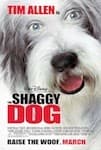
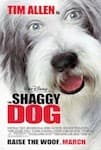
The Shaggy Dog (2006), directed by Brian Robbins and distributed by Walt Disney Pictures, was produced on a reported budget of $60,000,000. The film served as a remake of Disney's 1959 family classic of the same name (a previous remake had been released as a 1976 sequel, The Shaggy D.A., and a 1994 television movie). The 2006 version updated the premise around dad-turns-into-dog comedy as a Tim Allen vehicle, with Allen as a Los Angeles deputy district attorney transformed into a sheepdog after being bitten by an aging sacred dog stolen by a pharmaceutical company.
The $60,000,000 budget was the standard tier for a Tim Allen-led Disney family comedy in the mid-2000s, comparable to the budgets for Disney's Christmas with the Kranks (2004) and The Santa Clause 3 (2006). Costs were driven by Allen's compensation, extensive visual effects work to deliver the dog-acting performances (combining trained animal work with CG mouth movement and facial expression), studio shooting at Disney Studios in Burbank, and an ensemble adult and child cast that included Robert Downey Jr., Kristin Davis, Spencer Breslin, Zena Grey, Danny Glover, Philip Baker Hall, and Jane Curtin.
Key Budget Allocation Categories
The reported $60,000,000 budget was distributed across several core production areas:
- Above-the-Line Talent: Tim Allen, fresh off Christmas with the Kranks and continuing the Santa Clause franchise for Disney, commanded a substantial fee plus back-end participation. Robert Downey Jr., several years into his post-prison comeback before Iron Man, took the antagonist role at his still-recovering star tier. Supporting cast Kristin Davis (fresh off Sex and the City's finale), Spencer Breslin, Zena Grey, Danny Glover, Philip Baker Hall, and Jane Curtin filled out the family and pharmaceutical-company casts. Director Brian Robbins commanded a feature-director rate.
- Visual Effects: The dog-acting performances combined trained animal work with substantial CG mouth movement, eye animation, and facial-expression overlay. Visual effects houses including Rhythm & Hues and Cinesite handled the digital work, with R&H taking the lead on the principal sheepdog character. The transformation sequences also required visual effects pipeline for the morph between Allen and the sheepdog.
- Animal Wrangling and Training: The production used multiple trained sheepdogs across the shoot, working with veteran animal trainer Mark Forbes. Animal welfare costs, on-set veterinary oversight, and the time required to capture coverage of the dogs in specific blocking positions added significant below-the-line cost relative to a comedy without animal-acting requirements.
- Production Design and Sets: Production designer Leslie McDonald built the Douglas family suburban Los Angeles home, the Grant Pharmaceuticals corporate offices and laboratory interiors, and the climactic transformation set. The pharmaceutical-lab sets in particular required custom prop fabrication for the various transformation devices central to the plot.
- Costumes and Wardrobe: Costume designer Susie DeSanto built principal cast wardrobes appropriate to the family-comedy register, with particular attention to the pharmaceutical-company executive looks for Robert Downey Jr. and Philip Baker Hall. The wardrobe also covered hundreds of background performers across the courtroom, school, and animal-rights-protest sequences.
- Marketing Tier: Disney's marketing investment was substantial relative to the production budget, with an estimated $40,000,000 to $50,000,000 in worldwide P&A spend, leveraging Tim Allen's family-comedy audience appeal and the recognizable Shaggy Dog brand. The marketing campaign heavily featured the dog-acting sequences and emphasized the spring-break release window's family-targeted positioning.
How Does The Shaggy Dog's Budget Compare to Similar Films?
At $60,000,000, The Shaggy Dog sat in the standard tier of mid-2000s Disney family comedies. Comparing it with peers:
- The Pacifier (2005): Budget $56,000,000 | Worldwide $198,668,975. Disney's previous Vin Diesel family-comedy hit cost 7% less and grossed more than twice as much, the high-water mark for the Disney family-comedy budget tier of the era.
- Christmas with the Kranks (2004): Budget $60,000,000 | Worldwide $96,594,576. The Tim Allen family-holiday comedy cost identically to The Shaggy Dog and grossed 11% more, a direct prior-Allen benchmark that illustrates the modest commercial ceiling for these Tim Allen vehicles.
- The Santa Clause 3: The Escape Clause (2006): Budget $65,000,000 | Worldwide $110,706,920. Allen's same-year Santa Clause sequel cost 8% more and grossed 27% more, another direct same-year Allen benchmark.
- Garfield: The Movie (2004): Budget $50,000,000 | Worldwide $200,798,539. Fox's same-tier family-comedy talking-animal hit cost 17% less and grossed more than twice as much, a striking benchmark for what well-marketed talking-animal family comedy could deliver in the era.
- Underdog (2007): Budget $25,000,000 | Worldwide $65,257,357. Disney's subsequent talking-dog family comedy cost less than half as much and grossed roughly three quarters of The Shaggy Dog, illustrating the diminishing returns Disney saw across the talking-dog family-comedy cycle as the decade progressed.
The Shaggy Dog Box Office Performance
The Shaggy Dog opened domestically on March 10, 2006, earning $16,310,498 in its opening weekend and finishing first at the U.S. box office. That figure was at the upper end of pre-release tracking, signaling solid early audience interest in the spring-break family-comedy window. The film held reasonably well in subsequent weeks against limited family competition, ultimately becoming a moderate commercial success for Disney.
Against a $60,000,000 production budget, the film required approximately $130,000,000 in worldwide gross to reach profitability after marketing and distribution costs. The financial breakdown:
Box Office Breakdown
The Shaggy Dog

The Shaggy Dog returned approximately $0.79 to $0.88 in theatrical revenue for every $1 invested when measured against total estimated production and marketing spend, placing it as a modest theatrical loss for Disney that would have been offset by home-video and ancillary revenues. The domestic share of the gross was $61,123,569 against an international share of $26,000,000, a 70/30 split that confirmed the talking-dog family-comedy concept skewed strongly to North American audiences.
The Shaggy Dog's acceptable but unremarkable commercial performance contributed to Disney's gradual move away from talking-animal family comedies later in the decade, with the studio refocusing on franchise-driven family content including the Pirates of the Caribbean and High School Musical brands. Tim Allen returned to the Santa Clause franchise for The Santa Clause 3 the same year before transitioning primarily to television work with Last Man Standing.
The Shaggy Dog Production History
Walt Disney Pictures began developing the 2006 remake in 2003, with Geoff Rodkey writing the initial adapted screenplay drawing on the 1959 original and the Felix Salten source novella The Hound of Florence. Cormac Wibberley, Marianne Wibberley, and Jack Amiel and Michael Begler subsequently revised the screenplay across 2004 and 2005. Brian Robbins, fresh off Tim Allen comedies including the Shaggy Dog development cycle and Norbit pre-production work, was attached to direct in mid-2004.
Casting Tim Allen as Dave Douglas in late 2004 confirmed the project's Disney-family-comedy positioning. Robert Downey Jr.'s casting as antagonist Dr. Kozak in early 2005 represented a notable bet by Disney on the actor's emerging post-prison comeback (Iron Man would not arrive until 2008). Spencer Breslin and Zena Grey were cast as the Douglas children, with Kristin Davis as Allen's wife Rebecca following her work on Sex and the City.
Principal photography ran from June to October 2005 primarily at Disney Studios in Burbank, California, with extensive location work across the Los Angeles area. Animal training and dog wrangling for the sheepdog scenes were supervised by veteran trainer Mark Forbes. The production used multiple trained sheepdogs across the shoot, working in carefully blocked sequences that allowed for visual effects integration of the CG mouth movement and facial-expression overlay added in post-production by Rhythm & Hues.
Post-production stretched across roughly five months, with visual effects work concentrated at Rhythm & Hues for the principal sheepdog character and at Cinesite for transformation and supporting effects shots. The film was completed in February 2006, with Disney positioning the March 10, 2006 release date in the spring-break family window. The marketing campaign heavily featured the dog-acting sequences and emphasized the recognizable Shaggy Dog brand.
Awards and Recognition
The Shaggy Dog received minimal awards recognition. The film was largely absent from year-end critics' lists and the major industry awards circuit. It received Razzie attention in 2007, with Robert Downey Jr. receiving a Golden Raspberry nomination for Worst Supporting Actor for his work in The Shaggy Dog (combined with his work in A Scanner Darkly), though he did not win.
The visual effects work received industry recognition from Rhythm & Hues trade publications for the dog-acting performance integration, but no Visual Effects Society or Academy Awards nominations followed. The film has subsequently appeared on numerous lists of the worst Disney remakes and the worst Tim Allen films, though it has not generated significant critical reappraisal in either direction. It remains best known as a modestly profitable family-comedy programmer of the mid-2000s Disney family-comedy slate.
Critical Reception
The Shaggy Dog received negative reviews. The film holds a 26% approval rating on Rotten Tomatoes based on 122 critic reviews, with a critical consensus that called it "a thoroughly forgettable family comedy that wastes its talented cast on a creaky premise." On Metacritic, the film scored 31 out of 100, indicating generally unfavorable reviews. Audiences surveyed by CinemaScore gave the film a B+, a strong family-audience response that nevertheless reflected the disconnect between critics and the target demographic.
Critics broadly objected to the screenplay's lack of identifiable jokes, the strained whimsy of the central premise, and what reviewers characterized as a wasted Robert Downey Jr. supporting performance. Roger Ebert gave the film two and a half stars, writing that "the movie is well-made and competently performed, but it lacks the spark of inspiration that the best family comedies provide." A.O. Scott in The New York Times called the film "an entirely professional, entirely conventional product that fails to find a single fresh angle on its venerable premise."
Defenders pointed to Tim Allen's game physical-comedy performance, the technical achievement of the visual-effects-enhanced dog acting, and what the Hollywood Reporter's Frank Scheck called "a family-friendly professionalism that gets the job done without ever exceeding expectations." Audiences responded warmly enough to deliver a B+ CinemaScore, but the film has not undergone significant critical reappraisal and remains best known as a representative example of the mid-2000s Disney family-comedy cycle that the studio largely abandoned by the end of the decade in favor of franchise tentpoles.
Frequently Asked Questions
How much did it cost to make The Shaggy Dog (2006)?
The reported production budget was $60,000,000, the standard tier for a Tim Allen-led Disney family comedy of the mid-2000s. Costs were driven by Tim Allen's compensation, extensive visual effects work to deliver the dog-acting performances combining trained animal work with CG mouth and facial overlay, and an ensemble adult and child cast.
How much did The Shaggy Dog earn at the box office?
The film grossed $61,123,569 domestically and $26,000,000 internationally, for a worldwide total of $87,123,569. It opened to $16,310,498 in the United States, finishing first on its March 10, 2006 opening weekend in the spring-break family window.
Was The Shaggy Dog a box office success?
Modestly. Against a $60,000,000 production budget and an estimated $40-50 million in marketing, the film returned approximately $0.79 in worldwide gross for every $1 invested, placing it as a modest theatrical loss that would have been offset by home-video and ancillary revenues. The film is best characterized as a programmer that met but did not exceed Disney's expectations.
Who directed The Shaggy Dog?
Brian Robbins directed the film. Robbins, a former actor turned director, had previously made Norbit (released the year after Shaggy Dog) and would subsequently rise to head the Nickelodeon and then Paramount studio operations, becoming CEO of Paramount Pictures in 2021.
Where was The Shaggy Dog filmed?
Principal photography took place from June to October 2005 primarily at Disney Studios in Burbank, California, with extensive location work across the Los Angeles area. Animal training and dog wrangling for the sheepdog scenes were supervised by veteran trainer Mark Forbes.
Is The Shaggy Dog a remake?
Yes. The 2006 film is a remake of Disney's 1959 family classic The Shaggy Dog, which was followed by a 1976 sequel The Shaggy D.A. and a 1994 television movie. The 2006 version updates the premise around dad-turns-into-dog comedy as a Tim Allen vehicle, with substantial structural changes from the 1959 original.
How does the dog acting in The Shaggy Dog work?
The dog-acting performances combine trained animal work with substantial CG mouth movement, eye animation, and facial-expression overlay added in post-production. Visual effects houses Rhythm & Hues and Cinesite handled the digital work, with R&H taking the lead on the principal sheepdog character. Multiple trained sheepdogs were used across the shoot.
How does The Shaggy Dog compare to other Tim Allen comedies?
The Shaggy Dog grossed $87 million worldwide on a $60 million budget. By comparison, Christmas with the Kranks (2004) grossed $97 million on a $60 million budget, and The Santa Clause 3 (2006) grossed $111 million on a $65 million budget. The Shaggy Dog's commercial performance was the weakest of Allen's mid-2000s family-comedy trio.
What did critics think of The Shaggy Dog?
The film received negative reviews, with a 26% approval rating on Rotten Tomatoes (122 critics) and a 31 score on Metacritic. Audiences gave it a B+ CinemaScore. Roger Ebert gave it two and a half stars, writing that "the movie is well-made and competently performed, but it lacks the spark of inspiration that the best family comedies provide."
Did The Shaggy Dog win any awards?
No. The film received minimal awards recognition. Robert Downey Jr. received a Golden Raspberry nomination for Worst Supporting Actor for his work in The Shaggy Dog (combined with his work in A Scanner Darkly), though he did not win. The visual effects work received industry recognition from Rhythm & Hues trade publications but no Visual Effects Society or Academy Awards nominations.
Filmmakers
The Shaggy Dog

Build budgets like this one in Saturation
Start from an industry-standard feature film template, import the schedule and rates you already have, and let the cost report keep itself current as you spend. Real-time collaboration, no spreadsheets.