The Pearl Button Budget
Updated
Synopsis
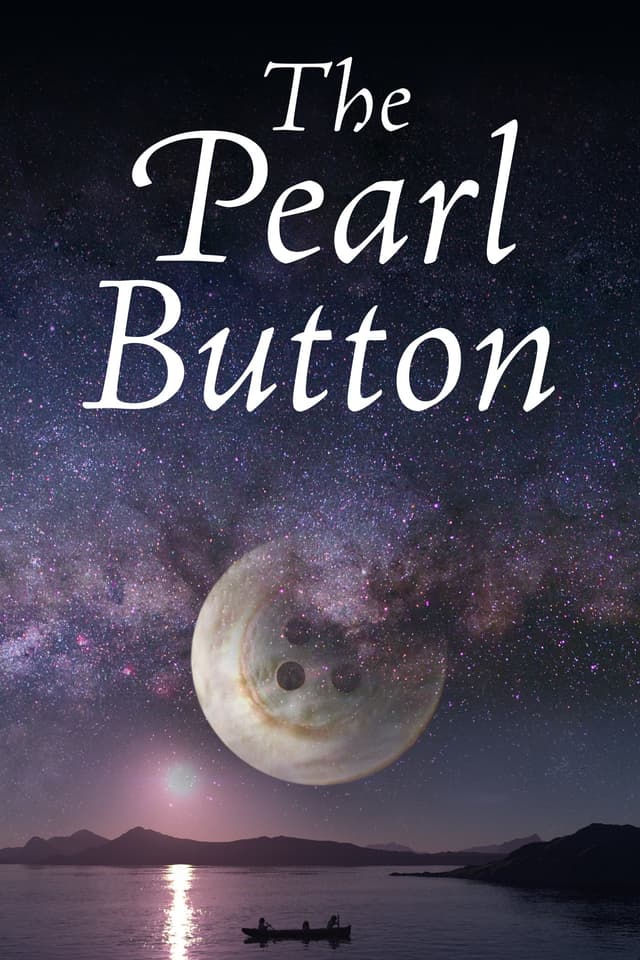
The Pacific Ocean contains the history of humanity. Patricio Guzmán's essay film weaves together the cosmic significance of water, the extermination of the indigenous Selk'nam and Yámana peoples of Patagonia, and the Pinochet regime's practice of disappearing political prisoners by dropping their weighted bodies into the sea. A pearl button found embedded in a piece of railway track recovered from the seabed gives the film its title.
What Is the Budget of The Pearl Button (2015)?
The Pearl Button (El botón de nácar, 2015), directed by Patricio Guzmán, was produced on an undisclosed budget that documentary production scale and European co-financing patterns place in the range of $1,000,000 to $2,500,000. The film was financed through a three-country co-production between Atacama Productions in France, Mediapro in Spain, and Valdivia Film in Chile, with additional support from CNC (the French Centre national du cinéma), Arte France Cinema, the Ibermedia program, and Chile's Council of Culture and the Arts (CNCA). Kino Lorber acquired North American distribution rights.
The investment reflected the prestige-documentary tier of European arthouse funding. Guzmán, then 74 and the most internationally recognized Chilean documentarian of his generation, had built The Pearl Button as the second installment of his cosmic-historical Chilean trilogy following Nostalgia for the Light (2010), with The Cordillera of Dreams (2019) completing the cycle. The budget covered an extended Patagonia shoot, archival research and licensing, an original score by Hughes Maréchal and Miranda y Tobar, and post-production at theatrical specification.
Key Budget Allocation Categories
The Pearl Button's estimated $1,000,000 to $2,500,000 budget was distributed across several core production areas:
- Above-the-Line Talent: Director Patricio Guzmán received feature documentary scale appropriate to his international auteur status, plus credits as writer and narrator. The film features Guzmán's on-camera and voice-over narration in Spanish throughout, a signature element of his cinematic essay form. Producer Renate Sachse, his long-time Atacama Productions partner, received producing fees on the French side of the co-production.
- Patagonia and Chilean Coastal Shoot: The film's visual core is a multi-month documentary expedition along the western Patagonia archipelago, the Strait of Magellan, and the Tierra del Fuego region, where Guzmán filmed the surviving members of the Selk'nam, Yámana, and Kawésqar indigenous peoples of southern Chile. Boat-based filming, remote-location logistics, and Antarctic-adjacent weather contingencies drove location costs.
- Cinematography: Katell Djian shot the film on digital cameras with an emphasis on water surfaces, ice formations, deep space astronomical imagery, and intimate portraits of indigenous interview subjects. The visual program required specialized lenses for both underwater and high-resolution astronomical capture, with NASA and ESO archival imagery licensed for the cosmic sequences.
- Archival Licensing: The film integrates historical photography of the European colonization and ethnic extermination of the Selk'nam and Yámana peoples in the late 19th and early 20th centuries, including archival images from missionary and anthropological sources. Licensing fees and rights clearance for this material added meaningful cost relative to the overall budget.
- Score and Music: Composers Hughes Maréchal and Miranda y Tobar created an original score blending orchestral, electronic, and ambient textures designed to underscore the film's cosmic and oceanic themes. Recording took place in France during post-production.
- Post-Production and Color: Editor Emmanuelle Joly cut the film at Paris-based facilities over approximately eight months, with color grading and sound design completed at French and Spanish post houses for the international theatrical release. Berlin Silver Bear awards-circuit positioning required theatrical-specification finishing.
How Does The Pearl Button's Budget Compare to Similar Films?
At an estimated $1,000,000 to $2,500,000, The Pearl Button sits within the international arthouse documentary funding tier of the early 2010s. The comparison set illustrates the European documentary co-production model:
- Nostalgia for the Light (2010): Budget undisclosed (estimated $1,000,000 to $2,000,000) | Worldwide N/A (limited arthouse). Patricio Guzmán's first cosmic-historical Chile trilogy entry, released five years earlier, established the framework The Pearl Button extended and likely operated at the same budget tier.
- The Cordillera of Dreams (2019): Budget undisclosed (estimated $1,000,000 to $2,500,000) | Worldwide N/A. The trilogy's third installment, released four years after The Pearl Button, completed the cycle at a comparable budget.
- The Act of Killing (2012): Budget approximately $1,000,000 | Worldwide $1,178,000. Joshua Oppenheimer's Oscar-nominated documentary about Indonesian death-squad veterans demonstrates the prestige-documentary tier The Pearl Button competed within and the typical theatrical ceiling.
- Cave of Forgotten Dreams (2010): Budget approximately $4,000,000 | Worldwide $5,300,000. Werner Herzog's 3D Chauvet cave documentary operated at roughly double the budget tier The Pearl Button worked within and earned a comparable arthouse theatrical return.
- Citizenfour (2014): Budget undisclosed (estimated $1,000,000 to $2,000,000) | Worldwide $2,800,000. Laura Poitras's Oscar-winning Edward Snowden documentary illustrates the financial scale of the prestige documentary tier of the mid-2010s.
The Pearl Button Box Office Performance
The Pearl Button premiered at the 65th Berlin International Film Festival on February 8, 2015, where it won the Silver Bear for Best Screenplay and the Ecumenical Jury Prize. The film opened in France on October 28, 2015 through Pyramide Distribution, where it grossed approximately €330,000 (roughly $370,000) over its theatrical run. Kino Lorber's North American release followed on October 23, 2015, with the film grossing $76,400 across a limited platform release in New York, Los Angeles, and a small number of additional arthouse markets.
Against an estimated production budget in the $1,000,000 to $2,500,000 range, the film's commercial framework was the prestige and festival circuit rather than mass theatrical recoupment. Here is the financial breakdown:
Box Office Breakdown
The Pearl Button

Documentary financing of this type depends on broadcast pre-sales (most prominently Arte France, which acquired the film as a co-producer), public-funding grants, and the prestige value of festival awards rather than theatrical box office. The Pearl Button's Silver Bear win at Berlin secured its arthouse positioning across European broadcast and home video markets.
The film extended Patricio Guzmán's critical standing as the principal documentary chronicler of late-20th-century Chilean political and ecological history, and its commercial framework was successful within the European public-funding model that produced it, even though direct theatrical revenue was minimal.
The Pearl Button Production History
Patricio Guzmán began developing The Pearl Button shortly after the 2010 Berlin premiere of Nostalgia for the Light, conceiving it as a thematic counterpart that would substitute water for the Atacama desert and the southern Chilean indigenous experience for the Pinochet-era political prisoners of the first film. The screenplay developed through 2012-2013 and centered on two interlocked Chilean historical traumas: the European colonial extermination of the Selk'nam, Yámana, and Kawésqar peoples of Patagonia and Tierra del Fuego in the late 19th and early 20th centuries, and the Pinochet regime's disappearance of political opponents whose weighted bodies were dropped into the Pacific Ocean in the 1970s.
Atacama Productions (Renate Sachse, France), Mediapro (Spain), and Valdivia Film (Chile) assembled the three-country co-production with backing from Arte France Cinema, CNC, the Ibermedia program, and Chile's CNCA. Cinematographer Katell Djian was attached early, with the production planning multiple expedition-style shoots into western Patagonia and the Tierra del Fuego archipelago.
Principal photography took place across 2013 and 2014 in Chile, with major shooting blocks in the Patagonian archipelago, the Strait of Magellan region, and Tierra del Fuego, plus interview locations in Santiago and on the Chilean coast. The film integrates a NASA and ESO archival imagery package licensed during the same period for the cosmic-water sequences that frame the film's philosophical inquiry. The title refers to a pearl button found embedded in a piece of railway track recovered from the Pacific seabed, attributed to one of the Pinochet regime's "disappeared" prisoners.
Post-production began in Paris in 2014 with editor Emmanuelle Joly, with score by Hughes Maréchal and Miranda y Tobar added in the final months. The film premiered in competition at the 65th Berlin International Film Festival on February 8, 2015, where it won the Silver Bear for Best Screenplay and the Ecumenical Jury Prize. Theatrical release followed across France, Spain, and Chile through the spring and fall of 2015, with Kino Lorber's North American release on October 23, 2015.
Awards and Recognition
The Pearl Button received significant international awards recognition. The film won the Silver Bear for Best Screenplay at the 65th Berlin International Film Festival in February 2015, along with the Ecumenical Jury Prize at the same festival. It also won the Best Documentary Feature prize at the Chilean Pedro Sienna Awards and was Chile's official submission for the Best Foreign Language Film category at the 88th Academy Awards, though it did not advance to the shortlist.
Documentary-specific recognition came from the European Film Awards, which nominated the film for Best European Documentary, and from the Cinema Eye Honors, which nominated it for Outstanding Achievement in Production and Outstanding Cinematography. Patricio Guzmán received career-recognition tributes from multiple festivals during the film's 2015-2016 release window, reinforcing his status as the principal documentary chronicler of contemporary Chilean memory.
Critical Reception
The Pearl Button received widespread critical acclaim. The film holds a 95% approval rating on Rotten Tomatoes based on 56 critic reviews with an average score of 8.0 out of 10, with the critical consensus calling it "a haunting essay film that connects cosmic immensity to political atrocity with quiet devastation." On Metacritic, the film scored 85 out of 100, indicating universal acclaim. Audience response among arthouse viewers was similarly strong.
Critics broadly praised the film's elliptical structure, the cinematography by Katell Djian, and Guzmán's philosophical narration. The New York Times's A. O. Scott called it "a gorgeous, mournful inquiry into Chilean memory" and described the cosmic-water imagery as "among the most beautiful work in documentary cinema this decade." The Guardian's Peter Bradshaw praised the film as "a quiet masterpiece," and Variety's Jay Weissberg wrote that "Guzmán has built one of the most coherent and powerful bodies of work in nonfiction cinema."
A small minority of critics raised pacing and structure objections. IndieWire noted that the film's philosophical voice-over occasionally veered toward overstatement, and Slant Magazine's Diego Costa argued that the connection between cosmic imagery and political history relied on associative rhythm rather than rigorous argument. These objections did not significantly affect the film's reception, which positioned it firmly as one of the most critically acclaimed documentaries of 2015.
Frequently Asked Questions
How much did it cost to make The Pearl Button (2015)?
The production budget was not publicly disclosed, but documentary production scale and European co-financing patterns place the figure in the range of $1,000,000 to $2,500,000. The film was financed through a three-country co-production between Atacama Productions (France), Mediapro (Spain), and Valdivia Film (Chile), with public funding support from Arte France Cinema, CNC, Ibermedia, and Chile's CNCA.
Did The Pearl Button win the Berlin Silver Bear?
Yes. The Pearl Button won the Silver Bear for Best Screenplay at the 65th Berlin International Film Festival in February 2015, along with the Ecumenical Jury Prize at the same festival. It was Chile's official submission for Best Foreign Language Film at the 88th Academy Awards.
Who directed The Pearl Button?
Patricio Guzmán wrote and directed the film. It is the second installment of his cosmic-historical Chilean trilogy, following Nostalgia for the Light (2010) and preceding The Cordillera of Dreams (2019). Guzmán is the most internationally recognized Chilean documentarian of his generation.
Where was The Pearl Button filmed?
Principal photography took place across 2013 and 2014 in Chile, with major shooting blocks in the Patagonian archipelago, the Strait of Magellan region, and Tierra del Fuego, plus interview locations in Santiago and on the Chilean coast. Boat-based filming and remote-location logistics shaped the production.
What is The Pearl Button about?
The film is an essay documentary that weaves together the cosmic significance of water, the European colonial extermination of the Selk'nam, Yámana, and Kawésqar indigenous peoples of southern Chile in the late 19th and early 20th centuries, and the Pinochet regime's practice of disappearing political prisoners by dropping their weighted bodies into the Pacific Ocean in the 1970s.
What is the pearl button the title refers to?
The title refers to a pearl button found embedded in a piece of railway track recovered from the Pacific seabed by forensic investigators, attributed to one of the Pinochet regime's "disappeared" prisoners whose weighted body had been dropped into the ocean. The button became a physical fragment of evidence of state-sponsored disappearance.
How did The Pearl Button perform at the box office?
The film opened in France on October 28, 2015 through Pyramide Distribution and grossed approximately €330,000 (roughly $370,000) theatrically. Kino Lorber's North American release on October 23, 2015 grossed $76,400 across a limited platform release. The film's commercial framework was the prestige and festival circuit rather than mass theatrical recoupment.
What did critics think of The Pearl Button?
The film received widespread critical acclaim, with a 95% Rotten Tomatoes approval based on 56 reviews (8.0 average) and an 85 out of 100 score on Metacritic, indicating universal acclaim. Critics broadly praised the elliptical structure, the cinematography by Katell Djian, and Guzmán's philosophical narration.
How does The Pearl Button relate to Nostalgia for the Light?
The Pearl Button is the second installment of Patricio Guzmán's cosmic-historical Chilean trilogy. Nostalgia for the Light (2010) used the Atacama desert to link cosmic astronomy with the disappeared political prisoners of the Pinochet era. The Pearl Button substitutes water for desert and southern indigenous experience for the desert's northern subjects. The Cordillera of Dreams (2019) completed the cycle.
Did The Pearl Button win an Oscar?
No. The Pearl Button was Chile's official submission for the Best Foreign Language Film category at the 88th Academy Awards but did not advance to the shortlist. The film did win the Silver Bear for Best Screenplay and the Ecumenical Jury Prize at the 2015 Berlin International Film Festival.
Filmmakers
The Pearl Button

Official Trailer
Build budgets like this one in Saturation
Start from an industry-standard feature film template, import the schedule and rates you already have, and let the cost report keep itself current as you spend. Real-time collaboration, no spreadsheets.