Searching for Sugar Man Budget
 MusicDocumentary85 minutes
Updated
Synopsis
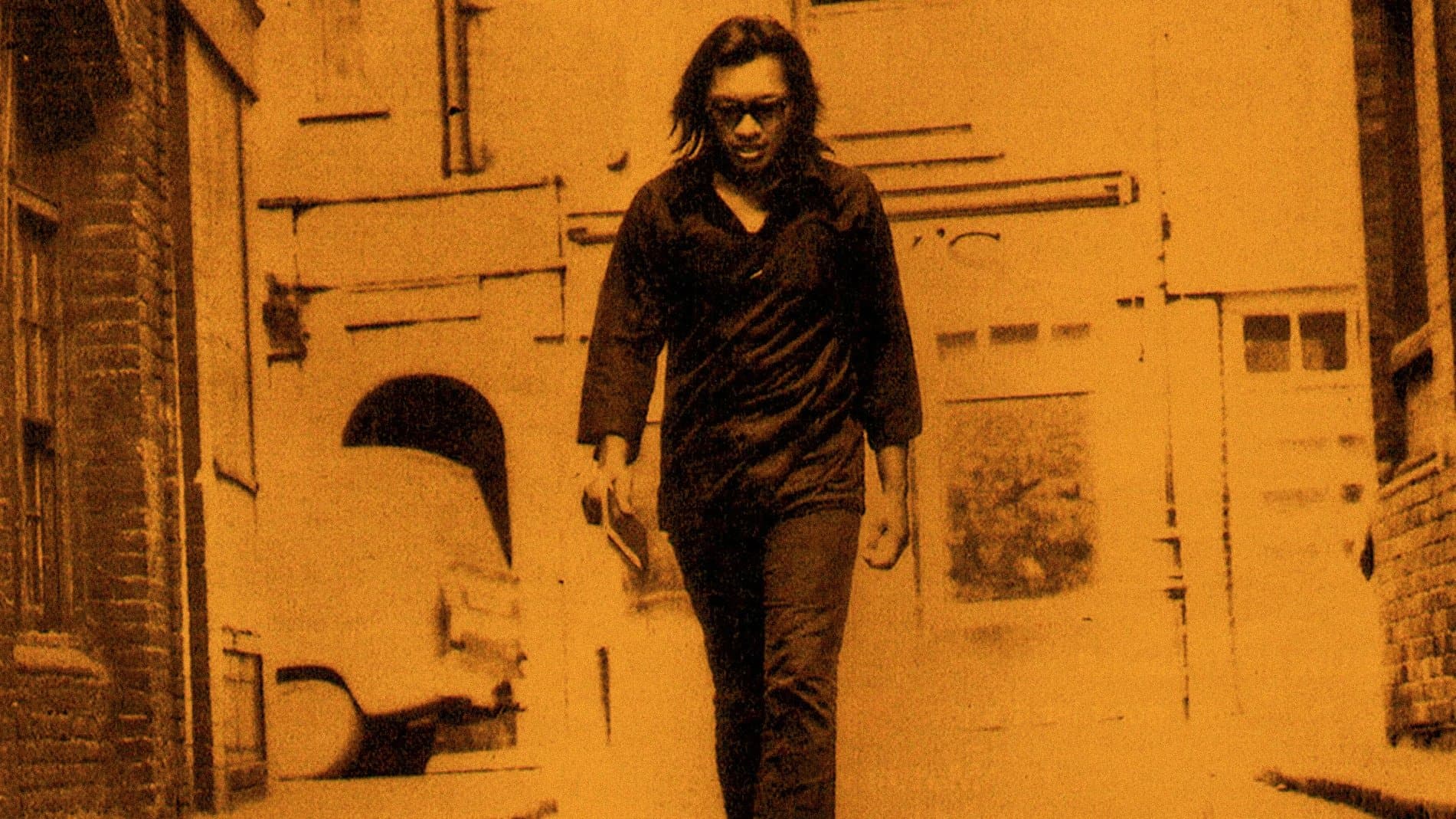
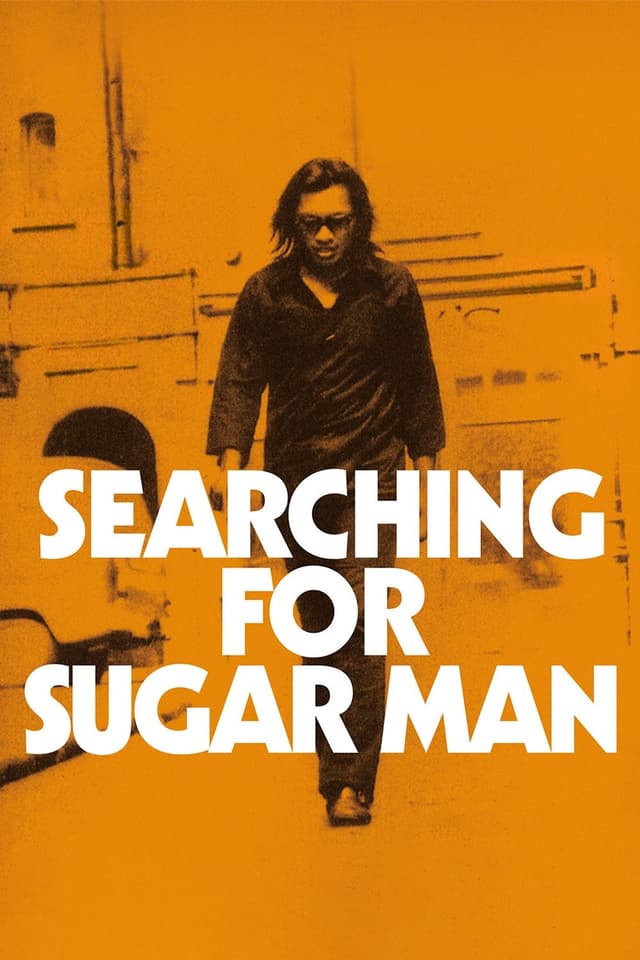
In the early 1970s, Sixto Rodriguez was a Detroit folksinger who had a short-lived recording career with only two well received but non-selling albums. Unknown to Rodriguez, his musical story continued in South Africa where he became a pop music icon and inspiration for generations. Long rumored there to be dead by suicide, a few fans in the 1990s decided to seek out the truth of their hero's fate. What follows is a bizarrely heartening story in which they found far more in their quest than they ever hoped, while a Detroit construction laborer discovered that his lost artistic dreams came true after all.
What Is the Budget of Searching for Sugar Man?
Searching for Sugar Man was produced on a budget of approximately $1 million, financed by Red Box Films and Passion Pictures with backing from the Swedish Film Institute and Film i Skane. The film was directed by Malik Bendjelloul, a Swedish filmmaker who had been working as a television documentary director when he heard the story of Sixto Rodriguez in Cape Town in 2006 while traveling in South Africa. Bendjelloul spent five years making the film, eventually shooting portions of it on an iPhone app called 8mm Vintage Camera when he ran out of production funds.
The documentary investigates the mystery of Rodriguez, an American folk musician who recorded two albums for Sussex Records in Detroit in 1970 and 1971 that sold almost no copies in the United States. Unknown in America, Rodriguez became a massive cultural phenomenon in apartheid-era South Africa, where bootleg copies of his albums circulated widely and he was rumored to have died. Two South African fans, Steve Segerman, a Cape Town record store owner, and Craig Bartholomew Strydom, a journalist, investigate the mystery of Rodriguez's fate and eventually discover him working as a demolition laborer in Detroit.
Key Budget Allocation Categories
- Director Malik Bendjelloul's Five-Year Production: Bendjelloul began filming in 2006 after hearing the Rodriguez story from Steve Segerman during a research trip to South Africa. He interviewed Segerman, Strydom, and other South African fans over multiple visits while simultaneously researching Rodriguez's history in Detroit and conducting interviews there. The production stretched across five years partly because of funding limitations and partly because locating the original recording sessions' participants and documenting Rodriguez's Detroit life required extended research.
- iPhone 8mm App Filming When Funds Ran Out: Bendjelloul publicly disclosed after the film's success that he had run out of production funds and completed portions of the film using an iPhone app called 8mm Vintage Camera, which applies vintage film grain and color effects to digital iPhone footage. This footage was cut into the 16mm and standard digital footage without most viewers noticing the difference, an achievement that illustrated both Bendjelloul's technical skill and the degree to which the story itself carried the film regardless of production value.
- South Africa Research and Rodriguez Music Licensing: The film required licensing Rodriguez's recorded music from his Sussex Records catalog and from subsequent recordings, as well as archival research into the South African music market of the 1970s and 1980s. The music licensing costs were unusual for a documentary about a musician whose recordings had commercial value in South Africa but had generated minimal revenue in the United States. The film's success significantly increased the value of Rodriguez's recordings in both markets.
- Detroit Production and Rodriguez Access: Filming Rodriguez in Detroit required building a relationship with a subject who had spent decades outside the music industry and was initially unaware of his South African fame. The Detroit sequences, showing Rodriguez's demolition work, his neighborhood, and his family, were filmed over multiple production visits coordinated with the ongoing South African research. Rodriguez's daughters appear in the film and participated as interview subjects, requiring family access that extended beyond the subject himself.
- Sundance Acquisition by Sony Pictures Classics: The film premiered at the Sundance Film Festival in January 2012, where it was acquired by Sony Pictures Classics for US theatrical distribution. Sony's acquisition and the P&A investment in a platform theatrical release gave the film the marketing infrastructure that transformed its Sundance premiere buzz into a sustained domestic theatrical run extending through the Academy Award announcement in January 2013.
How Does Searching for Sugar Man's Budget Compare to Similar Films?
Searching for Sugar Man's $1 million budget is at the standard level for a modestly financed international documentary co-production. Its commercial performance, generating $3.7 million worldwide in theatrical alone before its Academy Award win drove additional revenue, was exceptional for the budget level.
- Amy (2015): Budget ~$3M | Worldwide $8.6M. Asif Kapadia's documentary about Amy Winehouse, which won the Academy Award for Best Documentary Feature, spent three times what Searching for Sugar Man cost and found more than twice its worldwide theatrical gross. Both films are music documentaries with unexpected narrative arcs; Sugar Man's mystery structure distinguished it from Amy's tragedy structure in ways that affected their respective marketing and audience composition.
- 20 Feet from Stardom (2013): Budget ~$1.5M | Domestic $4.8M. Morgan Neville's documentary about backup singers, which won the Academy Award for Best Documentary Feature in 2014, spent slightly more than Sugar Man and found a somewhat larger domestic audience. Both films are music documentaries about obscured or uncredited talent that found art house audiences through the combination of great music and compelling personal stories.
- Anvil! The Story of Anvil (2008): Budget ~$500K | Worldwide $1.1M. Sacha Gervasi's documentary about the underappreciated Canadian heavy metal band Anvil found a much smaller worldwide theatrical audience than Searching for Sugar Man despite a comparable emotional structure, the story of an artist deserving recognition who never received it. Sugar Man's South African cultural resonance and the mystery element of its narrative gave it wider appeal than a pure music fandom documentary.
- Buena Vista Social Club (1999): Budget ~$1M | Worldwide $21.1M. Wim Wenders's documentary about elderly Cuban musicians rediscovered by Ry Cooder spent approximately the same as Searching for Sugar Man and found more than five times its worldwide theatrical gross. The comparison illustrates how much more commercially potent a discovery narrative becomes when the discovered artists are available to perform, tour, and appear in promotional events alongside the film's theatrical release.
Searching for Sugar Man Box Office Performance
Searching for Sugar Man opened July 27, 2012, through Sony Pictures Classics in a limited New York and Los Angeles platform release, expanding nationally through August and September. The film's domestic run extended through the Academy Award season, with the announcement of its nomination in January 2013 driving a significant theatrical expansion. The domestic gross reached approximately $3.7 million. International distribution, through Sony's European art house network and Swedish theatrical partners, added a small amount to the domestic figure, bringing the worldwide total to approximately $3.7 million as international figures are not separately reported.
Against a production budget of approximately $1 million and an estimated $1 million in prints and advertising for the domestic and international theatrical releases, the total investment was approximately $2 million. With theaters retaining roughly 50 percent of gross, Sony's share of the worldwide theatrical gross was approximately $1.85 million, below the total investment in theatrical alone. The Academy Award win for Best Documentary Feature in February 2013 drove significant DVD and digital sales that brought the film to overall profitability, and the win simultaneously boosted the commercial value of Rodriguez's back catalog.
Box Office Breakdown
Searching for Sugar Man

For every dollar invested in production, Searching for Sugar Man returned approximately $3.70 at the worldwide box office. Accounting for P&A, the film returned approximately $0.92 for every dollar of total investment in theatrical. The Academy Award win in February 2013 transformed the film's commercial trajectory, driving a second round of theatrical bookings, a significant DVD release, and a dramatic increase in Rodriguez's album and streaming revenue. Cold Fact, Rodriguez's 1970 debut album, re-entered commercial sales after decades of obscurity.
Searching for Sugar Man Production History
Malik Bendjelloul was traveling in South Africa in 2006, researching story ideas for Swedish television, when he met Steve Segerman, the Cape Town record store owner who would become one of the film's primary subjects. Segerman told Bendjelloul the story of Rodriguez, the American folk singer whose music had been part of the soundtrack of anti-apartheid resistance in South Africa and who was rumored to have committed suicide on stage in front of his audience. Bendjelloul immediately recognized the story as the subject of a feature documentary.
Bendjelloul returned to Sweden and began arranging financing through Red Box Films and Passion Pictures, eventually securing support from the Swedish Film Institute and Film i Skane. He returned to South Africa to film Segerman and Craig Bartholomew Strydom, the journalist who had conducted the original online investigation into Rodriguez's fate in the late 1990s. Their account of discovering that Rodriguez was alive and working in Detroit, and of making contact with him, formed the film's investigative spine.
The production challenges were significant. Bendjelloul ran out of funds during the production and completed portions using the iPhone 8mm app rather than his 16mm camera. He disclosed this after the film's success, noting that the app cost 99 cents and that he could not afford more film stock. The film's technical consistency across the two formats, achieved through careful post-production color work, meant that the budget constraint was invisible to viewers and critics.
The film premiered at the Sundance Film Festival on January 19, 2012, where it won the World Cinema Documentary Directing Award and the Audience Award. Sony Pictures Classics acquired it for US distribution following the festival, and the film opened theatrically that summer. Bendjelloul died on May 13, 2014, at age 36, from causes his family described as suicide. He had directed only one feature film. Rodriguez attended the Academy Award ceremony in February 2013 when the film won Best Documentary Feature.
Awards and Recognition
Searching for Sugar Man won the Academy Award for Best Documentary Feature at the 85th Academy Awards in February 2013, the most significant recognition available in the documentary form. The win was widely celebrated as recognition of the film's extraordinary story and Bendjelloul's achievement in bringing it to the screen despite minimal resources and five years of production difficulty. Rodriguez attended the ceremony with Bendjelloul and appeared on stage as the award was accepted.
The film also won the BAFTA Award for Best Documentary, the Sundance World Cinema Documentary Directing Award, the Sundance Audience Award, and the International Documentary Association Award for Best Feature Documentary. It received recognition from the British Independent Film Awards, the Critics' Choice Documentary Awards, and the Los Angeles Film Critics Association. Bendjelloul's death in May 2014 added a tragic dimension to the film's legacy: the only feature film he ever made had won the documentary Oscar, and he did not live to make a second.
Critical Reception
Searching for Sugar Man holds a 96% approval rating on Rotten Tomatoes and a Metacritic score of 91 out of 100, one of the highest scores ever recorded for a music documentary. The film's IMDb rating of 8.3 out of 10 reflects both critical and general audience enthusiasm. The near-universal critical praise was generated not only by the extraordinary story the film tells but by the structural elegance with which Bendjelloul organized its revelation.
Critics described the film as the perfect documentary story: two investigators, an unknown subject, a mystery with an unexpected resolution, and at its center, genuinely extraordinary music that justified the decades of devotion South Africans had brought to it. Roger Ebert gave it four stars, calling it "a remarkable story, told with great skill." The New York Times called it "irresistible." The consensus was that the film transcended the music documentary genre to become a universal story about artistic obscurity, survival, and the random distribution of recognition.
After the film's release, questions were raised by some South African journalists about whether Rodriguez had been quite as obscure in South Africa as the film implied, and whether certain elements of the investigation narrative had been constructed for dramatic effect. Segerman and Strydom disputed these critiques, and Bendjelloul maintained the accuracy of the film before his death. The questions did not significantly affect the film's critical reception or its Academy Award, but they have remained a footnote in discussions of the film's documentary methodology.
Frequently Asked Questions
How much did Searching for Sugar Man cost to make?
The production budget was approximately $1,500,000. The Swedish Film Institute, the British Film Institute, and Hysteria Films co-financed the documentary, with Sony Pictures Classics acquiring U.S. distribution rights after the film's Sundance premiere.
How much did Searching for Sugar Man earn at the box office?
The film grossed $3,696,196 domestically and $2,500,000 internationally, for a worldwide total of approximately $6,200,000. It opened to a strong limited $58,000 on July 27, 2012 before expanding nationally through Sony Pictures Classics' specialty platform.
What is Searching for Sugar Man about?
The documentary follows two South African fans investigating the fate of Sixto Rodriguez, an obscure 1970s Detroit folk musician whose two albums had become massively influential in apartheid-era South Africa while he had remained unknown in the United States and was rumored to have died.
Did Searching for Sugar Man win the Best Documentary Oscar?
Yes. The film won the Academy Award for Best Documentary Feature at the 85th Academy Awards on February 24, 2013. It also won the BAFTA Award for Best Documentary and the Sundance Audience Award and Special Jury Prize for World Cinema Documentary.
Who directed Searching for Sugar Man?
Malik Bendjelloul directed the film. The Swedish filmmaker had previously worked as a television music journalist and had developed the documentary over four years on a constrained budget that included finishing key sequences using the iPhone 8mm filter app.
Is Sixto Rodriguez still alive?
No. Sixto Rodriguez died on August 8, 2023 at age 81. He had lived modestly in Detroit working construction throughout the decades during which his music was enormously popular in South Africa, only learning of his international fame in the late 1990s before the documentary brought wider attention.
Where was Searching for Sugar Man filmed?
Filming took place across South Africa, primarily Cape Town and the surrounding Western Cape province, and in Detroit, Michigan, where Sixto Rodriguez was interviewed at his long-term home. Archival photography from the early 1970s Detroit folk scene was sourced from private collections.
What did critics think of Searching for Sugar Man?
The film received exceptional reviews, with a 96% approval rating on Rotten Tomatoes and an 81 out of 100 score on Metacritic. Critics universally praised the documentary's narrative structure and the emotional discovery sequences with Rodriguez and his daughters traveling to South Africa.
Was Searching for Sugar Man profitable?
Yes. Against the approximately $1,500,000 production budget and an estimated $3,000,000 to $5,000,000 in Sony Pictures Classics marketing spend, the worldwide gross of approximately $6,200,000 produced a modest theatrical profit. The Academy Award win significantly extended home video and streaming revenue.
What happened to director Malik Bendjelloul?
Malik Bendjelloul died on May 13, 2014, at age 36, just over a year after winning the Academy Award. Swedish authorities ruled the cause of death as suicide, citing a history of depression. Searching for Sugar Man was his only feature documentary.
Build budgets like this one in Saturation
Start from an industry-standard feature film template, import the schedule and rates you already have, and let the cost report keep itself current as you spend. Real-time collaboration, no spreadsheets.