The Mirror Has Two Faces Budget
 Romantic Comedy
Updated
Synopsis
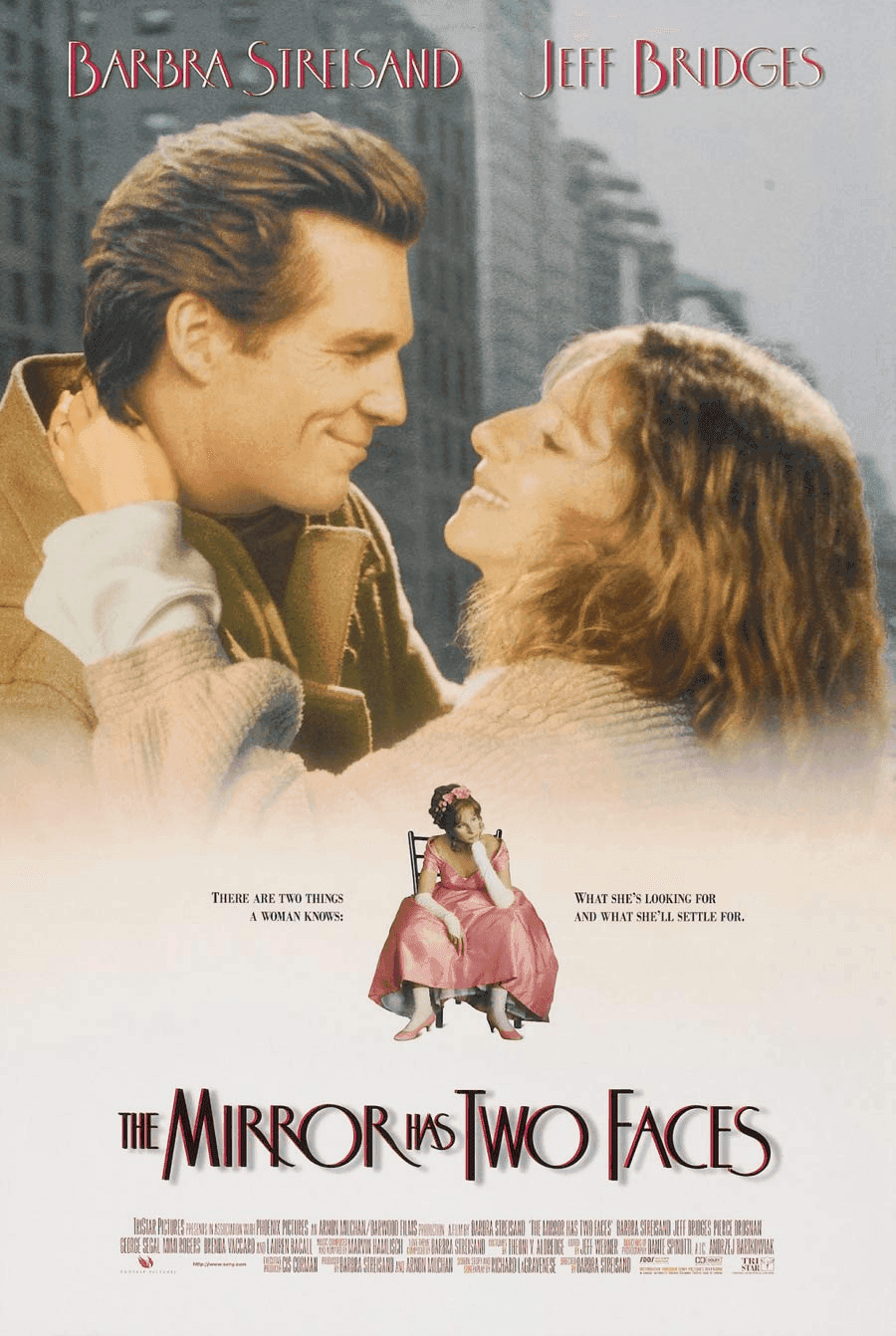
Columbia University literature professor Rose Morgan, resigned to a quiet life under the shadow of her glamorous mother, answers a personal ad placed by mathematics professor Gregory Larkin. He proposes a passionless marriage of intellect and companionship, but Rose finds herself wanting more.
What Is the Budget of The Mirror Has Two Faces (1996)?
The Mirror Has Two Faces (1996), directed by and starring Barbra Streisand and distributed by TriStar Pictures, was produced on a reported budget of $42,000,000. The romantic drama was co-financed by Streisand's Barwood Films, Arnon Milchan's Phoenix Pictures, and Milchan's Arnon Milchan Productions, with TriStar handling worldwide theatrical release. Streisand served as director, producer, and star, with Richard LaGravenese (The Fisher King, Bridges of Madison County) writing the screenplay.
The film was a loose American adaptation of the 1958 French film Le Miroir à Deux Faces directed by André Cayatte. Streisand's involvement on three sides of the camera commanded a substantial share of the above-the-line budget, with additional star compensation for co-leads Jeff Bridges, Pierce Brosnan, Lauren Bacall, and Mimi Rogers.
Key Budget Allocation Categories
The $42,000,000 budget was distributed across these core production areas:
- Above-the-Line Talent: Barbra Streisand's combined director, producer, and star fees represented the largest line item. Jeff Bridges, Lauren Bacall, Pierce Brosnan (in the middle of his first GoldenEye-era James Bond run), and Mimi Rogers all commanded star-tier compensation.
- New York Location Filming: Principal photography took place primarily in New York City, with Columbia University campus locations standing in for the film's academic setting. Manhattan location costs, traffic control, and apartment interiors anchored a significant share of the production schedule.
- Cinematography and Production Design: DP Andrzej Bartkowiak (with Dante Spinotti contributing additional photography after schedule overruns) shot the film with a glossy romantic-drama palette. Production designer Tom John created multiple elaborate interior sets.
- Score and Music: Marvin Hamlisch composed the score, and Streisand performed the film's title song "I Finally Found Someone" with Bryan Adams, which became a top-ten single and earned an Academy Award nomination for Best Original Song.
- Reshoots and Schedule Overruns: The production experienced multiple reshoots and a director-of-photography change during principal photography, with Bartkowiak replacing Spinotti partway through the schedule. These added carrying costs and additional shooting days contributed to budget creep.
- Marketing and Distribution: TriStar's P&A spend was estimated at approximately $25,000,000 to $35,000,000, with a Thanksgiving 1996 release positioned for adult-audience counterprogramming against family titles.
How Does The Mirror Has Two Faces' Budget Compare to Similar Films?
At $42,000,000, The Mirror Has Two Faces fell within the typical range of mid-1990s star-led romantic dramas:
- The Bridges of Madison County (1995): Budget $24,000,000 | Worldwide $182,000,000. Clint Eastwood's romantic drama (also written by Richard LaGravenese) cost roughly half as much and earned more than four times the worldwide gross, illustrating how the genre could break out when packaged with broader appeal.
- The Prince of Tides (1991): Budget $30,000,000 | Worldwide $74,800,000. Streisand's previous directorial effort cost less and earned more, with seven Academy Award nominations including Best Picture providing the template the studio hoped Mirror would replicate.
- Sleepless in Seattle (1993): Budget $21,000,000 | Worldwide $227,800,000. TriStar's previous adult romance cost half as much and earned more than five times the worldwide gross, anchoring the studio's commercial expectations for the genre.
- When Harry Met Sally... (1989): Budget $16,000,000 | Worldwide $92,800,000. Castle Rock's romantic comedy cost less than 40% of Mirror and out-grossed it more than two to one, illustrating the commercial ceiling for adult romantic films.
The Mirror Has Two Faces Box Office Performance
The Mirror Has Two Faces opened on November 15, 1996, debuting at number two with $12,038,143 over its opening weekend. The film held competently through the Thanksgiving frame. The financial breakdown:
Box Office Breakdown
The Mirror Has Two Faces

The Mirror Has Two Faces returned approximately $0.53 to $0.61 in worldwide theatrical revenue for every $1 invested. The domestic share of the gross was $41,038,866 against minimal international revenue, an indication that the film's appeal was concentrated in the North American adult-audience demographic. TriStar recouped further through home video and cable licensing, but the theatrical run fell well below the studio's expectations for a Streisand director-star vehicle.
The Mirror Has Two Faces Production History
Development on The Mirror Has Two Faces began in the early 1990s with Streisand's Barwood Films optioning the property as a loose American adaptation of the 1958 French film Le Miroir à Deux Faces. Richard LaGravenese was hired to write the screenplay, transposing the central premise to a contemporary New York academic setting.
Principal photography took place in 1995 and 1996, primarily in New York City. The production experienced significant turbulence, including a director-of-photography change with Andrzej Bartkowiak replacing Dante Spinotti partway through the schedule. Streisand and Pierce Brosnan reportedly clashed during production, and multiple reshoots extended the post-production timeline.
TriStar released the film at Thanksgiving 1996 in counterprogramming position against family titles. Lauren Bacall's performance as Streisand's mother emerged as the film's critical and awards centerpiece, ultimately earning Bacall her first Academy Award nomination after a six-decade career. The film's title song "I Finally Found Someone" by Bryan Adams and Streisand became a top-ten Billboard single and provided ongoing radio and soundtrack revenue.
Awards and Recognition
The Mirror Has Two Faces received two Academy Award nominations: Best Supporting Actress (Lauren Bacall) and Best Original Song ("I Finally Found Someone" by Bryan Adams, Robert John "Mutt" Lange, and Marvin Hamlisch, performed by Streisand and Adams). Bacall was widely considered the front-runner for the supporting actress prize but lost to Juliette Binoche for The English Patient in one of the most discussed upsets of the 1997 ceremony.
Lauren Bacall did win the Golden Globe for Best Supporting Actress in a Motion Picture. The film also received SAG and Critics' Choice nominations for Bacall. Streisand herself was nominated for Worst Director and Worst Actress at the Razzies, reflecting the polarized critical and industry response to her work on the film. The combination of legitimate awards prestige (anchored by Bacall) and Razzie scorn (directed at Streisand) made the film one of the more controversial awards entries of the 1996 season.
Critical Reception
The Mirror Has Two Faces received mixed reviews. The film holds a 41% approval rating on Rotten Tomatoes based on 39 critic reviews, with a critical consensus calling it a charming but uneven romantic comedy. On Metacritic, the film scored 49 out of 100, indicating mixed or average reviews.
Roger Ebert awarded the film three stars out of four, praising the central performances and writing that "Streisand has made a thoughtful film about love and self-image, even if her own performance feels self-conscious." Variety found the film "intermittently engaging but burdened by a vanity-project sheen," while The New York Times praised Bacall as "a revelation in a film that often struggles to match her gravity." The polarized response framed the film as a vehicle whose strongest elements (Bacall, the title song, the comic supporting work) were partly obscured by what critics described as Streisand's over-control of the material.
Frequently Asked Questions
How much did it cost to make The Mirror Has Two Faces (1996)?
The reported production budget was $42,000,000. The film was co-financed by Barbra Streisand's Barwood Films, Arnon Milchan's Phoenix Pictures, and Arnon Milchan Productions, with TriStar Pictures handling worldwide theatrical distribution.
How much did The Mirror Has Two Faces earn at the box office?
The film grossed $41,038,866 domestically and approximately $45,000 internationally, for a worldwide total of $41,083,864. It opened to $12,038,143 in the United States, debuting at number two on the weekend of November 15, 1996.
Was The Mirror Has Two Faces profitable?
No. Against a $42,000,000 production budget and an estimated $25,000,000 to $35,000,000 in marketing spend, the film returned approximately $0.53 to $0.61 in worldwide gross for every $1 invested. TriStar recouped further through home video and cable licensing, but the theatrical run fell well below studio expectations.
Who directed The Mirror Has Two Faces?
Barbra Streisand directed the film, also serving as producer and star. It was her third feature as director after Yentl (1983) and The Prince of Tides (1991). The screenplay was written by Richard LaGravenese (The Fisher King, Bridges of Madison County).
Is The Mirror Has Two Faces a remake?
Yes. The film is a loose American adaptation of the 1958 French film Le Miroir à Deux Faces directed by André Cayatte. Richard LaGravenese's screenplay transposed the central premise to a contemporary New York academic setting at Columbia University.
Did Lauren Bacall win an Oscar for The Mirror Has Two Faces?
No. Lauren Bacall received an Academy Award nomination for Best Supporting Actress, her first nomination after a six-decade career, but she lost to Juliette Binoche for The English Patient in one of the most discussed upsets of the 1997 ceremony. Bacall did win the Golden Globe for Best Supporting Actress in a Motion Picture.
Where was The Mirror Has Two Faces filmed?
Principal photography took place in 1995 and 1996, primarily in New York City. Columbia University campus locations stood in for the film's academic setting, with additional interior work on Manhattan apartment and restaurant locations.
Who performed the song "I Finally Found Someone" from The Mirror Has Two Faces?
Barbra Streisand and Bryan Adams performed the duet "I Finally Found Someone," written by Adams, Streisand, Robert John "Mutt" Lange, and Marvin Hamlisch. The song became a top-ten Billboard single and received an Academy Award nomination for Best Original Song.
What did critics think of The Mirror Has Two Faces?
The film received mixed reviews, with a 41% approval rating on Rotten Tomatoes and a 49 out of 100 Metacritic score. Roger Ebert awarded the film three stars out of four. Critics praised Lauren Bacall's performance but were polarized on Streisand's direction, with some calling the film a vanity project.
Who is in the cast of The Mirror Has Two Faces?
The cast includes Barbra Streisand as Rose Morgan, Jeff Bridges as Gregory Larkin, Pierce Brosnan, Lauren Bacall as Rose's mother, Mimi Rogers, George Segal, Brenda Vaccaro, and Austin Pendleton.
Filmmakers
The Mirror Has Two Faces

Build budgets like this one in Saturation
Start from an industry-standard feature film template, import the schedule and rates you already have, and let the cost report keep itself current as you spend. Real-time collaboration, no spreadsheets.