The Magnificent Seven Budget
Updated
Synopsis
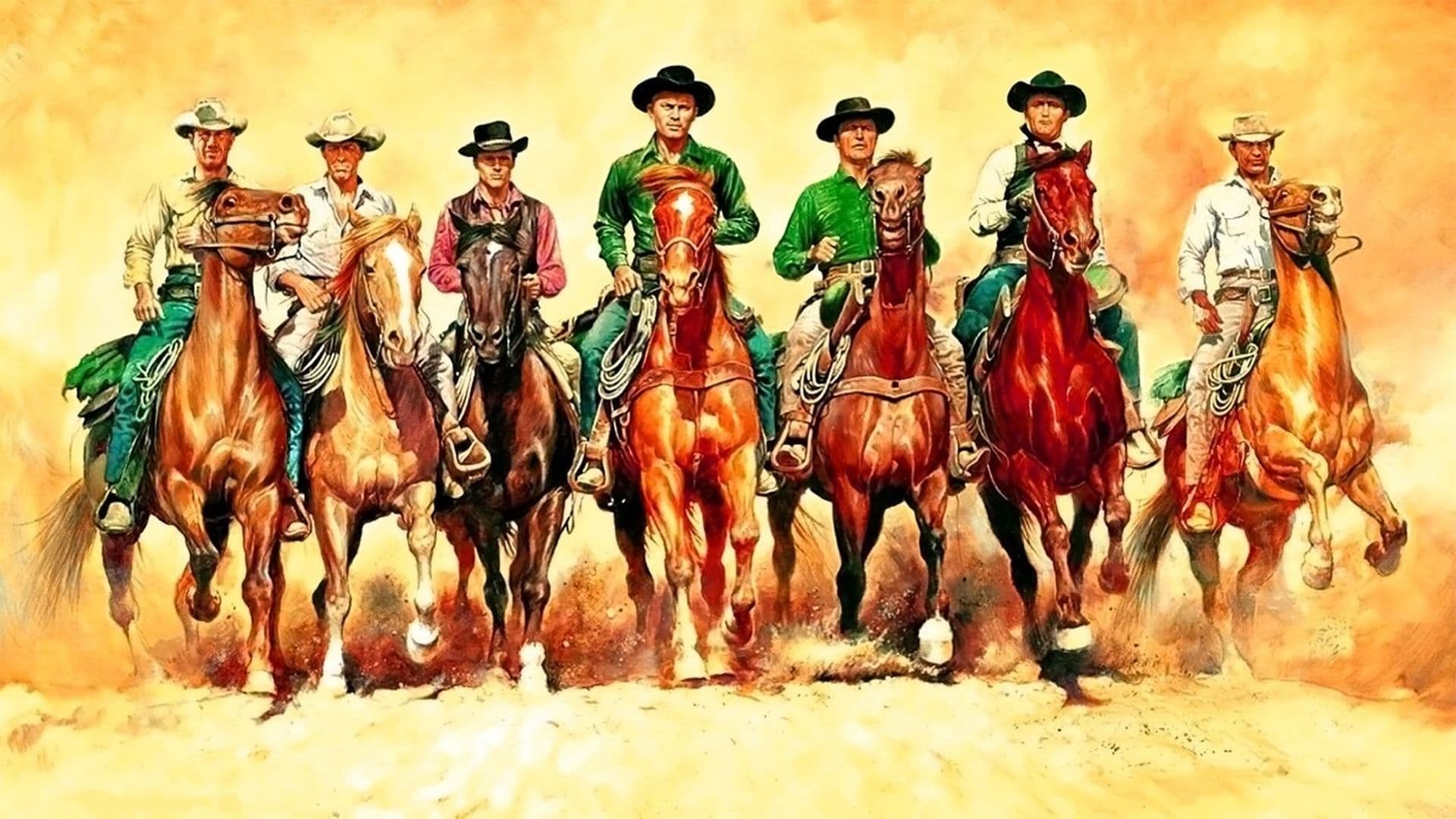
With the town of Rose Creek under the deadly control of industrialist Bartholomew Bogue, the desperate townspeople employ protection from seven outlaws, bounty hunters, gamblers and hired guns — Sam Chisolm, Josh Farraday, Goodnight Robicheaux, Jack Horne, Billy Rocks, Vasquez, and Red Harvest. As they prepare the town for the violent showdown that they know is coming, these seven mercenaries find themselves fighting for more than money.
What is the budget of The Magnificent Seven?
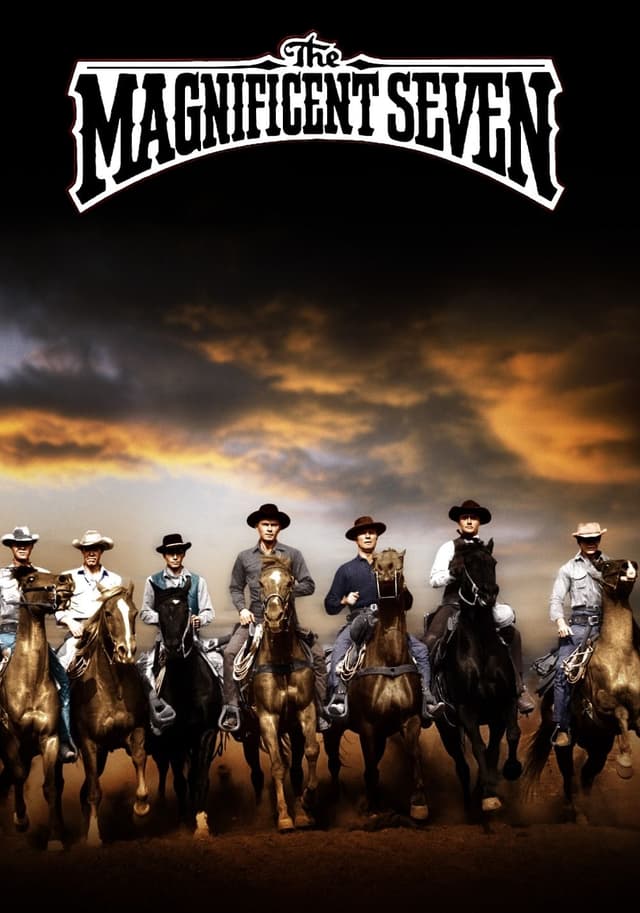
"The Magnificent Seven," a western released in 1960, was directed by John Sturges and stars Yul Brynner, Eli Wallach. The production budget was $2,000,000, placing it in the micro-budget range for western productions of the 1960s.
Key Budget Allocation Categories
While specific budget breakdowns are not publicly available, typical cost drivers for a western production like this include:
- Stunts, Action Sequences & Visual Effects: Action films allocate a substantial portion of their budget to choreographing and executing practical stunts, pyrotechnics, and CGI-heavy sequences.
- Above-the-Line Talent (Cast & Director): A-list talent commands significant upfront fees plus backend participation.
- Production Design, Sets & Locations: Action films frequently require multiple international shooting locations, large-scale set construction, vehicle acquisitions and modifications, and specialized equipment , all of which drive production costs well above those of dialogue-driven genres.
- Writing: Script credit was a subject of contention.
What were the major cost factors in The Magnificent Seven?
Several factors contributed to the overall production costs of "The Magnificent Seven."
- Stunts: Stunts, Action Sequences & Visual Effects is one of the primary cost drivers in western productions of this scale.
- Above-the-Line Talent (Cast: Above-the-Line Talent (Cast & Director) is one of the primary cost drivers in western productions of this scale.
- Production Design: Production Design, Sets & Locations is one of the primary cost drivers in western productions of this scale.
How Does The Magnificent Seven's Budget Compare to Similar Films?
At $2,000,000, The Magnificent Seven sits in the micro-budget range. Here is how it compares to productions with a similar budget:
- Seven Samurai (1954): Budget $2,000,000, Worldwide Gross $105,000,000
- The Great Dictator (1940): Budget $2,000,000, Worldwide Gross $11,000,000
- Sing Sing (2024): Budget $2,000,000, Worldwide Gross $3,401,789
- The Lives of Others (2006): Budget $2,000,000, Worldwide Gross $77,672,685
- Anatomy of a Murder (1959): Budget $2,000,000, Worldwide Gross $8,000,000
The median budget for wide-release western films in the era ranges from $30 to 80M for mid-budget to $150M+ for tentpoles.
The Magnificent Seven Box Office Performance
"The Magnificent Seven" earned $4,905,000 worldwide at the box office. Against a production budget of $2,000,000, the film showed modest profitability in theatrical release.
A film typically needs to earn approximately twice its production budget to cover marketing and distribution costs. For "The Magnificent Seven," that break-even threshold was roughly $4,000,000. With worldwide earnings of $4,905,000, the film cleared that threshold comfortably.
Box Office Breakdown
The Magnificent Seven

At 145.2%, "The Magnificent Seven" earned roughly $2.45 for every $1 invested in production.
The Magnificent Seven Production History
Script credit was a subject of contention. Associate producer Morheim commissioned Walter Bernstein, a blacklisted scriptwriter, to produce the first draft "faithfully" adapted from the original script written by Shinobu Hashimoto, Hideo Oguni and Akira Kurosawa; when Mirisch and Brynner took over the production, they brought on Walter Newman, whose version "is largely what's onscreen." When Newman was unavailable to be onsite during the film's principal photography in Mexico, William Roberts was hired, in part to make changes required by Mexican censors. When Roberts asked the Writers Guild of America for a co-credit, Newman asked that his name be removed from the credits..
Sturges was eager to cast Steve McQueen in the picture, having just worked with him on the 1959 film Never So Few, but McQueen could not get a release from actor/producer Dick Powell, who controlled McQueen's hit TV series Wanted Dead or Alive. On the advice of his agent, McQueen, an experienced race car driver, staged a car accident and claimed that he could not work on his series because he had suffered a whiplash injury and had to wear a neck brace. During the interval required for his "recuperation", he was free to appear in The Magnificent Seven.
The film was shot by cinematographer Charles Lang in a 35 mm anamorphic format using Panavision lenses. Location shooting began on March 1, 1960, in Mexico, where both the village and the U.S. border town were built for the film.
Frequently Asked Questions
How much did it cost to make The Magnificent Seven (1960)?
The production budget was $2,000,000, covering principal photography, cast and crew salaries, locations, sets, post-production, and music. Marketing and distribution (P&A) costs are estimated at an additional $1,000,000 - $1,600,000, bringing the total studio investment to approximately $3,000,000 - $3,600,000.
How much did The Magnificent Seven (1960) earn at the box office?
The Magnificent Seven grossed $4,905,000 worldwide.
Was The Magnificent Seven (1960) profitable?
The film did not break even theatrically, earning $4,905,000 against an estimated $5,000,000 needed. Ancillary revenue may have improved the picture.
What were the biggest costs in producing The Magnificent Seven?
The primary cost drivers were above-the-line talent (Yul Brynner, Eli Wallach, Steve McQueen); visual effects, practical stunts, and A-list talent compensation.
How does The Magnificent Seven's budget compare to similar western films?
At $2,000,000, The Magnificent Seven is classified as a micro-budget production. The median budget for wide-release western films in the era ranges from $30 - 80M for mid-budget to $150M+ for tentpoles. Comparable budgets: Seven Samurai (1954, $2,000,000); The Great Dictator (1940, $2,000,000); Sing Sing (2024, $2,000,000).
Did The Magnificent Seven (1960) go over budget?
There are no widely reported accounts of significant budget overruns for this production. However, studios rarely disclose precise budget overrun figures publicly. The reported production budget reflects the final estimated cost.
What was the return on investment (ROI) for The Magnificent Seven?
The theatrical ROI was 145.2%, calculated as ($4,905,000 − $2,000,000) ÷ $2,000,000 × 100. This measures gross revenue against production budget only - it does not account for P&A or exhibitor shares.
Who directed The Magnificent Seven and who were the key crew members?
Directed by John Sturges, written by William Roberts, Walter Bernstein, Walter Newman, shot by Charles Lang, with music by Elmer Bernstein, Robert Bain, edited by Ferris Webster.
Where was The Magnificent Seven filmed?
The Magnificent Seven was filmed in United States of America. The film was shot by cinematographer Charles Lang in a 35 mm anamorphic format using Panavision lenses. Location shooting began on March 1, 1960, in Mexico, where both the village and the U.S.
Filmmakers
The Magnificent Seven

Official Trailer
Build budgets like this one in Saturation
Start from an industry-standard feature film template, import the schedule and rates you already have, and let the cost report keep itself current as you spend. Real-time collaboration, no spreadsheets.