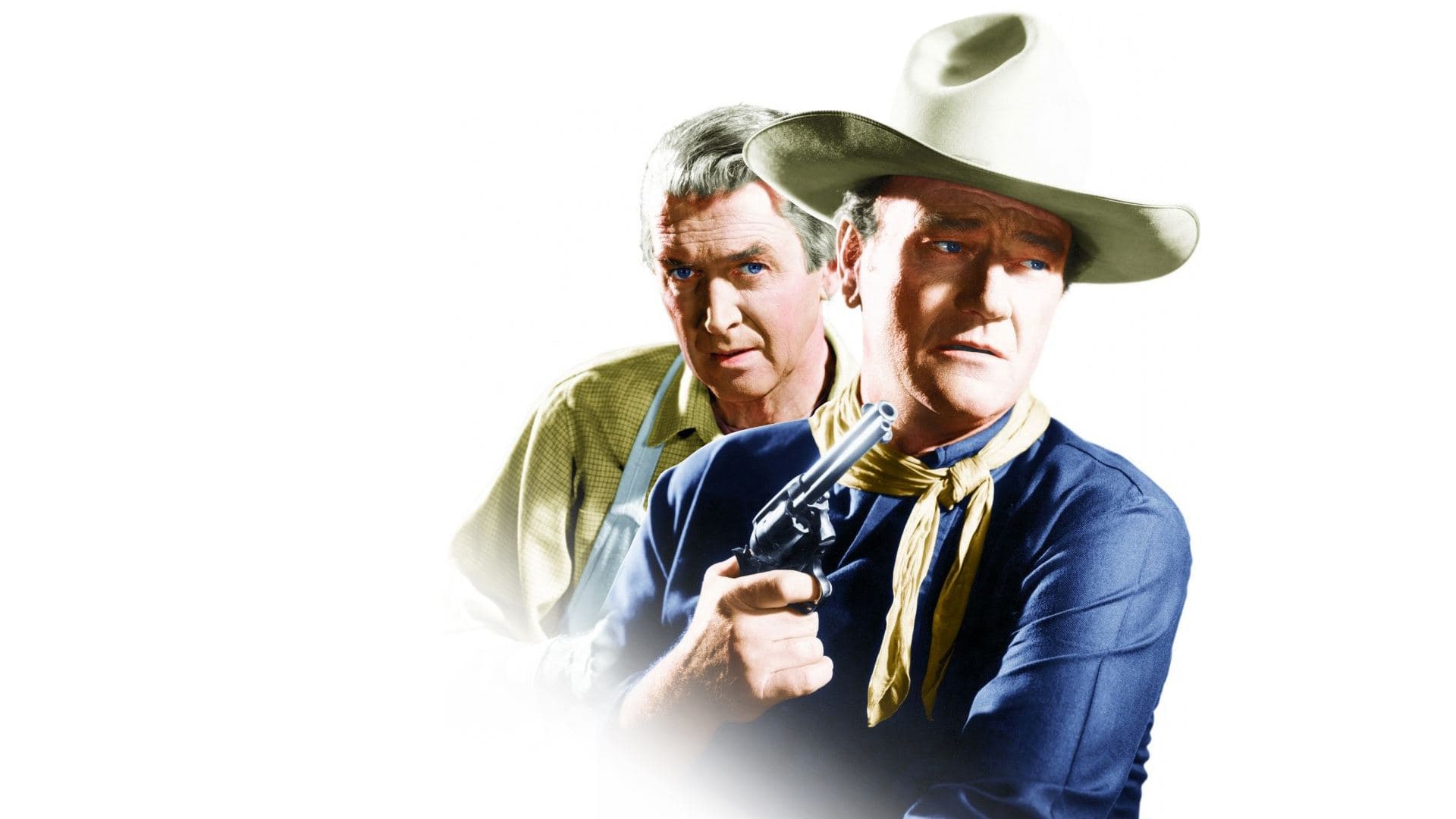
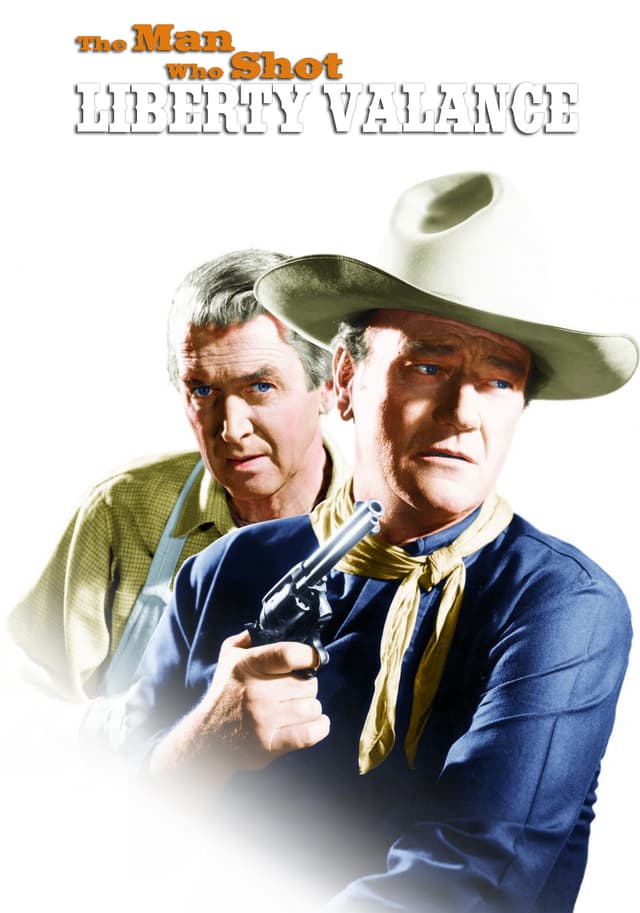
The Man Who Shot Liberty Valance Budget
 Western2h 3m
Updated
Synopsis
Questions arise when Senator Stoddard attends the funeral of a local man named Tom Doniphon in a small Western town. Flashing back, we learn Doniphon saved Stoddard, then a lawyer, when he was roughed up by a crew of outlaws terrorizing the town, led by Liberty Valance. As the territory's safety hung in the balance, Doniphon and Stoddard, two of the only people standing up to him, proved to be very important, but different, foes to Valance.
What is the budget of The Man Who Shot Liberty Valance?
"The Man Who Shot Liberty Valance," a western released in 1962, was directed by John Ford and stars John Wayne, James Stewart. The production budget was $3,200,000, placing it in the micro-budget range for western productions of the 1960s.
Key Budget Allocation Categories
While specific budget breakdowns are not publicly available, typical cost drivers for a western production like this include:
- Stunts, Action Sequences & Visual Effects: Action films allocate a substantial portion of their budget to choreographing and executing practical stunts, pyrotechnics, and CGI-heavy sequences.
- Above-the-Line Talent (Cast & Director): A-list talent commands significant upfront fees plus backend participation.
- Production Design, Sets & Locations: Action films frequently require multiple international shooting locations, large-scale set construction, vehicle acquisitions and modifications, and specialized equipment , all of which drive production costs well above those of dialogue-driven genres.
- Production: In contrast to prior John Ford Westerns, such as The Searchers (1956) and She Wore a Yellow Ribbon (1949), The Man Who Shot Liberty Valance was shot in black-and-white on Paramount's soundstages.
What were the major cost factors in The Man Who Shot Liberty Valance?
Several factors contributed to the overall production costs of "The Man Who Shot Liberty Valance."
- Stunts: Stunts, Action Sequences & Visual Effects is one of the primary cost drivers in western productions of this scale.
- Above-the-Line Talent (Cast: Above-the-Line Talent (Cast & Director) is one of the primary cost drivers in western productions of this scale.
- Production Design: Production Design, Sets & Locations is one of the primary cost drivers in western productions of this scale.
How Does The Man Who Shot Liberty Valance's Budget Compare to Similar Films?
At $3,200,000, The Man Who Shot Liberty Valance sits in the micro-budget range. Here is how it compares to productions with a similar budget:
- Cool Hand Luke (1967): Budget $3,200,000, Worldwide Gross $16,217,773
- Sorry to Bother You (2018): Budget $3,200,000, Worldwide Gross $18,200,000
- It's a Wonderful Life (1946): Budget $3,180,000, Worldwide Gross $9,644,124
- City of God (2002): Budget $3,300,000, Worldwide Gross $30,641,770
- Whiplash (2014): Budget $3,300,000, Worldwide Gross $50,307,484
The median budget for wide-release western films in the era ranges from $30 to 80M for mid-budget to $150M+ for tentpoles.
The Man Who Shot Liberty Valance Box Office Performance
"The Man Who Shot Liberty Valance" earned $8,000,000 worldwide at the box office. Against a production budget of $3,200,000, the film performed strongly at the box office.
A film typically needs to earn approximately twice its production budget to cover marketing and distribution costs. For "The Man Who Shot Liberty Valance," that break-even threshold was roughly $6,400,000. With worldwide earnings of $8,000,000, the film cleared that threshold comfortably.
Box Office Breakdown
The Man Who Shot Liberty Valance

At 150%, "The Man Who Shot Liberty Valance" earned roughly $2.5 for every $1 invested in production.
The Man Who Shot Liberty Valance Production History
The film's music score was composed by Cyril J. Mockridge, but in scenes involving Hallie's relationships with Doniphon and Stoddard, Ford reprised Alfred Newman's "Ann Rutledge Theme", from Young Mr. Lincoln.
Awards and Recognition
Nominated for 1 Oscar. 4 wins & 3 nominations total
Critical Reception
The Man Who Shot Liberty Valance was released in April 1962, and achieved both financial and critical success. Produced for $US3.2 million, it grossed $8 million,
Frequently Asked Questions
How much did it cost to make The Man Who Shot Liberty Valance (1962)?
The production budget was $3,200,000, covering principal photography, cast and crew salaries, locations, sets, post-production, and music. Marketing and distribution (P&A) costs are estimated at an additional $1,600,000 - $2,560,000, bringing the total studio investment to approximately $4,800,000 - $5,760,000.
How much did The Man Who Shot Liberty Valance (1962) earn at the box office?
The Man Who Shot Liberty Valance grossed $8,000,000 worldwide.
Was The Man Who Shot Liberty Valance (1962) profitable?
Yes. Against a production budget of $3,200,000 and estimated total costs of ~$8,000,000, the film earned $8,000,000 theatrically - a 150% ROI on production costs alone.
What were the biggest costs in producing The Man Who Shot Liberty Valance?
The primary cost drivers were above-the-line talent (John Wayne, James Stewart, Vera Miles); visual effects, practical stunts, and A-list talent compensation.
How does The Man Who Shot Liberty Valance's budget compare to similar western films?
At $3,200,000, The Man Who Shot Liberty Valance is classified as a micro-budget production. The median budget for wide-release western films in the era ranges from $30 - 80M for mid-budget to $150M+ for tentpoles. Comparable budgets: Cool Hand Luke (1967, $3,200,000); Sorry to Bother You (2018, $3,200,000); It's a Wonderful Life (1946, $3,180,000).
Did The Man Who Shot Liberty Valance (1962) go over budget?
There are no widely reported accounts of significant budget overruns for this production. However, studios rarely disclose precise budget overrun figures publicly. The reported production budget reflects the final estimated cost.
What was the return on investment (ROI) for The Man Who Shot Liberty Valance?
The theatrical ROI was 150.0%, calculated as ($8,000,000 − $3,200,000) ÷ $3,200,000 × 100. This measures gross revenue against production budget only - it does not account for P&A or exhibitor shares.
What awards did The Man Who Shot Liberty Valance (1962) win?
Nominated for 1 Oscar. 4 wins & 3 nominations total.
Who directed The Man Who Shot Liberty Valance and who were the key crew members?
Directed by John Ford, written by James Warner Bellah, Dorothy M. Johnson, Willis Goldbeck, shot by William H. Clothier, with music by Cyril J. Mockridge, Irvin Talbot, edited by Otho Lovering.
Where was The Man Who Shot Liberty Valance filmed?
The Man Who Shot Liberty Valance was filmed in United States of America.
Filmmakers
The Man Who Shot Liberty Valance

Official Trailer
Build budgets like this one in Saturation
Start from an industry-standard feature film template, import the schedule and rates you already have, and let the cost report keep itself current as you spend. Real-time collaboration, no spreadsheets.