Rio Bravo Budget
Updated
Synopsis
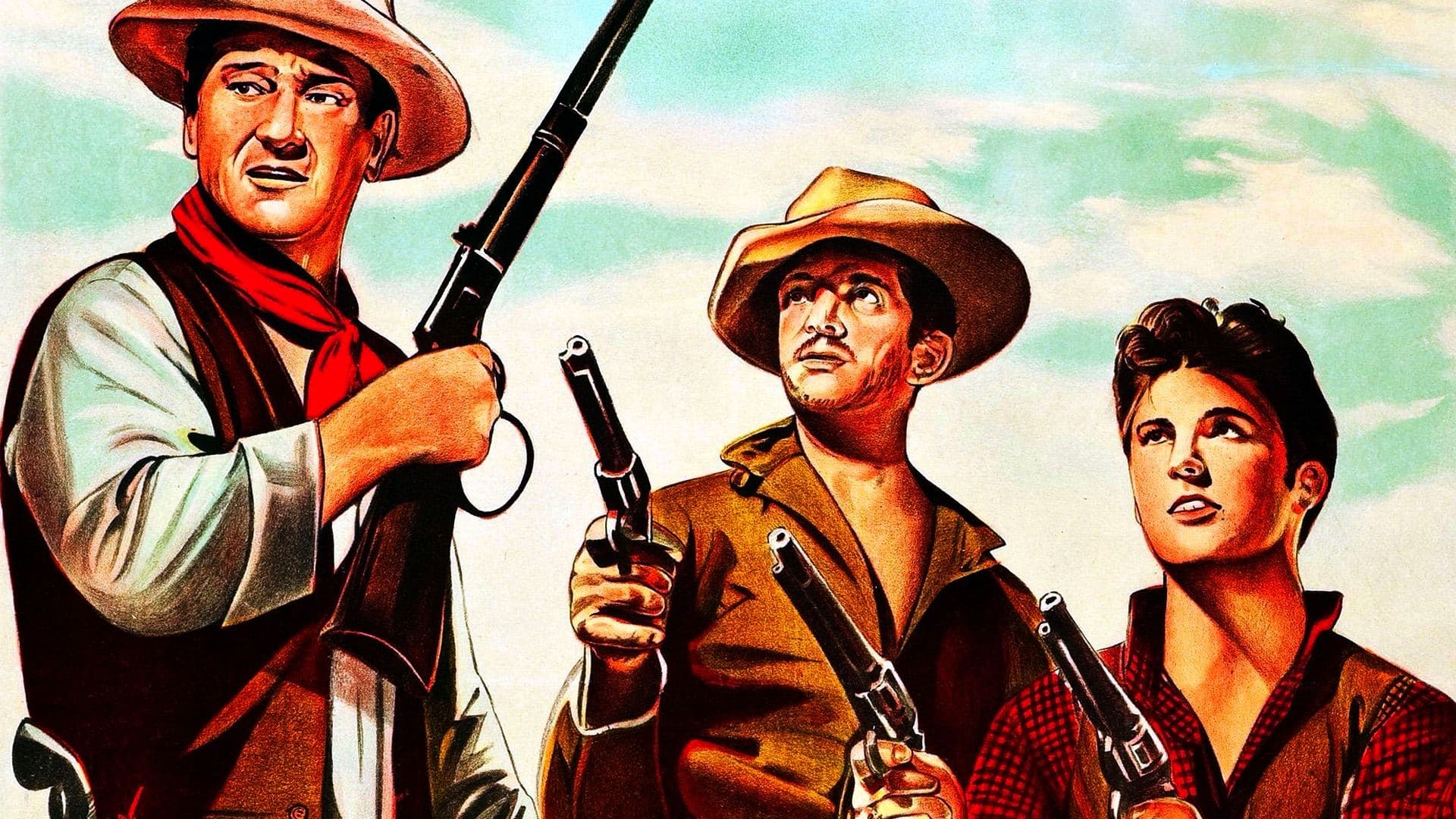
Sheriff John T. Chance has his hands full after arresting Joe Burdette for murder. He knows that Burdette's brother Nathan, a powerful rancher, will go to any lengths to get him out of jail. Chance's good friend Pat Wheeler offers to help but within 20 minutes of making the offer is gunned down in the street, shot in the back. That leaves his elderly deputy Stumpy, the town drunk Dude - once a deputy and a pretty good shot when he was sober - and a young hand, Colorado, who used to work for Wheeler. Nathan Burdette meanwhile has a couple of dozen men at his disposal. Chance does his best to prepare all the while romancing a pretty gambler who goes by the name of Feathers.
What is the budget of Rio Bravo?
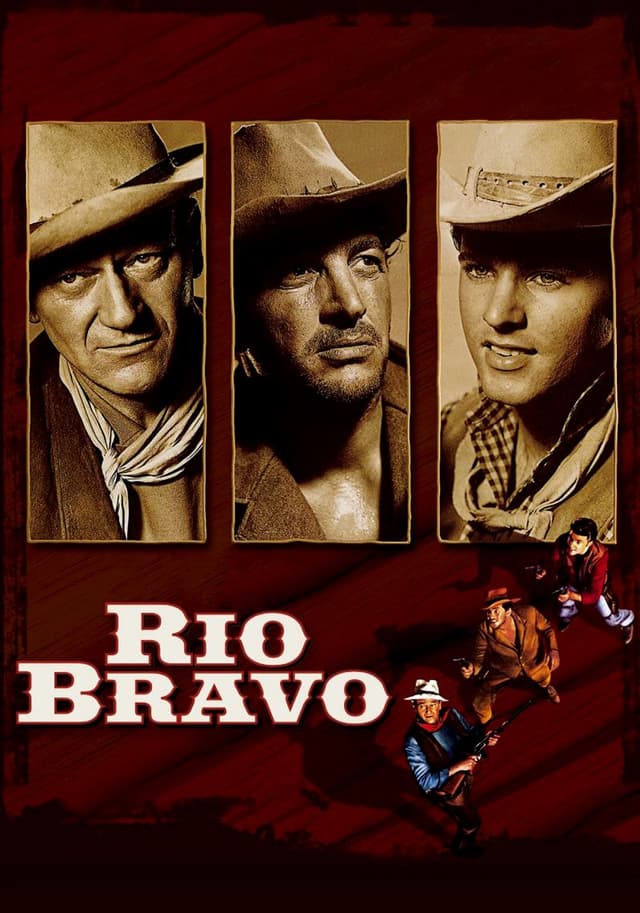
"Rio Bravo," a western released in 1959, was directed by Howard Hawks and stars John Wayne, Dean Martin. The production budget was $1,200,000, placing it in the micro-budget range for western productions of the 1950s.
Key Budget Allocation Categories
While specific budget breakdowns are not publicly available, typical cost drivers for a western production like this include:
- Stunts, Action Sequences & Visual Effects: Action films allocate a substantial portion of their budget to choreographing and executing practical stunts, pyrotechnics, and CGI-heavy sequences.
- Above-the-Line Talent (Cast & Director): A-list talent commands significant upfront fees plus backend participation.
- Production Design, Sets & Locations: Action films frequently require multiple international shooting locations, large-scale set construction, vehicle acquisitions and modifications, and specialized equipment , all of which drive production costs well above those of dialogue-driven genres.
- Production: Exteriors for the film were shot at Old Tucson Studios, just outside Tucson. Filming took place in the summer of 1958, and the movie's credits gave 1958 for the copyright; the film was released in March 1959.
What were the major cost factors in Rio Bravo?
Several factors contributed to the overall production costs of "Rio Bravo."
- Stunts: Stunts, Action Sequences & Visual Effects is one of the primary cost drivers in western productions of this scale.
- Above-the-Line Talent (Cast: Above-the-Line Talent (Cast & Director) is one of the primary cost drivers in western productions of this scale.
- Production Design: Production Design, Sets & Locations is one of the primary cost drivers in western productions of this scale.
How Does Rio Bravo's Budget Compare to Similar Films?
At $1,200,000, Rio Bravo sits in the micro-budget range. Here is how it compares to productions with a similar budget:
- The Good, the Bad and the Ugly (1966): Budget $1,200,000, Worldwide Gross $38,900,000
- Nirvanna the Band the Show the Movie (2026): Budget $1,200,000, Worldwide Gross $4,087,357
- Brief Encounter (1945): Budget $1,200,000
- Reservoir Dogs (1992): Budget $1,200,000, Worldwide Gross $2,859,750
- But I'm a Cheerleader (2000): Budget $1,200,000, Worldwide Gross $2,600,000
The median budget for wide-release western films in the era ranges from $30 to 80M for mid-budget to $150M+ for tentpoles.
Rio Bravo Box Office Performance
"Rio Bravo" earned $12,535,000 domestically and $5,750,000 worldwide at the box office. Against a production budget of $1,200,000, the film performed strongly at the box office.
A film typically needs to earn approximately twice its production budget to cover marketing and distribution costs. For "Rio Bravo," that break-even threshold was roughly $2,400,000. With worldwide earnings of $5,750,000, the film cleared that threshold comfortably.
Box Office Breakdown
Rio Bravo

At 379.2%, "Rio Bravo" earned roughly $4.79 for every $1 invested in production.
Rio Bravo Production History
The musical score was composed by Dimitri Tiomkin. His score includes the hauntingly ominous "El Degüello" theme, which is heard several times. The Colorado character identifies the tune as "The Cutthroat Song".
Awards and Recognition
4 wins & 5 nominations total
- Golden Globe Award for New Star of the Year , Actress: Angie Dickinson
Critical Reception
In the United Kingdom, Rio Bravo was not originally even reviewed for Sight & Sound; Leslie Halliwell gave the film two out of four stars in his Film Guide, describing it as a "cheerfully overlong and slow-moving Western" that was nevertheless "very watchable for those with time to spare". The film was taken more seriously by British critics such as Robin Wood, who rated it as his top film of all time and wrote a book on it in 2003 for the British Film Institute, publishers of Sight & Sound.
Frequently Asked Questions
How much did it cost to make Rio Bravo (1959)?
The production budget was $1,200,000, covering principal photography, cast and crew salaries, locations, sets, post-production, and music. Marketing and distribution (P&A) costs are estimated at an additional $600,000 - $960,000, bringing the total studio investment to approximately $1,800,000 - $2,160,000.
How much did Rio Bravo (1959) earn at the box office?
Rio Bravo grossed $12,535,000 domestic, $-6,785,000 international, totaling $5,750,000 worldwide.
Was Rio Bravo (1959) profitable?
Yes. Against a production budget of $1,200,000 and estimated total costs of ~$3,000,000, the film earned $5,750,000 theatrically - a 379% ROI on production costs alone.
What were the biggest costs in producing Rio Bravo?
The primary cost drivers were above-the-line talent (John Wayne, Dean Martin, Ricky Nelson); visual effects, practical stunts, and A-list talent compensation.
How does Rio Bravo's budget compare to similar western films?
At $1,200,000, Rio Bravo is classified as a micro-budget production. The median budget for wide-release western films in the era ranges from $30 - 80M for mid-budget to $150M+ for tentpoles. Comparable budgets: The Good, the Bad and the Ugly (1966, $1,200,000); Nirvanna the Band the Show the Movie (2026, $1,200,000); Brief Encounter (1945, $1,200,000).
Did Rio Bravo (1959) go over budget?
There are no widely reported accounts of significant budget overruns for this production. However, studios rarely disclose precise budget overrun figures publicly. The reported production budget reflects the final estimated cost.
What was the return on investment (ROI) for Rio Bravo?
The theatrical ROI was 379.2%, calculated as ($5,750,000 − $1,200,000) ÷ $1,200,000 × 100. This measures gross revenue against production budget only - it does not account for P&A or exhibitor shares.
What awards did Rio Bravo (1959) win?
4 wins & 5 nominations total.
Who directed Rio Bravo and who were the key crew members?
Directed by Howard Hawks, written by Jules Furthman, Leigh Brackett, shot by Russell Harlan, with music by Dimitri Tiomkin, edited by Folmar Blangsted.
Where was Rio Bravo filmed?
Rio Bravo was filmed in United States of America.
Filmmakers
Rio Bravo

Official Trailer
Build budgets like this one in Saturation
Start from an industry-standard feature film template, import the schedule and rates you already have, and let the cost report keep itself current as you spend. Real-time collaboration, no spreadsheets.