Rules of Engagement Budget
 Drama
DramaUpdated
Synopsis
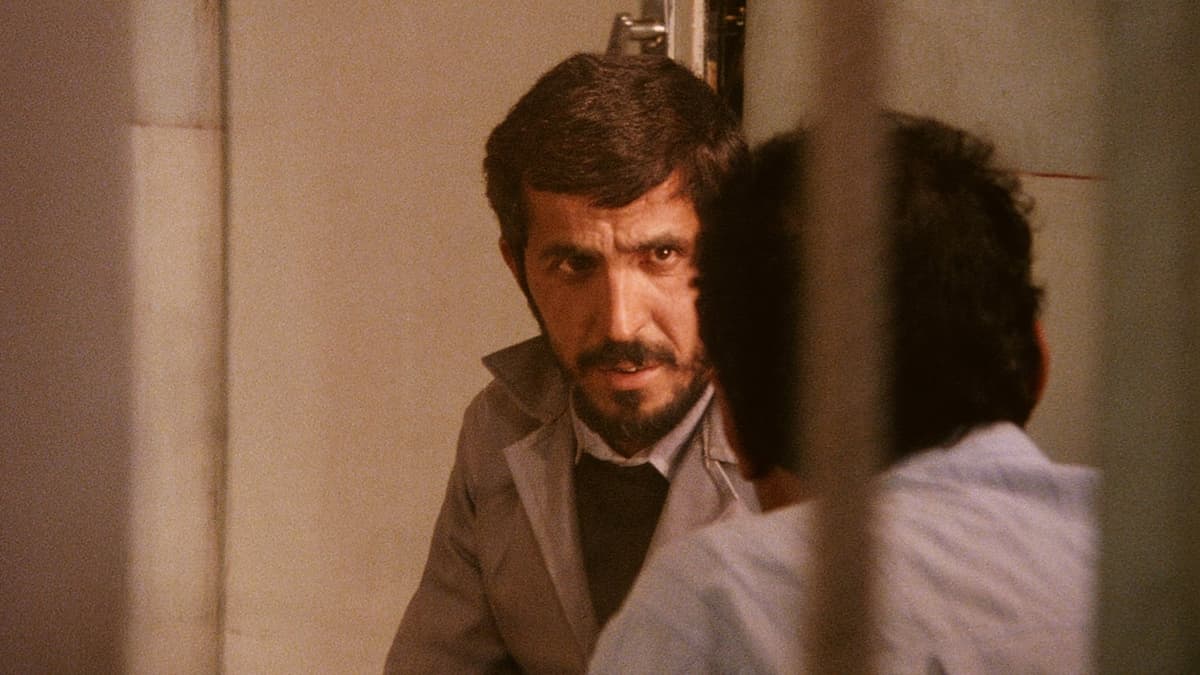
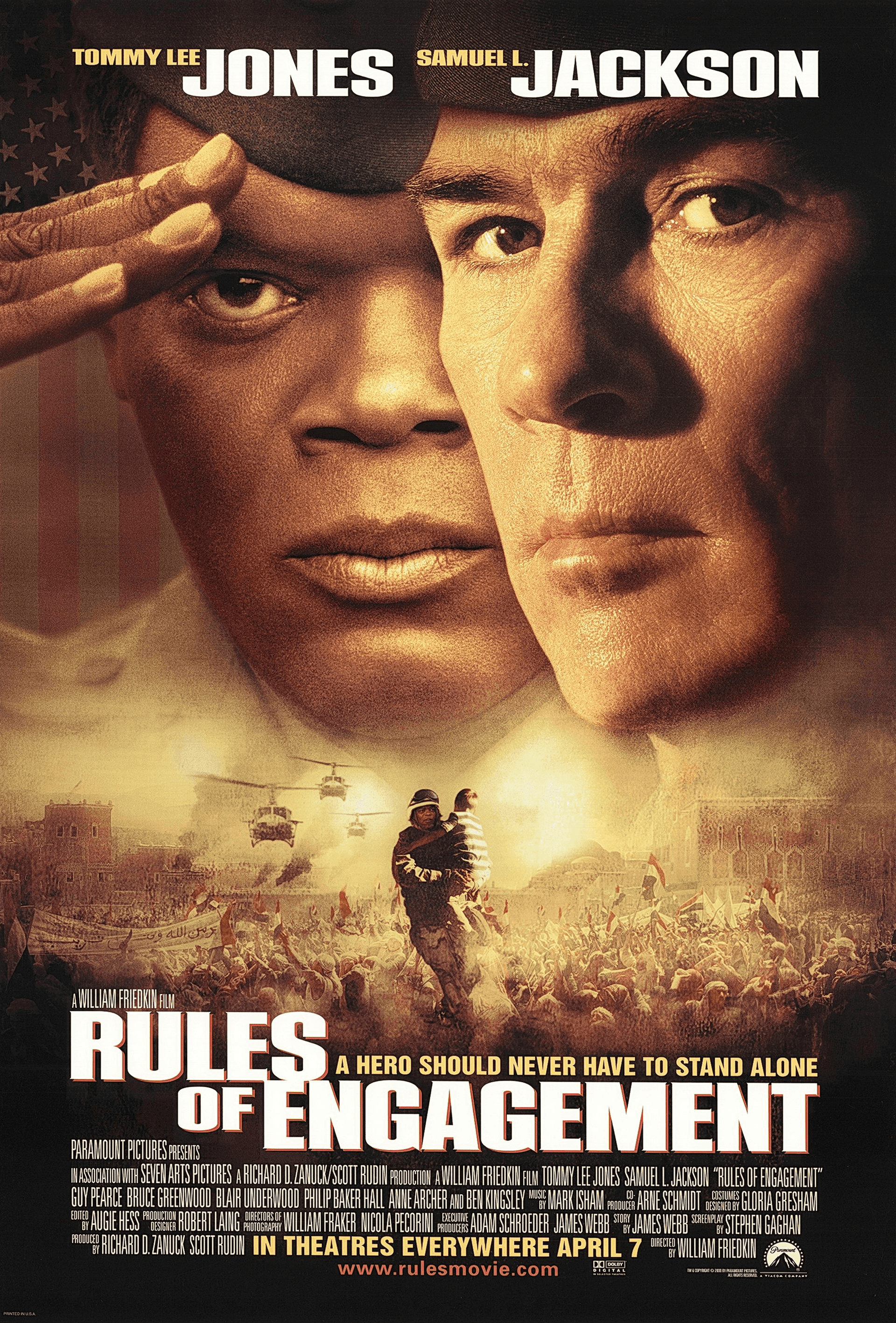
Marine Colonel Terry Childers stands court-martial after his rifle squad opens fire on civilians during the evacuation of the American embassy in Yemen, leaving 83 dead. His defense lawyer, longtime friend Colonel Hays Hodges, faces a State Department determined to make Childers the scapegoat for a politically inconvenient incident. William Friedkin's legal-military thriller stars Tommy Lee Jones and Samuel L. Jackson.
What Is the Budget of Rules of Engagement (2000)?
Rules of Engagement carried a production budget of approximately $60,000,000, a figure that reflects the cast, locations, and visual-effects load required by the screenplay.
Key Budget Allocation Categories
The production allocated the budget across the following major categories.
- Above-the-Line: Samuel L. Jackson and Tommy Lee Jones co-led the cast on participation deals, with Guy Pearce, Bruce Greenwood, and Ben Kingsley rounding out a strong ensemble at substantial quote rates.
- Multi-Location Production: Principal photography took place across Morocco (the Yemen embassy sequence), Virginia, and Washington DC, with substantial below-the-line costs across three continents.
- Marine Corps Coordination: The U.S. Marine Corps provided substantial technical advice, locations at Quantico, and equipment access in exchange for script approval rights, with disputes over the depiction of the embassy massacre producing some on-set tension.
- Action Sequences: The opening Vietnam-era prologue and the Yemen embassy evacuation required practical pyrotechnics, military vehicle work, and crowd choreography across hundreds of extras.
- Mark Isham Score: Mark Isham composed the score with orchestral sessions in Los Angeles, contributing roughly $1,500,000 to below-the-line costs.
- Marketing and Distribution: Paramount mounted a $40,000,000 global P&A push for an April 2000 release positioned against The Skulls in its third week.
How Does Rules of Engagement's Budget Compare to Similar Films?
Placed against comparable releases, the budget reads as follows.
- A Few Good Men (1992): Budget $40,000,000, Worldwide $243,200,000. Rob Reiner's court-martial drama defined the genre territory and box office ceiling.
- The Rock (1996): Budget $75,000,000, Worldwide $335,100,000. A larger-scale military thriller from the same producer (Jerry Bruckheimer) at higher cost and higher gross.
- Courage Under Fire (1996): Budget $46,000,000, Worldwide $100,800,000. A comparable military-investigation drama at lower cost that outperformed Rules of Engagement.
- The General's Daughter (1999): Budget $60,000,000, Worldwide $149,800,000. A roughly contemporaneous military thriller at identical budget that grossed more than twice as much.
Rules of Engagement Box Office Performance
Rules of Engagement opened on April 7, 2000 to $15,000,000 across 2,517 North American theaters, finishing first ahead of Erin Brockovich in its third week.
Box Office Breakdown
Rules of Engagement

The film returned roughly $0.72 for every $1 invested at the worldwide box office.
Domestic receipts of $61,300,000 ran far ahead of international takings of $10,400,000, a remarkably North American-heavy split that reflected the property's limited overseas appeal. Solid VHS and DVD performance through 2001 partially closed the gap, but the film never recovered its theatrical losses. The middling commercial performance prompted Paramount to scale back its commitment to mid-budget legal thrillers in the early 2000s.
Rules of Engagement Production History
Stephen Gaghan adapted James Webb's original story in 1997 with input from Webb, a former Secretary of the Navy and Marine combat veteran whose narrative was based partially on the 1983 Beirut barracks bombing. Paramount and Seven Arts attached William Friedkin to direct in 1998, drawing on his earlier military-legal work in The French Connection.
Samuel L. Jackson and Tommy Lee Jones were cast in late 1998 with extensive script consultation rights that drove substantial rewrites focused on the dynamic between the two leads. Bruce Greenwood, Guy Pearce, and Ben Kingsley filled out the principal supporting cast through early 1999.
Principal photography ran from June through October 1999 across Morocco (the Yemen embassy sequence, filmed in Ouarzazate), Virginia (Quantico and the Marine Corps Base), and Washington DC (exteriors). The Marine Corps provided substantial technical advice, locations, and equipment access in exchange for script-approval rights.
Post-production was marked by significant editorial disputes between Friedkin and Paramount over the depiction of the embassy massacre, with the studio pushing for a less ambiguous portrayal of Marine actions. The released cut leaned toward exonerating Colonel Childers, a decision that subsequently drew sustained criticism from civil-rights organizations and Yemeni cultural commentators.
Awards and Recognition
Rules of Engagement received no Academy Award nominations. Samuel L. Jackson received a Black Reel Award nomination for Theatrical: Best Actor but lost to Don Cheadle for The Family Man.
The film won the Image Award for Outstanding Actor in a Motion Picture for Samuel L. Jackson at the 32nd NAACP Image Awards. It was not selected for any major festival showcases and was excluded from genre-focused awards.
Critical Reception
Critics gave the film a sharply negative reception. Rotten Tomatoes records a 34 percent approval rating from 117 reviews, with Metacritic scoring 47 out of 100 from 35 critics. CinemaScore audiences graded the film an A-minus.
Roger Ebert gave the film two stars, calling it "a film that loads the deck against its Yemeni civilians" and noting that "Friedkin's direction is more confident than his screenplay deserves." Variety wrote that "the two leads bring more conviction than the material earns," and the Los Angeles Times concluded the film "asks for sympathy for Childers without earning it." Civil-rights advocates including the American-Arab Anti-Discrimination Committee publicly criticized the film's depiction of Yemeni civilians, a controversy that lingered well past the theatrical release.
Official Trailer
Build budgets like this one in Saturation
Start from an industry-standard feature film template, import the schedule and rates you already have, and let the cost report keep itself current as you spend. Real-time collaboration, no spreadsheets.