The Interpreter Budget
 Thriller/Suspense
Updated
Synopsis
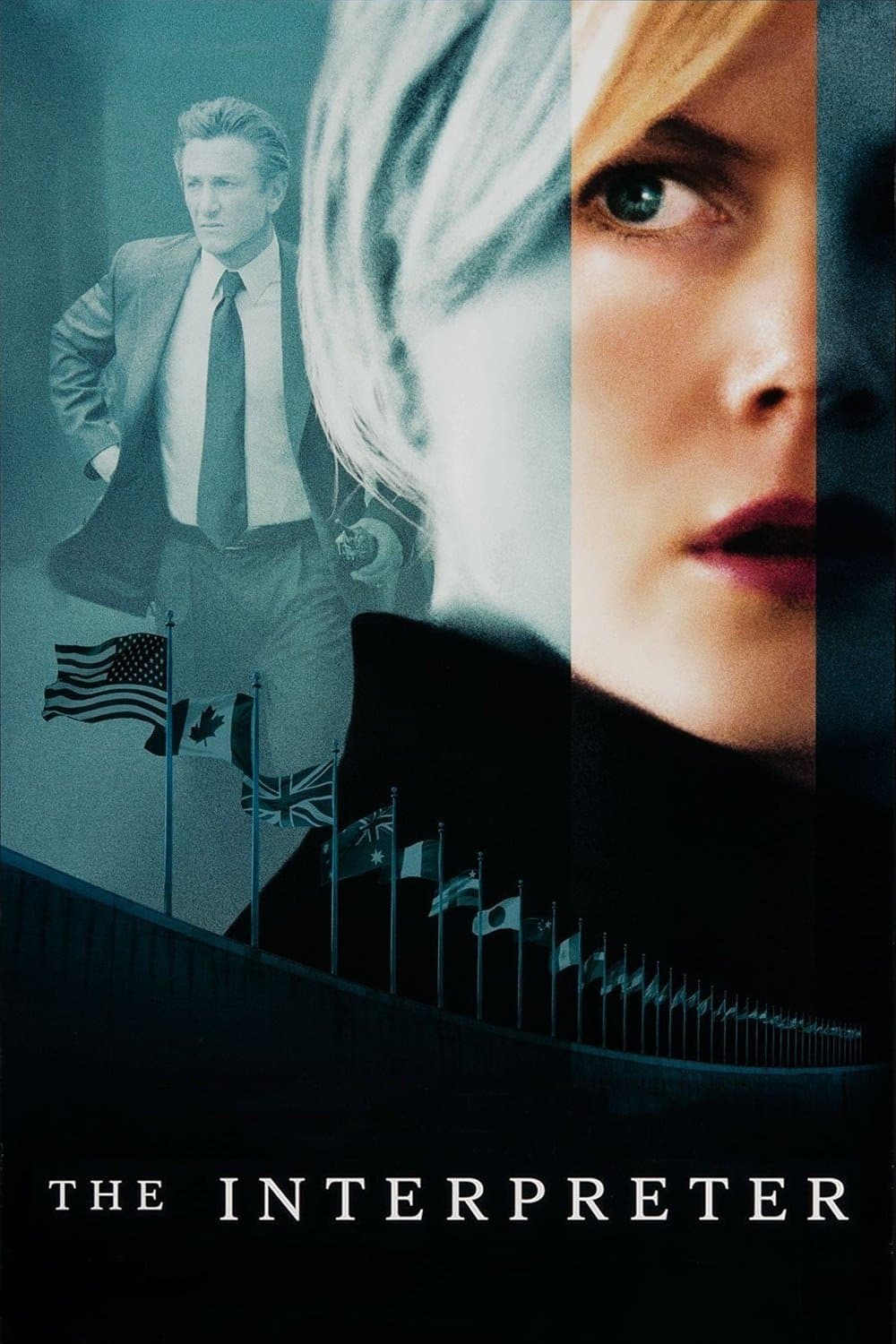
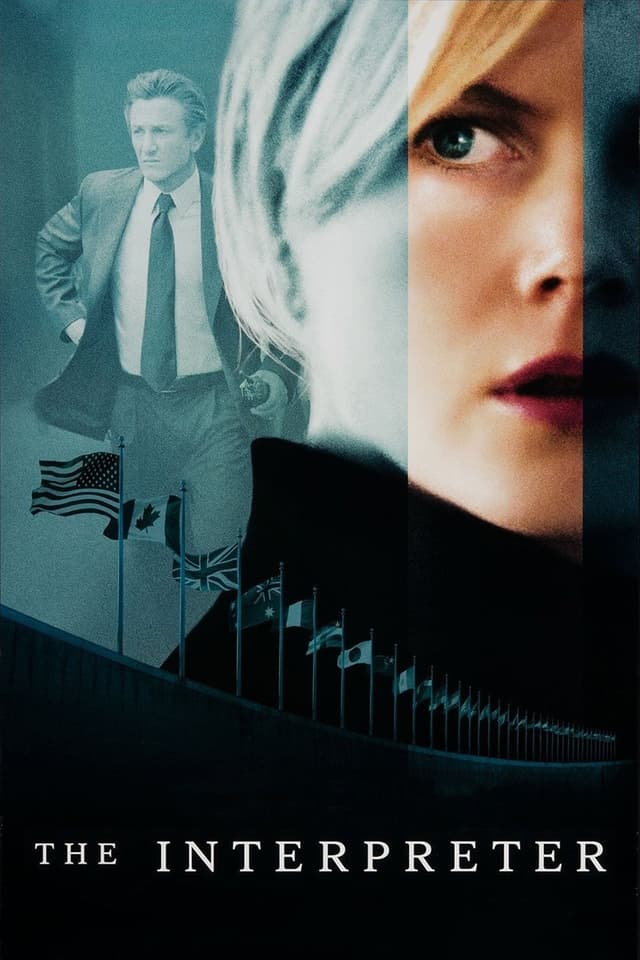
Silvia Broome, a UN interpreter at the United Nations headquarters in New York, overhears an assassination plot whispered in Ku, an obscure African dialect she happens to understand. As Secret Service agent Tobin Keller investigates her claim, his suspicions grow about her motives, her past in the fictional African nation of Matobo, and what she may be hiding behind the threat she has reported.
What Is the Budget of The Interpreter (2005)?
The Interpreter (2005), directed by Sydney Pollack and distributed by Universal Pictures, was produced on a reported budget of $80,000,000. The political thriller, which paired Nicole Kidman and Sean Penn at the height of their post-Oscar profiles, was a Working Title Films production financed jointly by Universal, StudioCanal, and Mirage Enterprises, Pollack and Anthony Minghella's production company. The budget reflected the cost of a contemporary New York City shoot, two A-list lead salaries, an extended international cast, and a James Newton Howard score, balanced against the relative thrift of a dialogue-driven thriller with limited visual effects work.
The investment also absorbed the unprecedented expense of the first feature film ever permitted to shoot inside the United Nations headquarters in Manhattan. Pollack secured access from Secretary-General Kofi Annan after years of negotiation, and the production paid for security clearances, scheduled access around General Assembly sessions, and a level of insurance coverage commensurate with filming inside an active diplomatic facility. Universal positioned the film as a prestige adult thriller in the mold of Pollack's earlier hits Three Days of the Condor and The Firm, with a release slot targeted for the spring 2005 corridor.
Key Budget Allocation Categories
The Interpreter's $80,000,000 budget was distributed across several core production areas:
- Above-the-Line Talent: Nicole Kidman, who had won Best Actress for The Hours in 2003 and was commanding $15,000,000 to $17,500,000 per picture by 2004, took the lead role of UN interpreter Silvia Broome. Sean Penn, fresh off his Best Actor win for Mystic River, played Secret Service agent Tobin Keller. Their combined fees, plus Sydney Pollack's director and producer compensation as a multi-Oscar nominee with five-decade industry standing, accounted for the single largest line item on the budget.
- United Nations and New York Location Shoot: The historic UN headquarters access required custom logistics: filming during off-hours, working around live diplomatic sessions, and rebuilding portions of the General Assembly chamber on a sound stage for sequences that could not be staged on location. Manhattan exteriors and interiors across Midtown, Brooklyn, and Queens added significant location, permitting, and traffic-management costs typical of a New York-anchored studio production.
- Supporting Cast and International Ensemble: Catherine Keener, Jesper Christensen, Yvan Attal, Earl Cameron, George Harris, and Hugo Speer rounded out a cast pulled from American, British, French, and African screen traditions. The film's invented African nation of Matobo required dialect coaches, a constructed language (Ku) developed by linguist Said el-Gheithy, and African-set sequences shot on location in Mozambique and South Africa.
- Score and Music: Composer James Newton Howard, a frequent Pollack collaborator coming off The Village and Hidalgo, delivered an orchestral score recorded with full ensemble. The soundtrack also licensed an original Tutu Puoane vocal piece and incorporated African choral elements consistent with the film's Matobo storyline.
- Cinematography and Production Design: Cinematographer Darius Khondji, known for Se7en and The City of Lost Children, shot the film on 35mm anamorphic, requiring high-end lighting packages for the UN interiors and night exteriors. Production designer Jon Hutman built a near-replica General Assembly chamber on a New York sound stage to supplement the limited on-site UN shooting days.
- Post-Production and Marketing Carry: A nine-month post window covered editorial under William Steinkamp, ADR, sound design, and final color. Universal's domestic marketing campaign, launched in February 2005 ahead of the April 22 release, layered network television buys, in-theater trailers, and a Cannes-adjacent press push around Pollack and Kidman.
How Does The Interpreter's Budget Compare to Similar Films?
At $80,000,000, The Interpreter sits in the upper-middle range of mid-2000s political thrillers and conspiracy dramas. The comparison set shows how its commercial outcome stacked up against the genre cohort released within a two-year window:
- The Manchurian Candidate (2004): Budget $80,000,000 | Worldwide $96,105,902. Jonathan Demme's contemporaneous remake matched The Interpreter's budget almost dollar for dollar but underperformed at the global box office, a result that made Pollack's $163,000,000 worldwide haul look comparatively healthy.
- Spy Game (2001): Budget $115,000,000 | Worldwide $143,049,560. Tony Scott's Robert Redford and Brad Pitt CIA thriller cost considerably more and earned less worldwide, illustrating how Pollack delivered a stronger investment return per dollar despite operating in a similar prestige-thriller lane.
- The Constant Gardener (2005): Budget $25,000,000 | Worldwide $82,466,670. Fernando Meirelles's Africa-set political drama, released later in 2005, cost less than a third of The Interpreter and earned roughly half its worldwide gross, a more efficient return that also delivered Rachel Weisz a Best Supporting Actress Oscar.
- Syriana (2005): Budget $50,000,000 | Worldwide $93,966,386. Stephen Gaghan's geopolitical mosaic earned George Clooney a Best Supporting Actor Oscar but recouped less worldwide than The Interpreter, despite a more critically lauded reception and a lower negative cost.
- Michael Clayton (2007): Budget $25,000,000 | Worldwide $92,991,835. Tony Gilroy's legal-conspiracy thriller demonstrated how the genre would tilt toward leaner budgets and awards-friendly storytelling within two years of The Interpreter's release, a market shift that made $80,000,000 political thrillers increasingly rare.
The Interpreter Box Office Performance
The Interpreter opened on April 22, 2005, debuting at number one at the domestic box office with $22,815,030 over its opening weekend across 2,250 theaters, an average of $10,140 per screen. The film bumped Sahara from the top spot and faced limited competition from holdovers like Sin City and The Pacifier. Internationally, it opened strongly in the United Kingdom, France, Germany, and Spain through Universal's Working Title relationship.
Against a reported production budget of $80,000,000, the film needed approximately $180,000,000 in worldwide gross to reach profitability when accounting for marketing and distribution costs. Here is the financial breakdown:
Box Office Breakdown
The Interpreter

The Interpreter returned approximately $1.18 in theatrical revenue for every $1 invested when measured against total estimated production and marketing spend, a modest theatrical profit before factoring in home video, television licensing, and ancillary revenue streams. The domestic share of the gross was $72,708,161 against an international share of $90,241,003, a 45/55 split that demonstrated the film's international appeal in markets responsive to Pollack's name and the Kidman-Penn pairing.
Universal home video released the film on DVD in October 2005, where it performed strongly through the holiday window and into 2006. With ancillary revenue layered onto the theatrical result, The Interpreter delivered a respectable mid-budget return for Universal, though not at the level of Pollack's biggest commercial peaks like Tootsie or Out of Africa.
The Interpreter Production History
The Interpreter originated from a story by Charles Randolph, who developed the central premise of a UN interpreter overhearing an assassination plot whispered in an obscure African language. Sydney Pollack acquired the project at Universal through his Mirage Enterprises banner and brought in Scott Frank (Out of Sight, Minority Report) for an extensive rewrite, with Steven Zaillian (Schindler's List, Gangs of New York) handling a further uncredited polish during pre-production. The screenplay went through approximately a dozen drafts before reaching production.
Pollack spent more than two years negotiating with the United Nations for shooting access. The General Assembly had previously denied every feature film request including Alfred Hitchcock's attempt to film North by Northwest there in 1959, which forced Hitchcock to recreate the lobby on an MGM stage. Pollack's relationship with then-Secretary-General Kofi Annan proved decisive, and after multiple meetings and assurances that the script handled the institution respectfully, Annan personally approved the access in 2003. Principal photography ran from April to August 2004, with the production filming inside the actual General Assembly chamber, Security Council, delegates' lounge, and Secretariat building. The bulk of the New York shoot took place across Manhattan and the outer boroughs, anchored by New York production infrastructure and crew.
Casting moved through several iterations. Kidman replaced an earlier attached actress and entered the project after committing to Birth and Dogville. Sean Penn signed on after his Mystic River Oscar campaign concluded, with the role of Tobin Keller rewritten to accommodate his preference for a quieter, grief-burdened performance. Sydney Pollack himself took a supporting role as Penn's Secret Service supervisor, a decision made during production when the original casting fell through.
African-set sequences filmed on location in Mozambique and South Africa during a six-week unit, with cinematographer Darius Khondji handling both the New York interiors and the African exteriors. Composer James Newton Howard scored the film in late 2004, and post-production wrapped in early 2005 ahead of the April 22 release. The Interpreter was the final film Sydney Pollack directed before his death from cancer in May 2008. He continued producing and acting after 2005, including roles in Michael Clayton and Made of Honor, but never directed another feature.
Awards and Recognition
The Interpreter received moderate awards-season attention without breaking through to major nominations. James Newton Howard's score was longlisted by several critics groups but failed to advance to the Academy Awards shortlist. The film was nominated for Best Foreign Language Film at the 2006 Political Film Society Awards, recognizing its treatment of African political violence and international diplomacy.
Nicole Kidman received a nomination at the 2006 Saturn Awards for Best Actress for her work as Silvia Broome, alongside her recognition for The Stepford Wives and Bewitched that year. Pollack was nominated for the Edgar Award for Best Motion Picture Screenplay by the Mystery Writers of America, sharing the credit with Charles Randolph, Scott Frank, and Steven Zaillian. The film also received a nomination at the 2005 Teen Choice Awards in the Choice Movie Thriller category, a reflection of its mainstream commercial reach despite its adult tone. No Academy Awards, Golden Globes, or BAFTA nominations followed.
Critical Reception
The Interpreter received generally positive reviews. The film holds a 58% approval rating on Rotten Tomatoes based on 209 critic reviews, with a critical consensus that praised the lead performances and the craftsmanship of Pollack's direction while flagging the plot's eventual lapses into thriller convention. On Metacritic, the film scored 64 out of 100, indicating generally favorable reviews. Audiences surveyed by CinemaScore gave the film a B, a solid result for an adult thriller without strong four-quadrant appeal.
Critics broadly praised Nicole Kidman's controlled, accent-shifting performance and Sean Penn's restrained turn as a grief-stricken agent, with Roger Ebert awarding the film three and a half stars and writing that "Pollack is a master at this kind of well-crafted, intelligent thriller for grown-ups." The New York Times' Manohla Dargis called it "an old-fashioned entertainment, made with a sure hand," and Variety's Todd McCarthy noted the film's "pleasing throwback quality" and its place in Pollack's career-long interest in political and ethical conundrums.
Detractors objected to the third-act exposition and the convenient resolution of the assassination plot, with The Village Voice's J. Hoberman calling the film "more sober than suspenseful" and Slate's David Edelstein flagging the gap between the film's lofty UN setting and its conventional thriller mechanics. The mixed-positive reception, combined with the solid commercial outcome, cemented The Interpreter's reputation as a respectable late-career Pollack work, neither a peak like Tootsie nor a misfire, and a fitting final directing credit for one of the most reliable Hollywood craftsmen of the previous four decades.
Frequently Asked Questions
How much did it cost to make The Interpreter (2005)?
The reported production budget for The Interpreter was $80,000,000. Universal Pictures co-financed the film with Working Title Films, StudioCanal, and Sydney Pollack and Anthony Minghella's Mirage Enterprises. The budget covered the salaries of Nicole Kidman and Sean Penn, an extended Manhattan shoot, and the unprecedented expense of filming inside the United Nations headquarters.
How much did The Interpreter earn at the box office?
The film grossed $72,708,161 domestically and $90,241,003 internationally, for a worldwide total of $162,949,164. It opened to $22,815,030 on its April 22, 2005 opening weekend across 2,250 theaters, debuting at number one at the domestic box office.
Was The Interpreter profitable?
Yes, modestly. Against a $80,000,000 production budget and an estimated $50,000,000 to $60,000,000 in marketing spend, the worldwide gross of $162,949,164 delivered an approximate theatrical return of $1.18 for every $1 invested. Home video, television licensing, and ancillary revenue layered additional profit on top of the theatrical result.
Who directed The Interpreter?
Sydney Pollack directed The Interpreter. It was the final film he directed before his death from pancreatic cancer in May 2008. Pollack continued producing and acting after 2005, including roles in Michael Clayton and Made of Honor, but never helmed another feature. The Interpreter sits in his late filmography alongside The Firm and Random Hearts.
Was The Interpreter really filmed inside the United Nations?
Yes. The Interpreter was the first feature film ever permitted to shoot inside the United Nations headquarters in New York. Sydney Pollack negotiated access directly with Secretary-General Kofi Annan over more than two years. The production filmed inside the General Assembly chamber, the Security Council, the delegates' lounge, and the Secretariat building. Alfred Hitchcock had previously been denied access for North by Northwest in 1959.
Where else was The Interpreter filmed?
Principal photography ran from April to August 2004, primarily in New York City across Manhattan, Brooklyn, and Queens. African-set sequences were filmed on location in Mozambique and South Africa during a six-week unit. A near-replica United Nations General Assembly chamber was built on a New York sound stage for sequences that could not be staged on location.
Who plays the lead role in The Interpreter?
Nicole Kidman plays Silvia Broome, the UN interpreter at the center of the assassination plot, and Sean Penn plays Tobin Keller, the Secret Service agent assigned to protect her and investigate her claim. Kidman was coming off her Best Actress Oscar for The Hours (2003) and Penn had just won Best Actor for Mystic River (2004).
What language does Silvia Broome speak in the film?
Silvia Broome speaks Ku, a fictional African language created specifically for the film by linguist Said el-Gheithy of the Centre for African Language Learning in London. The constructed language is associated with the invented African nation of Matobo and is central to the plot, as Silvia overhears the assassination plot whispered in Ku at the General Assembly.
How does The Interpreter compare to other Sydney Pollack thrillers?
The Interpreter belongs to Pollack's political-thriller lineage alongside Three Days of the Condor (1975) and The Firm (1993). Three Days of the Condor remains his most acclaimed work in the genre. The Firm was his biggest commercial hit, earning $270,000,000 worldwide against a $42,000,000 budget. The Interpreter's $163,000,000 worldwide gross made it a solid mid-budget success but did not match the cultural footprint of either earlier film.
What did critics think of The Interpreter?
The Interpreter received generally positive reviews, with a 58% approval rating on Rotten Tomatoes (based on 209 critics) and a 64 out of 100 score on Metacritic. Audiences gave it a B CinemaScore. Critics praised Nicole Kidman and Sean Penn's performances and Sydney Pollack's craftsmanship while flagging the third-act exposition and the eventual reliance on conventional thriller mechanics. Roger Ebert awarded the film three and a half stars.
Filmmakers
The Interpreter

Build budgets like this one in Saturation
Start from an industry-standard feature film template, import the schedule and rates you already have, and let the cost report keep itself current as you spend. Real-time collaboration, no spreadsheets.