The Human Condition I No Greater Love Budget
Updated
Synopsis
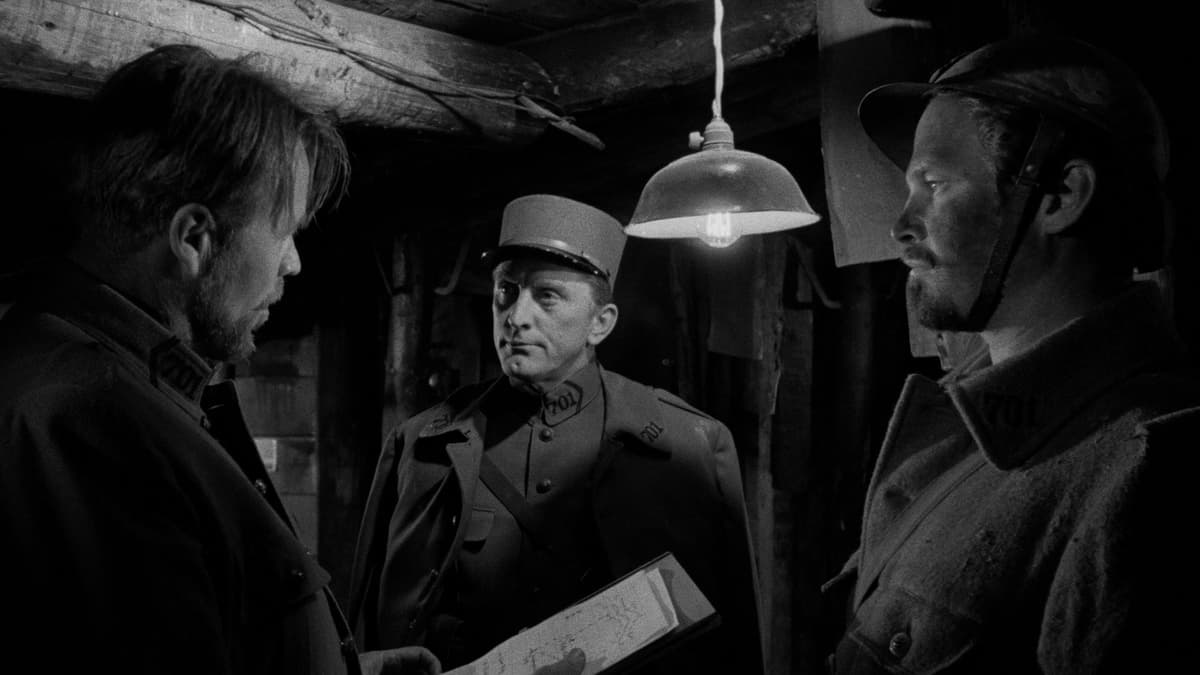
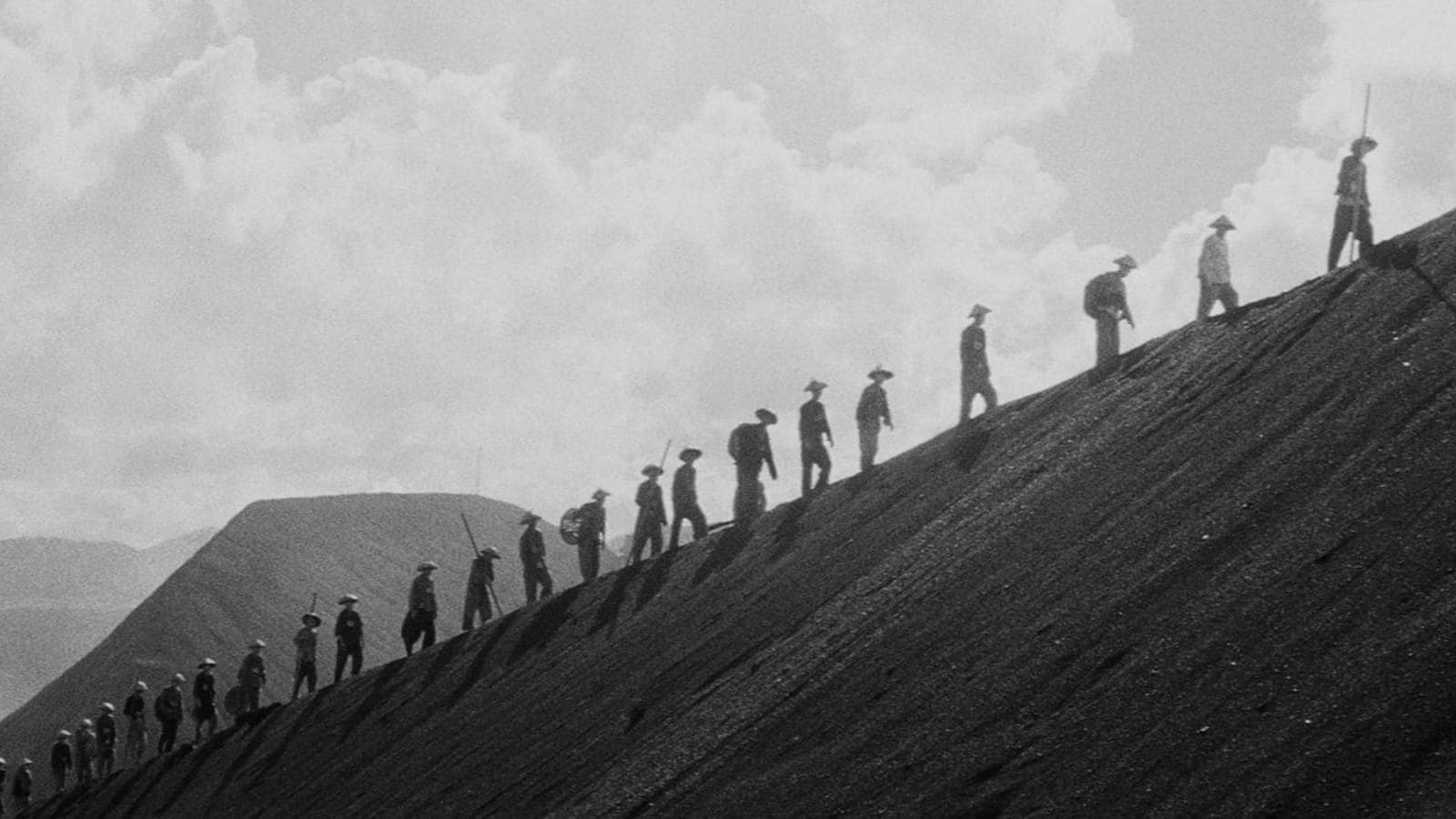
In 1943, idealist Kaji takes a labor-supervisor post at a Manchurian iron-ore mine to avoid Imperial Army conscription. As he tries to humanize conditions for Chinese forced laborers, his commitment to socialist principles collides with the brutalities of the Japanese occupation, the indifference of his superiors, and his own moral compromise.
What Is the Budget of The Human Condition I: No Greater Love (1959)?
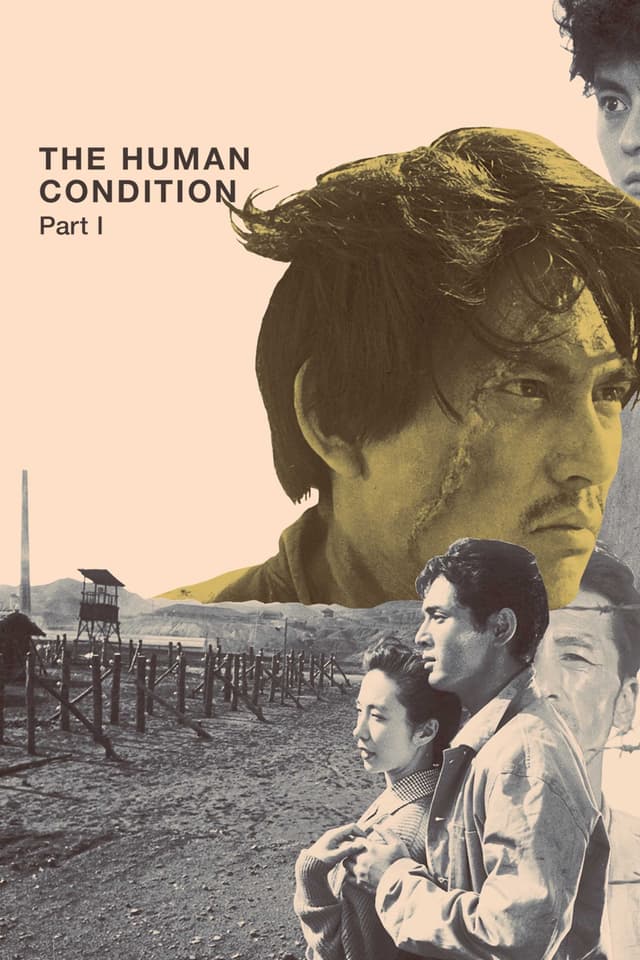
The Human Condition I: No Greater Love (1959), directed by Masaki Kobayashi and distributed by Shochiku, was produced as the opening chapter of one of the most ambitious epic projects in Japanese cinema history. Shochiku has never disclosed an official production budget for any of the three Human Condition films, in line with mid-20th-century Japanese studio practice. Industry sources and Kobayashi scholarship place the combined budget of the full nine-hour trilogy at approximately ¥600,000,000 in 1959-1961 figures, equivalent to roughly $1,700,000 at contemporary exchange rates and substantially more in adjusted modern terms.
The film was produced by Shochiku and Bungei Production Ninjin Club through the Japanese studio system, with Kobayashi and his frequent collaborator Tatsuo Hashida adapting the multi-volume novel by Junpei Gomikawa. The trilogy as a whole was the most expensive Japanese film project of its era, with location work in Hokkaido doubling for Manchuria, large casts of extras for the labor camp sequences, and extended production timelines totaling more than four years from the start of Part I through the completion of Part VI. The investment reflected Shochiku's commitment to a serious anti-war literary adaptation at a moment when Japanese cinema was confronting its wartime past at scale.
Key Budget Allocation Categories
No Greater Love was the first chapter of a nine-hour trilogy and absorbed roughly one-third of the total combined budget across approximately three hours of running time. The cost categories included:
- Above-the-Line Talent: Tatsuya Nakadai, who would become one of postwar Japanese cinema's defining leading men, played Kaji across all three films. Michiyo Aratama played his wife Michiko. The cast of supporting laborers, Manchurian Chinese forced laborers, and Japanese supervisors required dozens of speaking roles plus hundreds of background extras. Casting at this scale was substantially larger than a typical Shochiku production of the period.
- Hokkaido Location Shoot: Principal photography for the Manchurian labor camp sequences took place in Hokkaido, the northernmost and most sparsely populated Japanese prefecture, which offered the vast plains and harsh weather conditions needed to double for occupied Manchuria. Multi-week location shoots in remote settings drove significant below-the-line cost.
- Period Costuming and Production Design: The film required authentic late-WWII Japanese military uniforms, Manchurian civilian dress, period machinery for the iron-ore mining sequences, and detailed labor-camp construction. Production designer Kazue Hirataka oversaw the multi-location build.
- Cinematography: Director of photography Yoshio Miyajima collaborated with Kobayashi on the film's widescreen TohoScope-format compositions. The black-and-white cinematography required extensive lighting setups for the labor camp interiors and exterior winter scenes.
- Score and Music: Composer Chuji Kinoshita scored the film. Music budgets for prestige Japanese productions of the era covered orchestra recording sessions and substantial collaborative composition work with the director.
- Extended Production Schedule: The trilogy as a whole spanned more than four years of intermittent production from 1958 to 1961, with carrying costs for cast, equipment storage, and ongoing screenplay development across the three feature installments adding to the cumulative budget.
How Does The Human Condition I: No Greater Love's Budget Compare to Similar Films?
Postwar Japanese cinema and prestige international epics of the late 1950s cluster across a wide budget range. Comparable productions include:
- Seven Samurai (1954): Budget approximately ¥125,000,000 (1954 figures) | International distribution. Akira Kurosawa's epic was the previous high-water mark for Japanese-studio investment and provides the closest scale reference.
- Harakiri (1962): Budget undisclosed | Domestic and international distribution. Kobayashi's own follow-up samurai film, completed after the Human Condition trilogy.
- Throne of Blood (1957): Budget undisclosed | International distribution. Kurosawa's Macbeth adaptation, contemporaneous with Human Condition Part I and produced by the rival Toho studio.
- Bridge on the River Kwai (1957): Budget $3,000,000 | Worldwide $33,300,000. The David Lean Anglo-American WWII Pacific war epic, included as a Western contemporaneous reference for scale and theme.
- Ran (1985): Budget approximately $11,500,000 | Worldwide $4,191,008 (US gross). Included as a later Kurosawa scale reference, two and a half decades after Human Condition.
The Human Condition I: No Greater Love Box Office Performance
No Greater Love was released theatrically in Japan on January 15, 1959, the first installment of the trilogy. Shochiku has not published box office figures for any of the three Human Condition films. Industry sources suggest the trilogy as a whole was a meaningful domestic commercial success in Japan despite its severe subject matter, with each chapter drawing on the audience built by its predecessor.
The financial breakdown using mid-range industry assumptions for prestige Japanese-studio productions of the period:
Box Office Breakdown
The Human Condition I No Greater Love

The film opened in the United States in May 1960 as part of a sustained Kobayashi international art-house run, alongside subsequent Part II (Road to Eternity) and Part III (A Soldier's Prayer) releases. The combined nine-hour trilogy has been programmed as a single-day marathon at retrospectives worldwide and has been the subject of a Criterion Collection deluxe release that has driven decades of catalog revenue.
The Human Condition trilogy is widely cited in Japanese cinema scholarship as one of the most commercially successful prestige projects of the late Shochiku studio era, and as a foundational text for Japanese cinema's engagement with the moral legacy of the Pacific War.
The Human Condition I: No Greater Love Production History
Development on the Human Condition trilogy began at Shochiku and Bungei Production Ninjin Club in 1957, with director Masaki Kobayashi committing to a multi-year adaptation of Junpei Gomikawa's six-volume novel. Kobayashi had been drafted into the Japanese army during the Pacific War and had refused promotion to officer status as a personal protest against the military structure, a biographical fact that informed his decades-long engagement with the war's moral aftermath. Adapting Gomikawa's autobiographical novel was a personal project that he had pursued for several years before securing Shochiku's backing.
Principal photography for Part I took place in Hokkaido across 1958, with extended location shoots at remote mining and agricultural sites that doubled for occupied Manchuria. The production also used Shochiku studio interiors for the labor camp barracks and administrative offices. Cinematographer Yoshio Miyajima and Kobayashi planned the widescreen TohoScope-format compositions to convey the scale of the labor camp and the isolation of the protagonist.
Post-production took place at Shochiku's facilities in late 1958 and into early 1959. The film premiered on January 15, 1959, four months ahead of Part II (Road to Eternity), which was released in November 1959. Part III (A Soldier's Prayer) followed in 1961. The total production timeline for the full trilogy spanned approximately four years.
Awards and Recognition
The Human Condition I: No Greater Love received significant awards recognition. The film won the Best Film Award at the 14th Mainichi Film Awards in 1959 and the Best Director Award at the 33rd Kinema Junpo Awards. Cinematographer Yoshio Miyajima won the Mainichi Film Award for Best Cinematography.
Internationally, the film received the San Giorgio Prize at the 21st Venice Film Festival in 1960. The film was selected as Japan's entry for the Best Foreign Language Film at the 31st Academy Awards but was not accepted as a nominee. The full trilogy has been recognized retrospectively as one of the great achievements of Japanese cinema, with regular inclusion on critic and director polls including the BFI Sight and Sound Critics' Poll and Kinema Junpo's All-Time Best Japanese Films list.
Critical Reception
The Human Condition I: No Greater Love received critical acclaim in both its Japanese and international releases. The film holds approval ratings clustered at the top of art-cinema aggregator scores, with the full trilogy regularly cited as one of the greatest achievements of Japanese cinema. Roger Ebert added the trilogy to his Great Movies series in 2006, describing it as "one of the supreme accomplishments of cinematic art." Mainstream critic coverage on the original 1959 release was uniformly positive in major Japanese trade publications including Kinema Junpo and Eiga Junpo.
Critics praised Tatsuya Nakadai's lead performance, Kobayashi's moral seriousness, Yoshio Miyajima's cinematography, and the film's confrontation of Japanese wartime conduct in occupied Manchuria at a moment when much of Japanese culture was choosing to look away from that history. The New York Times's Bosley Crowther, reviewing the 1960 US release, described the film as "an accumulation of meaningful imagery and dramatic detail, demonstrating in unforgettable terms how good intentions are no match for organized cruelty.
Retrospective critical writing has positioned the trilogy as a sustained moral and political achievement, with Donald Richie's Japanese Cinema scholarship treating Kobayashi alongside Kurosawa, Mizoguchi, and Ozu as one of the central figures of postwar Japanese cinema. The Human Condition's combination of literary fidelity, political seriousness, and formal ambition has made it a recurring object of academic writing and a touchstone of war-cinema criticism in multiple languages.
Frequently Asked Questions
How much did it cost to make The Human Condition I: No Greater Love (1959)?
Shochiku has never disclosed an official production budget. Industry sources and Kobayashi scholarship place the combined budget of the full nine-hour trilogy at approximately ¥600,000,000 in 1959-1961 figures, equivalent to roughly $1,700,000 at contemporary exchange rates, with Part I representing roughly one-third of that combined cost.
Who directed The Human Condition trilogy?
Japanese filmmaker Masaki Kobayashi directed all three Human Condition films. Kobayashi is also known for Harakiri (1962), Kwaidan (1964), and Samurai Rebellion (1967). He had been drafted into the Japanese army during the Pacific War and refused promotion to officer status as a personal protest, a biographical fact that informed his engagement with the war's moral aftermath.
Where can you watch The Human Condition I?
The film is available on Blu-ray and DVD through the Criterion Collection, which packages all three Human Condition films as a single deluxe boxset. Streaming availability includes the Criterion Channel and Max in territories where those services operate.
How long is The Human Condition trilogy?
The full trilogy runs approximately 9 hours and 39 minutes. Part I (No Greater Love) runs 208 minutes, Part II (Road to Eternity) runs 178 minutes, and Part III (A Soldier's Prayer) runs 190 minutes. The trilogy is sometimes screened as a single-day marathon at retrospectives.
Is The Human Condition based on a true story?
The trilogy is based on Junpei Gomikawa's six-volume novel of the same title, which drew on Gomikawa's own experiences in Manchuria during World War II. While not strictly a memoir, the novel is grounded in autobiographical experience and contemporaneous Japanese military and labor-camp practice.
How is The Human Condition I connected to The Human Condition II and III?
The three films tell a continuous story across the wartime trajectory of protagonist Kaji, played by Tatsuya Nakadai throughout. Part I (1959) covers his labor-supervisor work in Manchuria. Part II (1959) covers his conscription into the Imperial Army. Part III (1961) covers his retreat at the war's end.
Where was The Human Condition I filmed?
Principal photography took place in Hokkaido, Japan, across 1958, with extended location shoots at remote mining and agricultural sites that doubled for occupied Manchuria. Studio interiors were captured at Shochiku's facilities. The production also used Japanese military-equipment archives for the period machinery.
Did The Human Condition I win any awards?
Yes. The film won the Best Film Award at the 14th Mainichi Film Awards in 1959 and the Best Director Award at the 33rd Kinema Junpo Awards. Cinematographer Yoshio Miyajima won the Mainichi Film Award for Best Cinematography. Internationally, the film received the San Giorgio Prize at the 21st Venice Film Festival in 1960.
How was The Human Condition I received by critics?
The film received critical acclaim in both Japan and internationally and has retained its position as one of the great achievements of postwar Japanese cinema. Roger Ebert added the trilogy to his Great Movies series in 2006, describing it as "one of the supreme accomplishments of cinematic art."
Is The Human Condition trilogy hard to watch?
The trilogy is famous for its severe subject matter, which includes forced labor, military brutality, and the moral compromises of wartime occupation. The nine-hour combined running time also presents a substantial commitment. Many viewers and programmers split the trilogy across multiple sittings rather than attempting a single-day viewing.
Filmmakers
The Human Condition I No Greater Love

Official Trailer
Build budgets like this one in Saturation
Start from an industry-standard feature film template, import the schedule and rates you already have, and let the cost report keep itself current as you spend. Real-time collaboration, no spreadsheets.