Paths of Glory Budget
Updated
Synopsis
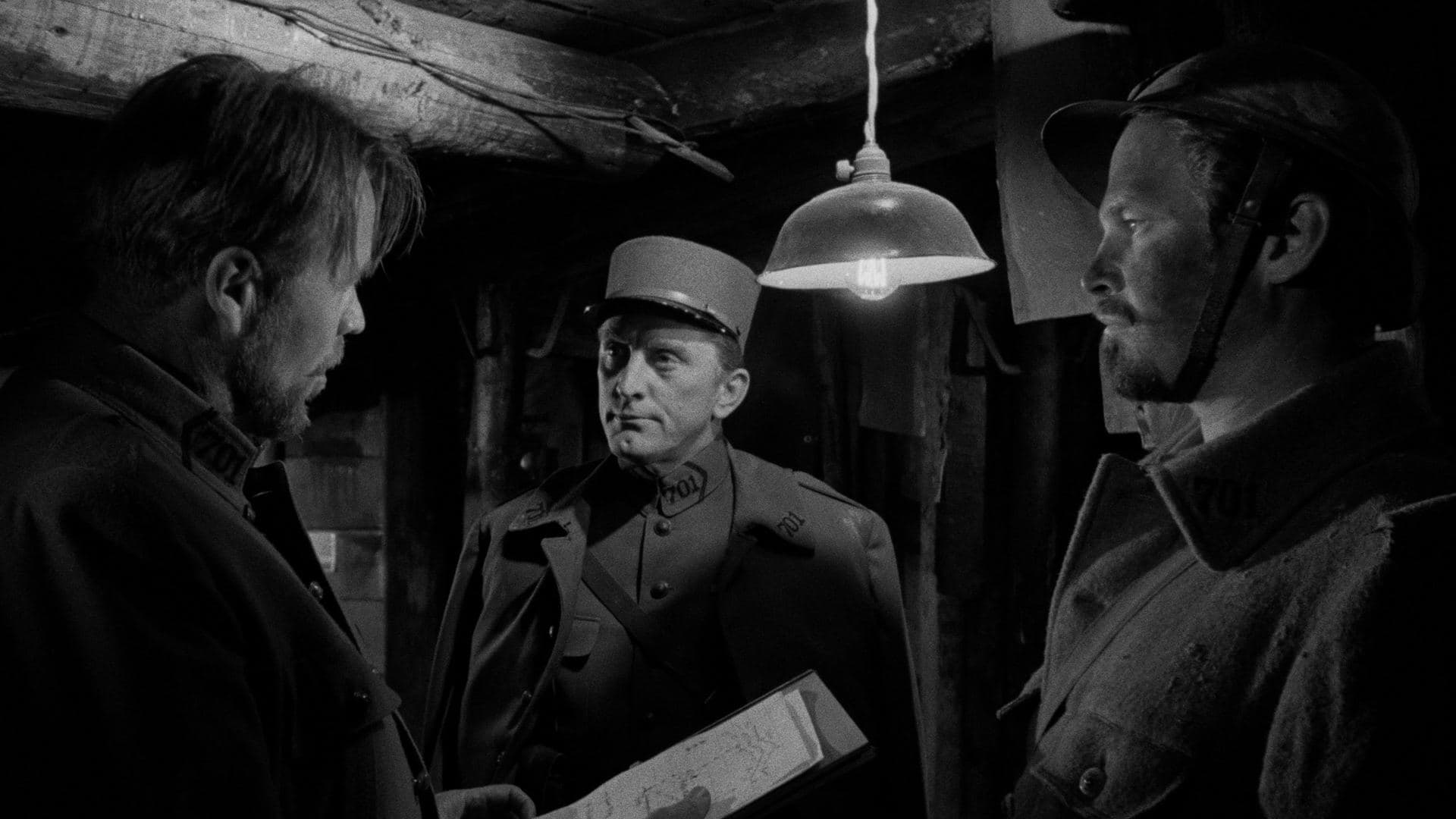
The futility and irony of the war in the trenches in WWI is shown as a unit commander in the French army must deal with the mutiny of his men and a glory-seeking general after part of his force falls back under fire in an impossible attack.
What is the budget of Paths of Glory?
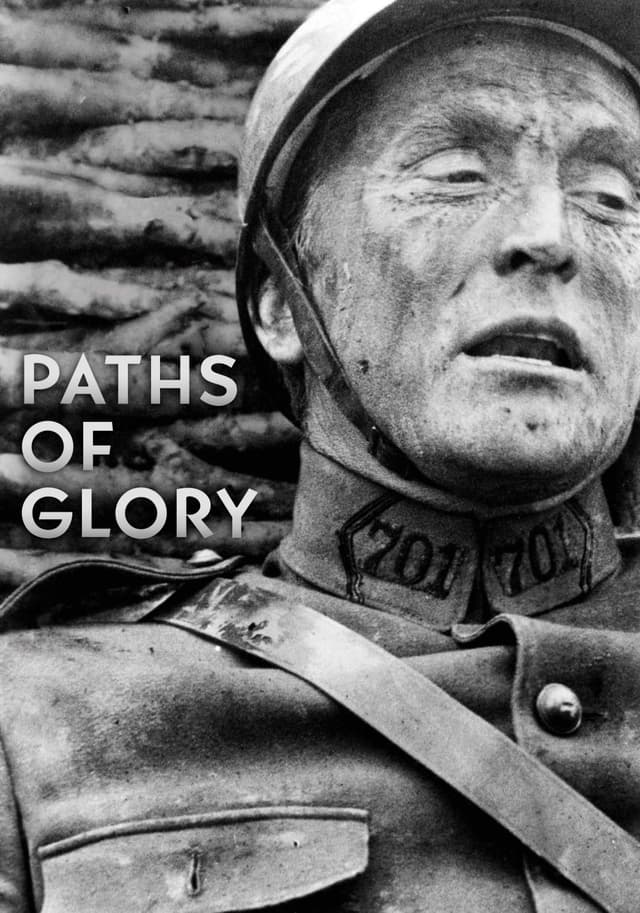
"Paths of Glory," a war released in 1957, was directed by Stanley Kubrick and stars Kirk Douglas, Ralph Meeker. The production budget was $935,000, placing it in the micro-budget range for war productions of the 1950s.
Key Budget Allocation Categories
While specific budget breakdowns are not publicly available, typical cost drivers for a war production like this include:
- Above-the-Line Talent: Drama films live or die on the strength of their performances.
- Location Filming & Period Production Design: Authentic locations , whether contemporary or historical , require scouting, permits, travel, lodging, and often significant dressing to match the story's time period.
- Post-Production, Color Grading & Score: The editorial process for dramas is typically longer than genre films, with careful attention to pacing and tone.
- Development: Kubrick said of his decision to make a war film: "One of the attractions of a war or crime story is that it provides an almost unique opportunity to contrast an individual or our contemporary society with a solid framework of accepted value, which the audience becomes fully aware of, and which can be used as a counterpoint to a human, individual, emotional situation.
What were the major cost factors in Paths of Glory?
Several factors contributed to the overall production costs of "Paths of Glory."
- Above-the-Line Talent: Above-the-Line Talent is one of the primary cost drivers in war productions of this scale.
- Location Filming: Location Filming & Period Production Design is one of the primary cost drivers in war productions of this scale.
- Post-Production: Post-Production, Color Grading & Score is one of the primary cost drivers in war productions of this scale.
How Does Paths of Glory's Budget Compare to Similar Films?
At $935,000, Paths of Glory sits in the micro-budget range. Here is how it compares to productions with a similar budget:
- Double Indemnity (1944): Budget $927,262, Worldwide Gross $2,500,000
- The Gold Rush (1925): Budget $923,000, Worldwide Gross $4,000,000
- What Ever Happened to Baby Jane? (1962): Budget $980,000
- Cemetery of Splendor (2015): Budget $980,000, Worldwide Gross $89,487
- Casablanca (1943): Budget $878,000, Worldwide Gross $10,462,500
The median budget for wide-release war films in the era ranges from $30 to 80M for mid-budget to $150M+ for tentpoles.
Paths of Glory Box Office Performance
"Paths of Glory" earned $1,200,000 worldwide at the box office. Against a production budget of $935,000, the film showed modest profitability in theatrical release.
A film typically needs to earn approximately twice its production budget to cover marketing and distribution costs. For "Paths of Glory," that break-even threshold was roughly $1,870,000. With worldwide earnings of $1,200,000, the film fell short of that threshold but recouped its production costs in theatrical release.
Box Office Breakdown
Paths of Glory

At 28.3%, "Paths of Glory" returned its production investment but margin was tight after marketing and distribution costs.
Paths of Glory Production History
Kubrick said of his decision to make a war film: "One of the attractions of a war or crime story is that it provides an almost unique opportunity to contrast an individual or our contemporary society with a solid framework of accepted value, which the audience becomes fully aware of, and which can be used as a counterpoint to a human, individual, emotional situation. Further, war acts as a kind of hothouse for forced, quick breeding of attitudes and feelings. Attitudes crystallise and come out into the open.
Kubrick eventually hired Calder Willingham to work on the script of Paths of Glory (1957), of which Jim Thompson had written earlier drafts. The specific contributions by Kubrick, Thompson, and Willingham to the final script were disputed, and the matter went to arbitration with the Writers' Guild. Willingham claimed that Thompson had minimal involvement in the final script of the film, claiming responsibility for 99 percent of Paths of Glory for himself and that Thompson had not written any of the dialogue.
Production took place entirely in Bavaria, Germany, especially at the Schleissheim Palace near Munich. Timothy Carey was fired during production. He was reportedly extremely difficult to work with, even to the extent of faking his own kidnapping, holding up the whole production.
Awards and Recognition
Nominated for 1 BAFTA Award5 wins & 3 nominations total
Critical Reception
Although the film did not receive a single nomination for the Academy Awards of 1958, it was nominated for and collected several international awards. Those awards and many positive reviews from film critics further enhanced Kubrick's already growing reputation. The film was nominated for a BAFTA Award under the category Best Film but lost to The Bridge on the River Kwai.
Frequently Asked Questions
How much did it cost to make Paths of Glory (1957)?
The production budget was $935,000, covering principal photography, cast and crew salaries, locations, sets, post-production, and music. Marketing and distribution (P&A) costs are estimated at an additional $467,500 - $748,000, bringing the total studio investment to approximately $1,402,500 - $1,683,000.
How much did Paths of Glory (1957) earn at the box office?
Paths of Glory grossed $1,200,000 worldwide.
Was Paths of Glory (1957) profitable?
The film did not break even theatrically, earning $1,200,000 against an estimated $2,337,500 needed. Ancillary revenue may have improved the picture.
What were the biggest costs in producing Paths of Glory?
The primary cost drivers were above-the-line talent (Kirk Douglas, Ralph Meeker, Adolphe Menjou); talent compensation, authentic period production design, and meticulous post-production.
How does Paths of Glory's budget compare to similar war films?
At $935,000, Paths of Glory is classified as a ultra-low-budget production. The median budget for wide-release war films in the era ranges from $30 - 80M for mid-budget to $150M+ for tentpoles. Comparable budgets: Double Indemnity (1944, $927,262); The Gold Rush (1925, $923,000); What Ever Happened to Baby Jane? (1962, $980,000).
Did Paths of Glory (1957) go over budget?
There are no widely reported accounts of significant budget overruns for this production. However, studios rarely disclose precise budget overrun figures publicly. The reported production budget reflects the final estimated cost.
What was the return on investment (ROI) for Paths of Glory?
The theatrical ROI was 28.3%, calculated as ($1,200,000 − $935,000) ÷ $935,000 × 100. This measures gross revenue against production budget only - it does not account for P&A or exhibitor shares.
What awards did Paths of Glory (1957) win?
Nominated for 1 BAFTA Award5 wins & 3 nominations total.
Who directed Paths of Glory and who were the key crew members?
Directed by Stanley Kubrick, written by Stanley Kubrick, Jim Thompson, Calder Willingham, shot by Georg Krause, with music by Gerald Fried, edited by Eva Kroll.
Where was Paths of Glory filmed?
Paths of Glory was filmed in United States of America. Production took place entirely in Bavaria, Germany, especially at the Schleissheim Palace near Munich. Timothy Carey was fired during production.
Filmmakers
Paths of Glory

Official Trailer
Build budgets like this one in Saturation
Start from an industry-standard feature film template, import the schedule and rates you already have, and let the cost report keep itself current as you spend. Real-time collaboration, no spreadsheets.