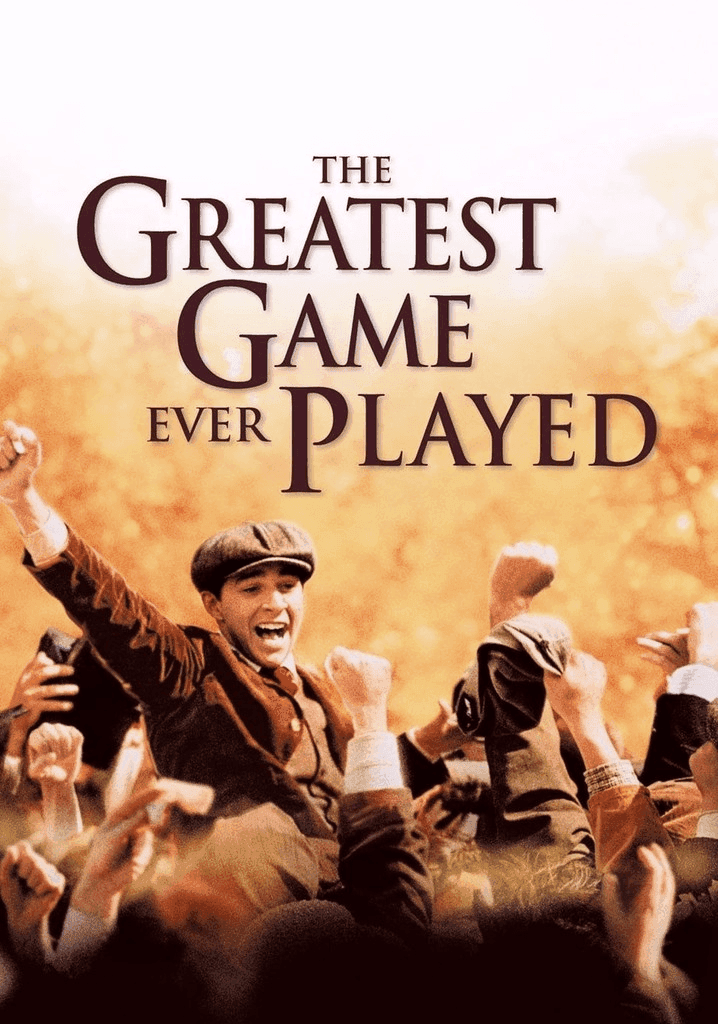
The Greatest Game Ever Played Budget
 Drama
DramaUpdated
Synopsis
In 1913, twenty-year-old amateur golfer and former caddie Francis Ouimet enters the U.S. Open at The Country Club in Brookline, Massachusetts, where he must compete against reigning British champion Harry Vardon, the era's most acclaimed professional. Across four days of competition, the working-class American and his ten-year-old caddie Eddie Lowery face the gentleman professionals of the British golf establishment in a contest whose outcome will reshape the sport.
What Is the Budget of The Greatest Game Ever Played (2005)?
The Greatest Game Ever Played (2005), directed by Bill Paxton and distributed by Walt Disney Pictures, was produced on a reported budget of $25,000,000. The film served as actor Bill Paxton's second directorial effort following Frailty (2001), depicting the true story of 20-year-old amateur golfer Francis Ouimet's victory over British favorite Harry Vardon at the 1913 U.S. Open at The Country Club in Brookline, Massachusetts. Mark Frost (Twin Peaks, The Six Million Dollar Man) wrote the screenplay adapting his own 2002 nonfiction book of the same name.
The modest $25,000,000 budget was unusual for a Disney live-action prestige release in 2005, a year in which the studio's typical wide-release tentpoles cost three to five times as much. Disney positioned the film as a family-skewing sports drama in the lineage of Remember the Titans (2000), Miracle (2004), and The Rookie (2002), all of which had delivered respectable theatrical returns at modest budget tiers. The Greatest Game Ever Played was shot primarily in Quebec, Canada, taking advantage of provincial production incentives, with limited Massachusetts location work for The Country Club exteriors.
Key Budget Allocation Categories
The reported $25,000,000 budget was distributed across several core production areas:
- Above-the-Line Talent: Director Bill Paxton commanded a modest feature-director rate, with much of his compensation coming through back-end participation. Star Shia LaBeouf, in one of his first major leading roles following Even Stevens and Holes (2003), was cast as Francis Ouimet. Stephen Dillane (Stannis Baratheon in Game of Thrones, who had not yet entered that role) played Harry Vardon, with supporting cast including Peter Firth, Elias Koteas, Josh Flitter, Stephen Marcus, and Peyton List. Mark Frost's screenplay and source-book rights also represented above-the-line costs.
- Quebec Location Shoot: Principal photography took place primarily in Montreal and surrounding Quebec locations, with the Royal Montreal Golf Club and Mount Bruno Country Club standing in for The Country Club in Brookline. Quebec's film tax credit offset a meaningful percentage of qualifying spend, and the local crew kept below-the-line costs significantly lower than a comparable Massachusetts shoot would have allowed.
- Period Production Design: Production designer François Séguin built 1913-era interiors, including the Ouimet family home, the British clubhouse, and various golf-club lounges. Costume designer Renée April supervised the period wardrobe for both the principal cast and the hundreds of extras playing tournament spectators, with authentic 1913 golf attire requiring custom fabrication.
- Visual Effects: The film required significant visual effects work to deliver the stylized golf-ball-flight sequences, the simulated player point-of-view shots of putts breaking, and the crowd extensions for the tournament galleries. Visual effects houses including Hybride supervised the work, with the stylized ball-flight sequences becoming one of the film's signature visual elements.
- Music and Sound: Composer Brian Tyler wrote the score, blending sweeping orchestral material with subtle period instrumentation. The mix schedule covered the precise rhythm of the golf sequences, which required deliberate sound-design pacing to support the cinematic depiction of a sport whose actual rhythm is meditative and quiet.
- Marketing Tier: Disney's marketing investment was substantial relative to the production budget, with an estimated $25,000,000 to $35,000,000 in worldwide P&A spend, leveraging the family-friendly true-story positioning and the Shia LaBeouf rising-star angle.
How Does The Greatest Game Ever Played's Budget Compare to Similar Films?
At $25,000,000, The Greatest Game Ever Played sat at the upper end of family-skewing sports biopics of its era. Comparing it with peers:
- The Rookie (2002): Budget $22,000,000 | Worldwide $80,716,148. John Lee Hancock's Dennis Quaid baseball biopic for Disney cost slightly less and grossed more than five times The Greatest Game Ever Played worldwide, the closest direct same-studio same-genre benchmark that highlights The Greatest Game Ever Played's underperformance.
- Miracle (2004): Budget $28,000,000 | Worldwide $64,455,360. The Kurt Russell hockey biopic for Disney cost slightly more and grossed four times The Greatest Game Ever Played worldwide, another direct same-studio benchmark.
- Bobby Jones: Stroke of Genius (2004): Budget $17,000,000 | Worldwide $3,649,705. The other major golf biopic of the era, made one year prior, cost 32% less and grossed less than a quarter of The Greatest Game Ever Played, suggesting that even a struggling commercial performance for a golf biopic represented a relative success.
- Cinderella Man (2005): Budget $88,000,000 | Worldwide $108,539,911. Ron Howard's boxing biopic released the same year cost more than three times as much and grossed seven times as much, the prestige tier of period sports biopics from which The Greatest Game Ever Played's smaller-budget approach distinguished itself.
- Glory Road (2006): Budget $30,000,000 | Worldwide $44,127,420. Disney's subsequent basketball biopic cost 20% more and grossed nearly three times The Greatest Game Ever Played, another same-studio benchmark that confirmed the modest commercial ceiling for the genre.
The Greatest Game Ever Played Box Office Performance
The Greatest Game Ever Played opened domestically on September 30, 2005, earning $3,592,743 in its limited 446-screen opening weekend, an average of $8,055 per screen. The film expanded the following week to 1,766 screens but failed to find a wider audience, and it dropped sharply in subsequent weeks. Disney pulled it from major U.S. circuits within a month of release.
Against a $25,000,000 production budget, the film required approximately $55,000,000 in worldwide gross to reach profitability after marketing and distribution costs. The financial breakdown:
Box Office Breakdown
The Greatest Game Ever Played

The Greatest Game Ever Played returned approximately $0.27 to $0.30 in theatrical revenue for every $1 invested when measured against total estimated production and marketing spend, placing it in the clear-loss category for Disney that year. The domestic share of the gross was $15,140,892 against an international share of just $327,374, a 98/2 split that confirmed the property had essentially no overseas appeal, an unusually severe ratio even for an American sports biopic.
Despite the theatrical disappointment, the film has acquired a substantial long-tail audience through television syndication, particularly on Golf Channel and Disney-owned cable networks, where it airs frequently. The film is widely regarded as one of the best golf films ever made and as a representative example of the modest-budget prestige sports drama that Disney mostly abandoned later in the 2000s as the company refocused on franchise tentpoles.
The Greatest Game Ever Played Production History
Walt Disney Pictures optioned the screen rights to Mark Frost's 2002 nonfiction book The Greatest Game Ever Played: Harry Vardon, Francis Ouimet, and the Birth of Modern Golf shortly after publication, with Frost attached to write the screenplay. Bill Paxton, fresh off his directorial debut Frailty (2001), was approached to direct in late 2003, and the project entered active pre-production through 2004.
Casting Shia LaBeouf as Francis Ouimet in early 2004 was a notable bet by Disney on the young actor's rising profile following the success of Holes (2003) and his Disney Channel work. Stephen Dillane, then primarily known for Welcome to Sarajevo and The Hours, was cast as Harry Vardon. LaBeouf trained extensively for the golf sequences across the months preceding principal photography, working with PGA professionals to develop a swing that could read authentically on camera.
Principal photography ran from August to November 2004 in Montreal and surrounding Quebec locations, Canada, leveraging Quebec's film tax credit. The Royal Montreal Golf Club and Mount Bruno Country Club stood in for The Country Club in Brookline, Massachusetts, where the historical 1913 U.S. Open had taken place. Limited location work in Massachusetts was used for establishing exteriors. The production employed PGA Tour player Tom Howard as a swing consultant and used roughly 800 background performers for the tournament gallery scenes.
Post-production was straightforward by major studio standards, with the film completed in spring 2005 ahead of an originally planned summer release. Disney subsequently pushed the release to September 30, 2005, positioning the film as a fall counter-programming play against the season's prestige releases. Test screenings reportedly responded warmly, but Disney's marketing campaign struggled to find a unifying message for what was simultaneously a sports film, a period drama, a class-conflict story, and a coming-of-age narrative.
Awards and Recognition
The Greatest Game Ever Played received modest awards recognition. Bill Paxton was nominated for the Directors Guild of America's Outstanding Directorial Achievement in Children's Programs (the film qualified through its family-classification crossover). The film also received Christopher Award recognition, an industry honor for films that "affirm the highest values of the human spirit." Composer Brian Tyler's score received industry recognition from film-music focused organizations but no major awards-body nominations.
Shia LaBeouf received Young Artist Award nominations and an MTV Movie Award nomination for Best Breakthrough Performance, though he did not win in either category. The film has subsequently appeared on numerous lists of the best sports films, the best golf films, and the best underseen Disney releases of the 2000s, building a reputation that exceeds its initial box office footprint. The American Film Institute recognized the film on multiple "essential viewing" lists in subsequent years.
Critical Reception
The Greatest Game Ever Played received generally positive reviews. The film holds a 66% approval rating on Rotten Tomatoes based on 134 critic reviews, with a critical consensus that called it "a charming and lovingly mounted sports biopic that handles its period setting with care." On Metacritic, the film scored 62 out of 100, indicating generally favorable reviews. Audiences surveyed by CinemaScore gave the film an A, the highest CinemaScore among the films covered in this 2005 release window and a strong signal of audience affection that nevertheless failed to translate into significant box office.
Critics broadly praised Bill Paxton's directorial restraint, the stylized golf-ball-flight visual effects, the period production design, and the chemistry between Shia LaBeouf and Josh Flitter (playing Ouimet's ten-year-old caddie Eddie Lowery). Roger Ebert gave the film three and a half stars, writing that "this is the kind of movie that is unafraid to admire its heroes, and unafraid of being a movie that audiences will love. It is not unafraid of being merely competent, however; it is too well made for that." Manohla Dargis in The New York Times called the film "an unexpectedly elegant addition to Disney's catalog of family-friendly sports biographies."
Detractors objected to what some reviewers characterized as predictable storytelling and conventional sports-movie beats. Variety's Todd McCarthy called the film "professionally executed but emotionally undernourished" and noted that the class-conflict subplot was given less weight than the underlying material deserved. The Los Angeles Times' Carina Chocano wrote that the film "settles for inspiration when it could have aimed for transcendence." Despite these reservations, the film has steadily built a strong reputation, and it now regularly appears on lists of the best sports films and the best Disney live-action releases of the 2000s.
Frequently Asked Questions
How much did it cost to make The Greatest Game Ever Played (2005)?
The reported production budget was $25,000,000, modest for a Disney live-action prestige release in 2005. Costs were controlled by Quebec-based principal photography that leveraged provincial production incentives, mid-tier above-the-line compensation outside of an emerging Shia LaBeouf, and a focused visual effects pipeline limited primarily to the stylized golf-ball-flight sequences.
How much did The Greatest Game Ever Played earn at the box office?
The film grossed $15,140,892 domestically and just $327,374 internationally, for a worldwide total of $15,468,266. It opened to $3,592,743 in a 446-screen limited release on September 30, 2005, before expanding to 1,766 screens the following week. The 98/2 domestic/international split confirmed essentially no overseas appeal.
Was The Greatest Game Ever Played a box office success?
No. Against a $25,000,000 production budget and an estimated $25-35 million in marketing, the film returned approximately $0.27 in worldwide gross for every $1 invested. It was a clear theatrical loss for Disney, although the film has acquired a substantial long-tail audience through television syndication.
Who directed The Greatest Game Ever Played?
Bill Paxton directed the film, marking his second directorial effort after Frailty (2001). The film was the last theatrical feature Paxton directed before his death in 2017, although he subsequently completed substantial acting work in front of the camera.
Where was The Greatest Game Ever Played filmed?
Principal photography took place from August to November 2004 in Montreal and surrounding Quebec locations, leveraging Quebec's film tax credit. The Royal Montreal Golf Club and Mount Bruno Country Club stood in for The Country Club in Brookline, Massachusetts, where the historical 1913 U.S. Open had taken place. Limited location work in Massachusetts was used for establishing exteriors.
Is The Greatest Game Ever Played based on a true story?
Yes. The film depicts the true story of 20-year-old amateur golfer Francis Ouimet's victory over British favorite Harry Vardon at the 1913 U.S. Open at The Country Club in Brookline, Massachusetts. Mark Frost adapted his own 2002 nonfiction book The Greatest Game Ever Played: Harry Vardon, Francis Ouimet, and the Birth of Modern Golf.
Who plays Francis Ouimet in The Greatest Game Ever Played?
Shia LaBeouf plays Francis Ouimet in one of his first major leading roles, following Even Stevens and Holes (2003). LaBeouf trained extensively for the golf sequences across the months preceding principal photography, working with PGA professionals to develop a swing that could read authentically on camera.
How does The Greatest Game Ever Played compare to other Disney sports biopics?
The Greatest Game Ever Played grossed $15.5 million worldwide on a $25 million budget. By comparison, The Rookie (2002) grossed $80.7 million on a $22 million budget, Miracle (2004) earned $64.5 million on a $28 million budget, and Glory Road (2006) grossed $44.1 million on a $30 million budget. The Greatest Game Ever Played was a clear commercial outlier in the lower tier of the Disney sports-biopic cycle.
What did critics think of The Greatest Game Ever Played?
The film received generally positive reviews, with a 66% approval rating on Rotten Tomatoes (134 critics) and a 62 score on Metacritic. Audiences gave it an A CinemaScore. Roger Ebert gave it three and a half stars, and critics broadly praised Bill Paxton's direction and the stylized golf-ball-flight visual effects. The film has built a substantial long-tail reputation as one of the best golf films ever made.
Did The Greatest Game Ever Played win any awards?
The film received modest awards recognition. Bill Paxton was nominated for the Directors Guild of America's Outstanding Directorial Achievement in Children's Programs, and the film received Christopher Award recognition. Shia LaBeouf received Young Artist Award nominations and an MTV Movie Award nomination for Best Breakthrough Performance, though he did not win in either category.
Filmmakers
The Greatest Game Ever Played

Build budgets like this one in Saturation
Start from an industry-standard feature film template, import the schedule and rates you already have, and let the cost report keep itself current as you spend. Real-time collaboration, no spreadsheets.