The Good, the Bad and the Ugly Budget
 Western2h 41m
Updated
Synopsis
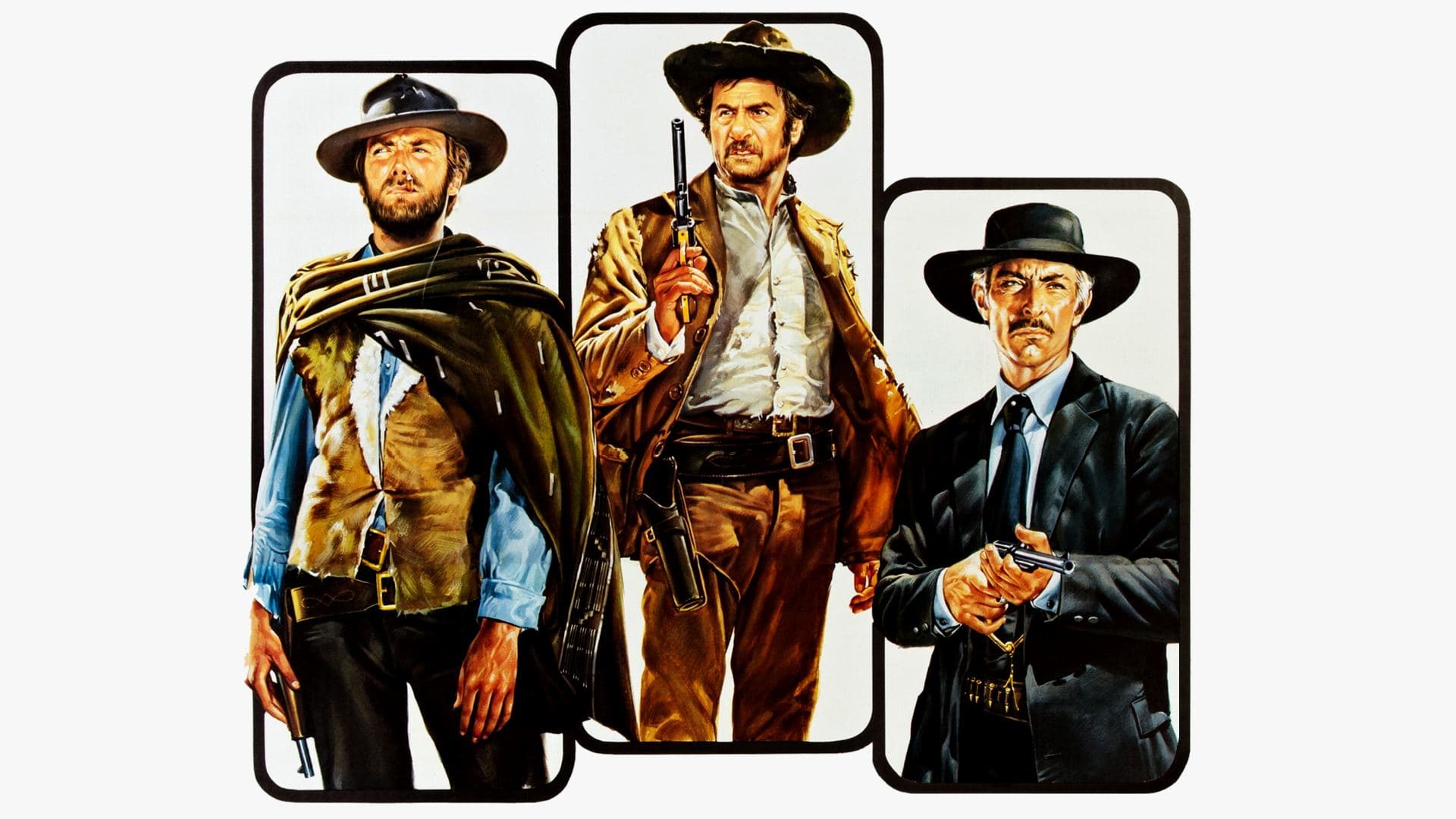
While the Civil War rages on between the Union and the Confederacy, three men – a quiet loner, a ruthless hitman, and a Mexican bandit – comb the American Southwest in search of a strongbox containing $200,000 in stolen gold.
What is the budget of The Good, the Bad and the Ugly?
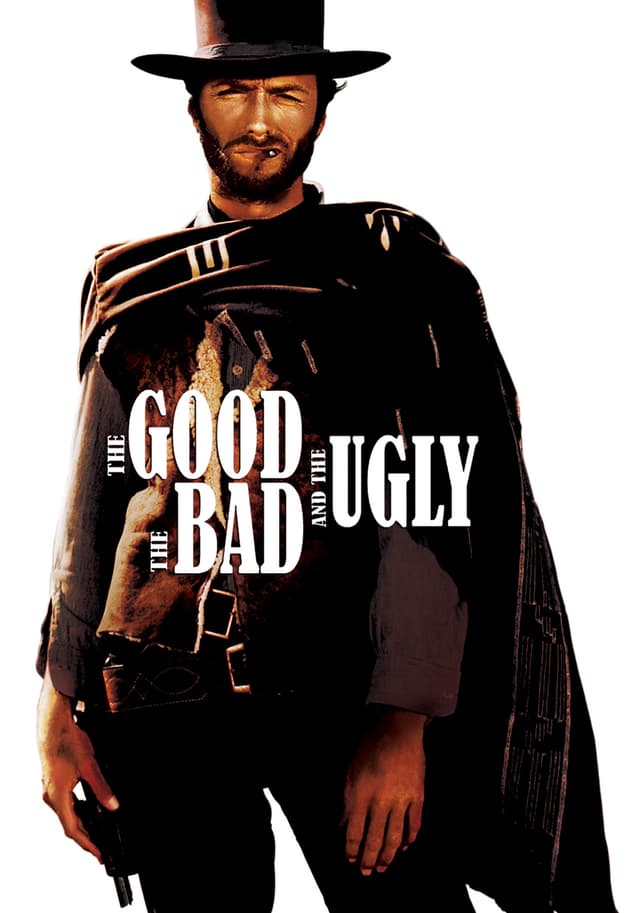
"The Good, the Bad and the Ugly," a western released in 1966, was directed by Sergio Leone and stars Clint Eastwood, Eli Wallach. The production budget was $1,200,000, placing it in the micro-budget range for western productions of the 1960s.
Key Budget Allocation Categories
While specific budget breakdowns are not publicly available, typical cost drivers for a western production like this include:
- Stunts, Action Sequences & Visual Effects: Action films allocate a substantial portion of their budget to choreographing and executing practical stunts, pyrotechnics, and CGI-heavy sequences.
- Above-the-Line Talent (Cast & Director): A-list talent commands significant upfront fees plus backend participation.
- Production Design, Sets & Locations: Action films frequently require multiple international shooting locations, large-scale set construction, vehicle acquisitions and modifications, and specialized equipment , all of which drive production costs well above those of dialogue-driven genres.
- Casting: After Leone offered Clint Eastwood a role in his next movie, travelling to California to persuade him, Eastwood agreed to make the film, playing Blondie, upon being paid $250,000 and receiving 10 per cent of the profits from the North American markets,a deal with which Leone was not happy.
What were the major cost factors in The Good, the Bad and the Ugly?
Several factors contributed to the overall production costs of "The Good, the Bad and the Ugly."
- Stunts: Stunts, Action Sequences & Visual Effects is one of the primary cost drivers in western productions of this scale.
- Above-the-Line Talent (Cast: Above-the-Line Talent (Cast & Director) is one of the primary cost drivers in western productions of this scale.
- Production Design: Production Design, Sets & Locations is one of the primary cost drivers in western productions of this scale.
How Does The Good, the Bad and the Ugly's Budget Compare to Similar Films?
At $1,200,000, The Good, the Bad and the Ugly sits in the micro-budget range. Here is how it compares to productions with a similar budget:
- Nirvanna the Band the Show the Movie (2026): Budget $1,200,000, Worldwide Gross $4,087,357
- Brief Encounter (1945): Budget $1,200,000
- Rio Bravo (1959): Budget $1,200,000, Worldwide Gross $5,750,000
- Reservoir Dogs (1992): Budget $1,200,000, Worldwide Gross $2,859,750
- But I'm a Cheerleader (2000): Budget $1,200,000, Worldwide Gross $2,600,000
The median budget for wide-release western films in the era ranges from $30 to 80M for mid-budget to $150M+ for tentpoles.
The Good, the Bad and the Ugly Box Office Performance
"The Good, the Bad and the Ugly" earned $25,100,000 domestically and $38,900,000 worldwide at the box office. Against a production budget of $1,200,000, the film performed strongly at the box office.
A film typically needs to earn approximately twice its production budget to cover marketing and distribution costs. For "The Good, the Bad and the Ugly," that break-even threshold was roughly $2,400,000. With worldwide earnings of $38,900,000, the film cleared that threshold comfortably.
Box Office Breakdown
The Good, the Bad and the Ugly

At 3141.7%, "The Good, the Bad and the Ugly" earned roughly $32.42 for every $1 invested in production.
The Good, the Bad and the Ugly Production History
After Leone offered Clint Eastwood a role in his next movie, travelling to California to persuade him, Eastwood agreed to make the film, playing Blondie, upon being paid $250,000 and receiving 10 per cent of the profits from the North American markets,a deal with which Leone was not happy. The director originally considered Gian Maria Volonté (who portrayed the villains in both the preceding films) for the role of Tuco, but felt that the role required someone with "natural comic talent". In the end, Leone chose Eli Wallach, based on his role in the "Railroads" scene of How the West Was Won (1962).
Production began at the Cinecittà Studios in Rome mid-May 1966. It then moved on to Spain's northern plateau region near Burgos, which doubled for the Southwestern United States, and again in southern Spain's Almería. The production required elaborate sets, including a town under cannon fire, an extensive prison camp, and an American Civil War battlefield; for the climax, several hundred Spanish soldiers were employed to build a cemetery,Sad Hill,with several thousand gravestones and wooden crosses to resemble an ancient Roman circus.
The score was composed by frequent Leone collaborator Ennio Morricone. For this film, Leone and Morricone departed from their previous working method by developing the principal themes before filming began. This approach allowed the music to shape the film's rhythm and atmosphere, with Leone often playing the compositions on set and staging camera movements and editing patterns to match the score.
Awards and Recognition
2 wins & 5 nominations total
Critical Reception
Upon release, The Good, the Bad and the Ugly received criticism for its depiction of violence. Leone explains that "the killings in my films are exaggerated because I wanted to make a tongue-in-cheek satire on run-of-the-mill westerns... The west was made by violent, uncomplicated men, and it is this strength and simplicity that I try to recapture in my pictures." To this day, Leone's effort to reinvigorate the timeworn Western is widely acknowledged.
Frequently Asked Questions
How much did it cost to make The Good, the Bad and the Ugly (1966)?
The production budget was $1,200,000, covering principal photography, cast and crew salaries, locations, sets, post-production, and music. Marketing and distribution (P&A) costs are estimated at an additional $600,000 - $960,000, bringing the total studio investment to approximately $1,800,000 - $2,160,000.
How much did The Good, the Bad and the Ugly (1966) earn at the box office?
The Good, the Bad and the Ugly grossed $25,100,000 domestic, $13,800,000 international, totaling $38,900,000 worldwide.
Was The Good, the Bad and the Ugly (1966) profitable?
Yes. Against a production budget of $1,200,000 and estimated total costs of ~$3,000,000, the film earned $38,900,000 theatrically - a 3142% ROI on production costs alone.
What were the biggest costs in producing The Good, the Bad and the Ugly?
The primary cost drivers were above-the-line talent (Clint Eastwood, Eli Wallach, Lee Van Cleef); visual effects, practical stunts, and A-list talent compensation; international production across United States of America, Italy, Spain, Germany.
How does The Good, the Bad and the Ugly's budget compare to similar western films?
At $1,200,000, The Good, the Bad and the Ugly is classified as a micro-budget production. The median budget for wide-release western films in the era ranges from $30 - 80M for mid-budget to $150M+ for tentpoles. Comparable budgets: Nirvanna the Band the Show the Movie (2026, $1,200,000); Brief Encounter (1945, $1,200,000); Rio Bravo (1959, $1,200,000).
Did The Good, the Bad and the Ugly (1966) go over budget?
There are no widely reported accounts of significant budget overruns for this production. However, studios rarely disclose precise budget overrun figures publicly. The reported production budget reflects the final estimated cost.
What was the return on investment (ROI) for The Good, the Bad and the Ugly?
The theatrical ROI was 3141.7%, calculated as ($38,900,000 − $1,200,000) ÷ $1,200,000 × 100. This measures gross revenue against production budget only - it does not account for P&A or exhibitor shares.
What awards did The Good, the Bad and the Ugly (1966) win?
2 wins & 5 nominations total.
Who directed The Good, the Bad and the Ugly and who were the key crew members?
Directed by Sergio Leone, written by Luciano Vincenzoni, Sergio Leone, Agenore Incrocci, Furio Scarpelli, shot by Tonino Delli Colli, with music by Ennio Morricone, edited by Eugenio Alabiso, Nino Baragli.
Where was The Good, the Bad and the Ugly filmed?
The Good, the Bad and the Ugly was filmed in United States of America, Italy, Spain, Germany. Production began at the Cinecittà Studios in Rome mid-May 1966. It then moved on to Spain's northern plateau region near Burgos, which doubled for the Southwestern United States, and again in southern Spain's Almería.
Filmmakers
The Good, the Bad and the Ugly

Official Trailer
Build budgets like this one in Saturation
Start from an industry-standard feature film template, import the schedule and rates you already have, and let the cost report keep itself current as you spend. Real-time collaboration, no spreadsheets.