Saturation
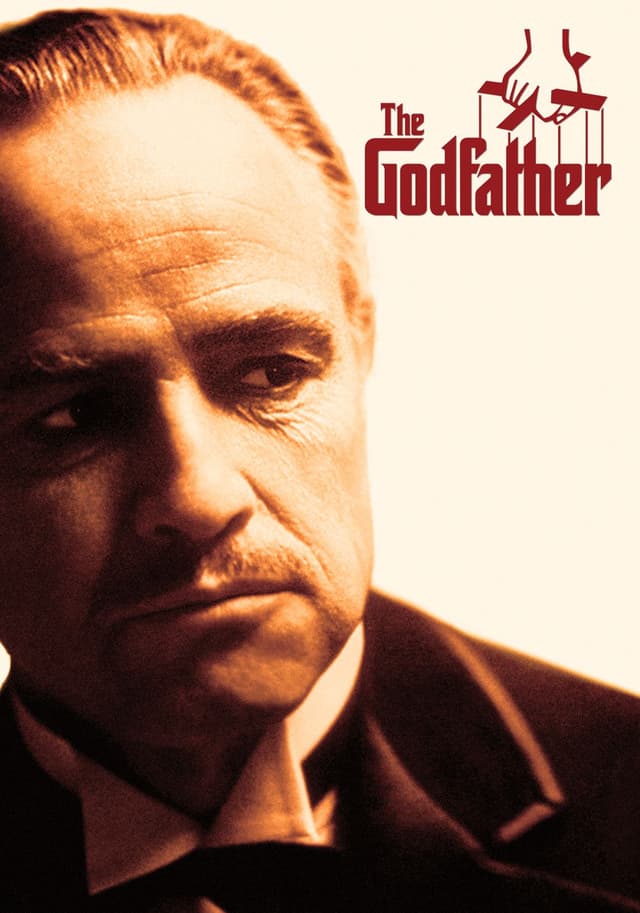
The Godfather movie poster

The Godfather

RDrama, Crime
Budget$6M
Domestic Box Office$136.5M
Worldwide Box Office$245.1M

Synopsis

The Godfather "Don" Vito Corleone is the head of the Corleone mafia family in New York. He is at the event of his daughter's wedding. Michael, Vito's youngest son and a decorated WW II Marine is also present at the wedding. Michael seems to be uninterested in being a part of the family business. Vito is a powerful man, and is kind to all those who give him respect but is ruthless against those who do not. But when a powerful and treacherous rival wants to sell drugs and needs the Don's influence for the same, Vito refuses to do it. What follows is a clash between Vito's fading old values and the new ways which may cause Michael to do the thing he was most reluctant in doing and wage a mob war against all the other mafia families which could tear the Corleone family apart.

Production Budget Analysis

What was the production budget for The Godfather?

Directed by Francis Ford Coppola, with Marlon Brando, Al Pacino, James Caan leading the cast, The Godfather was produced by Paramount Pictures with a confirmed budget of $6,000,000, placing it in the micro-budget category for drama films as part of the The Godfather Collection.

At $6,000,000, The Godfather was produced on a modest budget. Lower-budget films benefit from reduced break-even thresholds, with profitability achievable at approximately $15,000,000.

Budget Comparison — Similar Productions

• Chinatown (1974): Budget $6,000,000 | Gross $30,000,000 → ROI: 400% • The Father (2020): Budget $6,000,000 | Gross $21,029,340 → ROI: 250% • I Swear (2025): Budget $6,000,000 | Gross $8,682,832 → ROI: 45% • Marcel the Shell with Shoes On (2022): Budget $6,000,000 | Gross $6,909,209 → ROI: 15% • Kagemusha (1980): Budget $6,000,000 | Gross $4,000,000 → ROI: -33%

Key Budget Allocation Categories

▸ Above-the-Line Talent Drama films live or die on the strength of their performances. Securing award-caliber actors and experienced directors represents the single largest budget line item, often consuming 30–40% of the total production budget.

▸ Location Filming & Period Production Design Authentic locations — whether contemporary or historical — require scouting, permits, travel, lodging, and often significant dressing to match the story's time period. Period dramas add the cost of era-accurate props, vehicles, and set decoration.

▸ Post-Production, Color Grading & Score The editorial process for dramas is typically longer than genre films, with careful attention to pacing and tone. Color grading, a nuanced musical score, and detailed sound mixing are critical to achieving the emotional resonance that defines the genre.

Key Production Personnel

CAST: Marlon Brando, Al Pacino, James Caan, Robert Duvall, Richard S. Castellano Key roles: Marlon Brando as Don Vito Corleone; Al Pacino as Michael Corleone; James Caan as Sonny Corleone; Robert Duvall as Tom Hagen

DIRECTOR: Francis Ford Coppola CINEMATOGRAPHY: Gordon Willis MUSIC: Nino Rota EDITING: William Reynolds, Peter Zinner PRODUCTION: Paramount Pictures, Alfran Productions, ASR Productions FILMED IN: United States of America

Box Office Performance

The Godfather earned $136,479,994 domestically and $108,586,417 internationally, for a worldwide total of $245,066,411. Revenue was split 56% domestic / 44% international.

Break-Even Analysis

Using the industry-standard 2.5x multiplier (P&A + exhibitor shares of 40–50% + distribution fees), The Godfather needed approximately $15,000,000 to break even. The film surpassed this threshold by $230,066,411.

Return on Investment (ROI)

Revenue: $245,066,411 Budget: $6,000,000 Net: $239,066,411 ROI: 3984.4%

Profitability Assessment

VERDICT: Highly Profitable

The Godfather was a clear financial success, generating $245,066,411 worldwide against a $6,000,000 production budget — a 3984% ROI. After estimated marketing costs, the film still delivered substantial profit to Paramount Pictures.

INDUSTRY IMPACT

Franchise: The Godfather is part of the The Godfather Collection.

The outsized success of The Godfather likely influenced studio greenlight decisions for similar drama projects.

Although many films about gangsters preceded The Godfather, Coppola steeped his film in Italian immigrant culture, and his portrayal of mobsters as persons of considerable psychological depth and complexity was unprecedented. Coppola took it further with The Godfather Part II, and the success of those two films, critically, artistically and financially, was a catalyst for the production of numerous other depictions of Italian Americans as mobsters, including films such as Martin Scorsese's Goodfellas and TV series such as David Chase's The Sopranos. A comprehensive study of Italian-American culture in film from 1914 to 2014 was conducted by the Italic Institute of America showing the influence of The Godfather. Over 81 percent of films, 430 films, featuring Italian Americans as mobsters (87 percent of which were fictional) had been produced since The Godfather, an average of 10 per year, while only 98 such films were produced preceding The Godfather.

Produced in a period of intense national cynicism and self-criticism, the film struck a chord about the dual identities felt by many descendants of immigrants. The Godfather has been cited as an influence in an increase in Hollywood's negative portrayals of immigrant Italians, and was a recruiting tool for organized crime.

PRODUCTION NOTES

▸ Development

The film is based on Mario Puzo's The Godfather, which remained on The New York Times Best Seller list for 67 weeks and sold over nine million copies in two years. Published in 1969, it became the best selling published work in history for several years. Burt Lancaster and Danny Thomas both expressed interest adapting the book. Paramount Pictures originally found out about Puzo's novel in 1967 when a literary scout for the company contacted then Paramount Vice President of Production Peter Bart about Puzo's unfinished sixty-page manuscript titled Mafia. Bart believed the work was "much beyond a Mafia story" and offered Puzo a $12,500 option for the work, with an option for $80,000 if the finished work were to be made into a film. Despite Puzo's agent telling him to turn down the offer, Puzo was desperate for money and accepted the deal. Paramount's Robert Evans relates that, when they met in early 1968, he offered Puzo the deal after the author confided in him that he urgently needed $10,000 to pay off gambling debts.

In March 1967, Paramount announced that it backed Puzo's upcoming work in the hopes of making a film. In 1969, Paramount confirmed their intentions to make a film out of the novel for the price of $80,000, with aims to have the film released on Christmas Day in 1971. On March 23, 1970, Albert S. Ruddy was officially announced as the film's producer, in part because studio executives were impressed with his interview and because he was known for bringing his films in under budget.

▸ Writing

On April 14, 1970, it was revealed that Puzo was hired by Paramount for $100,000, along with a percentage of the film's profits, to work on the screenplay for the film. Working from the book, Coppola wanted to have the themes of culture, character, power, and family at the forefront of the film, whereas Puzo wanted to retain aspects from his novel and his initial draft of 150 pages was finished on August 10, 1970. After Coppola was hired as director, both Puzo and Coppola worked on the screenplay, but separately. Puzo worked on his draft in Los Angeles, while Coppola wrote his version in San Francisco. Coppola created a book where he tore pages out of Puzo's book and pasted them into his book. There, he made notes about each of the book's fifty scenes, which related to major themes prevalent in the scene, whether the scene should be included in the film, along with ideas and concepts that could be used when filming to make the film true to Italian culture. The two remained in contact while they wrote their respective screenplays and made decisions on what to include and what to remove for the final version. A second draft was completed on March 1, 1971, and was 173 pages long. The final screenplay was finished on March 29, 1971, and wound up being 163 pages long, 40 pages over what Paramount had asked for. When filming, Coppola referred to the notebook he had created over the final draft of the screenplay. Screenwriter Robert Towne was asked to do some uncredited work on the script as a script doctor, particularly on the dialogue in the Pacino-Brando garden scene. Despite finishing the third draft, some scenes in the film were still not written yet and were written during production.

The Italian-American Civil Rights League, led by mobster Joseph Colombo, maintained that the film emphasized stereotypes about Italian-Americans, and wanted all uses of the words "mafia" and "Cosa Nostra" to be removed from the script.

▸ Casting

Puzo was first to show interest in having Marlon Brando portray Don Vito Corleone by sending a letter to Brando in which he stated Brando was the "only actor who can play the Godfather". Despite Puzo's wishes, the executives at Paramount were against having Brando, Coppola favored Brando or Laurence Olivier for the role, and Olivier's agent refused the role claiming Olivier was sick; however, Olivier went on to star in Sleuth later that year. Bluhdorn proposed Charles Bronson for the role. Welles met with Puzo and tried to convince him that he was right for the role.

After months of debate between Coppola and Paramount over Brando, the two finalists for the role were Borgnine and Brando; Paramount president Stanley Jaffe required Brando to perform a screen test. Coppola did not want to offend Brando and stated that he needed to test equipment in order to set up the screen test at Brando's California residence. For make-up, Brando stuck cotton balls in his cheeks, put shoe polish in his hair to darken it, and rolled his collar. Coppola placed Brando's audition tape in the middle of the videos of the audition tapes as the Paramount executives watched them. The executives were impressed with Brando's efforts and allowed Coppola to cast Brando for the role if Brando accepted a lower salary and put up a bond to ensure he would not cause any delays in production. Brando earned $1.6 million from a net participation deal.

From the start of production, Coppola wanted Robert Duvall to play the part of Tom Hagen. the part of Johnny Fontane was given to Martino. Before auditioning, Keaton never read the book, but she decided to read it after she was cast. John Cazale was given the part of Fredo Corleone after Coppola saw him perform in an Off-Broadway production. In a 2000 interview, Robert Evans recalls this preference when asked, "Was Warren Beatty your first choice for Michael?" He answers: "No, I wanted Alain Delon. He was the type, but he couldn't speak English well.

▸ Filming & Locations

Before the filming began, the cast received a two-week period for rehearsal, which included a dinner where each actor and actress had to assume their character for its duration. Principal photography was done between March 29 and August 6, 1971. Filming was scheduled to begin on March 29, with the scene between Michael Corleone and Kay Adams as they leave Best & Co. in New York City after shopping for Christmas gifts. The weather on March 23 predicted snow flurries, which caused Ruddy to move the filming date forward; snow did not materialize, and a snow machine was used. Principal filming in New York continued until July 2. Coppola asked for a three-week break before heading overseas to film in Sicily. Following the crew's departure for Sicily, Paramount announced that the release date would be moved to early 1972.

Cinematographer Gordon Willis initially turned down the opportunity to film The Godfather because the production seemed "chaotic" to him. After Willis later accepted the offer, he and Coppola agreed to not use any modern filming devices, helicopters, or zoom lenses. Willis and Coppola chose to use a "tableau format" of filming to make it seem like a painting. He made use of shadows and low light levels throughout the film to show psychological developments. Willis and Coppola agreed to interplay light and dark scenes throughout the film. Willis underexposed the film to create a "yellow tone". The scenes in Sicily were shot to display the countryside and "display a more romantic land," giving these scenes a "softer, more romantic" feel than the New York scenes.

One scene in the film involved an actual severed horse's head. Coppola received some criticism for the scene, although the head was obtained from a dog-food company from a horse that was to be killed regardless of the film.

▸ Music & Score

Coppola hired Italian composer Nino Rota to create the underscore for the film, including "Love Theme from The Godfather". For the score, Rota was to relate to the situations and characters in the film. Rota synthesized new music for the film and took some parts from his 1958 Fortunella film score, to create an Italian feel and evoke the tragedy within the film. Paramount executive Evans found the score to be too "highbrow" and did not want to use it; however, it was used after Coppola managed to get Evans to agree. Coppola believed that Rota's musical piece gave the film even more of an Italian feel. Coppola's father, Carmine, created some additional music for the film, particularly the music played by the band during the opening wedding scene.

Incidental music includes "C'è la luna mezzo mare", Cherubino's aria, "Non so più cosa son", from Mozart's Le Nozze di Figaro and "Brindisi", from Verdi's La traviata. There was a soundtrack released for the film in 1972 in vinyl form by Paramount Records, on CD in 1991 by Geffen Records, and digitally by Geffen on August 18, 2005. The album contains over 31 minutes of music that was used in the film, most of which was composed by Rota, along with a song from Coppola and one by Johnny Farrow and Marty Symes. AllMusic gave the album five out of five, with editor Zach Curd saying it is a "dark, looming, and elegant soundtrack".

AWARDS & RECOGNITION

Summary: Won 3 Oscars. 31 wins & 31 nominations total

Awards Won: ★ Golden Globe Award for Best Actor – Motion Picture Drama — Marlon Brando ★ Academy Award for Best Writing, Adapted Screenplay — Francis Ford Coppola (45th Academy Awards) ★ Academy Award for Best Writing, Adapted Screenplay — Mario Puzo (45th Academy Awards) ★ National Board of Review: Top Ten Films ★ Golden Globe Award for Best Screenplay ★ Academy Award for Best Actor — Marlon Brando (45th Academy Awards) ★ Golden Globe Award for Best Motion Picture – Drama ★ Academy Award for Best Picture — Albert S. Ruddy (45th Academy Awards)

Nominations: ○ Academy Award for Best Sound (45th Academy Awards) ○ Academy Award for Best Costume Design (45th Academy Awards) ○ Academy Award for Best Writing, Adapted Screenplay (45th Academy Awards) ○ Academy Award for Best Supporting Actor (45th Academy Awards) ○ Academy Award for Best Supporting Actor (45th Academy Awards) ○ Academy Award for Best Film Editing (45th Academy Awards) ○ Academy Award for Best Director (45th Academy Awards) ○ Academy Award for Best Original Dramatic Score (45th Academy Awards) ○ Academy Award for Best Picture (45th Academy Awards) ○ Academy Award for Best Supporting Actor (45th Academy Awards) ○ Academy Award for Best Actor (45th Academy Awards)

Additional Recognition: The Godfather was nominated for seven awards at the 30th Golden Globe Awards: Best Picture – Drama, Al Pacino and Marlon Brando for Best Actor – Drama, James Caan for Best Supporting Actor, Best Score, Best Director, and Best Screenplay, winning for: Best Screenplay, Best Director, Best Actor – Drama (Brando), Best Original Score, and Best Picture – Drama.

Rota's score was also nominated for Grammy Award for Best Original Score for a Motion Picture or TV Special at the 15th Grammy Awards. Rota was announced the winner of the category on March 3 at the Grammys' ceremony in Nashville, Tennessee. The nominations were for: Best Picture, Best Costume Design, Marlon Brando for Best Actor, Mario Puzo and Francis Ford Coppola for Best Adapted Screenplay, Pacino, Caan, and Robert Duvall for Best Supporting Actor, Best Film Editing, Nino Rota for Best Original Score, Coppola for Best Director, and Best Sound. Upon further review of Rota's love theme from The Godfather, the academy found that Rota had used a similar score in Eduardo De Filippo's 1958 comedy Fortunella. This led to re-balloting, where members of the music branch chose from six films: The Godfather and the five films that had been on the shortlist for best original dramatic score but did not get nominated. John Addison's score for Sleuth won this new vote, and thus replaced Rota's score on the official list of nominees.

CRITICAL RECEPTION

The Godfather has received widespread critical acclaim and is seen as one of the greatest and most influential films of all time, particularly of the gangster genre. On review aggregator Rotten Tomatoes, the film holds an approval rating of 97% based on 153 reviews, with an average rating of 9.4/10. The website's critics consensus reads, "One of Hollywood's greatest critical and commercial successes, The Godfather gets everything right; not only did the movie transcend expectations, but it established new benchmarks for American cinema." Metacritic, which uses a weighted average, has assigned the film a score of 100 out of 100 based on 16 critic reviews, indicating "universal acclaim".

The Village Voices Andrew Sarris believed Marlon Brando portrayed Vito Corleone well, and that his character dominated each scene it appeared in, but felt Puzo and Coppola had the character of Michael Corleone too focused on revenge. In addition, Sarris stated that Richard Castellano, Robert Duvall, and James Caan were good in their respective roles.

Roger Ebert of the Chicago Sun Times praised the casting by Coppola and Ruddy: "As the Irish cop, for example, they simply slide in Sterling Hayden and let the character go about his business." He wrote that "Coppola has found a style and a visual look for all this material so "The Godfather" becomes something of a rarity: a really good movie squeezed from a bestseller. The decision to shoot everything in period decor (the middle and late 1940s) was crucial; if they'd tried to save money as they originally planned, by bringing everything up-to-date, the movie simply wouldn't have worked. But it's uncannily successful as a period piece, filled with sleek, bulging limousines and postwar fedoras. Coppola and his cinematographer, Gordon Willis, also do some interesting things with the color photography.

SAG Feature Film template
AFI template
Amazon template
Podcast template
Digital Content template
BET template
Commercial Bid template
Disney Films template
New Jersey Tax Credit template
Short Film template
Malta Film Incentive template
BBC Television template
New York Tax Credit template
Marvel Studios template
Feature Film template
Photography template
Netflix Productions template
hotdocs template
Paramount template
HBO Series template
UK Channel 4 template
Georgia Film Tax Credit template
Unscripted template
California Tax Credit template
Documentary template
CBS Television template
Music Video template
Events template
Post Production template
Canada Productions Telefilm template
Screen Australia template
Dreamworks template
Discovery Networks template
SAG Feature Film template
AFI template
Amazon template
Podcast template
Digital Content template
BET template
Commercial Bid template
Disney Films template
New Jersey Tax Credit template
Short Film template
Malta Film Incentive template
BBC Television template
New York Tax Credit template
Marvel Studios template
Feature Film template
Photography template
Netflix Productions template
hotdocs template
Paramount template
HBO Series template
UK Channel 4 template
Georgia Film Tax Credit template
Unscripted template
California Tax Credit template
Documentary template
CBS Television template
Music Video template
Events template
Post Production template
Canada Productions Telefilm template
Screen Australia template
Dreamworks template
Discovery Networks template
SAG Feature Film template
AFI template
Amazon template
Podcast template
Digital Content template
BET template
Commercial Bid template
Disney Films template
New Jersey Tax Credit template
Short Film template
Malta Film Incentive template
BBC Television template
New York Tax Credit template
Marvel Studios template
Feature Film template
Photography template
Netflix Productions template
hotdocs template
Paramount template
HBO Series template
UK Channel 4 template
Georgia Film Tax Credit template
Unscripted template
California Tax Credit template
Documentary template
CBS Television template
Music Video template
Events template
Post Production template
Canada Productions Telefilm template
Screen Australia template
Dreamworks template
Discovery Networks template
UK Channel 4 template
Amazon template
BET template
Canada Productions Telefilm template
BBC Television template
California Tax Credit template
Documentary template
Dreamworks template
Commercial Bid template
HBO Series template
Photography template
Short Film template
Discovery Networks template
Netflix Productions template
Disney Films template
Georgia Film Tax Credit template
Screen Australia template
Digital Content template
New York Tax Credit template
New Jersey Tax Credit template
Feature Film template
hotdocs template
Podcast template
SAG Feature Film template
Music Video template
AFI template
Malta Film Incentive template
Paramount template
Unscripted template
CBS Television template
Marvel Studios template
Post Production template
Events template
UK Channel 4 template
Amazon template
BET template
Canada Productions Telefilm template
BBC Television template
California Tax Credit template
Documentary template
Dreamworks template
Commercial Bid template
HBO Series template
Photography template
Short Film template
Discovery Networks template
Netflix Productions template
Disney Films template
Georgia Film Tax Credit template
Screen Australia template
Digital Content template
New York Tax Credit template
New Jersey Tax Credit template
Feature Film template
hotdocs template
Podcast template
SAG Feature Film template
Music Video template
AFI template
Malta Film Incentive template
Paramount template
Unscripted template
CBS Television template
Marvel Studios template
Post Production template
Events template
UK Channel 4 template
Amazon template
BET template
Canada Productions Telefilm template
BBC Television template
California Tax Credit template
Documentary template
Dreamworks template
Commercial Bid template
HBO Series template
Photography template
Short Film template
Discovery Networks template
Netflix Productions template
Disney Films template
Georgia Film Tax Credit template
Screen Australia template
Digital Content template
New York Tax Credit template
New Jersey Tax Credit template
Feature Film template
hotdocs template
Podcast template
SAG Feature Film template
Music Video template
AFI template
Malta Film Incentive template
Paramount template
Unscripted template
CBS Television template
Marvel Studios template
Post Production template
Events template
Discovery Networks template
AFI template
Events template
BBC Television template
Unscripted template
Paramount template
BET template
Music Video template
Digital Content template
Short Film template
California Tax Credit template
Screen Australia template
Feature Film template
CBS Television template
Canada Productions Telefilm template
Podcast template
Commercial Bid template
Marvel Studios template
Amazon template
Malta Film Incentive template
Georgia Film Tax Credit template
Netflix Productions template
hotdocs template
Photography template
UK Channel 4 template
Post Production template
Disney Films template
New Jersey Tax Credit template
HBO Series template
Dreamworks template
New York Tax Credit template
SAG Feature Film template
Documentary template
Discovery Networks template
AFI template
Events template
BBC Television template
Unscripted template
Paramount template
BET template
Music Video template
Digital Content template
Short Film template
California Tax Credit template
Screen Australia template
Feature Film template
CBS Television template
Canada Productions Telefilm template
Podcast template
Commercial Bid template
Marvel Studios template
Amazon template
Malta Film Incentive template
Georgia Film Tax Credit template
Netflix Productions template
hotdocs template
Photography template
UK Channel 4 template
Post Production template
Disney Films template
New Jersey Tax Credit template
HBO Series template
Dreamworks template
New York Tax Credit template
SAG Feature Film template
Documentary template
Discovery Networks template
AFI template
Events template
BBC Television template
Unscripted template
Paramount template
BET template
Music Video template
Digital Content template
Short Film template
California Tax Credit template
Screen Australia template
Feature Film template
CBS Television template
Canada Productions Telefilm template
Podcast template
Commercial Bid template
Marvel Studios template
Amazon template
Malta Film Incentive template
Georgia Film Tax Credit template
Netflix Productions template
hotdocs template
Photography template
UK Channel 4 template
Post Production template
Disney Films template
New Jersey Tax Credit template
HBO Series template
Dreamworks template
New York Tax Credit template
SAG Feature Film template
Documentary template

Budget Templates

Build your own production budget

Create professional budgets with industry-standard feature film templates. Real-time collaboration, no spreadsheets.

Start Budgeting Free