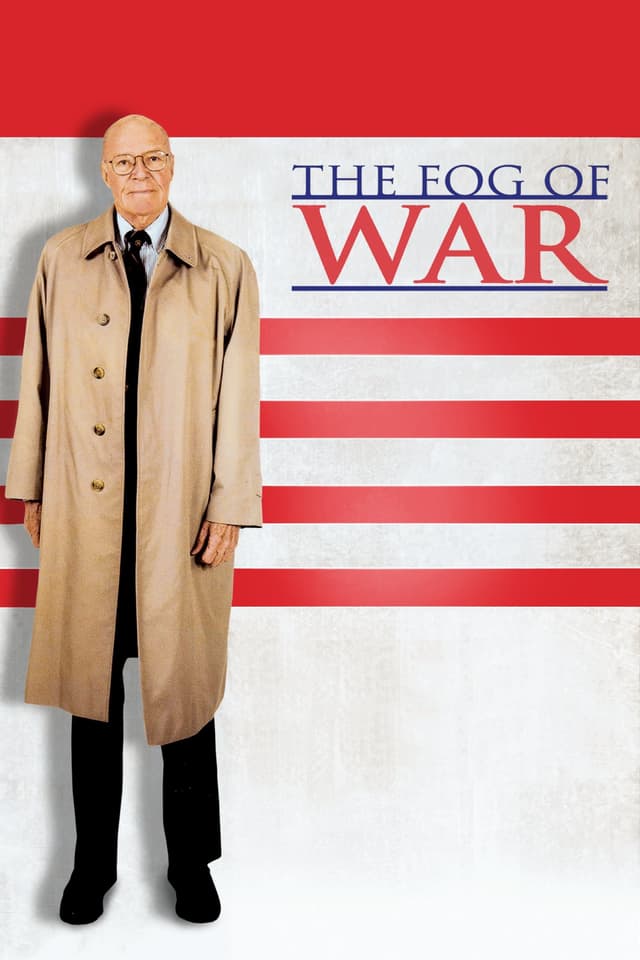
The Fog of War Budget
 DocumentaryTV MovieHistoryWar107 minutes
Updated
Synopsis
Former corporate whiz kid Robert McNamara was the controversial Secretary of Defense in the Kennedy and Johnson administrations, during the height of the Vietnam War. This Academy Award-winning documentary, augmented by archival footage, gives the conflicted McNamara a platform on which he attempts to confront his and the U.S. government's actions in Southeast Asia in light of the horrors of modern warfare, the end of ideology and the punitive judgment of history.
What Is the Budget of The Fog of War?
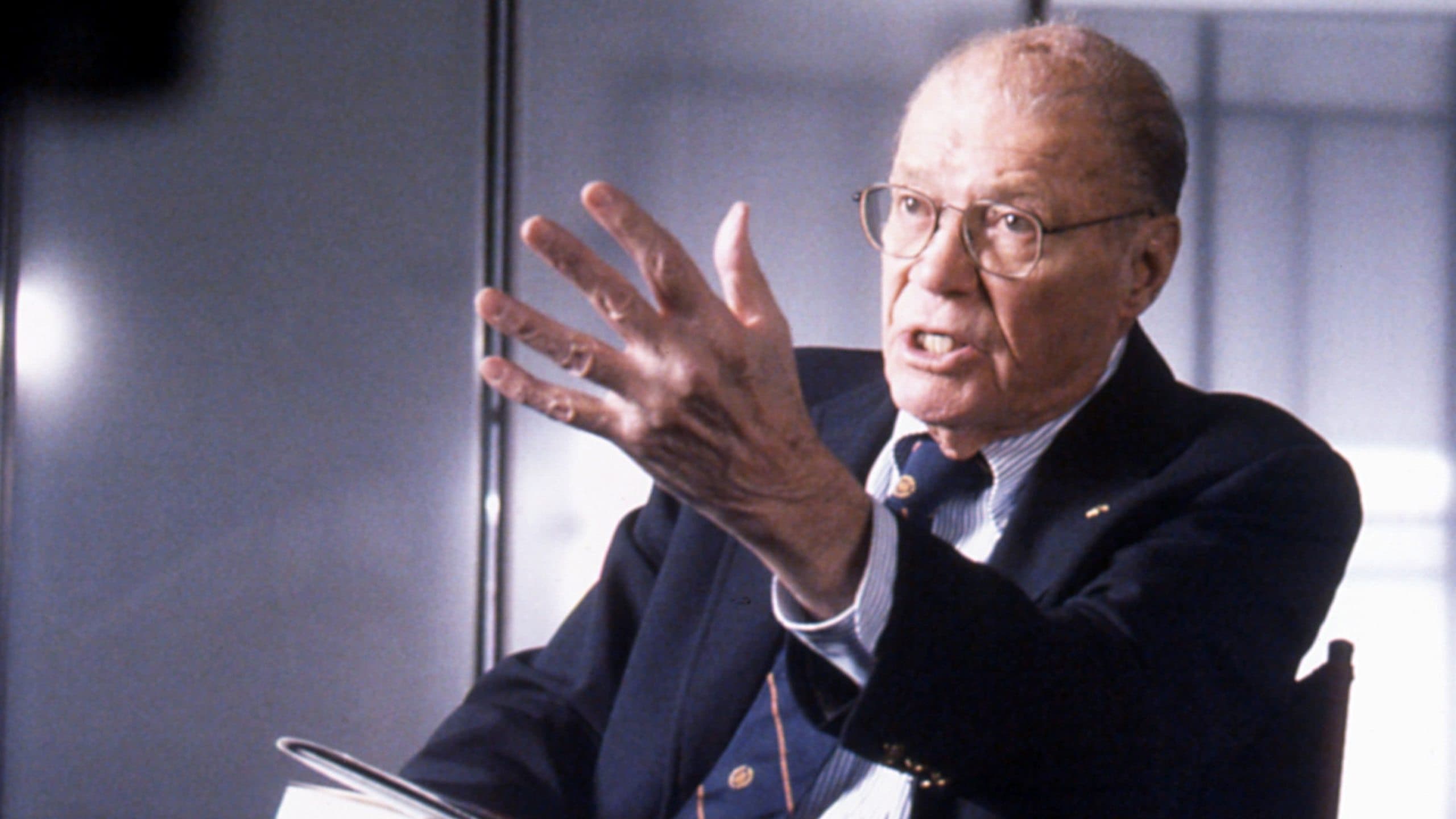
The Fog of War: Eleven Lessons from the Life of Robert S. McNamara was produced on a budget of approximately $2 million, financed by Sony Pictures Classics and the Gate Productions. The film was directed by Errol Morris, the documentary filmmaker whose The Thin Blue Line (1988) had pioneered the investigative documentary form and whose A Brief History of Time (1991) had demonstrated his ability to make intellectually demanding subjects cinematically compelling. Morris conducted extended interviews with Robert McNamara over two years, using his patented Interrotron filming device.
The $2 million budget covered the extended interview sessions with McNamara, the research into declassified government documents, archival footage licensing from the National Archives and other sources, Philip Glass's original score, and Morris's extensive post-production editorial work. McNamara was 85 years old at the time of filming and died on July 6, 2009, six years after the film's release. The Interrotron, which Morris invented for his 1997 documentary Fast, Cheap and Out of Control, allowed McNamara to look directly into the lens while watching Morris's reflection, creating the illusion of direct eye contact with the viewer that defines the film's visual intimacy.
Key Budget Allocation Categories
- Robert McNamara Interview Sessions: McNamara served as US Secretary of Defense under Presidents John F. Kennedy and Lyndon B. Johnson from 1961 to 1968, overseeing the escalation of American involvement in Vietnam. Gaining his cooperation for the film required establishing a level of trust that took extended pre-production conversations before cameras rolled. The filming sessions, conducted over multiple visits across two years, required careful scheduling around McNamara's health and his ongoing writing projects.
- The Interrotron and Morris's Production System: The Interrotron uses a half-silvered mirror to allow the interview subject to look directly at the camera lens while seeing the interviewer's face reflected in the glass. The technical apparatus required custom fabrication and operation by Morris's dedicated camera crew. The Interrotron's effect on the viewer experience, the feeling of direct eye contact with McNamara as he speaks, was central to Morris's conception of the film and justified its production cost.
- Archival Footage Licensing from the National Archives, LBJ Library, and Other Sources: The film draws on declassified audio recordings from the Kennedy and Johnson administrations, historical footage of the Vietnam War and the firebombing of Tokyo in World War II, and documentary photography from McNamara's career. Licensing fees for archival materials from government archives, the Associated Press, and other sources represented a significant budget line for a two-hour documentary with extensive historical illustration.
- Philip Glass Score: Philip Glass, whose minimalist orchestral compositions had defined the sound of prestige documentary filmmaking through his scores for Errol Morris's previous films and for the Godfrey Reggio Qatsi trilogy, composed the original score for The Fog of War. Glass's score provides the film's emotional underpinning and its sense of historical weight, particularly in the sequences addressing McNamara's role in the firebombing of Tokyo and the Cuban Missile Crisis.
- Post-Production Editorial Work: Morris spent extensive time in post-production organizing McNamara's reflections into the eleven-lesson structure that gives the film its shape. The editorial challenge of constructing a coherent, dramatically compelling narrative from hours of interview footage with an 85-year-old man reflecting on events spanning sixty years required sophisticated structural thinking as well as technical editing skill. The "eleven lessons" framework was developed in the editorial process rather than in advance of filming.
How Does The Fog of War's Budget Compare to Similar Films?
The Fog of War sits at the lower end of Sony Pictures Classics documentary budgets for films with significant archival research components. Its Academy Award win demonstrates that prestige documentary performance is not correlated with production investment at this budget level.
- S-21: The Khmer Rouge Killing Machine (2003): Budget ~$1M | Limited theatrical. Rithy Panh's documentary about the Tuol Sleng prison and the Khmer Rouge genocide, also released in 2003, spent approximately half what The Fog of War cost and found a much smaller theatrical audience, receiving its primary distribution through film festivals and specialized screening programs. The Fog of War's American subject and McNamara's personal profile gave it the mainstream art house accessibility that Panh's film could not achieve.
- Standard Operating Procedure (2008): Budget ~$5M | Domestic $200K. Morris's follow-up documentary about the Abu Ghraib torture photographs spent more than twice as much as The Fog of War and found a dramatically smaller domestic theatrical audience. The Fog of War benefited from the timeliness of its Vietnam War reflection in the early years of the Iraq War; Standard Operating Procedure arrived when Abu Ghraib had already saturated news coverage.
- Capturing the Friedmans (2003): Budget ~$500K | Domestic $3.1M. Andrew Jarecki's documentary about a Long Island family accused of child sexual abuse, released in the same year as The Fog of War, spent approximately one-quarter as much and found a comparable domestic theatrical audience. The comparison illustrates that domestic documentary performance at the art house level is largely independent of production investment.
- No End in Sight (2007): Budget ~$2M | Domestic $1.4M. Charles Ferguson's documentary about the planning failures of the Iraq War, produced at roughly the same budget as The Fog of War, found a smaller domestic theatrical audience despite its topical urgency. Ferguson's Inside Job (2010), which examined the 2008 financial crisis, won the Academy Award for Best Documentary Feature at a comparable production level, demonstrating the consistency of documentary Academy recognition for films at this budget range.
The Fog of War Box Office Performance
The Fog of War opened December 19, 2003, through Sony Pictures Classics in a limited New York and Los Angeles release, expanding nationally through January and February 2004 following its Academy Award nomination announcement. The domestic total finished at $4.2 million. International distribution, handled through Sony Pictures Classics' established European art house network, added additional theatrical revenue, bringing the worldwide total to approximately $4.2 million as international gross data is not separately reported for this release.
Against a production budget of approximately $2 million and an estimated $1.5 million in prints and advertising for the domestic theatrical release, the total investment was approximately $3.5 million. With theaters retaining roughly 50 percent of gross, Sony's share of the domestic theatrical gross was approximately $2.1 million, below the total investment in theatrical alone. The Academy Award win for Best Documentary Feature in February 2004 extended the theatrical run and boosted DVD sales significantly, bringing the film to overall profitability across all windows.
Box Office Breakdown
The Fog of War

For every dollar invested in production, The Fog of War returned approximately $2.10 at the worldwide box office. Accounting for P&A, the film returned approximately $0.60 for every dollar of total investment in theatrical alone. The Academy Award win transformed the film's economic trajectory: the nomination announcement in January 2004 drove a significant expansion of the theatrical run, and the win in February 2004 generated substantial DVD sales that made the film profitable across all distribution windows. The DVD release from Sony Pictures Home Entertainment became a standard text in university courses on American foreign policy and documentary filmmaking.
The Fog of War Production History
Errol Morris had been interested in documenting Robert McNamara since reading McNamara's memoir In Retrospect (1995), in which the former Secretary of Defense acknowledged that the United States had been wrong about Vietnam and that he had known this earlier than he had publicly admitted. The memoir's combination of candor and evasion, its willingness to admit error while still defending the systemic logic of decisions he now acknowledged were catastrophic, struck Morris as the perfect subject for his interview-driven documentary method.
Gaining McNamara's cooperation required extended conversations that preceded any filming commitment. McNamara, who had spoken publicly about Vietnam many times since leaving government in 1968, was initially uncertain whether another documentary interview would add anything new to the historical record. Morris's pitch centered on the Interrotron and on the idea that McNamara's reflections would be organized around lessons with universal applicability rather than around a chronological account of his career. This framing, which would become the film's "eleven lessons" structure, persuaded McNamara to participate.
The filming sessions extended across two years and covered McNamara's experience as a statistician under General Curtis LeMay during the World War II firebombing campaigns against Japan, his role in the Cuban Missile Crisis, and his escalating doubts about the Vietnam War strategy he was implementing. The declassified White House telephone recordings from the Kennedy and Johnson administrations, obtained from the National Archives, provided the film's most historically significant material, including recordings in which McNamara and Johnson discuss their private doubts about the war while publicly maintaining that it could be won.
The film premiered at the Telluride Film Festival in September 2003 and at the New York Film Festival the following month before its theatrical release in December. Sony Pictures Classics positioned it as a timely reflection on American military intervention at the beginning of the Iraq War, which had begun in March 2003. The film's Telluride and New York premiere circuit generated significant critical attention that established its trajectory toward the Academy Award nomination.
Awards and Recognition
The Fog of War won the Academy Award for Best Documentary Feature at the 76th Academy Awards in February 2004, the most significant recognition in documentary filmmaking. Morris used his acceptance speech to criticize the Iraq War, telling the audience "Forty years ago, this country went down a rabbit hole in Vietnam, and we haven't come up for air since." The moment was one of the most politically pointed Oscar acceptance speeches of the decade.
The film received the International Documentary Association Award for Best Feature Documentary, the Producers Guild of America Award in the Documentary category, and the Directors Guild of America nomination for Outstanding Directorial Achievement in Documentary. It was named one of the best films of 2003 by the National Society of Film Critics, the New York Film Critics Circle, and Time magazine, where it appeared on Richard Schickel's annual ten-best list. The film is regularly cited in lists of the greatest documentaries ever made and is a standard text in university courses on the Vietnam War, American foreign policy, and documentary form.
Critical Reception
The Fog of War holds a 96% approval rating on Rotten Tomatoes and a Metacritic score of 92 out of 100, one of the highest scores ever recorded for a documentary feature. The film's IMDb rating of 8.2 out of 10 reflects both critical and general audience enthusiasm. The near-universal critical praise was remarkable for a film that consists almost entirely of a single elderly man speaking to a camera.
Critics focused on two dimensions of the film's achievement: its historical significance as a primary source document of McNamara's self-accounting, and its formal achievement as a piece of cinema. Roger Ebert gave it four stars, writing that McNamara "is a fascinating human being -- brilliant, dedicated, tormented by guilt, unwilling to call it guilt." A.O. Scott in The New York Times called it "a devastating record of a civilization in crisis with its own conscience." The critical consensus was that Morris had found a subject worthy of his method and that the combination produced a film of genuine historical importance.
The film's reception included substantive engagement with McNamara's arguments as well as evaluation of the film's craft. Critics debated whether McNamara's eleven lessons were genuine reflections on moral responsibility or a sophisticated self-exculpation that admitted mistakes in order to avoid taking full responsibility for them. This debate, which echoed the criticism of McNamara's 1995 memoir, added intellectual substance to the film's reviews that is unusual in documentary criticism and contributed to its status as a work that rewards re-viewing and analysis.
Frequently Asked Questions
How much did The Fog of War cost to make?
The production budget was approximately $4,000,000. Sony Pictures Classics co-financed the documentary with Errol Morris's own Fourth Floor Productions and Senart Films, with a substantial portion of the budget allocated to archival licensing and re-creation sequences.
How much did The Fog of War earn at the box office?
The film grossed $4,189,792 domestically and $1,200,000 internationally, for a worldwide total of approximately $5,400,000. It opened to a limited $42,000 on December 19, 2003 in New York and Los Angeles, with subsequent expansion through Sony Pictures Classics' specialty distribution.
What is The Fog of War about?
The documentary is a 107-minute interview with Robert S. McNamara, the Secretary of Defense under Presidents Kennedy and Johnson, covering his role in the firebombing of Tokyo during World War II, the Cuban Missile Crisis, and the escalation of the Vietnam War, organized around eleven lessons drawn from his career.
Who directed The Fog of War?
Errol Morris directed the film. Morris is renowned for his Interrotron interview technique, in which subjects look directly into the camera through a teleprompter-style device, an approach he had refined across The Thin Blue Line (1988) and Mr. Death (1999).
Did The Fog of War win the Best Documentary Oscar?
Yes. The Fog of War won the Academy Award for Best Documentary Feature at the 76th Academy Awards on February 29, 2004. In his acceptance speech, Errol Morris pointedly drew connections between McNamara's reflections on Vietnam and the then-ongoing Iraq War.
Where was The Fog of War filmed?
The principal McNamara interviews were filmed at a controlled studio location using Morris's Interrotron device. Archival footage was sourced from the National Archives, the Lyndon B. Johnson Presidential Library, and the John F. Kennedy Presidential Library and Museum.
What did critics think of The Fog of War?
The film received exceptional reviews, with a 98% approval rating on Rotten Tomatoes and an 87 out of 100 score on Metacritic. Critics universally praised McNamara's candid self-examination and Errol Morris's structural use of the eleven lessons framework. Philip Glass composed the score.
Was The Fog of War profitable?
Yes. Against the approximately $4,000,000 production budget and an estimated $1,500,000 in Sony Pictures Classics marketing spend, the worldwide gross of approximately $5,400,000 produced a modest theatrical profit. Strong home video and educational distribution revenue extended the documentary's commercial life substantially.
How does The Fog of War compare to other Errol Morris documentaries?
The Fog of War is widely considered the commercial and critical peak of Morris's career, outperforming The Thin Blue Line (1988, approximately $1,200,000 worldwide), Standard Operating Procedure (2008), and The Unknown Known (2013, his Donald Rumsfeld follow-up, approximately $260,000 worldwide).
Where can I stream The Fog of War?
The film is available on the Criterion Channel, which produced a high-definition transfer with extensive supplementary materials. It is also available for digital purchase on Amazon Prime Video, Apple TV, and Google Play, and remains in active educational distribution.
Official Trailer
Build budgets like this one in Saturation
Start from an industry-standard feature film template, import the schedule and rates you already have, and let the cost report keep itself current as you spend. Real-time collaboration, no spreadsheets.