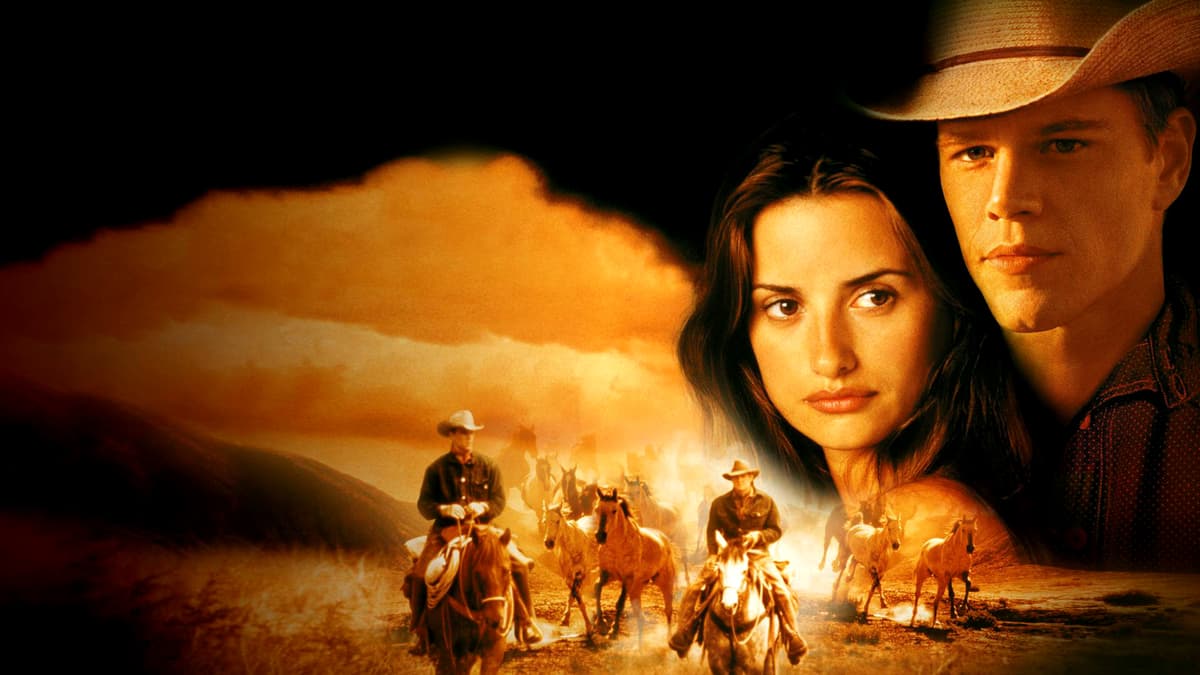
The Alamo Budget
 Western
Updated
Synopsis
In 1836, fewer than 200 Texian defenders led by William B. Travis, Jim Bowie, and Davy Crockett occupy a converted Franciscan mission in San Antonio as Mexican President General Antonio López de Santa Anna marches a 1,500-soldier army against them. After a thirteen-day siege, the defenders are overrun, and the Texian commander Sam Houston subsequently leads a counterattack at San Jacinto that secures Texas independence.
What Is the Budget of The Alamo (2004)?
The Alamo (2004), directed by John Lee Hancock and distributed by Buena Vista Pictures, was produced on a reported budget of $107,000,000, with some industry sources citing figures as high as $145,000,000 once all production overruns, reshoots, and the prolonged development cycle were factored in. The film served as Disney's prestige historical epic for spring 2004, depicting the 1836 Battle of the Alamo and the events leading to Texas independence from Mexico. Touchstone Pictures, Imagine Entertainment, and Disney co-produced.
The project had originated with director Ron Howard, who had developed The Alamo as a major historical epic for Disney with Russell Crowe attached to play Sam Houston and a budget that reportedly reached $200 million in some pre-production estimates. Howard departed in late 2002 after the studio rejected his three-hour R-rated cut and budget, with John Lee Hancock (The Rookie) replacing him to deliver a leaner PG-13 version. The final $107,000,000 budget reflected this scaled-back approach but still ranked among the most expensive Westerns ever produced.
Key Budget Allocation Categories
The reported $107,000,000 budget was distributed across several core production areas:
- Above-the-Line Talent: Director and co-writer John Lee Hancock commanded a feature-director rate following The Rookie's 2002 success. The cast included Dennis Quaid as Sam Houston, Billy Bob Thornton as Davy Crockett, Jason Patric as Jim Bowie, Patrick Wilson as William Travis, and Emilio Echevarría as General Antonio López de Santa Anna. Thornton's casting in particular drew significant compensation given his post-Sling Blade and Bandits stature.
- Texas Location Construction: The production built a full-scale replica of the 1836 Alamo compound on a ranch in Dripping Springs outside Austin, Texas. The set was the largest standing exterior set ever constructed in North America at the time, covering 51 acres and including the mission complex, surrounding town, and Mexican army encampments. The set required eighteen months to construct and represented one of the largest single line items in the budget.
- Period Costumes and Weapons: Costume designer Daniel Orlandi supervised the creation of more than 4,000 period costumes for the principal cast and the thousands of extras playing Texian defenders and Mexican soldiers. Authentic-replica 1830s firearms, cannons, and edged weapons were sourced from specialty suppliers, and the cannons were built as working replicas capable of firing pyrotechnic charges.
- Battle Choreography and Extras: The climactic battle sequence required hundreds of extras, extensive horse work, and a coordinated stunt team. The production used roughly 2,500 background performers across the course of the shoot, with multiple cameras capturing the assault from different angles and elevations. Stunt coordination, riding doubles, and the wrangling of more than 200 horses added substantial below-the-line cost.
- Visual Effects: Industrial Light & Magic supervised the visual effects work, which included digital extensions of the Alamo set, the multiplication of background extras, smoke and fire enhancements, and cannon-fire physics simulations. The visual effects budget was modest by ILM standards but still represented a meaningful share of post-production cost.
- Music and Sound: Carter Burwell composed the score, blending orchestral and Tejano influences. The soundtrack budget covered original composition, orchestra recording in London, and licensing of period folk tunes used during campfire and tavern sequences. The mix schedule extended through early 2004 to accommodate the battle sequence sound design.
How Does The Alamo's Budget Compare to Similar Films?
At $107,000,000, The Alamo sat at the upper end of historical epics of its era. Comparing it with peers:
- Gladiator (2000): Budget $103,000,000 | Worldwide $465,400,000. Ridley Scott's Roman epic cost slightly less and grossed more than eighteen times The Alamo worldwide, becoming a Best Picture winner. The contrast illustrates how a comparable budget could deliver radically different commercial outcomes depending on cast, marketing, and broad audience appeal.
- Master and Commander: The Far Side of the World (2003): Budget $150,000,000 | Worldwide $212,011,111. Peter Weir's naval epic cost 40% more and grossed nearly eight times The Alamo worldwide, providing a recent benchmark for how a historical action film of comparable budget tier could fail commercially while still performing far better than The Alamo did.
- Cold Mountain (2003): Budget $83,000,000 | Worldwide $173,029,939. Anthony Minghella's Civil War drama cost 22% less and grossed nearly seven times The Alamo, demonstrating that even a divisively received historical war film could find a meaningful theatrical audience when the cast and source material delivered prestige weight.
- Open Range (2003): Budget $26,000,000 | Worldwide $68,272,500. Kevin Costner's Western cost less than a quarter of The Alamo and grossed nearly three times as much, illustrating the difficulty of justifying a $107 million Western in the early 2000s when even modestly budgeted Western releases consistently outperformed their major-studio counterparts.
- Pearl Harbor (2001): Budget $140,000,000 | Worldwide $449,220,945. Michael Bay's WWII epic was the closest direct American historical-action comparison at the time, cost 31% more, and grossed nearly eighteen times The Alamo worldwide, although critics universally panned it. The contrast suggests that even prestige craftsmanship could not save The Alamo from a market that had decisively rejected the project.
The Alamo Box Office Performance
The Alamo opened domestically on April 9, 2004, earning $9,135,818 in its opening weekend and finishing fourth at the U.S. box office behind The Passion of the Christ, Hellboy, and Walking Tall. That figure was less than half of pre-release tracking projections and well below the $25-30 million opening Disney had targeted. Word of mouth was tepid, and the film fell sharply in subsequent weeks, never expanding meaningfully into international territories.
Against a $107,000,000 production budget, the film required approximately $250,000,000 in worldwide gross to reach profitability after marketing and distribution costs. The financial breakdown:
Box Office Breakdown
The Alamo

The Alamo returned approximately $0.15 to $0.17 in theatrical revenue for every $1 invested when measured against total estimated production and marketing spend, placing it among the most decisive box office bombs of the 2000s. The domestic share of the gross was $22,406,362 against an international share of just $3,413,599, a 87/13 split that confirmed the property had essentially no overseas appeal, a structural disadvantage for any historical American Western trying to recoup a $100-million-plus budget.
Disney took a substantial write-down on the film and quietly removed Ron Howard's name from much of the subsequent marketing and home-video promotion. The Alamo became a frequently cited case study in Hollywood's post-2000 retreat from the historical-epic genre, alongside Troy (2004), Alexander (2004), and Kingdom of Heaven (2005), all of which underperformed their budget targets to varying degrees during the same two-year window.
The Alamo Production History
Disney began developing The Alamo as a major historical epic in 2001 under the supervision of Ron Howard, who attached himself to direct following Disney's success with the Cinderella Man pre-production process. Howard worked with screenwriters John Sayles, Stephen Gaghan, Leslie Bohem, and others on a three-hour, R-rated screenplay that would have depicted the battle in unflinching detail. Russell Crowe was attached as Sam Houston, and pre-production design work continued through 2002.
In late 2002, Disney chairman Michael Eisner rejected Howard's budget and approach, asking for a leaner PG-13 version that could open as Disney's spring 2004 tentpole. Howard and Crowe departed the project, and John Lee Hancock, fresh off The Rookie (2002), replaced Howard as director in early 2003. Hancock worked with co-writers Leslie Bohem and Stephen Gaghan on a substantial screenplay revision that compressed the timeline and softened the violence to PG-13 thresholds.
Principal photography began in Dripping Springs, Texas in March 2003 on a full-scale replica of the 1836 Alamo compound that had been under construction since late 2001. The 51-acre set was the largest standing exterior set ever constructed in North America at the time. Shooting wrapped in October 2003, with the production deploying roughly 2,500 background performers across the course of the shoot. Disney mandated reshoots in late 2003 to add character beats and to clarify several historical sequences, pushing post-production into early 2004.
The film was originally scheduled to open in December 2003 as Disney's Christmas tentpole but was pushed to April 2004 after marketing and post-production complications. The four-month delay was widely interpreted in the trade press as a signal of studio uncertainty. The April release placed the film against Mel Gibson's The Passion of the Christ, which was still in its remarkable extended theatrical run, and Hellboy, which dominated genre audience attention.
Awards and Recognition
The Alamo received minimal awards recognition. The film was largely absent from year-end critics' lists and the major industry awards circuit. Carter Burwell's score received a handful of industry nominations from film-music focused organizations, but no Academy Award, Golden Globe, or BAFTA recognition followed. The production design team and costume designer Daniel Orlandi received industry recognition from craft guilds for their work on the period reconstruction, but neither rose to the level of major nominations.
The film also drew no Golden Raspberry nominations despite its commercial failure, in part because the Razzies that year focused on more publicly maligned releases such as Catwoman and White Chicks. The Alamo's legacy within awards conversation has been almost entirely absent, reflecting both its limited cultural footprint and the genre ceiling that affects most early 2000s historical epics.
Critical Reception
The Alamo received mixed reviews. The film holds a 30% approval rating on Rotten Tomatoes based on 168 critic reviews, with a critical consensus that called it "a respectable if unexciting recounting of a familiar historical event." On Metacritic, the film scored 47 out of 100, indicating mixed or average reviews. Audiences surveyed by CinemaScore gave the film a B+, a moderate response that nevertheless failed to translate into legs at the box office.
Critics broadly praised the production values, the period authenticity, and Billy Bob Thornton's performance as Davy Crockett, which Roger Ebert called "a wonderful subtle performance" and the strongest reason to see the film. Manohla Dargis in The Los Angeles Times wrote that Thornton "brings a melancholy gravitas to Crockett that the rest of the film cannot match." A.O. Scott in The New York Times praised the cinematography and battle choreography while finding the dramatic scenes "earnest but inert."
Detractors objected to the film's pacing, the under-developed Mexican characters, and what reviewers characterized as a tonally cautious approach to the historical material. The Washington Post's Stephen Hunter wrote that "the movie's tactical caution and dramatic restraint render its central episode oddly small." Trade publication Variety called the film "a Texas-sized bore." The film has not undergone significant critical reappraisal and remains best known as one of the more decisive commercial failures of the 2000s historical-epic cycle, alongside Troy, Alexander, and Kingdom of Heaven.
Frequently Asked Questions
How much did it cost to make The Alamo (2004)?
The reported production budget was $107,000,000, with some industry sources citing figures as high as $145,000,000 once production overruns, reshoots, and the prolonged development cycle were factored in. The project had originated as a Ron Howard film with a budget reportedly reaching $200 million before Disney mandated a leaner approach under John Lee Hancock.
How much did The Alamo earn at the box office?
The film grossed $22,406,362 domestically and $3,413,599 internationally, for a worldwide total of $25,819,961. It opened to $9,135,818 in the United States, finishing fourth on its April 9, 2004 opening weekend behind The Passion of the Christ, Hellboy, and Walking Tall.
Was The Alamo a box office bomb?
Yes, decisively. Against a $107,000,000 production budget and an estimated $50-70 million in marketing, the film returned approximately $0.15 in worldwide gross for every $1 invested. Disney took a substantial write-down on the film, and it became a frequently cited case study in the post-2000 retreat from the historical-epic genre.
Who directed The Alamo?
John Lee Hancock directed the film, replacing Ron Howard, who had developed the project for Disney before the studio rejected his three-hour R-rated cut and budget in late 2002. Hancock, who had previously directed The Rookie (2002), delivered a leaner PG-13 version with a substantially revised screenplay.
Where was The Alamo filmed?
Principal photography took place from March to October 2003 in Dripping Springs, Texas, on a 51-acre full-scale replica of the 1836 Alamo compound built specifically for the production. The set was the largest standing exterior set ever constructed in North America at the time. The production deployed roughly 2,500 background performers across the course of the shoot.
Why was The Alamo delayed from 2003 to 2004?
The film was originally scheduled to open in December 2003 as Disney's Christmas tentpole but was pushed to April 2004 after marketing and post-production complications, including reshoots mandated by Disney in late 2003 to add character beats and clarify several historical sequences. The four-month delay was widely interpreted in the trade press as a signal of studio uncertainty.
Who plays Davy Crockett in The Alamo?
Billy Bob Thornton plays Davy Crockett. Critics broadly identified Thornton's performance as the strongest element of the film, with Roger Ebert calling it "a wonderful subtle performance" and Manohla Dargis writing that Thornton "brings a melancholy gravitas to Crockett that the rest of the film cannot match."
What did critics think of The Alamo?
The film received mixed reviews, with a 30% approval rating on Rotten Tomatoes (168 critics) and a 47 score on Metacritic. Audiences gave it a B+ CinemaScore. Critics praised the production values, period authenticity, and Billy Bob Thornton's Crockett but objected to pacing, under-developed Mexican characters, and a tonally cautious approach to the historical material.
How does The Alamo compare to other 2000s historical epics?
The Alamo grossed $25.8 million worldwide on a $107 million budget. By comparison, Gladiator (2000) earned $465 million on a $103 million budget, Master and Commander (2003) earned $212 million on a $150 million budget, and Pearl Harbor (2001) earned $449 million on a $140 million budget. The Alamo is widely cited alongside Troy (2004), Alexander (2004), and Kingdom of Heaven (2005) as evidence of the 2000s historical-epic cycle's commercial difficulty.
Did The Alamo win any awards?
No. The film was largely absent from year-end critics' lists and the major industry awards circuit. Carter Burwell's score received a handful of industry nominations from film-music focused organizations, but no Academy Award, Golden Globe, or BAFTA recognition followed. The film also avoided Golden Raspberry nominations despite its commercial failure.
Filmmakers
The Alamo

Build budgets like this one in Saturation
Start from an industry-standard feature film template, import the schedule and rates you already have, and let the cost report keep itself current as you spend. Real-time collaboration, no spreadsheets.