The Age of Innocence Budget
 Drama
DramaUpdated
Synopsis
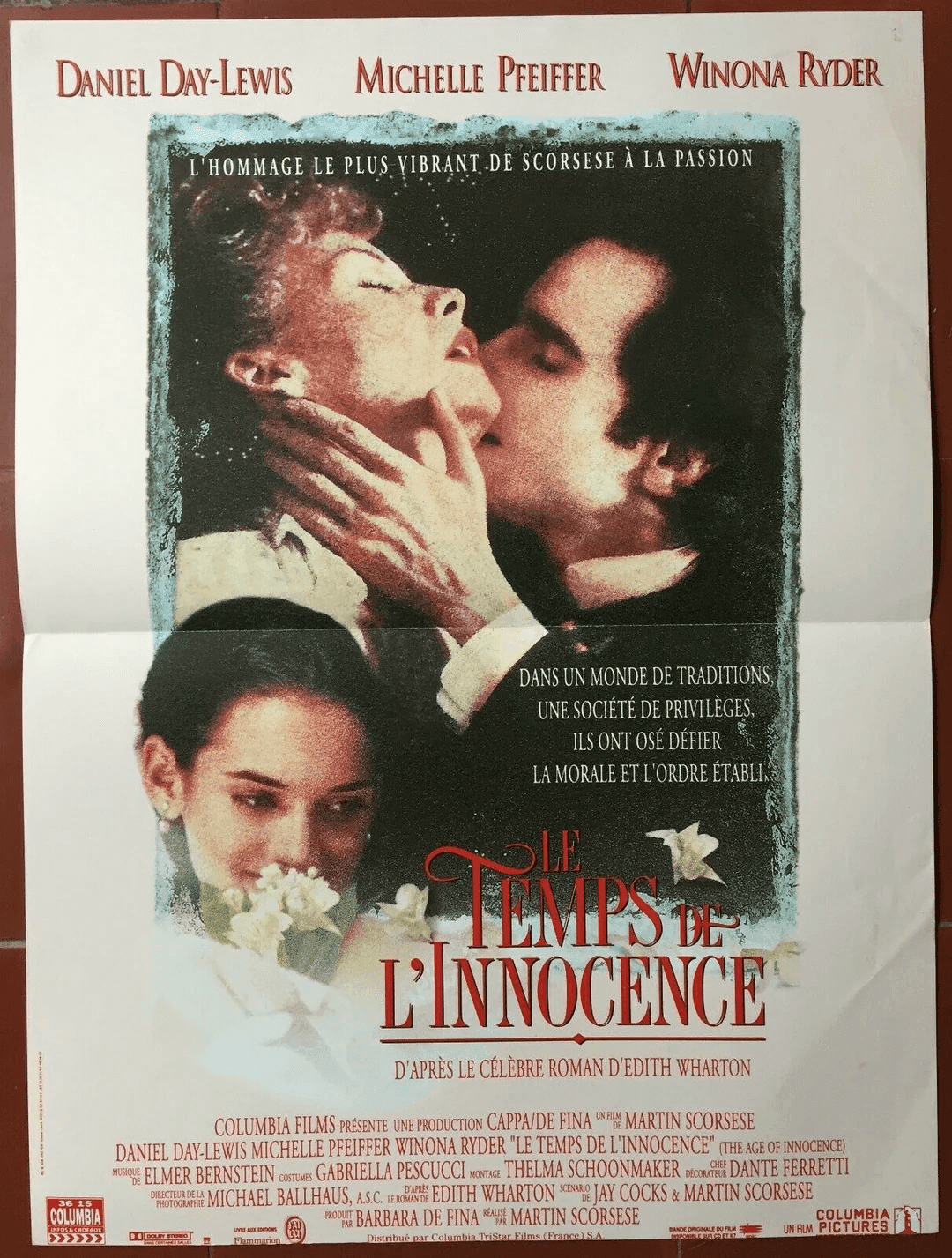
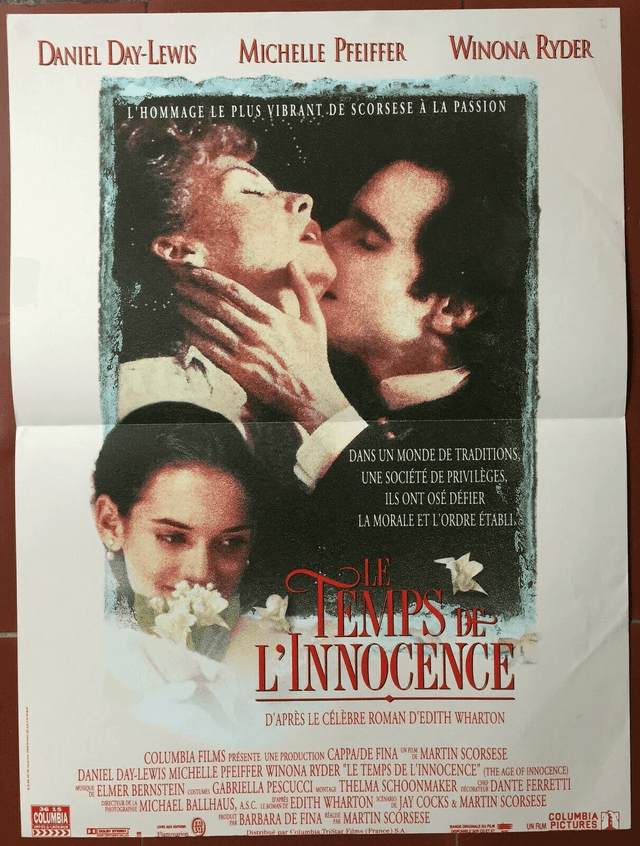
In 1870s New York high society, the engaged lawyer Newland Archer's carefully ordered life is upended when his fiancée's cousin, the Countess Ellen Olenska, returns to the city after fleeing her abusive Polish husband. Caught between his proper marriage to May Welland and his growing passion for the unconventional Ellen, Archer must navigate the suffocating rituals of Gilded Age society that conspire to keep them apart.
What Is the Budget of The Age of Innocence (1993)?
The Age of Innocence (1993), directed by Martin Scorsese and distributed by Columbia Pictures, was produced on a budget of $34,000,000. Barbara De Fina produced through Cappa Production, with Scorsese's longtime collaborator overseeing the financial structure that combined Columbia studio finance with European pre-sale support. The film was a faithful adaptation of Edith Wharton's 1920 Pulitzer Prize-winning novel, a striking detour for Scorsese from the contemporary urban-crime milieu of GoodFellas (1990) and Cape Fear (1991).
The budget reflected the production-design demands of a meticulously recreated 1870s New York rather than tentpole-scale star spending. Daniel Day-Lewis, Michelle Pfeiffer, and Winona Ryder anchored the cast at significant but not outsized fees, with the majority of the budget flowing into Dante Ferretti's production design, Gabriella Pescucci's costume work, and the elaborate dining-room and ballroom set pieces that defined the film's visual texture. Columbia priced the film as an awards-tier prestige project, expecting modest theatrical performance offset by Best Picture campaign upside.
Key Budget Allocation Categories
The Age of Innocence's $34,000,000 budget was distributed across several core production areas:
- Above-the-Line Talent: Daniel Day-Lewis took the Newland Archer lead following his My Left Foot (1989) Oscar win at his standard prestige-era rate. Michelle Pfeiffer (Countess Olenska) and Winona Ryder (May Welland) commanded eight-figure secondary fees. Supporting players including Geraldine Chaplin, Mary Beth Hurt, Alec McCowen, and Richard E. Grant filled out the ensemble, with Joanne Woodward providing the narrator voice-over.
- Production Design: Dante Ferretti, in his first Scorsese collaboration, recreated 1870s Manhattan interiors with extraordinary attention to period detail. The Beaufort ball, the Mingott dining room, and the opera-box sequence each required full-build sets dressed with period-accurate furniture, china, glassware, paintings, floral arrangements, and decorative objects. Several thousand individual props were either sourced from period collections or fabricated.
- Costume Design: Gabriella Pescucci designed the principal cast wardrobe, with each major female character outfitted in multiple period-accurate Gilded Age gowns featuring authentic boning, hand-finishing, and accessories. Pescucci's work won the Academy Award for Best Costume Design and required a costume-construction line significantly above the norm for a contemporary drama.
- New York and Philadelphia Location Shoot: Principal photography ran on Troy, New York exteriors (doubling for 1870s Manhattan), Philadelphia's Academy of Music (for the opera sequence), and Paris locations (for the European epilogue). The Troy, New York shoot took advantage of preserved Victorian-era streetscapes that allowed period exteriors without extensive set construction.
- Score and Music: Composer Elmer Bernstein wrote the original orchestral score, earning an Academy Award nomination. The opera-house sequences required licensing or new performance of Gounod's Faust, with full orchestral and vocal recording adding meaningful cost to the music line.
- Period Cinematography and Lighting: Cinematographer Michael Ballhaus designed a soft, candle-lit interior look that required custom gels, period-appropriate practical lighting, and extensive grip work to maintain across multiple sequences. The dining and ballroom scenes alone consumed a significant share of below-the-line shooting time.
How Does The Age of Innocence's Budget Compare to Similar Films?
At $34,000,000, The Age of Innocence sits at the upper range of early-1990s prestige period dramas. The comparison set illustrates the genre's commercial expectations and the modest theatrical ceilings:
- Howards End (1992): Budget $8,000,000 | Worldwide $26,000,000. Merchant Ivory's contemporaneous prestige period drama cost less than a quarter of The Age of Innocence and earned 40% of its worldwide gross, the closest stylistic and tonal comparison.
- The Remains of the Day (1993): Budget $11,500,000 | Worldwide $63,148,003. Another Merchant Ivory release from the same year cost a third as much and earned 92% of The Age of Innocence's worldwide gross, illustrating the commercial efficiency of the boutique prestige model.
- A Room with a View (1985): Budget $3,000,000 | Worldwide $68,500,000. Merchant Ivory's earlier Wharton-adjacent E.M. Forster adaptation cost less than 10% of The Age of Innocence and matched its worldwide gross.
- Bram Stoker's Dracula (1992): Budget $40,000,000 | Worldwide $215,862,692. Francis Ford Coppola's Columbia release from the prior year cost 18% more and earned three times the worldwide gross, demonstrating the genre-versus-prestige commercial gap.
- Schindler's List (1993): Budget $22,000,000 | Worldwide $322,161,245. Spielberg's same-year prestige release cost 35% less, won Best Picture, and earned nearly five times The Age of Innocence's worldwide gross.
The Age of Innocence Box Office Performance
The Age of Innocence opened on September 17, 1993, debuting to $1,396,532 in its opening weekend in limited release across 6 theaters, then expanding to wide release on October 1, 1993. The platform-release strategy was Columbia's standard prestige-tier rollout, prioritizing critic exposure and awards-campaign positioning over a wide opening weekend. The film grossed $32,255,440 domestically and $36,060,941 internationally over its full theatrical run.
Against a $34,000,000 production budget, The Age of Innocence needed roughly $80,000,000 in worldwide gross to reach profitability when accounting for marketing and distribution costs. Here is the financial breakdown:
Box Office Breakdown
The Age of Innocence

The Age of Innocence returned approximately $1.10 in theatrical revenue for every $1 invested when measured against total estimated production and marketing spend. The domestic share of the gross was $32,255,440 against an international share of $36,060,941, a near-even split that confirmed the property's comparable European appeal, aided by the Wharton novel's established international literary standing.
Columbia recouped its investment through theatrical performance combined with home entertainment, television licensing, and awards-driven library value over subsequent decades. The film's Oscar nominations and Costume Design win unlocked sustained downstream revenue that pushed the overall production into clear profitability. The Age of Innocence has since become a foundational Scorsese reference point and a perennial Criterion Collection and home-video staple.
The Age of Innocence Production History
Development began in the late 1980s when Scorsese, drawn to Wharton's social-anthropology framing of New York's "tribal society," approached the novel as a project that combined his interest in ritual, code, and the violence of polite society. Jay Cocks, who had collaborated with Scorsese for decades and would later co-write Gangs of New York, adapted the screenplay with Scorsese. Cappa Production developed the package, with Barbara De Fina producing and Columbia Pictures financing.
Casting was completed in 1991, with Daniel Day-Lewis attaching after his My Left Foot Oscar win and Michelle Pfeiffer signing for the Olenska role. Winona Ryder was cast as May Welland after the project considered several younger actresses, with her presence anchoring the third leg of the central triangle. Ryder's casting against type as the seemingly innocent fiancée later won her the Best Supporting Actress nominations across multiple awards bodies.
Principal photography ran from March to July 1992. Scorsese filmed extensively in Troy, New York, whose preserved Victorian-era streetscapes allowed period exteriors with minimal set construction, then moved to Philadelphia for the Academy of Music opera sequence, and finally to Paris for the late-film European epilogue. The interior coverage was shot on stages dressed by Dante Ferretti, who treated each principal location as a near-museum reconstruction of 1870s upper-class New York.
Post-production extended into early 1993, with extensive editorial work by Thelma Schoonmaker handling the film's deliberate pacing and the ritual-of-society set pieces. Scorsese and Schoonmaker structured the long dining and ballroom sequences with internal pacing that allowed the audience to absorb the social codes as they unfolded. Columbia positioned the film for a fall 1993 platform release timed to the Best Picture awards calendar.
Awards and Recognition
The Age of Innocence received five Academy Award nominations at the 66th Academy Awards, including Best Adapted Screenplay (Jay Cocks and Martin Scorsese), Best Supporting Actress (Winona Ryder), Best Art Direction (Dante Ferretti), Best Costume Design (Gabriella Pescucci), and Best Original Score (Elmer Bernstein). Pescucci won for Best Costume Design, the film's only competitive Oscar win.
At the Golden Globes, the film received four nominations including Best Motion Picture (Drama), Best Director (Scorsese), Best Actress (Pfeiffer), and Best Supporting Actress (Ryder), with Ryder winning Best Supporting Actress. The film received three BAFTA nominations and a Writers Guild of America nomination, and won the National Board of Review's Best Film award. The Age of Innocence has since been included on multiple "best of decade" lists by retrospective critics revisiting Scorsese's 1990s output.
Critical Reception
The Age of Innocence received broadly positive reviews. The film holds an 81% approval rating on Rotten Tomatoes based on 75 critic reviews, with a critical consensus that called it a meticulously crafted study of social cruelty. On Metacritic, the film scored 83 out of 100, indicating universal acclaim. The film opened to strong limited-release reviews that anchored its awards campaign.
Critics broadly praised Scorsese's departure from contemporary crime material, Dante Ferretti's production design, Gabriella Pescucci's costume work, and the central performances. Roger Ebert awarded the film four stars, writing that "this is Scorsese's most beautiful film, and one of his most personal." The New York Times' Janet Maslin called it "an extraordinary departure that proves Scorsese can do anything." Vincent Canby noted that "the film's precise period detail and tightly controlled performances create an atmosphere of social suffocation that ranks among Scorsese's most accomplished work.
A minority of critics found the film's deliberate pacing and tonal restraint at odds with Scorsese's more kinetic strengths, with some calling it admirable rather than exciting. The film's reputation has continued to grow over subsequent decades, with retrospective coverage treating it as one of the great American period dramas and a defining argument for Scorsese's range. The Age of Innocence is regularly included on critic-led lists of the most accomplished Edith Wharton adaptations and the most important American films of the 1990s.
Frequently Asked Questions
How much did it cost to make The Age of Innocence (1993)?
The production budget was $34,000,000. The film was produced by Barbara De Fina through Cappa Production and distributed worldwide by Columbia Pictures, with the majority of the budget flowing into production design and costume rather than star fees.
How much did The Age of Innocence earn at the box office?
The film grossed $32,255,440 domestically and $36,060,941 internationally, for a worldwide total of $68,316,381. It opened in limited release on September 17, 1993 in 6 theaters, then expanded wide on October 1, 1993, following Columbia's prestige-tier platform-release strategy.
Was The Age of Innocence profitable?
Yes, modestly. Against a $34M production budget and an estimated $25M to $30M in marketing spend, the film returned approximately $1.10 in worldwide gross for every $1 invested, generating roughly $4M to $9M in theatrical profit before home entertainment, television, and library revenue.
Who directed The Age of Innocence?
Martin Scorsese directed the film. Scorsese had previously directed GoodFellas (1990) and Cape Fear (1991), and The Age of Innocence marked a deliberate departure from contemporary crime material into period drama based on Edith Wharton's 1920 Pulitzer Prize-winning novel.
Where was The Age of Innocence filmed?
Principal photography ran from March to July 1992 in Troy, New York (doubling for 1870s Manhattan, leveraging preserved Victorian-era streetscapes), Philadelphia (Academy of Music for the opera sequence), and Paris (for the European epilogue). The interior coverage was shot on stages dressed by production designer Dante Ferretti.
Did The Age of Innocence win any Oscars?
Yes. The film received five Academy Award nominations and won one, for Best Costume Design (Gabriella Pescucci). The other nominations were Best Adapted Screenplay, Best Supporting Actress (Winona Ryder), Best Art Direction (Dante Ferretti), and Best Original Score (Elmer Bernstein).
How does The Age of Innocence compare to other 1993 prestige films?
The Age of Innocence earned $68.3M worldwide on a $34M budget. The Remains of the Day (1993) earned $63.1M on $11.5M. Schindler's List (1993) earned $322.2M on $22M and won Best Picture. The Age of Innocence's commercial scale was modest but its costume and design recognition extended its library value substantially.
Is The Age of Innocence based on a book?
Yes. The film is a faithful adaptation of Edith Wharton's 1920 novel of the same name, which won the Pulitzer Prize for Fiction in 1921 (the first time the prize was awarded to a woman). Jay Cocks and Martin Scorsese co-wrote the screenplay, preserving large amounts of Wharton's prose through Joanne Woodward's narration.
Who stars in The Age of Innocence?
Daniel Day-Lewis stars as the engaged lawyer Newland Archer, with Michelle Pfeiffer as the Countess Ellen Olenska and Winona Ryder as Archer's fiancée May Welland. Geraldine Chaplin, Mary Beth Hurt, Alec McCowen, Richard E. Grant, and Miriam Margolyes round out the ensemble, with Joanne Woodward providing voice-over narration.
What did critics think of The Age of Innocence?
The film holds an 81% approval rating on Rotten Tomatoes (75 reviews) and scored 83 out of 100 on Metacritic. Roger Ebert awarded four stars, calling it "Scorsese's most beautiful film, and one of his most personal." The film won the National Board of Review's Best Film award and has continued to grow in critical reputation across subsequent decades.
Filmmakers
The Age of Innocence

Build budgets like this one in Saturation
Start from an industry-standard feature film template, import the schedule and rates you already have, and let the cost report keep itself current as you spend. Real-time collaboration, no spreadsheets.