The Adventures of Tintin Budget
Updated
Synopsis
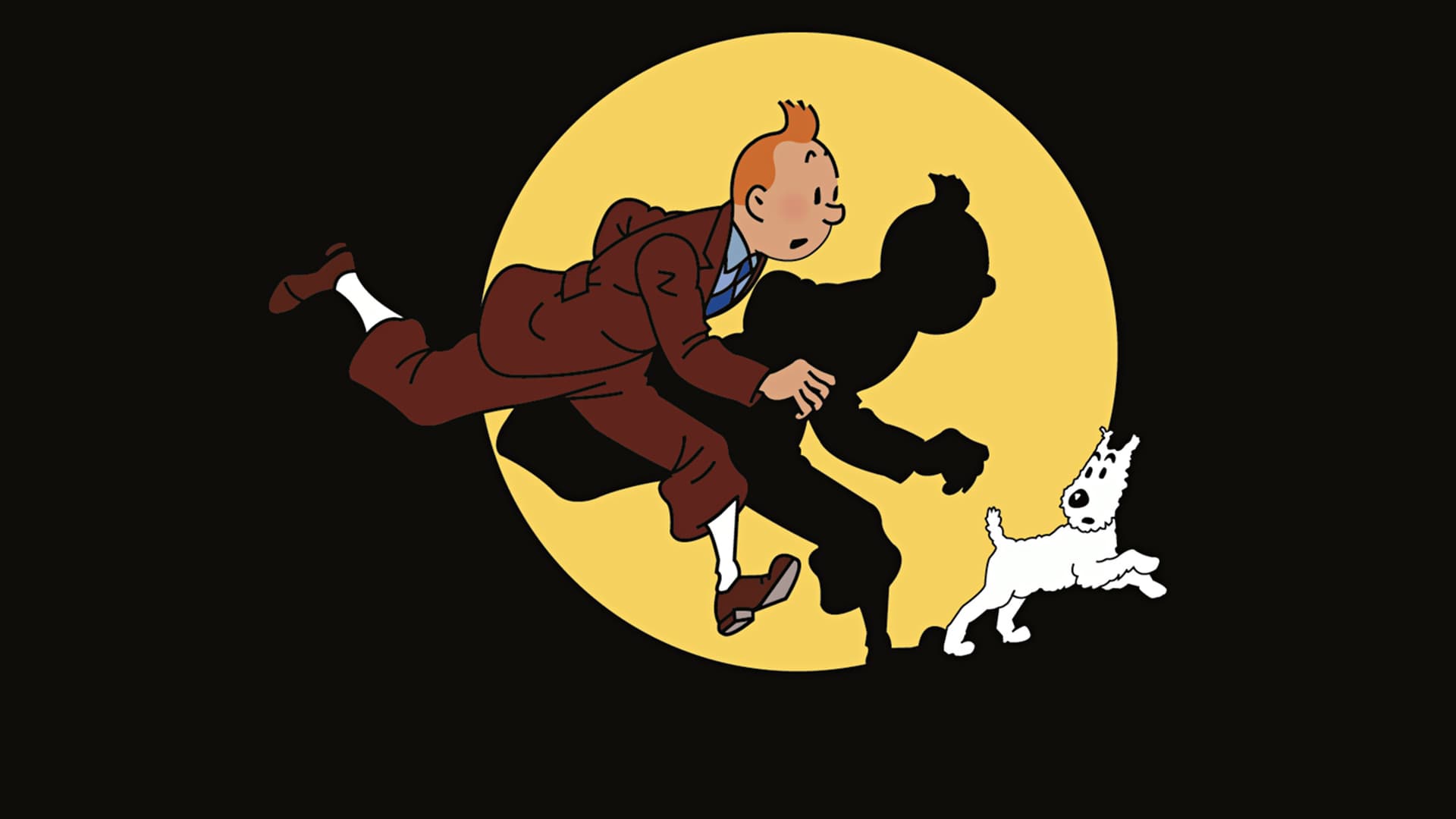
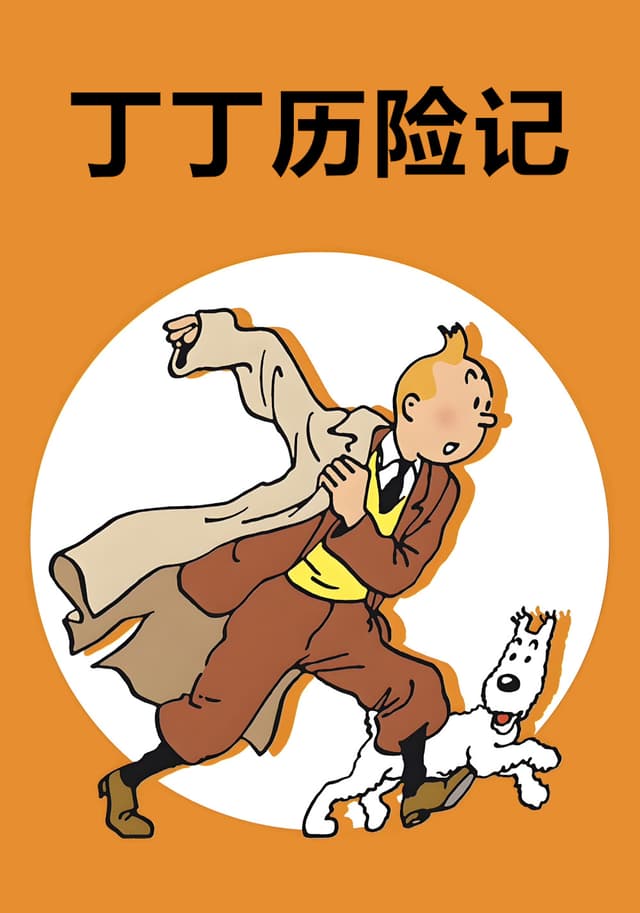
The Adventures of Tintin (1991) is the French-Canadian animated television series adapting Hergé's Tintin albums for FR3, HBO, and the Family Channel. Co-produced by Ellipse Programme in Paris and Nelvana Limited in Toronto under the creative oversight of the Hergé Foundation, the series ran 39 half-hour episodes across three seasons in 1991 and 1992, adapting 21 of Hergé's 24 Tintin albums in approximately chronological order from The Crab with the Golden Claws through Tintin and the Picaros.
What Is the Budget of The Adventures of Tintin (1991)?
The Adventures of Tintin (1991), the French-Canadian animated television series co-produced by Ellipse Programme (France) and Nelvana Limited (Canada) for FR3 and HBO, was made on an estimated per-episode budget of approximately $400,000 to $550,000, or approximately $15,000,000 to $21,000,000 across all 39 half-hour episodes produced between 1991 and 1992. The figures align with traditionally animated cel television production costs of the early 1990s, and are anchored by the show's deliberately high-fidelity adaptation of Hergé's ligne claire visual style, which required a substantially larger background-painting and inbetweener workforce than a standard Saturday-morning cartoon.
Co-financing came from FR3 (France 3 from 1992), HBO in the United States, Family Channel in Canada, and the Hergé Foundation, which licensed the underlying Tintin albums and retained creative oversight. The production split work between Ellipse's Paris studios for background design, layout, and storyboarding, and Nelvana's Toronto operations for animation and post-production. Three seasons of 13 episodes each were produced across an 18-month production window.
Key Budget Allocation Categories
The series' per-episode spend broke down across the cost centres typical of an early-1990s prestige animated television production, with several show-specific items reflecting the Hergé estate's fidelity requirements:
- Ligne Claire Background Painting: Hergé's ligne claire ("clear line") visual style required highly detailed, flatly coloured backgrounds with precise architectural and period accuracy. The background-painting workforce, led by Ellipse Paris art directors, was substantially larger than a standard television cartoon, with weekly background counts running 60 to 90 per 22-minute episode.
- Character Animation (Cel): Nelvana Toronto handled cel character animation across all 39 episodes, with a Toronto animation staff of approximately 60 to 80 artists at peak production. The studio used traditional hand-drawn cel animation, an unusual choice for 1991 as the industry was beginning to transition to digital ink-and-paint workflows.
- Voice Cast: Thierry Wermuth (French), Colin O'Meara (English), and an extensive Canadian and French voice ensemble (David Fox as Captain Haddock, Wayne Robson as Professor Calculus, John Stocker as Thomson and Thompson) recorded all 39 episodes in both French and English. Recording and editing dual-language masters absorbed substantial weekly post-production cost.
- Hergé Foundation Licensing: The Hergé Foundation, controlled by Fanny Rodwell, retained creative oversight and licensing rights to all 22 of Hergé's Tintin albums adapted for the series. Licensing fees and approval workflow with the Foundation were a recurring cost item across pre-production and production for each episode.
- Music: Composers Ray Parker and Tom Szczesniak wrote the title theme and underscore, with engineer James Morgan recording the music tracks. The score deliberately echoed cinematic adventure-film traditions (the Indiana Jones series, the Sherlock Holmes films) to position the show as a prestige animated property rather than a Saturday-morning slot filler.
- Period-Accurate Production Design: The Tintin albums span the 1929 to 1976 period and were set across roughly 20 international locations. The production design budget supported period-accurate background research, vehicle references, costume design, and architectural reference photography across each adapted album.
- Dual-Language Post-Production: The series was produced simultaneously in French and English, with separate dialogue editing, sound design, and ADR pipelines for each language version. The dual-language workflow added approximately 30% to standard single-language post-production cost.
- International Distribution Mastering: International sales agent Ellipse Distribution sold the series to over 50 broadcast territories, requiring delivery of M and E (music and effects) tracks for local-language dub production. The delivery and mastering budget anchored the show's long-tail international monetisation.
How Does The Adventures of Tintin's Budget Compare to Similar Series?
At an estimated $400,000 to $550,000 per episode, The Adventures of Tintin sat in the upper tier of early-1990s animated television, well above standard Saturday-morning cartoons and roughly in line with contemporaneous prestige animated co-productions:
- Batman: The Animated Series (1992): Estimated per-episode budget approximately $400,000 to $500,000. Warner Bros. Animation's Bruce Timm and Eric Radomski-led Batman series, broadcast on Fox Kids beginning September 1992, hit a similar tariff with similarly elaborate background design and a comparable focus on craft over speed.
- The Simpsons (1989): Estimated per-episode budget approximately $750,000 to $1,000,000 (1991 dollars). 20th Television Animation's primetime Fox series cost roughly twice Tintin per episode, reflecting its primetime adult-comedy tariff, AKOM Korean outsourced character animation, and substantially larger writing staff.
- Tintin (1957 Belvision): The earlier Belvision-produced Tintin animated series cost a small fraction of the 1991 Nelvana/Ellipse production per episode (no public figures, but estimated at under $50,000 per episode in period dollars), reflecting its limited-animation production model and significantly reduced background detail.
- TaleSpin (1990): Estimated per-episode budget approximately $300,000 to $400,000. Disney's syndicated animated series produced by Walt Disney Television Animation hit a lower tariff than Tintin, with simpler background design and a Korean and Taiwanese outsourced animation pipeline.
- Babar (1989): Estimated per-episode budget approximately $300,000 to $400,000. Nelvana's earlier Canadian-French animated co-production for Family Channel and HBO operated at a slightly lower price band, illustrating the price band Nelvana's prestige co-production model occupied across the late 1980s and early 1990s.
The Adventures of Tintin Season Performance and Syndication
The Adventures of Tintin premiered on FR3 in France and on HBO in the United States in 1991 and concluded its broadcast run in 1992 after 39 episodes spanning 21 of Hergé's 24 Tintin albums (excluding Tintin in the Land of the Soviets, Tintin in the Congo, and the unfinished Tintin and Alph-Art). The economic framework across the run breaks down as follows:
- Per-Episode Budget: approximately $400,000 to $550,000 across the 39-episode run
- Total Series Investment: approximately $15,000,000 to $21,000,000 across all 39 half-hour episodes
- Networks: FR3 / France 3 in France; HBO in the United States; Family Channel in Canada; Channel 4 and Channel 5 in the United Kingdom; broadcast in over 50 international territories
- Audience: achieved strong ratings on HBO in 1991 to 1993 as part of the cable channel's early premium-animation slate; broadcast in dozens of international territories with strong syndication revenue across the 1990s and 2000s
- International Distribution: Ellipse Distribution (later Studio Canal) sold the show to over 50 territories; the series remains in active syndication on streaming platforms including Apple TV, Amazon Prime Video, and Pluto TV
- Library/Syndication Value: continues to perform on streaming and home-video platforms; Blu-ray box sets released by Shout! Factory in the United States and StudioCanal in France have remained in print since the 2010s
No subsequent seasons were produced after 1992. The Hergé Foundation, satisfied with the high-craft adaptation, declined further animated series development in favour of the Steven Spielberg / Peter Jackson live-action / motion-capture feature The Adventures of Tintin: The Secret of the Unicorn (2011). The 1991 series remains the definitive long-form animated adaptation of the Hergé Tintin catalogue and continues to be the version most viewers under 50 associate with the property.
The Adventures of Tintin Production History
Development of an authoritative animated Tintin series began in 1988 at Ellipse Programme in Paris, with creative producer Philippe Gildas and Nelvana Limited's co-founders Michael Hirsh, Patrick Loubert, and Clive Smith partnering on a Franco-Canadian co-production aimed at HBO and FR3. The Hergé Foundation, then led by Fanny Rodwell, retained final creative approval over every script, character design, and background painting, an unusually tight licensing structure that fundamentally shaped the show's craft-first production economics.
Stéphane Bernasconi was hired as series director from the French side, with Peter Hudecki as Canadian unit director. Adaptation of the source albums was handled by a combined French and Canadian writing team, with attention paid to streamlining the longer multi-album storylines (the Moon adventure across Destination Moon and Explorers on the Moon, the Calculus Affair-Tintin in Tibet sequence) into 22-minute episodes or two-parter pairs. Pre-production began in 1989, with character design supervised by Hergé's longtime collaborator Bob de Moor.
Production ran from 1990 to 1992 across Ellipse Paris and Nelvana Toronto. Ellipse handled storyboarding, background painting, layout, and pre-production design; Nelvana handled character animation, ink-and-paint, and final compositing. The studios produced 39 half-hour episodes across an 18-month production window, with three seasons of 13 episodes each delivered to HBO and FR3 broadcast schedules. The series was broadcast in approximately chronological album-publication order, beginning with The Crab with the Golden Claws and concluding with Tintin and the Picaros.
The Hergé Foundation's tight creative approval workflow was both the production's greatest strength and a recurring schedule pressure. Every background painting, character expression, and dialogue line required Foundation sign-off, with iterations sometimes taking weeks. The result, however, was a definitive ligne claire animated adaptation that the Foundation publicly endorsed as faithful to Hergé's vision, and that became the template for all subsequent Tintin merchandise and Tintin estate-licensed creative work through the 2010s.
Awards and Recognition
The Adventures of Tintin received Best Animated Television Series nominations at the 1992 Annie Awards (the animation industry's top US honour) and at the 1992 Gemini Awards (Canada's television awards). The series won the Best Animation Award at the 1993 Festival International du Film d'Animation d'Annecy, the leading international animation festival.
Background designer Daniel Brunet and director Stéphane Bernasconi were specifically recognised at multiple animation industry events for their faithfulness to Hergé's ligne claire visual style. The show has been retrospectively cited on multiple "best animated television series of the 1990s" lists, including IGN's 2009 ranking of best animated TV (placed in the top 25) and Den of Geek's 2015 retrospective of European animation, which placed it at number two behind Asterix.
Critical Reception
The Adventures of Tintin received broadly positive reviews on its 1991 broadcast and is widely considered the definitive animated adaptation of the Hergé Tintin albums. The New York Times in 1991 praised the series as "as faithful and detailed as any animated television production of the year, with backgrounds painted to the standard of theatrical animation." The Toronto Star called it "the most lovingly produced Canadian co-production of the decade so far."
Hergé fans and Tintinologue communities have consistently endorsed the series as the most accurate animated rendering of the source material. The Belgian Hergé Foundation, which retained creative oversight, publicly endorsed the production as a faithful adaptation, an unusual step for an estate that had been historically cautious about animated rights. The voice performances, particularly David Fox as Captain Haddock and Wayne Robson as Professor Calculus, have been singled out in retrospective coverage for capturing the specific comic-album energy of the source characters.
Streaming-era reappraisal has been positive. The show's appearance on Amazon Prime Video and Apple TV in the 2010s introduced it to a new generation of viewers, with retrospective reviews in The Guardian (2018) and Polygon (2019) both placing the series in the top tier of European animated television. The Hergé Foundation's continued endorsement and the absence of any subsequent animated Tintin adaptation have positioned the 1991 series as the canonical Tintin animated work for the foreseeable future.
Frequently Asked Questions
How much did The Adventures of Tintin (1991) cost to produce?
Estimated per-episode budgets ran approximately $400,000 to $550,000 across the 39-episode run, for a total production spend of approximately $15,000,000 to $21,000,000 in period dollars. Co-financing came from FR3 (France 3 from 1992), HBO in the United States, Family Channel in Canada, and the Hergé Foundation, which licensed the underlying Tintin albums.
How many episodes of The Adventures of Tintin (1991) were produced?
39 half-hour episodes across three seasons of 13 episodes each, produced and broadcast between 1991 and 1992. The series adapted 21 of Hergé's 24 Tintin albums in approximately chronological publication order, excluding Tintin in the Land of the Soviets, Tintin in the Congo, and the unfinished Tintin and Alph-Art.
Who produced The Adventures of Tintin animated series?
The series was co-produced by Ellipse Programme in Paris and Nelvana Limited in Toronto. Ellipse handled storyboarding, background painting, and pre-production design; Nelvana handled character animation, ink-and-paint, and final compositing. The Hergé Foundation, then led by Fanny Rodwell, retained final creative approval over every script and background painting.
Which Tintin albums were adapted for the series?
21 of Hergé's 24 Tintin albums were adapted, beginning with The Crab with the Golden Claws and concluding with Tintin and the Picaros. The three albums not adapted were Tintin in the Land of the Soviets, Tintin in the Congo (both early albums that the Hergé Foundation viewed as creatively unrepresentative), and the unfinished Tintin and Alph-Art.
Who directed The Adventures of Tintin (1991)?
French director Stéphane Bernasconi served as series director, with Peter Hudecki as Canadian unit director at Nelvana Toronto. Bernasconi supervised the show's ligne claire visual style and the faithful adaptation of Hergé's source albums. The series broadcast in approximately chronological album-publication order.
Who voiced Tintin in the 1991 animated series?
Thierry Wermuth voiced Tintin in the French version, and Colin O'Meara voiced Tintin in the English version. David Fox voiced Captain Haddock in English (Christian Pelissier in French), Wayne Robson voiced Professor Calculus in English (Henri Labussière in French), and John Stocker voiced both Thomson and Thompson in English.
Where can I watch The Adventures of Tintin (1991) today?
The series is available on Amazon Prime Video, Apple TV, and Pluto TV in various territories. Blu-ray box sets have been released by Shout! Factory in the United States and StudioCanal in France and have remained in print since the 2010s. Ellipse Distribution (now StudioCanal) sold the show to over 50 international broadcast territories.
How does the 1991 series compare to other Tintin adaptations?
The 1991 Nelvana/Ellipse series is widely considered the definitive long-form animated adaptation of the Hergé Tintin albums. The earlier Belvision Tintin series (1957) used limited animation and significantly less background detail. The Steven Spielberg / Peter Jackson live-action / motion-capture feature The Adventures of Tintin: The Secret of the Unicorn (2011) cost $135,000,000 and adapted three albums into a single feature.
Did The Adventures of Tintin (1991) win any awards?
Yes. The series won the Best Animation Award at the 1993 Festival International du Film d'Animation d'Annecy, the leading international animation festival. It was nominated for Best Animated Television Series at the 1992 Annie Awards and the 1992 Gemini Awards. The Hergé Foundation publicly endorsed the production as a faithful adaptation, an unusual step for an estate historically cautious about animated rights.
Why was the 1991 series the last animated Tintin TV adaptation?
The Hergé Foundation, satisfied with the high-craft 1991 adaptation, declined further animated series development in favour of the Steven Spielberg and Peter Jackson live-action / motion-capture feature The Adventures of Tintin: The Secret of the Unicorn (2011). The 1991 series remains the canonical animated Tintin work and continues to be the version most viewers under 50 associate with the property.
Filmmakers
The Adventures of Tintin

Official Trailer
Build budgets like this one in Saturation
Start from an industry-standard feature film template, import the schedule and rates you already have, and let the cost report keep itself current as you spend. Real-time collaboration, no spreadsheets.