Tampopo Budget
Updated
Synopsis
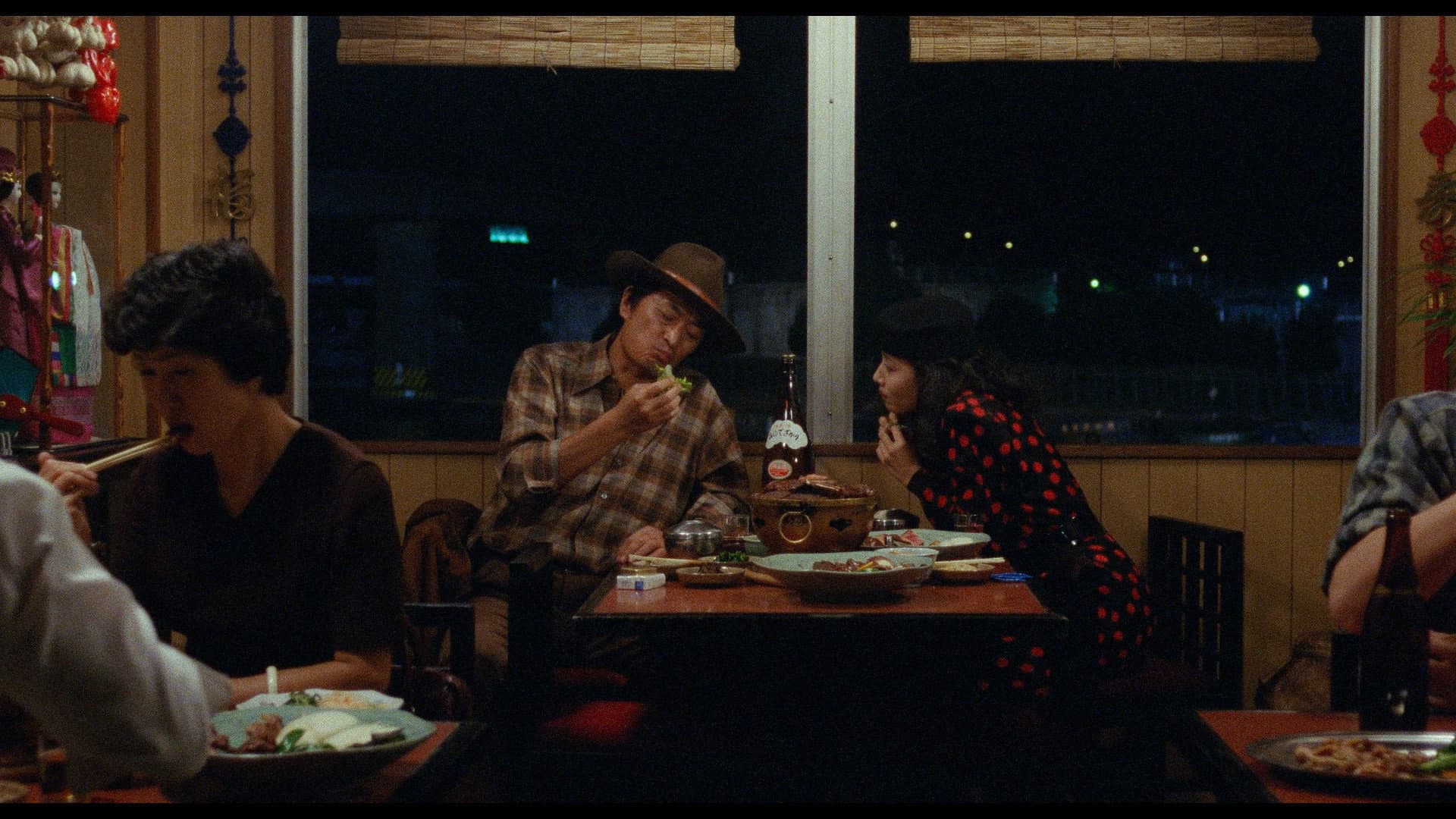
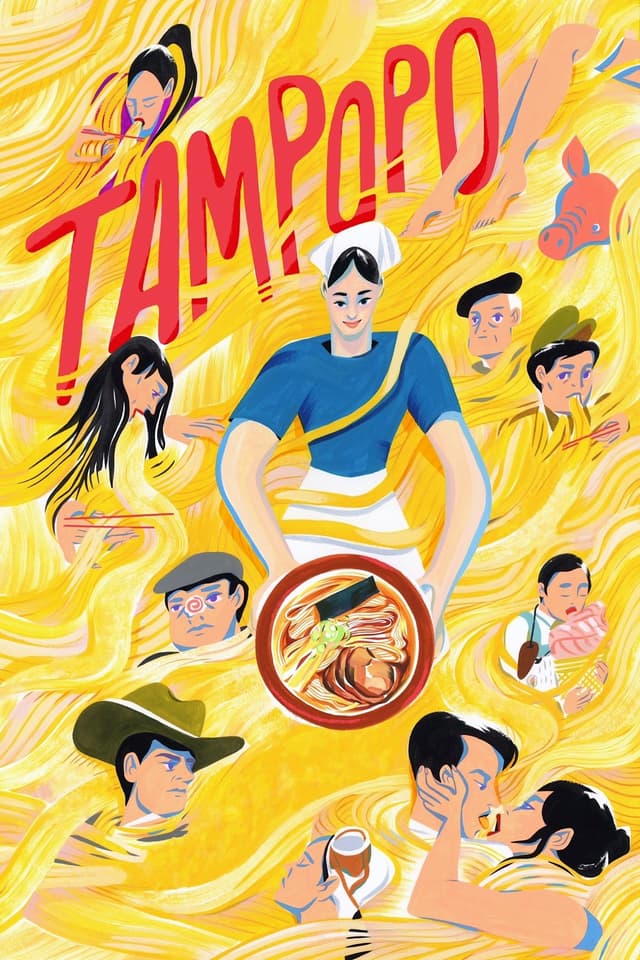
Tampopo is Juzo Itami's 1985 "ramen Western," in which a Stetson-wearing Tokyo truck driver named Goro stops at a struggling roadside noodle shop and helps the widowed owner, Tampopo, master the art of making perfect ramen. Threaded through the central training story is a kaleidoscope of food-centered comic vignettes, from a businessman ordering wine to a couple making erotic use of a raw egg yolk, that together form one of the most beloved meditations on food, desire, and craft in international cinema.
What Is the Budget of Tampopo (1985)?
Tampopo, Juzo Itami's 1985 "ramen Western," was produced on a working budget of approximately $1,500,000, an extraordinarily lean figure for a 114-minute Toho-distributed feature. The film was financed and produced independently by Itami's own banner, Itami Productions, in partnership with New Century Producers (Shinsei Eiga), a model Itami had used the previous year on his debut feature The Funeral (1984) and would repeat on A Taxing Woman (1987) and its sequel. The arrangement freed Itami from the major-studio development apparatus and let him write, direct, edit, and steer marketing on his own schedule.
That $1.5 million figure has been cited across English-language sources including AllMovie, the BFI, and Wikipedia, and tracks with the production economics of mid-1980s Japanese independent cinema. By contrast, contemporary Toho-financed Akira Kurosawa productions of the same period (Ran in 1985, Dreams in 1990) carried budgets ten to twenty times larger. Tampopo's spending profile sat closer to the Japanese television-grade independent tier than to the studio-prestige tier, and the savings were achieved through a Shibaura-centered Tokyo location shoot, an in-house Itami Productions producing team, a compact cast of professional and semi-professional players, and an editor (Akira Suzuki) and composer (Kunihiko Murai) working on independent rates.
Key Budget Allocation Categories
While Itami Productions has not published a line-item breakdown, the film's production profile points to a familiar set of cost drivers for a mid-1980s Japanese indie feature:
- Above-the-Line Cast Salaries: The ensemble was anchored by Tsutomu Yamazaki as the trucker Goro and Nobuko Miyamoto (Itami's wife and frequent leading lady) as Tampopo, with substantial supporting roles for Koji Yakusho as the white-suited gangster, Ken Watanabe as the trucker's sidekick Gun, and Rikiya Yasuoka. None of the principals carried the kind of compensation a Toho-financed studio production would have demanded, with Miyamoto and Yamazaki returning at Itami Productions rates after The Funeral.
- Shibaura Tokyo Location Shoot: Principal photography centered on Shibaura, a then-industrial reclaimed-land neighborhood off Tokyo's Inner Circular Route, with truck-driving exteriors filmed on Old Kaigan Road just off the Takahama Bridge. Shooting in real working-class Tokyo locations rather than a Toho soundstage kept set-construction spending narrow and delivered the documentary-grade texture the film's comedy depends on.
- Tampopo Ramen Shop Set: The interior of Tampopo's noodle shop was the largest single set built for the production, a freestanding stage build that allowed Itami to choreograph the elaborate ramen-preparation sequences with multi-camera coverage. The set absorbed a meaningful share of below-the-line spending and is the only significant constructed environment in the picture.
- Cinematography and Lighting Package: Masaki Tamura, the documentary-trained cinematographer who had shot Kazuo Hara's seminal nonfiction work, brought a handheld observational approach that kept the lighting package small. The shooting style relied heavily on practical sources inside the ramen shop and on natural exteriors in Shibaura, which compressed the grip and electric department to indie-feature scale.
- Food Styling and Props: Tampopo is a film about cooking, eating, and the sensual presentation of food, and a substantial share of art-department spending went into the steady supply of working ramen, oysters, ice cream, raw eggs, sausages, and the elaborate fine-dining sequences in the gangster vignettes. Real food was prepared on set for nearly every dining scene, an unusually heavy props bill for a film at this budget level.
- Editing and Post-Production: Akira Suzuki, who would win the Japanese Academy Award for Best Editing for his work on the film, cut the picture under Itami's close supervision. Sound recording by Fumio Hashimoto, also a Japanese Academy Award winner for the film, was completed at Tokyo-based facilities at Japanese indie rates well below the Toho studio standard.
- Original Score: Composer Kunihiko Murai delivered an original orchestral score blending Western and Japanese motifs, recorded with a modest ensemble rather than a full symphonic session. The score is a memorable component of the finished film but represented a contained line-item relative to comparable mid-1980s studio Japanese pictures.
- Distribution Through Toho: Toho handled domestic Japanese distribution, which placed the film into roughly 200 screens at peak in late 1985 and 1986. Itami Productions retained the international rights, which were subsequently sold territory by territory, with New Yorker Films picking up the United States in 1987 for the film's landmark American theatrical run.
How Does Tampopo's Budget Compare to Similar Films?
Tampopo's $1.5 million working budget places it firmly in the indie food-cinema tier alongside celebrated small-scale culinary features from the 1980s, 1990s, and 2010s:
- The Funeral (1984): Budget not publicly disclosed (estimated $800,000 to $1,200,000 Itami Productions tier) | Worldwide gross not publicly aggregated. Itami's debut feature, made the year before Tampopo with the same producing model and starring Miyamoto and Yamazaki, is the most direct internal comparison and confirms the production-cost tier Itami Productions operated in across the mid-1980s.
- A Taxing Woman (1987): Budget not publicly disclosed (estimated $1,500,000 to $2,500,000) | Worldwide gross not publicly aggregated. Itami's follow-up to Tampopo, again starring Miyamoto, used a similar Itami Productions financing structure and slightly larger location footprint, and went on to sweep the Japanese Academy Awards.
- Babette's Feast (1987): Budget approximately $1,300,000 (DKK 8.7 million) | Worldwide $4,400,000 reported US gross. Gabriel Axel's Danish Best Foreign Language Film Oscar winner is the closest international peer in scale, sensibility, and theme, an intimate food-centered drama produced at almost identical cost the same year Tampopo opened in the United States.
- Big Night (1996): Budget approximately $4,000,000 | Worldwide $11,983,529 US gross. The Stanley Tucci and Campbell Scott Italian-American restaurant fable is the canonical American counterpart to Tampopo, working at roughly two-and-a-half times the budget and operating squarely inside the Sundance indie-distribution model that Tampopo helped legitimize a decade earlier.
- Eat Drink Man Woman (1994): Budget approximately $1,500,000 | Worldwide $7,294,403 US gross. Ang Lee's Taiwanese food-and-family comedy was produced at almost exactly Tampopo's budget level less than a decade later, and its elaborately filmed Sunday dinner-preparation sequences are the closest descendant of Tampopo's ramen-shop training montages in international art cinema.
- Chef (2014): Budget approximately $11,000,000 | Worldwide $45,895,737. Jon Favreau's food-truck comedy ran at roughly seven times Tampopo's budget and grossed thirty times more, but worked within the same crowd-pleasing comedic register and explicit love of food preparation that Itami pioneered in 1985.
- Jiro Dreams of Sushi (2011): Budget not publicly disclosed (estimated $500,000 to $1,000,000 documentary tier) | Worldwide $2,552,478 US gross. David Gelb's documentary on Jiro Ono is a non-fiction cousin to Tampopo, made for substantially less money and operating in the same Japanese food-mastery thematic territory that Itami had defined a quarter century earlier.
Tampopo Box Office Performance
Tampopo opened in Japan on November 23, 1985 through Toho on a 100-plus screen rollout, performing solidly in domestic exhibition without breaking into the upper tier of the 1985 Japanese box office (a year topped by Toho-financed Kurosawa epic Ran and the long-running Tora-san franchise). The film then premiered internationally at the 1986 Toronto International Film Festival and reached the United States on March 26, 1987 through New Yorker Films, opening at the Lincoln Plaza Cinema in New York and gradually expanding to art houses in Los Angeles, San Francisco, Boston, Chicago, and key university cinema markets across 1987 and 1988.
Box Office Breakdown
Tampopo

Without a confirmed Japanese domestic gross, the standard "$X for every $1 invested" calculation cannot be performed against the full theatrical return. The reported $224,097 United States gross alone covered roughly 15 percent of the production budget and was distributed across a multi-year platform release that ran in art-house theaters from 1987 into 1989. By 1990s industry standards, that US figure was a strong outcome for a subtitled Japanese comedy on a New Yorker Films platform release and signaled the arrival of Itami as a recognizable name in the American specialty market.
Tampopo's commercial trajectory is best understood across decades rather than within a single theatrical window. The film returned to American art houses in October 2016 through Janus Films in a Criterion-supervised 4K restoration that played roughly 50 markets and grossed an additional reported figure in the high six digits, generating the bulk of the post-1990s theatrical revenue. International streaming on HBO Max, the Criterion Channel, and MUBI, combined with continuous home-video sales since the 2016 Criterion Blu-ray and DVD release (spine #851), means the film has comfortably returned its production cost many times over across its full commercial lifetime.
Tampopo Production History
Juzo Itami arrived at Tampopo with one feature behind him: The Funeral, his 1984 directorial debut, had earned the Japanese Academy Award for Best Film and turned the fifty-one-year-old former actor into the most unlikely commercial filmmaker of his generation. Working from his own original screenplay, Itami built Tampopo as an ensemble comedy structured around a single dramatic spine, a struggling Tokyo ramen-shop widow named Tampopo learning to make great noodles with the help of a passing truck driver, interwoven with a kaleidoscope of food-centered comic vignettes that range from a businessman ordering wine to a couple making erotic use of a raw egg yolk.
Itami self-financed and self-produced the picture through Itami Productions in partnership with New Century Producers, the same arrangement he had used on The Funeral. Casting was anchored by Nobuko Miyamoto, Itami's wife and the lead of his debut feature, in the title role, with Tsutomu Yamazaki (also from The Funeral) as the trucker Goro and a young Koji Yakusho as the gangster in the white suit, his first major film role four years before Shall We Dance?. Ken Watanabe, then a twenty-six-year-old NHK television actor years before his international breakthrough in The Last Samurai, took the supporting role of Goro's sidekick Gun.
Principal photography unfolded in the summer of 1985 in Tokyo, primarily in the Shibaura district, an industrial neighborhood built on reclaimed land just off the city's Inner Circular Route. The truck-driving exteriors that bracket the main narrative were shot on Old Kaigan Road near the Takahama Bridge, while the Tampopo noodle shop interior was a freestanding stage build that allowed Itami and cinematographer Masaki Tamura to choreograph the elaborate ramen-preparation sequences with multi-camera coverage. Filming inside the wider region around Tokyo and Japan more broadly drew on Itami Productions' established local crew relationships and the lean independent-cinema infrastructure that had supported The Funeral the previous year. Decades later, Japan would introduce formal tax-credit incentives for inbound production, but in 1985 Tampopo operated on cash budgets, in-kind support, and an entirely Japanese cast and crew.
Itami's working method emphasized rehearsal and on-set improvisation around tightly drafted set pieces. Food preparation was real on every shooting day, with working ramen, oysters, raw eggs, ice cream, and the elaborate fine-dining sequences in the white-suited gangster vignettes prepared by professional kitchen staff between takes. The cinematography by Masaki Tamura, drawing on his documentary background with Kazuo Hara, favored handheld observational coverage that contributed to the film's naturalistic texture even as the narrative repeatedly broke into Western-genre parody and surrealist comic insert.
Post-production was completed in Tokyo through the autumn of 1985, with editor Akira Suzuki shaping the kaleidoscopic ensemble structure into a coherent 114-minute feature and sound recordist Fumio Hashimoto and composer Kunihiko Murai layering an original score that consciously echoed the spaghetti-Western convention the film's opening sequence references. Toho handled domestic Japanese distribution beginning November 23, 1985. New Yorker Films acquired the United States rights and opened the film in New York in March 1987, where it became one of the year's defining American art-house releases and established Itami as a recognizable presence in international specialty cinema.
Tampopo proved a launchpad rather than a culmination. Itami followed it with A Taxing Woman (1987) and its 1988 sequel, A-Ge-Man (1990), Minbo (1992), and a string of further satires through the mid-1990s, all featuring Nobuko Miyamoto. Itami died in 1997 in a fall from his Tokyo apartment building that was officially ruled suicide but that family and colleagues have long disputed, an event widely tied to the controversy that followed his Minbo critique of yakuza extortion. Tampopo remains the most internationally beloved of his films.
Awards and Recognition
Tampopo won two Japanese Academy Awards at the 10th annual ceremony in 1987, recognizing editor Akira Suzuki for Best Editing and sound recordist Fumio Hashimoto for Best Sound Recording. The film also picked up additional Japanese Academy Award nominations in major craft categories, and Nobuko Miyamoto was widely cited in domestic critics' year-end coverage for her work in the title role. The Japanese Academy Awards recognized Itami's wider catalog more heavily on A Taxing Woman the following year, which swept the major categories, but Tampopo's two craft wins were significant validation for an Itami Productions independent release operating outside the major-studio prestige pipeline.
In the United States, Tampopo received a 1988 Independent Spirit Award nomination for Best Foreign Film, and Itami was nominated by the National Society of Film Critics for Best Screenplay and Best Director, both significant signals at a moment when New Yorker Films' specialty release was still in its theatrical platform run. The film did not earn an Academy Award nomination for Best Foreign Language Film, in part because Japan submitted a different title that year, but it earned year-end ten-best mentions from critics including Roger Ebert, Vincent Canby of The New York Times, and Pauline Kael of The New Yorker.
Tampopo's longest-running honor has been its inclusion in canonical lists. Roger Ebert added the film to his Great Movies series in 2002. The Criterion Collection issued a 4K-restored Blu-ray and DVD in October 2016 as spine #851, with an accompanying theatrical re-release through Janus Films. The British Film Institute regularly programs the film in retrospectives, and it appears on numerous best-of-the-1980s and greatest-comedy lists, including high placements in Time Out's and Sight & Sound's editorial polls. The film holds a place on multiple "best food movies of all time" rankings published by The Guardian, Bon Appetit, Eater, and The New York Times.
Critical Reception
Tampopo holds a 100 percent positive score on Rotten Tomatoes based on 58 critic reviews with an 8.53 average rating, and a 93 percent Popcornmeter audience score. The film's Metacritic score sits at 87 out of 100 based on aggregated 2016 re-release reviews, placing it in the upper tier of all foreign-language theatrical releases of that year. CinemaScore does not survey audiences for limited art-house releases, so no audience grade has been recorded. On IMDb, Tampopo carries a 7.9 average rating across more than 30,000 user ratings, a robust score for a 1985 Japanese subtitled comedy.
Roger Ebert awarded Tampopo four stars on its 1987 US release, calling it "a bemused meditation on human nature" and including it in his Great Movies series in 2002, where he wrote at length on its structural inventiveness as "a movie about food" that is also "a comedy of manners" and "a parody of action films." Pauline Kael, writing in The New Yorker, observed that Itami employed his commercial-art background effectively, with "characters assum[ing] shiny Pop poses, and the images hav[ing] the slightly crazed look of heightened reality." Vincent Canby in The New York Times praised the film's "good-natured anarchy" and its capacity to make food itself "the most photogenic subject in the movies since the close-up."
At the 2016 Janus Films 4K-restoration re-release, A.O. Scott in The New York Times called Tampopo "one of the most purely pleasurable movies ever made," and Manohla Dargis included it on her year-end list. Critics including Richard Brody at The New Yorker, Bilge Ebiri at The Village Voice, and Sam Adams at Slate filed enthusiastic reissue reviews that reintroduced the film to a generation of viewers who had encountered it on home video or streaming rather than in theaters. The film's ramen-shop training sequences are widely cited as among the most quoted and homaged comic set pieces in international cinema, with David Lynch, Wes Anderson, and Quentin Tarantino each referencing it in interviews. Tampopo today functions as the foundational text of the modern food-cinema subgenre.
Frequently Asked Questions
How much did it cost to make Tampopo (1985)?
Tampopo was produced on a working budget of approximately $1,500,000. The film was financed and produced independently by Juzo Itami's own banner, Itami Productions, in partnership with New Century Producers, the same model Itami had used on his 1984 debut The Funeral and would repeat on A Taxing Woman in 1987. Toho handled Japanese theatrical distribution but did not finance the production.
How much did Tampopo (1985) earn at the box office?
Tampopo earned a reported $224,097 across its initial 1987 to 1989 United States theatrical release through New Yorker Films, and an additional reported figure in the high six digits during its 2016 Criterion-supervised 4K restoration release through Janus Films. Japanese domestic and other international totals have not been publicly aggregated and are not tracked by Box Office Mojo or The Numbers.
Was Tampopo (1985) profitable?
Tampopo returned a modest theatrical multiple in its initial 1985 to 1989 worldwide rollout, with most of the recoupment delivered by Japanese domestic exhibition and international territorial sales rather than the limited United States art-house run. Cumulatively, across home video, broadcaster licensing, the 2016 Criterion 4K restoration theatrical re-release, and ongoing streaming on HBO Max, the Criterion Channel, and MUBI, the film has comfortably returned its $1.5 million production cost many times over.
Who directed Tampopo (1985)?
Tampopo was written and directed by Juzo Itami, the Japanese former actor turned filmmaker whose career ran from his 1984 debut The Funeral through nine further satirical features ending with Woman of the Police Protection Program in 1997. Itami also served as the film's producer through his banner Itami Productions. He died in December 1997 in a fall from his Tokyo apartment building that was officially ruled suicide but that family and colleagues have long disputed.
Who stars in Tampopo (1985)?
Tampopo stars Tsutomu Yamazaki as the trucker Goro, Nobuko Miyamoto (Juzo Itami's wife and frequent collaborator) in the title role of the noodle-shop owner, Koji Yakusho as the white-suited gangster, Ken Watanabe as the trucker's sidekick Gun, and Rikiya Yasuoka in a supporting role. The film features Watanabe nearly two decades before his international breakthrough in The Last Samurai (2003).
Where was Tampopo (1985) filmed?
Principal photography took place in Tokyo in the summer of 1985, primarily in the Shibaura district, an industrial neighborhood on reclaimed land off the city's Inner Circular Route. Exterior truck-driving sequences were shot on Old Kaigan Road near the Takahama Bridge, and the interior of the Tampopo noodle shop was a freestanding stage build that allowed multi-camera coverage of the elaborate ramen-preparation sequences.
What does the word "tampopo" mean?
Tampopo (蒲公英) is the Japanese word for "dandelion," and the name is given to the central character, a young widow who runs a struggling roadside ramen shop. Juzo Itami selected the name to underscore the film's themes of resilience, modesty, and the quiet flowering of culinary craft from humble beginnings.
What awards did Tampopo (1985) win?
Tampopo won two Japanese Academy Awards at the 1987 ceremony, recognizing Akira Suzuki for Best Editing and Fumio Hashimoto for Best Sound Recording, plus additional craft nominations. In the United States, Itami was nominated by the National Society of Film Critics for Best Screenplay and Best Director, and the film received a 1988 Independent Spirit Award nomination for Best Foreign Film. Roger Ebert later added it to his Great Movies series in 2002.
Is Tampopo (1985) considered a classic?
Yes. Tampopo is widely regarded as a foundational text of the modern food-cinema subgenre and as the most internationally beloved of Juzo Itami's films. The Criterion Collection issued a 4K-restored Blu-ray and DVD in October 2016 as spine #851, the British Film Institute regularly programs it in retrospectives, and the film appears on numerous "best food movies of all time" lists published by The Guardian, Bon Appetit, Eater, and The New York Times.
Where can you watch Tampopo (1985) today?
Tampopo is available on streaming platforms including HBO Max, the Criterion Channel, and MUBI, with rental and purchase options through Fandango at Home, Amazon Video, and Apple TV. The film is also available on Criterion Collection Blu-ray and DVD (spine #851) in the 4K restoration that played in art-house theaters in 2016 through Janus Films.
Filmmakers
Tampopo

Official Trailer
Build budgets like this one in Saturation
Start from an industry-standard feature film template, import the schedule and rates you already have, and let the cost report keep itself current as you spend. Real-time collaboration, no spreadsheets.