Grease Budget
 RomanceComedy1h 50m
Updated
Synopsis
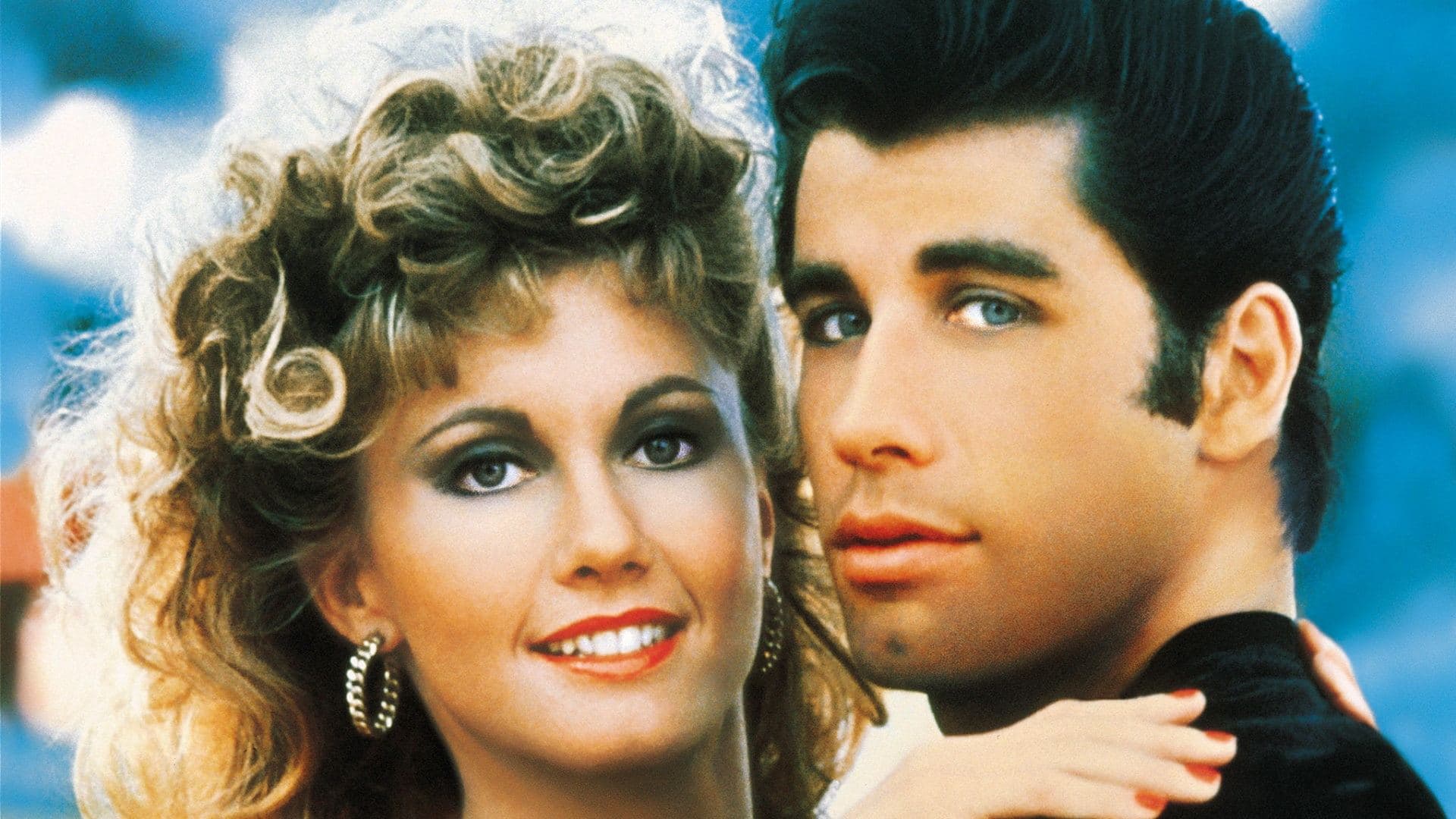
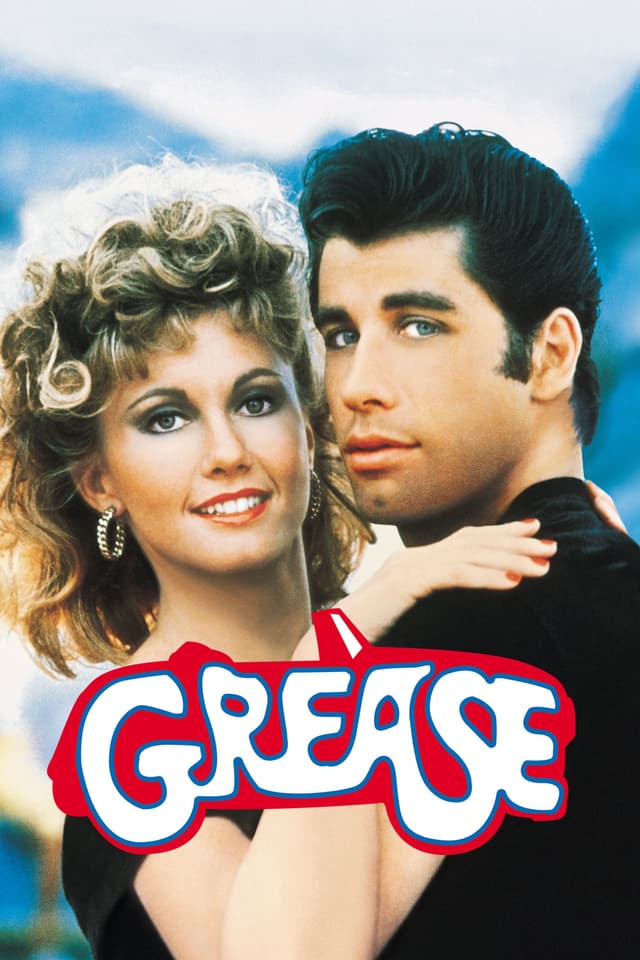
Australian transfer student Sandy Olsson and greaser Danny Zuko spend an idyllic summer romance at the California shore, only to discover when classes resume that they both attend Rydell High School. Across the 1959 school year, Sandy navigates the Pink Ladies, Danny postures for the T-Birds, and the two negotiate the social codes of late-1950s teen culture in pursuit of one another, culminating in a carnival, a drag race on Thunder Road, and a transformation that has become one of the most iconic finales in American musical cinema.
What Is the Budget of Grease (1978)?
Grease (1978), directed by Randal Kleiser and distributed by Paramount Pictures, was produced on a remarkably economical budget of $6,000,000. The figure is one of the most lopsided cost-to-gross ratios of any major studio release of the 1970s, particularly given that the film became the highest-grossing musical ever made at the time of its release and held that crown for three decades until Mamma Mia! (2008) eclipsed it in 2008. Producers Robert Stigwood and Allan Carr, fresh off the runaway success of Saturday Night Fever (1977), financed the adaptation through the Robert Stigwood Organisation in partnership with Paramount, with Stigwood retaining substantial back-end participation that turned the film into one of the most personally profitable productions of his career.
The investment was modest by 1978 standards. By comparison, Superman (1978) cost roughly $55,000,000 the same year, and even mid-budget Paramount releases such as Heaven Can Wait (1978) ran closer to $15,000,000. Grease economized through Los Angeles location shooting at working high schools and public beaches, a compressed summer 1977 production schedule, and the casting of relatively inexpensive talent: Olivia Newton-John was paid roughly $125,000, and John Travolta, despite his post-Saturday Night Fever bankability, was bound by a three-picture deal with Stigwood that capped his upfront fee. The math assumed Grease only had to clear roughly $15,000,000 worldwide to break even after marketing.
Key Budget Allocation Categories
Grease's $6,000,000 budget was distributed across several core production areas:
- Above-the-Line Talent: John Travolta was contractually bound to Robert Stigwood's three-picture deal following Saturday Night Fever, which capped his upfront compensation at a fraction of what an open-market quote would have commanded. Olivia Newton-John, then primarily known as a pop and country crossover artist, was paid roughly $125,000 to make her American film debut. Director Randal Kleiser, working on his first theatrical feature after directing the television movie The Boy in the Plastic Bubble, commanded a first-time-feature rate.
- Music and Soundtrack: New songs commissioned for the film, including "You're the One That I Want", "Hopelessly Devoted to You", "Sandy", and the Frankie Valli-performed title track written by Barry Gibb, required composer fees, performance rights, and recording sessions at multiple Los Angeles studios. The investment in original material rather than relying exclusively on the stage musical's songbook proved decisive, with several of the new tracks becoming chart hits before the film even opened.
- Choreography and Rehearsal: Patricia Birch, who had choreographed the Broadway stage production, was brought in to design the film's dance sequences. Several weeks of pre-production rehearsal at the Paramount lot were required to drill the cast through the hand jive, the dance-off at the Rydell High prom, and the carnival finale, with rehearsal payroll covering the principal cast plus a large ensemble of T-Birds, Pink Ladies, and background dancers.
- Production Design and Period Recreation: Production designer Philip M. Jefferies and art director Stan Jolley recreated late-1950s Los Angeles on a working high school campus, dressing Venice High School and Huntington Park High School with period vehicles, signage, and props. The Frenchy beauty school dream sequence with Frankie Avalon as the Teen Angel required its own constructed set, and Thunder Road, the climactic drag race location, was built on the Los Angeles River channel.
- Costumes: Costume designer Albert Wolsky outfitted the principal cast in the iconic T-Birds leather jackets, Pink Ladies satin coats, and the formal wear for the prom and finale sequences. Olivia Newton-John's black leather pants in the "You're the One That I Want" finale were so tight she had to be sewn into them each day of shooting, a fact that became one of the most frequently retold pieces of behind-the-scenes lore in musical film history.
- Location Photography: Shooting on practical Southern California locations including Venice High School (standing in for Rydell High), Huntington Park High School (interiors), Leo Carrillo State Beach in Malibu (the opening Sandy and Danny beach scene), and the Pickwick Drive-In in Burbank kept stage construction costs down compared with a fully studio-based shoot. The California production also took advantage of mild June weather for outdoor numbers.
- Editing and Post: Editor John F. Burnett, an Emmy winner for The Carol Burnett Show, cut the film for a tight 110-minute theatrical runtime, balancing the musical numbers with the comic and romantic narrative beats. Post-production sound mixing for the music numbers and Bill Butler's cinematography color timing rounded out a relatively compact post schedule that delivered the film on time for a June 16, 1978 release.
How Does Grease's Budget Compare to Similar Films?
At $6,000,000, Grease sits at the extreme low end of major studio musical budgets of its era. The comparison set illustrates how it punched far above its weight against both contemporary and later musical and Travolta vehicles:
- Saturday Night Fever (1977): Budget $3,500,000 | Worldwide $237,000,000. The previous Robert Stigwood / John Travolta collaboration cost barely half what Grease did and remains one of the most profitable productions in studio history, providing the template Stigwood and Allan Carr used to greenlight Grease.
- The Wiz (1978): Budget $24,000,000 | Worldwide $21,000,000. Universal's Diana Ross and Michael Jackson musical released the same year cost four times what Grease did and grossed less than its production budget, becoming one of the decade's most decisive musical-genre flops and a direct counterpoint to Grease's lean economics.
- Cabaret (1972): Budget $4,572,000 | Worldwide $42,800,000. Bob Fosse's eight-time Oscar winner cost slightly less than Grease and grossed roughly a tenth as much, illustrating how Grease's pop-culture reach exceeded even the most critically decorated stage adaptations of the prior decade.
- Mamma Mia! (2008): Budget $52,000,000 | Worldwide $611,395,000. The ABBA jukebox musical that eventually surpassed Grease as the highest-grossing live-action film musical cost roughly nine times as much and held the new title only until La La Land in 2017.
- Pulp Fiction (1994): Budget $8,500,000 | Worldwide $213,928,762. Travolta's career-rescuing Quentin Tarantino vehicle, released sixteen years after Grease, cost slightly more than Grease did but earned just over half of Grease's worldwide haul, a reminder that Grease was the bigger commercial event of Travolta's career.
- The Sound of Music (1965): Budget $8,200,000 | Worldwide $286,200,000. The previous all-time musical box office champion held the worldwide musical record for thirteen years until Grease overtook it in 1978, on a budget only modestly higher than Grease's own.
Grease Box Office Performance
Grease opened on June 16, 1978 in 862 theaters in the United States and Canada, grossing $8,941,717 in its opening weekend and finishing in second place behind Jaws 2. It seized the number one spot the following weekend with $7,867,000 and held the lead for the balance of the summer, crossing $100,000,000 domestic within 66 days to become Paramount's second-highest-grossing film at that point behind The Godfather. Counting subsequent reissues, the film's domestic total reached $189,968,000 and worldwide total reached $396,271,000, the highest worldwide gross of any musical film at that time.
Against a reported production budget of $6,000,000, the film needed approximately $15,000,000 in worldwide gross to reach profitability when accounting for marketing and distribution costs. Here is the financial breakdown:
Box Office Breakdown
Grease

Grease returned roughly $28 in theatrical revenue for every $1 invested when measured against total estimated production and marketing spend, placing it among the most profitable studio films of the 1970s on a percentage basis and on par with the Stigwood-produced Saturday Night Fever the prior year. The domestic share of the gross was $189,968,000 against an international share of $206,303,000, an unusually balanced 48/52 split for a property steeped in distinctly American 1950s nostalgia.
The soundtrack album, released on RSO Records, sold more than 38 million copies worldwide and topped the Billboard 200 for 12 weeks in 1978, producing four top-five Hot 100 singles. "You're the One That I Want" and "Summer Nights" hit number 1 in the United Kingdom, and the soundtrack remains one of the best-selling movie soundtracks in history. The combined theatrical and recorded-music revenue made Grease one of the most lucrative single-property entertainment events of the decade for Paramount, RSO, and Robert Stigwood personally.
Grease Production History
Grease originated as a 1971 Chicago stage production by Jim Jacobs and Warren Casey, which moved to Broadway in 1972 and became one of the longest-running Broadway shows of the decade. Producers Allan Carr and Robert Stigwood secured the film rights in 1976, with Stigwood's Robert Stigwood Organisation co-financing the production through Paramount Pictures. Bronté Woodard delivered the screenplay, with Allan Carr providing additional adaptation work that streamlined the stage book and added new musical numbers tailored to the film's movie-star leads.
John Travolta was already attached to the project through his three-picture deal with Stigwood, signed before Saturday Night Fever turned him into the biggest movie star of 1977. Casting Sandy proved more difficult. Carrie Fisher, Susan Dey, and Marie Osmond were among the actresses considered before Olivia Newton-John, then 29 and best known as a Grammy-winning pop singer, was chosen on Travolta's personal recommendation. To accommodate her Australian accent, Sandy was rewritten from an American girl named Sandy Dumbrowski (the stage version) to an Australian transfer student named Sandy Olsson. Stockard Channing, then 33, beat out Lucie Arnaz for the role of Rizzo.
Principal photography ran for ten weeks from June 1977 to August 1977, almost entirely in California. Venice High School in Los Angeles served as the exterior of Rydell High, Huntington Park High School supplied interiors, and the Pickwick Drive-In in Burbank doubled as the Twin Pines Drive-In. The opening beach sequence was shot at Leo Carrillo State Beach in Malibu, and the climactic Thunder Road drag race was filmed on the concrete-channeled Los Angeles River. Director Randal Kleiser, working on his theatrical debut, kept the principal cast in a tight rehearsal-and-shoot rhythm to deliver the production on a 90-day total schedule including post-production.
Choreographer Patricia Birch, who had choreographed the original Broadway production, was retained for the film and worked closely with Kleiser to translate stage dance vocabulary into screen-friendly camera blocking. The "You're the One That I Want" finale, performed on the carnival set built at Paramount and capped by Sandy's leather-clad transformation, was added late in pre-production at songwriters John Farrar and Olivia Newton-John's urging and became the film's most recognizable image. Travolta and Newton-John insisted on performing their own dance numbers without doubles, and Newton-John was sewn into her black satin pants each shooting day because they were too tight to be put on conventionally.
Post-production was completed in spring 1978, and Paramount opened the film wide on June 16, 1978 against Jaws 2. The studio's prints-and-advertising spend, estimated between $6,000,000 and $8,000,000, was conservative for a wide release of its scale but was supplemented by a coordinated soundtrack rollout from RSO Records that effectively turned every radio station into a free Grease promotion. The strategy turned the film into a self-marketing phenomenon and laid the groundwork for the soundtrack-driven marketing playbook later used on Footloose (1984), Dirty Dancing (1987), and The Bodyguard (1992).
Awards and Recognition
Grease was nominated for one Academy Award at the 51st Oscars: Best Original Song for "Hopelessly Devoted to You" by John Farrar, performed by Olivia Newton-John. It lost to "Last Dance" from Thank God It's Friday. The film received five Golden Globe nominations at the 36th ceremony, including Best Motion Picture Musical or Comedy, Best Actor Musical or Comedy (John Travolta), Best Actress Musical or Comedy (Olivia Newton-John), Best Supporting Actress (Stockard Channing), and Best Original Song ("You're the One That I Want"). It won none, with Heaven Can Wait taking Best Motion Picture Musical or Comedy that year.
At the 1979 People's Choice Awards, Grease won Favorite Overall Motion Picture and Favorite Musical Motion Picture, reflecting the gulf between critical and popular response. The American Film Institute later included Grease on multiple ranked lists, including AFI's 100 Years of Musicals (number 20) and AFI's 100 Years of Songs (with "Summer Nights" appearing on the list). In December 2020, the Library of Congress added Grease to the National Film Registry for being "culturally, historically, or aesthetically significant", securing its long-term preservation.
The Writers Guild of America nominated Bronté Woodard for Best Comedy Adapted from Another Medium. The film also received a Grammy nomination for Best Album of Original Score Written for a Motion Picture or a Television Special, and Olivia Newton-John won the American Music Award for Favorite Pop/Rock Female Artist on the strength of the Grease soundtrack singles.
Critical Reception
Grease received mixed reviews on its 1978 release, with critical opinion warming considerably in the decades since. The film holds a 65% approval rating on Rotten Tomatoes based on 79 critic reviews, with a critical consensus that calls it lively and good-humored but uneven. On Metacritic, the film scored 70 out of 100 across 17 critics, indicating generally favorable reviews. Contemporary critics were sharply divided. Pauline Kael of The New Yorker dismissed it as "a bogus, clumsily jointed pastiche", while Roger Ebert of the Chicago Sun-Times gave it three stars and called it "a contemporary musical that knows how to play to its audience".
Vincent Canby of The New York Times wrote that the film was "an enjoyable, slick fairy tale" while noting that "the level of energy on the screen is so high one can almost forgive the obvious shortcomings of the script". Variety praised the leads, writing that "Newton-John is luminous and Travolta is charismatic", and predicted accurately that the soundtrack would carry the film well past its theatrical run. Time magazine's Frank Rich was less generous, calling the film "a slick, factory-built confection that wears down resistance through sheer cheerful aggression".
In the four decades since its release, Grease has been reassessed as a foundational work of late-1970s pop culture. Its 2018 fortieth anniversary saw theatrical reissues, BBC sing-along screenings that became annual events in the United Kingdom, and a critical consensus that the film helped revive the studio movie musical as a commercially viable form. The 2020 National Film Registry inclusion sealed its institutional rehabilitation, and Grease 2 (1982), Grease Live! (2016), and Grease: Rise of the Pink Ladies (2023) extended the property across two further generations of audiences without ever matching the original's commercial scale.
Frequently Asked Questions
How much did it cost to make Grease (1978)?
The reported production budget was $6,000,000. The film was co-financed by Paramount Pictures and Robert Stigwood's Robert Stigwood Organisation, with Allan Carr producing alongside Stigwood. The economical budget was achieved by shooting on practical Los Angeles locations, casting talent under existing contractual deals (John Travolta was bound by a three-picture agreement with Stigwood), and completing principal photography in a compressed ten-week schedule during summer 1977.
How much did Grease earn at the box office?
Grease grossed $189,968,000 domestically and $206,303,000 internationally, for a worldwide total of $396,271,000 including subsequent reissues. It opened to $8,941,717 in the United States and Canada over its June 16, 1978 weekend, finishing second behind Jaws 2 before taking the number one spot the following weekend and holding it through the summer.
Was Grease the highest-grossing musical ever made?
Yes. On release in 1978, Grease overtook The Sound of Music (1965) to become the highest-grossing musical film in worldwide box office history, a title it held for thirty years until Mamma Mia! (2008) surpassed it. It remains the highest-grossing live-action musical film of the 1970s and one of the most commercially successful movie musicals ever made on an unadjusted-dollars basis.
Who directed Grease?
Randal Kleiser directed Grease in his theatrical feature debut. Kleiser had previously directed the 1976 television movie The Boy in the Plastic Bubble, which starred John Travolta and led to his being chosen for Grease. He went on to direct The Blue Lagoon (1980), Summer Lovers (1982), and Flight of the Navigator (1986).
Where was Grease filmed?
Grease was filmed almost entirely in California during summer 1977. Venice High School in Los Angeles served as the exterior of Rydell High, Huntington Park High School provided interiors, the Pickwick Drive-In in Burbank doubled as the Twin Pines Drive-In, the opening beach sequence was shot at Leo Carrillo State Beach in Malibu, and the climactic Thunder Road drag race took place on the concrete channel of the Los Angeles River.
How does Grease compare to Saturday Night Fever?
Both films were produced by Robert Stigwood and starred John Travolta, and both used soundtrack-driven marketing to amplify theatrical performance. Saturday Night Fever (1977) cost $3,500,000 and grossed $237,000,000 worldwide. Grease cost $6,000,000 and grossed $396,271,000 worldwide. Grease earned the higher absolute gross, but Saturday Night Fever's soundtrack album outsold the Grease soundtrack and remains the higher-selling of the two.
Who played Sandy and Danny in Grease?
Olivia Newton-John played Sandy Olsson and John Travolta played Danny Zuko. Newton-John, then 29 and best known as a Grammy-winning pop and country singer, was cast on Travolta's personal recommendation after Carrie Fisher, Susan Dey, and Marie Osmond were among the actresses considered. The character was rewritten from an American to an Australian transfer student to accommodate Newton-John's accent.
How much did the Grease soundtrack sell?
The Grease soundtrack, released on RSO Records, sold more than 38 million copies worldwide and topped the Billboard 200 chart for 12 weeks in 1978. It produced four top-five Hot 100 singles, including "You're the One That I Want" and "Summer Nights", both of which reached number 1 in the United Kingdom. It remains one of the best-selling movie soundtracks in recorded music history.
Did Grease win any Academy Awards?
No. Grease was nominated for one Academy Award, Best Original Song for "Hopelessly Devoted to You" by John Farrar, but lost to "Last Dance" from Thank God It's Friday at the 51st Oscars. The film also received five Golden Globe nominations including Best Motion Picture Musical or Comedy and won none of them, though it took home Favorite Overall Motion Picture and Favorite Musical Motion Picture at the 1979 People's Choice Awards.
What did critics think of Grease?
The film received mixed reviews on release that have warmed over time. It holds a 65% approval rating on Rotten Tomatoes based on 79 critics and a 70 out of 100 score on Metacritic. Roger Ebert gave it three stars, while Pauline Kael of The New Yorker dismissed it as "a bogus, clumsily jointed pastiche". In December 2020, the Library of Congress added Grease to the National Film Registry for being culturally, historically, or aesthetically significant, sealing its institutional reassessment.
Filmmakers
Grease

Official Trailer
Build budgets like this one in Saturation
Start from an industry-standard feature film template, import the schedule and rates you already have, and let the cost report keep itself current as you spend. Real-time collaboration, no spreadsheets.