1941 Budget
 ComedyWar1h 58m
Updated
Synopsis
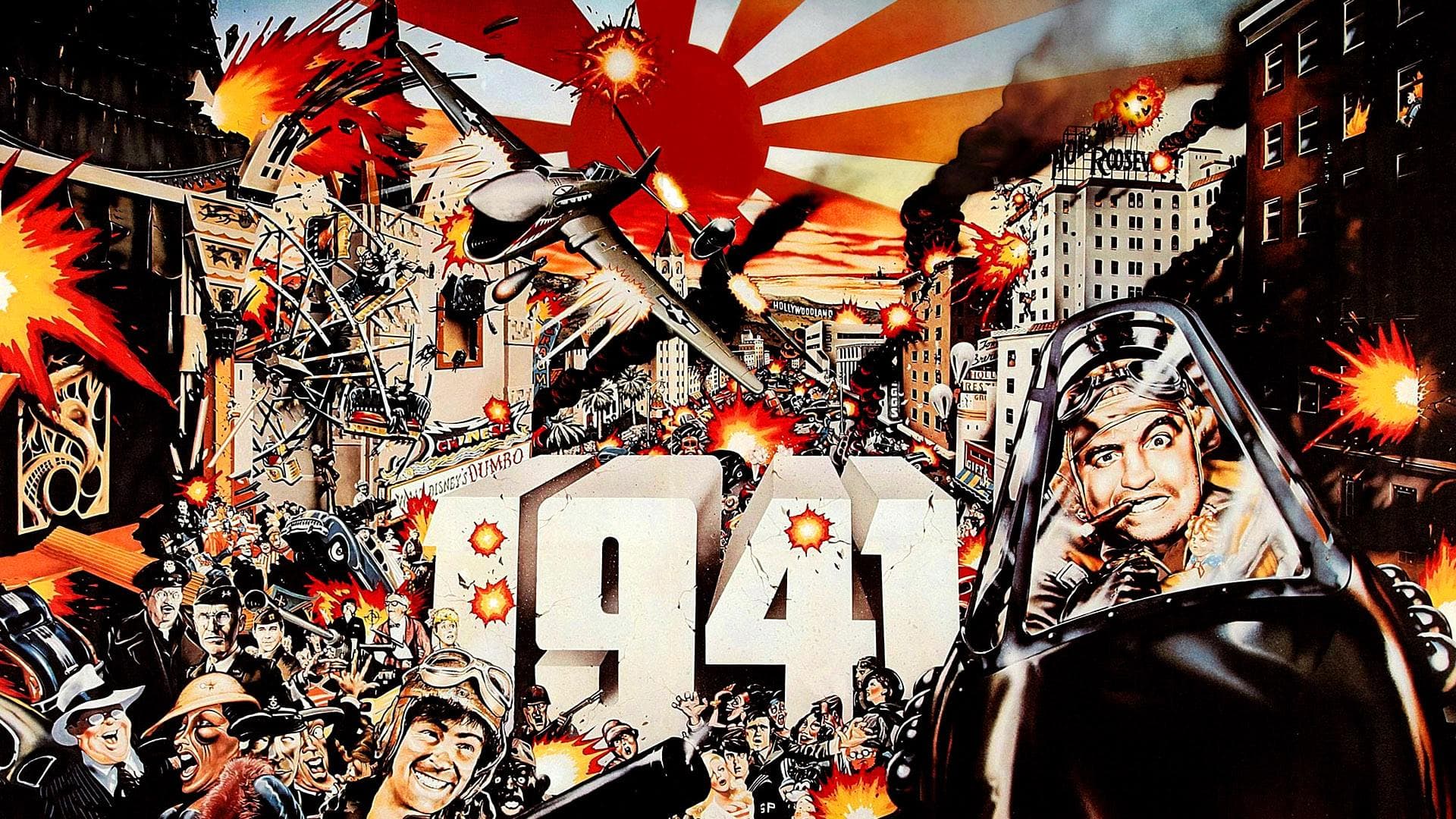
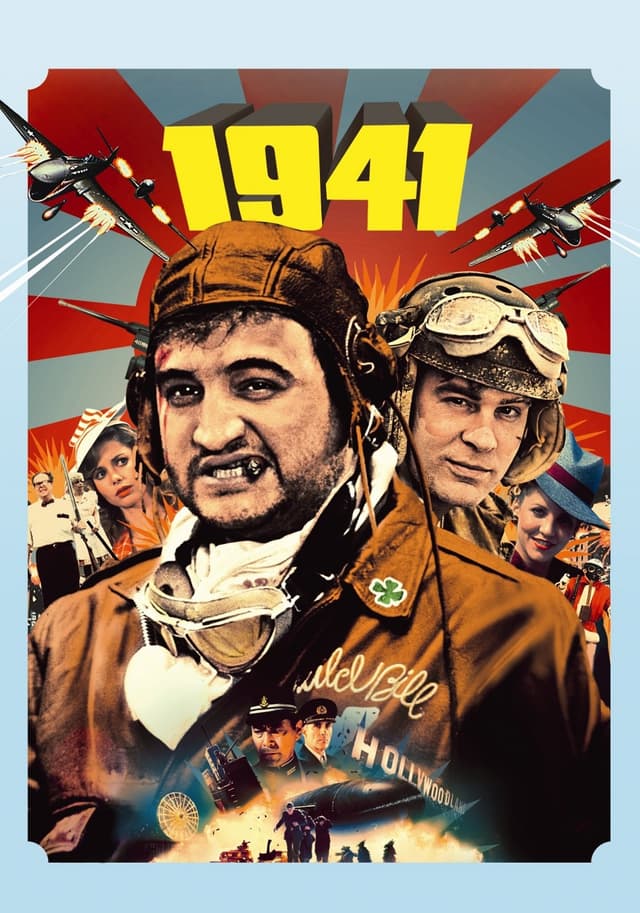
"1941" is a comedic war film directed by Steven Spielberg, set in the chaotic days following the attack on Pearl Harbor. The story unfolds in Los Angeles, where the city is gripped by paranoia and fear of a Japanese invasion. Amidst the hysteria, a motley crew of characters, including a group of civilians, military personnel, and a bumbling Japanese submarine crew, become embroiled in a series of misadventures. The film showcases the absurdity of wartime panic, blending slapstick humor with a satirical take on American culture during World War II. As the characters navigate their way through misunderstandings and comedic mishaps, "1941" ultimately highlights the resilience and eccentricity of the human spirit in the face of uncertainty.
What is the budget of 1941?
"1941," a comedy released in 1979, was directed by Steven Spielberg and stars Dan Aykroyd, Ned Beatty. The production budget was $35,000,000, placing it in the mid-budget range for comedy productions of the 1970s.
Key Budget Allocation Categories
While specific budget breakdowns are not publicly available, typical cost drivers for a comedy production like this include:
- Talent Salaries & Producing Deals: Established comedic talent can command $15 to 20 million per film, with top-tier stars earning even more through producing credits and backend deals.
- Production & Location Filming: While comedies generally avoid the VFX costs of action films, location shooting in recognizable cities or exotic locales adds meaningful production expense.
- Marketing & P&A (Prints & Advertising): Comedies rely heavily on marketing to build opening-weekend momentum.
- Production: According to Steven Spielberg's appearance in the documentary Stanley Kubrick: A Life in Pictures, Stanley Kubrick suggested that 1941 should have been marketed as a drama rather than a comedy film.
What were the major cost factors in 1941?
Several factors contributed to the overall production costs of "1941."
- Talent Salaries: Talent Salaries & Producing Deals is one of the primary cost drivers in comedy productions of this scale.
- Production: Production & Location Filming is one of the primary cost drivers in comedy productions of this scale.
- Marketing: Marketing & P&A (Prints & Advertising) is one of the primary cost drivers in comedy productions of this scale.
How Does 1941's Budget Compare to Similar Films?
At $35,000,000, 1941 sits in the mid-budget range. Here is how it compares to productions with a similar budget:
- Two for the Money (2005): Budget $35,000,000, Worldwide Gross $30,526,509
- 21 Bridges (2019): Budget $33,000,000, Worldwide Gross $49,900,000
- A History of Violence (2005): Budget $32,000,000, Worldwide Gross $61,477,797
- Alive (1993): Budget $32,000,000, Worldwide Gross $36,700,000
- Apocalypse Now (1979): Budget $31,500,000, Worldwide Gross $150,000,000
The median budget for wide-release comedy films in the era ranges from $30 to 80M for mid-budget to $150M+ for tentpoles.
1941 Box Office Performance
"1941" earned $31,755,742 domestically and $94,900,000 worldwide at the box office. Against a production budget of $35,000,000, the film performed strongly at the box office.
A film typically needs to earn approximately twice its production budget to cover marketing and distribution costs. For "1941," that break-even threshold was roughly $70,000,000. With worldwide earnings of $94,900,000, the film cleared that threshold comfortably.
Box Office Breakdown
1941

At 171.1%, "1941" earned roughly $2.71 for every $1 invested in production.
1941 Production History
The musical score for 1941 was composed and conducted by John Williams and performed by the Hollywood Studio Symphony. The titular march is used throughout the film and is perhaps the most memorable piece written for it. (Spielberg has said it is his favorite Williams march.) The score also includes a swing composition titled "Swing, Swing, Swing" composed by Williams.
Awards and Recognition
Nominated for 3 Oscars. 6 nominations total
Frequently Asked Questions
How much did it cost to make 1941 (1979)?
The production budget was $35,000,000, covering principal photography, cast and crew salaries, locations, sets, post-production, and music. Marketing and distribution (P&A) costs are estimated at an additional $17,500,000 - $28,000,000, bringing the total studio investment to approximately $52,500,000 - $63,000,000.
How much did 1941 (1979) earn at the box office?
1941 grossed $31,755,742 domestic, $63,144,258 international, totaling $94,900,000 worldwide.
Was 1941 (1979) profitable?
Yes. Against a production budget of $35,000,000 and estimated total costs of ~$87,500,000, the film earned $94,900,000 theatrically - a 171% ROI on production costs alone.
What were the biggest costs in producing 1941?
The primary cost drivers were above-the-line talent (Dan Aykroyd, Ned Beatty, John Belushi); star comedian salaries, location filming, and aggressive marketing campaigns.
How does 1941's budget compare to similar comedy films?
At $35,000,000, 1941 is classified as a low-budget production. The median budget for wide-release comedy films in the era ranges from $30 - 80M for mid-budget to $150M+ for tentpoles. Comparable budgets: Two for the Money (2005, $35,000,000); 21 Bridges (2019, $33,000,000); A History of Violence (2005, $32,000,000).
Did 1941 (1979) go over budget?
There are no widely reported accounts of significant budget overruns for this production. However, studios rarely disclose precise budget overrun figures publicly. The reported production budget reflects the final estimated cost.
What was the return on investment (ROI) for 1941?
The theatrical ROI was 171.1%, calculated as ($94,900,000 − $35,000,000) ÷ $35,000,000 × 100. This measures gross revenue against production budget only - it does not account for P&A or exhibitor shares.
What awards did 1941 (1979) win?
Nominated for 3 Oscars. 6 nominations total.
Who directed 1941 and who were the key crew members?
Directed by Steven Spielberg, written by Bob Gale, Robert Zemeckis, John Milius, shot by William A. Fraker, with music by John Williams, edited by Michael Kahn.
Where was 1941 filmed?
1941 was filmed in United States of America.
Filmmakers
1941

Official Trailer
Build budgets like this one in Saturation
Start from an industry-standard feature film template, import the schedule and rates you already have, and let the cost report keep itself current as you spend. Real-time collaboration, no spreadsheets.