Super Mario Bros. Budget
 Adventure
Updated
Synopsis
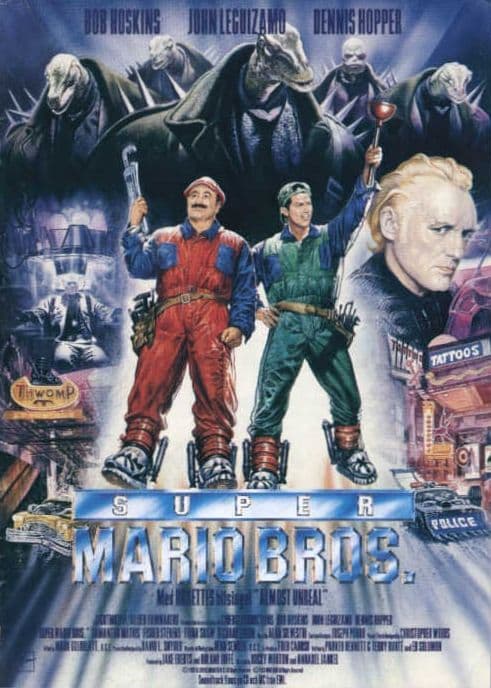
Brooklyn plumbers Mario and Luigi Mario are pulled into a parallel dimension where dinosaurs evolved into humanoids and a tyrannical reptilian dictator named Koopa rules over a decaying urban wasteland. With kidnapped Princess Daisy in danger, the brothers must navigate the dystopian alternate world to save her and prevent the dimensions from merging.
What Is the Budget of Super Mario Bros. (1993)?
Super Mario Bros. (1993), co-directed by Rocky Morton and Annabel Jankel and distributed by Buena Vista Pictures under the Hollywood Pictures banner, was produced on a budget of $48,000,000. Some industry estimates place the final cost as high as $50,000,000 to $60,000,000 once reshoots, schedule overruns, and the post-production rescue effort are factored in. The film was co-financed by Hollywood Pictures, Cinergi Pictures, Allied Filmmakers, and Lightmotive, with Disney's Buena Vista handling worldwide theatrical release.
Super Mario Bros. holds historical significance as the first feature-length live-action film based on a video game property, predating the wave of adaptations that would follow throughout the 1990s and beyond. The investment reflected the perceived size of the Nintendo brand at the height of the SNES era, though the film's departure from the source material's tone and aesthetic became central to its commercial collapse.
Key Budget Allocation Categories
The $48,000,000 budget was distributed across these core production areas:
- Cast Compensation: Bob Hoskins (Mario), John Leguizamo (Luigi), and Dennis Hopper (King Koopa) led the principal cast, with Samantha Mathis (Princess Daisy) and Fisher Stevens and Richard Edson as Koopa's henchmen. All three leads have publicly disavowed the film, with Hoskins later naming it the worst experience of his career.
- Production Design and Practical Effects: Production designer David L. Snyder created the dystopian Dinohattan world from scratch, including elaborate decaying urban sets, the Koopa Tower interior, and the cross-dimensional fungus environments. The visual design budget anchored the largest single line item.
- Creature and Makeup Effects: Multiple practical creature designs, including the Goombas, Yoshi, and the de-evolution effects, required extensive makeup, animatronic, and puppetry work. The integration of these elements with the live action consumed significant pre-production and on-set time.
- Visual Effects: The cross-dimensional travel sequences, the de-evolution chamber, and various practical-CGI hybrid elements required extensive optical and early digital effects work. The film was among the first to combine these techniques on a large scale.
- Reshoots and Production Turbulence: The directors clashed repeatedly with producers and the studio, and significant reshoots and reedits occurred during post-production. Multiple writers worked on the script, including Parker Bennett, Terry Runte, and Ed Solomon, and the production schedule extended well beyond initial estimates.
- Marketing and Promotional Tie-Ins: Buena Vista's P&A spend was estimated at approximately $35,000,000 to $45,000,000, with extensive promotional partnerships including a Nintendo Power magazine cover story, a Sunkist Orange Soda campaign, and tie-in merchandise from multiple licensees.
How Does Super Mario Bros.' Budget Compare to Similar Films?
At $48,000,000, Super Mario Bros. sat in the upper range of 1993 family-adventure productions:
- Jurassic Park (1993): Budget $63,000,000 | Worldwide $914,700,000. Universal's contemporaneous summer blockbuster cost only 31% more than Super Mario Bros. and earned 44 times the worldwide gross, providing a stark contrast to the year's family-event positioning.
- The Flintstones (1994): Budget $46,000,000 | Worldwide $341,600,000. Universal's following-year live-action cartoon adaptation cost roughly the same and earned more than 16 times the worldwide gross, illustrating the commercial ceiling for the format when execution worked.
- Cool World (1992): Budget $30,000,000 | Worldwide $14,100,000. Paramount's Ralph Bakshi live-action/animation hybrid offered a closer commercial twin in its disastrous reception, costing less than Mario but flopping at a similar magnitude.
- Hudson Hawk (1991): Budget $65,000,000 | Worldwide $97,300,000. TriStar's Bruce Willis vehicle cost 35% more and earned roughly five times Mario's worldwide gross while still being considered a major flop, illustrating how Mario underperformed even by box-office-bomb standards.
Super Mario Bros. Box Office Performance
Super Mario Bros. opened on May 28, 1993 against significant Memorial Day weekend competition, debuting in fifth place with $8,663,556 over the four-day holiday frame. The opening was widely interpreted as a disappointment for a major-studio family event film. The financial breakdown:
Box Office Breakdown
Super Mario Bros.

Super Mario Bros. returned approximately $0.22 to $0.25 in worldwide theatrical revenue for every $1 invested. The domestic share of the gross was $20,929,518 with negligible international theatrical revenue (the film never received a wide international release in many territories). It is widely cited as one of the most decisive video-game-adaptation flops of all time and effectively delayed Nintendo's next major Mario film effort by nearly three decades, until the 2023 animated The Super Mario Bros. Movie.
Super Mario Bros. Production History
Development of a live-action Mario film began in the late 1980s at Lightmotive and progressed through multiple drafts and directors before Rocky Morton and Annabel Jankel (Max Headroom) were hired in 1991. The original screenplay by Parker Bennett and Terry Runte was a more family-friendly adventure, but Morton and Jankel pushed the project toward a darker dystopian aesthetic influenced by Blade Runner and Brazil. Ed Solomon (Bill & Ted's Excellent Adventure) was brought in for late-stage rewrites in an attempt to mediate between the directors' vision and the studio's family-audience expectations.
Principal photography took place in 1992 in Wilmington, North Carolina at the former Dino De Laurentiis Studios (later EUE/Screen Gems). The shoot was widely reported as troubled, with daily clashes between the directors and the producers, multiple script rewrites delivered on set, and lead actor Bob Hoskins reportedly breaking his hand in the third week of production and continuing to film with the injury. Hoskins, Leguizamo, and Hopper all later confirmed they were drinking heavily on set to cope with the unstructured production.
Multiple reshoots and reedits occurred during post-production at Buena Vista's insistence. The directors' cut was significantly shortened and restructured, with key plot points and character development trimmed to recover pacing. The film's release in May 1993 came after Disney's family-audience marketing positioning that bore little resemblance to the final dystopian product, contributing to the audience whiplash that defined opening weekend.
Awards and Recognition
Super Mario Bros. received no significant positive awards recognition. The film was nominated for two Razzies at the 1993 ceremony: Worst Picture and Worst Director (Rocky Morton and Annabel Jankel). It did not win in either category, with Indecent Proposal and Sliver winning the marquee Razzie prizes that year.
In subsequent years the film has acquired a substantial cult following, with retrospective screenings, an extensive fan-restored "Morton-Jankel Cut" assembled from VHS workprint material, and renewed academic and pop-culture writing examining its aesthetic ambitions. The 2023 release of the animated The Super Mario Bros. Movie prompted further reappraisal of the 1993 film as a singular if commercially failed attempt at adult-leaning video-game adaptation.
Critical Reception
Super Mario Bros. received overwhelmingly negative reviews on initial release. The film holds a 28% approval rating on Rotten Tomatoes based on 65 critic reviews, with the critical consensus calling it a confused, tonally inconsistent adaptation that failed to capture the source material. On Metacritic, the film scored 35 out of 100, indicating generally unfavorable reviews.
Roger Ebert awarded the film one and a half stars out of four, writing that "the film is a mess, but an interesting mess, with bizarre production design and committed lead performances trapped in a script that makes no narrative sense." The Washington Post called it "a $50 million catastrophe," and Entertainment Weekly graded it a D. Bob Hoskins' candor about the experience, captured in numerous interviews before his death in 2014, framed the cultural memory of the film as a cautionary tale of behind-the-scenes turbulence. Retrospective criticism has been kinder, with multiple outlets re-evaluating the production design and the directorial ambition even while acknowledging the film's storytelling failures.
Frequently Asked Questions
How much did it cost to make Super Mario Bros. (1993)?
The reported production budget was $48,000,000, with some industry estimates placing the final figure as high as $50,000,000 to $60,000,000 once reshoots, schedule overruns, and the post-production rescue effort are factored in. The film was co-financed by Hollywood Pictures, Cinergi Pictures, Allied Filmmakers, and Lightmotive.
How much did Super Mario Bros. (1993) earn at the box office?
The film grossed $20,929,518 domestically with negligible international theatrical revenue, for a worldwide total of $20,929,518. It opened to $8,663,556 over the four-day Memorial Day frame ending May 31, 1993, debuting in fifth place.
Was Super Mario Bros. (1993) a box office bomb?
Yes. Against a $48,000,000 production budget and an estimated $35,000,000 to $45,000,000 in marketing spend, the film returned approximately $0.22 to $0.25 in worldwide gross for every $1 invested. It is widely cited as one of the most decisive video-game-adaptation flops of all time.
Who directed Super Mario Bros. (1993)?
The film was co-directed by Rocky Morton and Annabel Jankel, the British directing duo behind Max Headroom. They pushed the project toward a darker dystopian aesthetic influenced by Blade Runner and Brazil, which clashed with the studio's family-audience expectations and contributed to the troubled production.
Why was Super Mario Bros. (1993) considered a failure?
The film failed for multiple reasons: it departed substantially from the source material's tone and aesthetic, the directors clashed repeatedly with producers and the studio, multiple script rewrites occurred on set, the family-audience marketing did not match the dystopian final product, and the box office returned roughly a quarter of total investment.
Who is in the cast of Super Mario Bros. (1993)?
Bob Hoskins plays Mario, John Leguizamo plays Luigi, Dennis Hopper plays King Koopa, and Samantha Mathis plays Princess Daisy. Fisher Stevens and Richard Edson play Koopa's henchmen Iggy and Spike, with Fiona Shaw in a supporting role. All three leads have publicly disavowed the film.
Where was Super Mario Bros. (1993) filmed?
Principal photography took place in 1992 in Wilmington, North Carolina at the former Dino De Laurentiis Studios (later EUE/Screen Gems). The production was widely reported as troubled, with lead actor Bob Hoskins reportedly breaking his hand in the third week and continuing to film with the injury.
What is the difference between Super Mario Bros. (1993) and The Super Mario Bros. Movie (2023)?
The 1993 film is a live-action dystopian adaptation that grossed $20,929,518 worldwide against a $48,000,000 budget. The 2023 animated The Super Mario Bros. Movie, produced by Illumination and Nintendo, hewed closely to the video game aesthetic and grossed over $1.36 billion worldwide, becoming one of the highest-grossing animated films of all time.
What did critics think of Super Mario Bros. (1993)?
The film received overwhelmingly negative reviews, with a 28% approval rating on Rotten Tomatoes and a 35 out of 100 Metacritic score. Roger Ebert awarded the film one and a half stars out of four. Retrospective criticism has been kinder, with multiple outlets re-evaluating the production design and directorial ambition.
Did Super Mario Bros. (1993) win any awards?
No. The film received no significant positive awards recognition. It was nominated for two Razzies at the 1993 ceremony, Worst Picture and Worst Director (Rocky Morton and Annabel Jankel), but did not win in either category.
Filmmakers
Super Mario Bros.

Build budgets like this one in Saturation
Start from an industry-standard feature film template, import the schedule and rates you already have, and let the cost report keep itself current as you spend. Real-time collaboration, no spreadsheets.