Red Sonja Budget
 AdventureActionFantasyDrama1h 51m
Updated
Synopsis
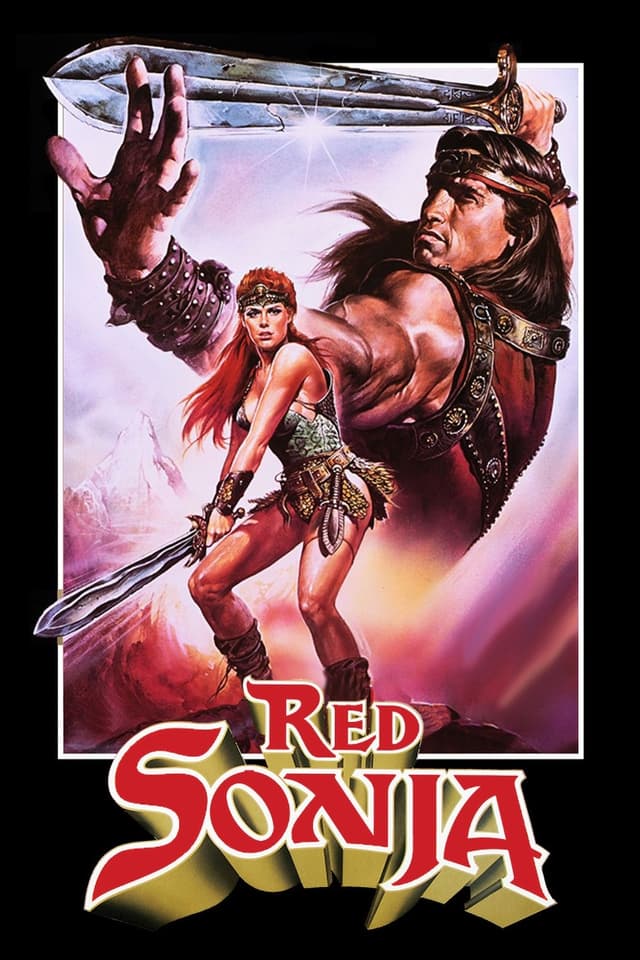
A sword-wielding warrior named Red Sonja sets out to avenge the destruction of her family and reclaim a magical talisman from the evil Queen Gedren, who razed her village and murdered her relatives. Joined by Lord Kalidor and a brash young prince, she battles across a mythical landscape to confront Gedren in her ice-bound palace before the talisman's unchecked power destroys the world.
What Is the Budget of Red Sonja (1985)?
Red Sonja (1985), directed by Richard Fleischer and produced by Dino De Laurentiis through the Dino De Laurentiis Corporation, was made on a reported production budget of $17,900,000. Distributed by MGM/UA Entertainment Co., the film was conceived as a sword and sorcery spinoff of the successful Conan series and was designed to capitalize on the genre boom that the De Laurentiis-produced Conan the Barbarian (1982) had helped kick off three years earlier. The budget reflected a mid-tier studio investment for the period, smaller than the $20,000,000 spent on Conan the Barbarian but larger than most independent fantasy productions of the early 1980s.
The financing assumed Red Sonja could capture the same young male audience that had powered the two Conan films, with Arnold Schwarzenegger receiving top billing despite playing a supporting role in support of newcomer Brigitte Nielsen. The math counted on a worldwide gross in the $35,000,000 to $45,000,000 range to clear the production budget once theatrical splits and marketing costs were factored in. The film fell well short of that mark and stands as one of the most decisive commercial failures of the 1980s sword and sorcery cycle.
Key Budget Allocation Categories
Red Sonja's $17,900,000 budget was distributed across the production categories typical of a Dino De Laurentiis international fantasy production:
- Above-the-Line Talent: Arnold Schwarzenegger, fresh off The Terminator (1984), commanded the largest single salary on the picture even though he played the supporting role of Lord Kalidor rather than the title character. Director Richard Fleischer, a veteran whose credits stretched back to 20,000 Leagues Under the Sea (1954) and included Conan the Destroyer (1984), drew a feature-director rate. Sandahl Bergman, returning to the De Laurentiis fantasy fold after starring as Valeria in Conan the Barbarian, was cast as the villainous Queen Gedren, while Danish model Brigitte Nielsen was hired in her feature acting debut as Red Sonja at a significantly lower scale rate.
- Italian Studio Shoot: Principal photography was anchored at Cinecittà Studios in Rome, a Dino De Laurentiis production hub used across the Conan films and other 1980s fantasy productions. Stage rentals, set construction for Gedren's temple and the climactic palace interiors, and the large Italian crew base were all booked against the Cinecittà operation.
- Italian Alps Location Work: Exterior sequences were shot in the Abruzzo region of central Italy, with extensive use of the Gran Sasso massif including Celano, Campo Felice, and the high-altitude Campo Imperatore plateau. The locations doubled for the snowy mountain passes and stark wilderness of the Hyborian Age, requiring logistics for cold-weather shooting, horse wranglers, and transportation of cast, crew, and elaborate prop and costume packages from Rome.
- Practical Creatures and Effects: The film leaned on physical effects, miniatures, and an animatronic mechanical creature that menaces Sonja and Kalidor in the third act. The talisman set piece, the destruction of Gedren's palace, and various sword combat gags all required dedicated effects budget. Visual effects supervision was handled by Italian and British vendors typical of De Laurentiis productions of the era.
- Score and Music: Italian composer Ennio Morricone, in the middle of one of his most prolific decades, wrote the orchestral score. His fee, the recording sessions in Rome, and the orchestra hire formed a significant line item on a film built around large-scale fantasy set pieces rather than dialogue scenes.
- Costumes and Production Design: Costume designer Danilo Donati, an Oscar winner who had collaborated with Fellini, Pasolini, and Zeffirelli, designed the film's armor, gowns, and warrior outfits, including the scale-mail bikini that became the most recognizable visual element of the production. Production designer Danilo Donati doubled on the sets, drawing on the Cinecittà crafts ecosystem to fabricate weapons, jewelry, and prosthetic appliances.
- Marketing and Distribution: MGM/UA carried the domestic marketing campaign, positioning the film as an Arnold Schwarzenegger vehicle even though he was second-billed, with a summer 1985 release pattern aimed at the same audience that had turned out for Conan the Destroyer the previous summer. International distribution was handled territory by territory in line with the De Laurentiis output deal structure.
How Does Red Sonja's Budget Compare to Similar Films?
At $17,900,000, Red Sonja sat in the middle of the early-to-mid-1980s sword and sorcery cycle. The comparison set illustrates how its commercial outcome diverged sharply from its budgetary peers:
- Conan the Barbarian (1982): Budget $20,000,000 | Worldwide $69,000,000. The film that launched the cycle, also produced by Dino De Laurentiis, cost slightly more than Red Sonja and earned ten times its worldwide gross, establishing the template Red Sonja tried and failed to replicate.
- Conan the Destroyer (1984): Budget $18,000,000 | Worldwide $31,000,000. The direct Conan sequel was made for essentially the same budget as Red Sonja but earned more than four times the worldwide gross, demonstrating that the audience still wanted Schwarzenegger in the Conan role rather than as a supporting player.
- The Beastmaster (1982): Budget $9,000,000 | Worldwide $14,000,000. The independent fantasy starring Marc Singer cost roughly half what Red Sonja spent and earned twice its worldwide gross, indicating that smaller-scale sword and sorcery could clear its costs even when the larger productions failed.
- Krull (1983): Budget $27,000,000 | Worldwide $16,500,000. Columbia's big-budget science fantasy was an even more decisive flop than Red Sonja in absolute dollar terms, foreshadowing the cycle's exhaustion.
- Ladyhawke (1985): Budget $20,000,000 | Worldwide $18,432,000. Released two months before Red Sonja, the Richard Donner medieval romance with Matthew Broderick and Michelle Pfeiffer also underperformed against its budget, underlining that 1985 audiences had moved on from straight-faced fantasy.
- Willow (1988): Budget $35,000,000 | Worldwide $57,300,000. George Lucas's late-cycle entry, produced three years after Red Sonja, cost almost twice as much and only modestly cleared profitability, confirming that the genre never returned to the Conan the Barbarian highs.
Red Sonja Box Office Performance
Red Sonja opened in the United States on July 3, 1985, into a crowded summer that included Back to the Future, Cocoon, and Pale Rider. The film never registered as a meaningful release, finishing well outside the top performers of the season and dropping off the chart quickly. Against a $17,900,000 production budget, the film needed roughly $40,000,000 in worldwide gross to clear theatrical splits and an estimated marketing spend.
Here is the financial breakdown:
Box Office Breakdown
Red Sonja

Red Sonja returned approximately $0.25 in worldwide theatrical revenue for every $1 invested when measured against total estimated production and marketing spend, placing it among the most decisive commercial failures of the 1985 calendar year. The domestic gross of $6,900,000 was the worst headline figure for any major studio fantasy release of the summer, and the film failed to generate the kind of word of mouth or international territory recovery that occasionally rescues underperforming theatrical releases.
The financial collapse effectively ended both the planned Red Sonja franchise and the broader Dino De Laurentiis sword and sorcery business at the studio level. Although the film later acquired a modest cult and home video afterlife, its theatrical performance helped close the door on the early-1980s fantasy cycle and contributed to Schwarzenegger's subsequent pivot toward contemporary action vehicles such as Commando (1985), Predator (1987), and The Running Man (1987).
Red Sonja Production History
Red Sonja originated as a Dino De Laurentiis project conceived alongside the Conan films. The character had been created by Marvel Comics writer Roy Thomas and artist Barry Windsor-Smith in 1973 as a spinoff of the Conan the Barbarian comic line, drawing loosely on a Robert E. Howard short story. De Laurentiis acquired the screen rights as part of a broader Howard- and Marvel-adjacent fantasy slate and developed the project as a vehicle that would extend the Conan brand without requiring Schwarzenegger to play Conan in a third consecutive picture.
Clive Exton wrote an initial draft, with novelist and screenwriter George MacDonald Fraser, whose Three Musketeers and Royal Flash adaptations had given him standing in the historical-action space, brought in for rewrites. Richard Fleischer, who had just directed Schwarzenegger in Conan the Destroyer (1984), was retained as director for continuity with the De Laurentiis fantasy operation. Casting Brigitte Nielsen in her feature debut after the Danish model was discovered through her Greta Garbo-style headshots proved to be the most consequential creative choice, locking the picture to a lead with no prior acting credits.
Principal photography took place from late 1984 through early 1985 entirely in Italy, with interiors filmed at Cinecittà Studios in Rome and exterior sequences shot in the Abruzzo region. The unit worked extensively in the Gran Sasso massif including the towns of Celano and Campo Felice and on the Campo Imperatore plateau, an exposed high-altitude landscape that doubled for the icy passes and barren wilderness of the film's Hyborian Age setting. The Italian crew base, drawn from the Cinecittà ecosystem, included cinematographer Giuseppe Rotunno (Fellini's Amarcord, All That Jazz) and costume designer Danilo Donati.
On-set reports describe a difficult production. Schwarzenegger and Nielsen had a brief romantic relationship during the shoot, which complicated the working dynamic, and Nielsen's inexperience as an actor required extensive coverage and additional takes. Schwarzenegger later disowned the picture in multiple interviews, calling it the worst film he has ever made and joking that he uses it as a threat against his children when they misbehave. Sandahl Bergman, who had played the heroic Valeria in Conan the Barbarian, was cast against type as the villainous Queen Gedren and spent much of the shoot in elaborate prosthetic makeup.
Post-production was handled in Rome with editor Frank J. Urioste cutting under Fleischer's supervision, and Ennio Morricone composed and recorded the orchestral score with Italian musicians. MGM/UA Entertainment Co. picked up domestic distribution and set the release for July 3, 1985, ahead of the prime Independence Day frame.
Awards and Recognition
Red Sonja received no significant positive awards recognition. The film was, however, a substantial presence at the sixth annual Golden Raspberry Awards, where it picked up three nominations. Brigitte Nielsen won the Razzie for Worst New Star for her combined work on Red Sonja and Rocky IV (1985), making the picture a double-feature liability for the actress's debut year. The film was also nominated for Worst Actress (Nielsen) and Worst Supporting Actor (Paul Smith as Falkon).
The film failed to register at any of the major industry ceremonies, including the Academy Awards, the British Academy Film Awards, the Saturn Awards for genre filmmaking, and the major guild ceremonies. Within the De Laurentiis canon and the early-1980s fantasy cycle, Red Sonja is now most often cited not for any individual achievement but as the moment the sword and sorcery cycle collapsed commercially and critically, a reputation reinforced by its Razzie haul and Schwarzenegger's own public dismissal.
Critical Reception
Red Sonja received decisively negative reviews on release and has never been substantially reassessed by critics. The film holds a 23% approval rating on Rotten Tomatoes, with a critical consensus that the film is leaden, poorly acted, and unintentionally comic in its earnest treatment of pulp fantasy material. On Metacritic, the film scored 35 out of 100, indicating generally unfavorable reviews. Audiences surveyed by CinemaScore graded the film a D+, an extraordinarily poor result for a wide studio release and a clear signal that the picture failed even with the genre fans who turned out for it.
Roger Ebert wrote that the film "looks great and goes nowhere," a sentiment echoed in Variety's mixed-to-negative trade review and in Janet Maslin's notice in The New York Times, which singled out Nielsen's performance as the central problem. Schwarzenegger's decision to give Lord Kalidor minimal dialogue earned grudging praise as the only restraint in an otherwise overwrought picture, while the Ennio Morricone score and Giuseppe Rotunno cinematography drew the only consistently positive notices.
In the four decades since its release, Red Sonja has acquired a cult reputation as a high-camp curiosity, with retrospective coverage in The Guardian, IndieWire, and various fantasy-genre publications treating the film as an enjoyable artifact of the sword and sorcery cycle even as critics continue to acknowledge its fundamental craftsmanship problems. Schwarzenegger's own continued ribbing of the picture has helped lock its reputation as one of the best-known box office bombs of the 1980s and a touchstone case study for the commercial limits of the De Laurentiis fantasy operation.
Frequently Asked Questions
How much did it cost to make Red Sonja (1985)?
The reported production budget for Red Sonja was $17,900,000. The film was produced by Dino De Laurentiis through the Dino De Laurentiis Corporation and distributed by MGM/UA Entertainment Co., placing it in the mid-range of early-to-mid-1980s sword and sorcery productions, slightly below the $20,000,000 spent on Conan the Barbarian (1982) and roughly in line with Conan the Destroyer (1984).
How much did Red Sonja earn at the box office?
Red Sonja grossed approximately $6,900,000 in worldwide theatrical release after opening on July 3, 1985. The figure was a fraction of its $17,900,000 production budget and well below the worldwide grosses of the two preceding Conan films, making Red Sonja one of the most decisive commercial failures of the 1985 summer movie season.
Was Red Sonja a box office bomb?
Yes. Against a $17,900,000 production budget and an estimated $8,000,000 to $10,000,000 in marketing spend, the film returned roughly $0.25 in worldwide gross for every $1 invested. The collapse effectively ended Dino De Laurentiis's sword and sorcery production cycle at the studio level and is widely cited as one of the most decisive 1980s fantasy bombs.
Who directed Red Sonja (1985)?
Richard Fleischer directed Red Sonja, working from a screenplay by Clive Exton and George MacDonald Fraser. Fleischer had just directed Arnold Schwarzenegger in Conan the Destroyer (1984) and was a veteran whose career stretched back to 20,000 Leagues Under the Sea (1954). He was retained for continuity with the Dino De Laurentiis fantasy operation.
Where was Red Sonja filmed?
Red Sonja was filmed entirely in Italy from late 1984 through early 1985. Interiors were shot at Cinecittà Studios in Rome, with exterior sequences in the Abruzzo region, including the Gran Sasso massif at Celano, Campo Felice, and the high-altitude Campo Imperatore plateau, which doubled for the icy mountain passes and wilderness of the film's Hyborian Age setting.
Who starred in Red Sonja?
Brigitte Nielsen starred as Red Sonja in her feature acting debut, with Arnold Schwarzenegger in the supporting role of Lord Kalidor and Sandahl Bergman as the villainous Queen Gedren. Bergman had previously starred as Valeria in Conan the Barbarian (1982) for the same producer. Paul Smith, Ernie Reyes Jr., and Ronald Lacey filled out the supporting cast.
Did Red Sonja win any Razzies?
Yes. Brigitte Nielsen won the Golden Raspberry Award for Worst New Star for her combined work in Red Sonja and Rocky IV (1985). The film was also nominated for Worst Actress (Nielsen) and Worst Supporting Actor (Paul Smith as Falkon) at the sixth annual Razzie ceremony, picking up three nominations in total.
What did Arnold Schwarzenegger say about Red Sonja?
Schwarzenegger publicly disowned the film in multiple interviews, calling it the worst film he has ever made and joking that he uses it as a threat against his children when they misbehave. His unusually candid disavowal has helped cement Red Sonja's reputation as a definitive 1980s box office bomb and is one of the most-quoted lines in coverage of his early career.
How does Red Sonja compare to the Conan films?
Red Sonja cost roughly the same as Conan the Destroyer (1984) at $17,900,000 versus $18,000,000 but earned only $6,900,000 worldwide compared with $31,000,000 for the Conan sequel and $69,000,000 for Conan the Barbarian (1982). The Conan films were profitable; Red Sonja was a decisive loss that effectively ended the Dino De Laurentiis sword and sorcery cycle.
What did critics think of Red Sonja?
The film received decisively negative reviews. It holds a 23% approval rating on Rotten Tomatoes, a 35 out of 100 score on Metacritic, and audiences gave it a D+ CinemaScore. Roger Ebert wrote that the film "looks great and goes nowhere," and Janet Maslin in The New York Times singled out Brigitte Nielsen's performance as the central problem. The Ennio Morricone score and Giuseppe Rotunno cinematography drew the only consistently positive notices.
Filmmakers
Red Sonja

Official Trailer
Build budgets like this one in Saturation
Start from an industry-standard feature film template, import the schedule and rates you already have, and let the cost report keep itself current as you spend. Real-time collaboration, no spreadsheets.